
 Công ty TNHH Thiết bị Điện Thâm Hằng.



sealed vs conservator transformer requires a clear engineering boundary before it can support a purchase, inspection or commissioning decision. Sealed transformer versus conservator transformer is a construction and maintenance decision, not a universal ranking. A sealed oil transformer limits atmospheric contact through its tank and pressure arrangement. A conservator transformer uses an expansion vessel and oil-preservation system. Compare moisture control, thermal expansion, protection, dimensions, environment, maintenance and the owner’s service capability.
Sealed and conservator transformer construction
A fully sealed oil transformer separates the oil from atmospheric contact through a sealed tank and pressure arrangement. A conservator transformer provides an expansion volume and breathing or oil-preservation system. The choice affects moisture control, inspection, dimensions, protection and maintenance.
Compare tank design, oil volume, expansion path, pressure relief, temperature indication, bushings, site environment and service procedure. A sealed construction is not automatically maintenance-free, and a conservator arrangement is not automatically unsuitable for outdoor service.
Compare oil-expansion arrangements in the supplied designs
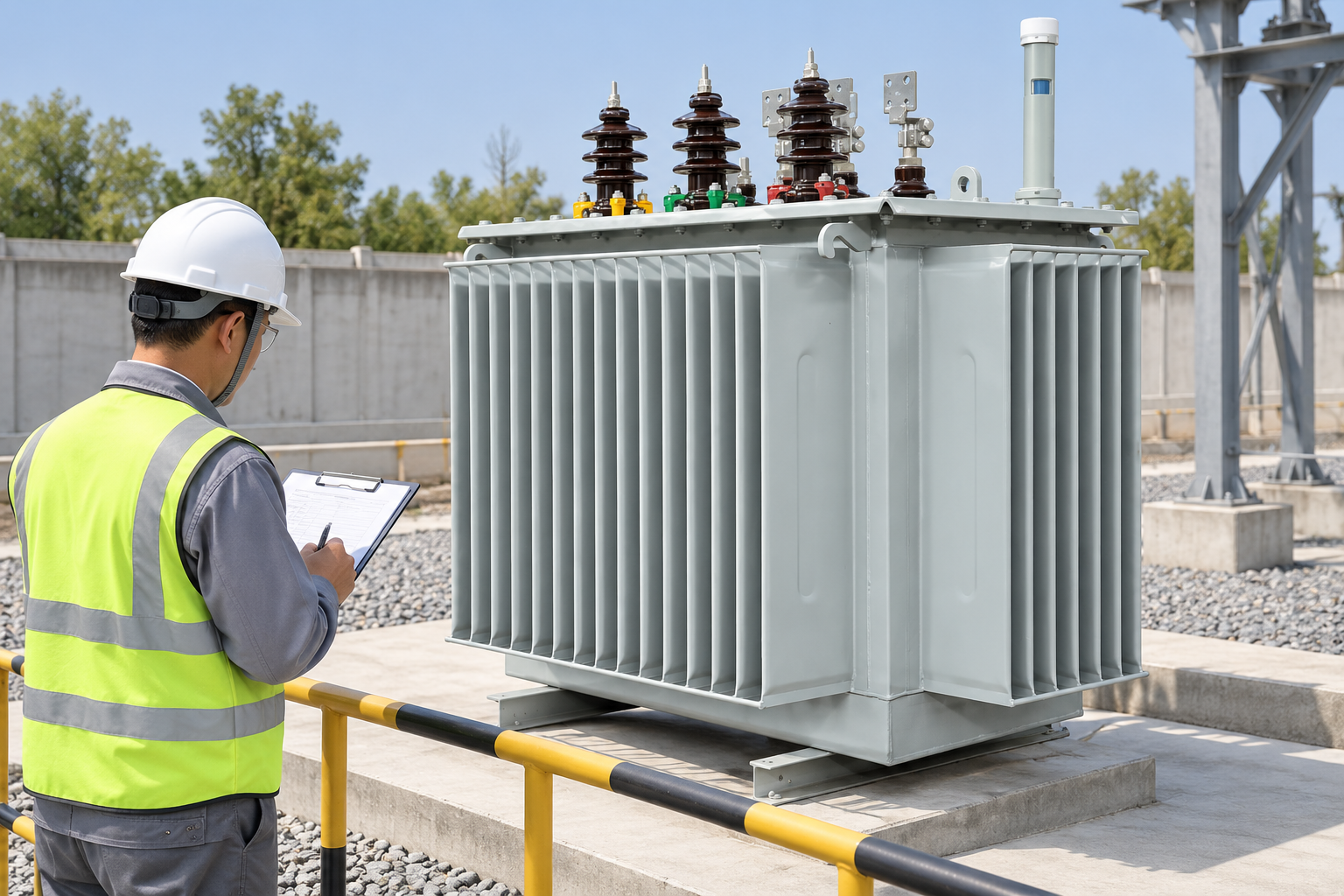
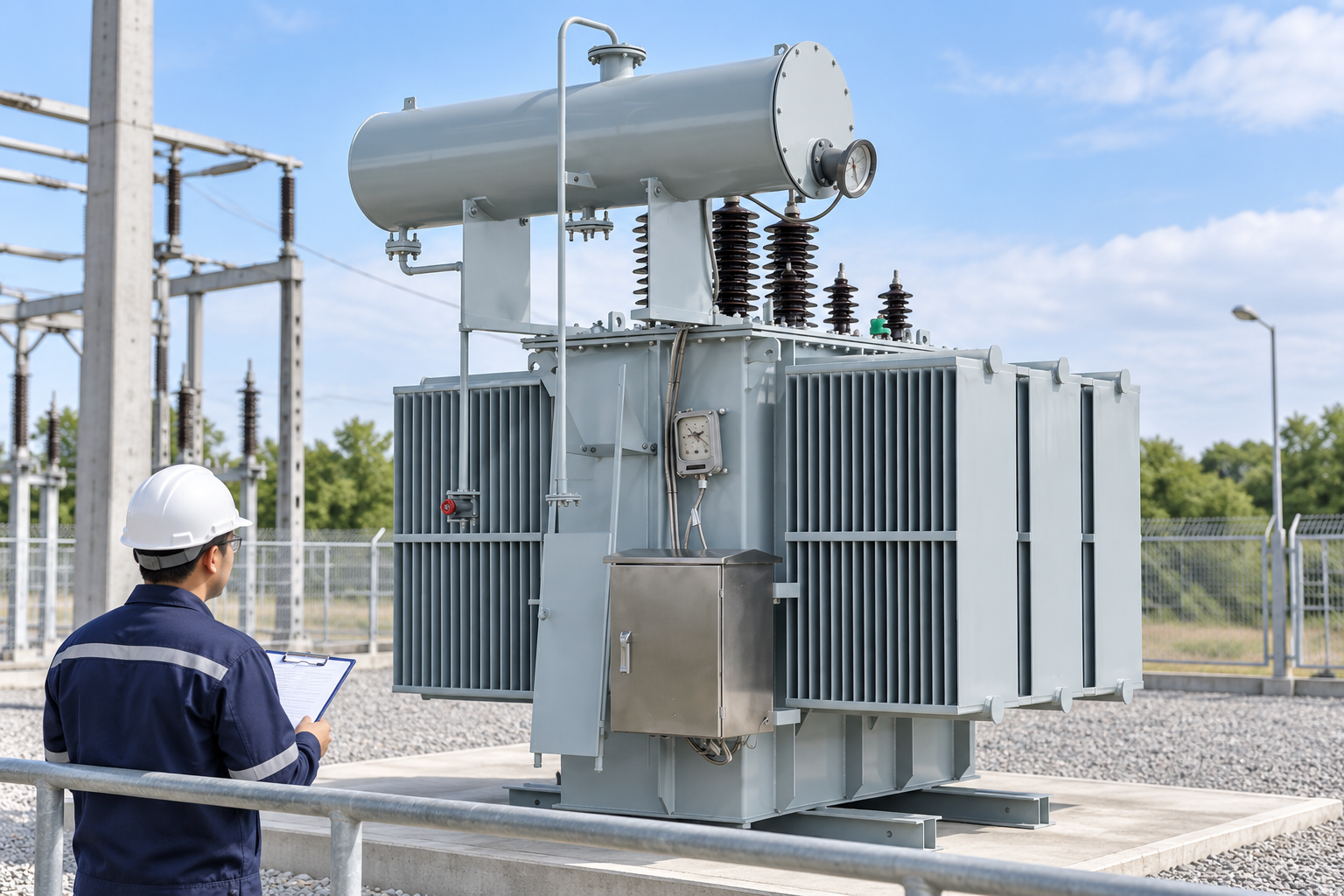
Begin by checking the general arrangement drawing rather than relying on a product name. The sealed distribution-transformer reference used here has a corrugated tank and no separate horizontal conservator. The conservator reference has a distinct cylindrical reservoir above the main tank. These visible differences explain the comparison, but they do not establish identical ratings or interchangeable accessories. Ask the supplier to identify the actual expansion arrangement, filling procedure, permissible transport condition and pressure protection for the offered unit. Do not assume that every sealed transformer uses the same tank construction.
For the sealed design, determine how the specified equipment accommodates oil expansion and contraction through its operating range. Obtain the manufacturer’s requirements for filling, leak inspection, pressure relief and temperature monitoring. A sealed tank reduces routine contact between the insulating liquid and ambient air, but a damaged seal or incorrect filling can undermine that benefit. Inspection should therefore concentrate on the integrity of joints, bushings and fittings, as well as evidence of abnormal pressure or leakage. Opening the tank or adding oil requires the manufacturer’s approved procedure; it is not a routine response to an uncertain level reading.
For a conservator design, establish whether air contacts the oil directly or whether a bladder or diaphragm separates them. Confirm the breather arrangement, oil-level indication and applicable alarm devices from the supplied drawings. A conservator’s presence alone does not prove that a particular gas-actuated relay, moisture-control system or monitoring package is fitted. Level readings also need interpretation against the manufacturer’s temperature reference. Record the ambient and oil temperatures when investigating an unexpected indication, then compare the reading with the approved operating instructions before deciding whether fluid is missing.
Make the procurement comparison under the same site conditions. Consider inspection access, staff capability, environmental exposure, spare parts and the consequences of an outage. Ask both suppliers for their scheduled inspections and abnormal-condition response requirements. Compare those documents alongside losses, insulation levels, impedance and required accessories instead of choosing solely on a sealed-versus-conservator label. A useful acceptance record includes photographs of the actual expansion system, accessory identification, leak inspection results and the correct operating manual. Neither construction removes the need for safe isolation, condition monitoring or project-specific engineering.
Sử dụng tiêu chuẩn và bằng chứng từ nhà sản xuất cùng nhau
Tiêu chuẩn xác định khung khổ, các khái niệm và thuật ngữ kiểm tra, trong khi các tài liệu của nhà sản xuất xác định các giới hạn về cấu tạo và hoạt động đã được xác nhận của thiết bị được cung cấp. Một liên kết tiêu chuẩn không thể chứng minh rằng việc sửa đổi chưa được xác nhận là chấp nhận được, và một cuốn sách hướng dẫn không thể thay thế các đặc điểm kỹ thuật dự án hoặc các quy tắc an toàn.
Đối với việc mua sắm, hãy yêu cầu về phạm vi tiêu chuẩn hóa, xác nhận thiết kế hoặc thử nghiệm loại hình, hồ sơ thử nghiệm thông thường, giới hạn lắp đặt và bất kỳ điều chỉnh độ cao hoặc môi trường nào. Lưu giữ các chứng cứ cùng với hồ sơ tài sản. Khi có tranh chấp về kết quả, hãy so sánh các định nghĩa, điều kiện thử nghiệm và ranh giới trước khi so sánh các số liệu.
Lập kế hoạch lắp đặt và vận hành
Installation quality often determines whether a sound design remains sound in the field. Confirm foundations, access, lifting, clearances, ventilation, cable bend radius, earthing, labels and control interfaces before energization. Use the approved method statement and permit system.
Việc vận hành nên chuyển từ việc kiểm tra tài liệu sang việc kiểm tra bằng mắt, vận hành cơ học, tính liên tục điện, logic chức năng, các bài kiểm tra bảo vệ hoặc điều khiển, và việc khôi phục lại chức năng cuối cùng. Ghi lại thông tin về thiết bị, cài đặt, giá trị thô, ngoại lệ, và người thực hiện kiểm tra. Giữ thiết bị cách ly khi nào một bài kiểm tra hoặc kiểm tra nào cũng gây ra nguy hiểm.
Điều chỉnh thay đổi và bàn giao
Việc thay đổi tuyến cáp, thiết lập tiếp sức, vị trí vòi nước, đường dẫn làm mát hoặc kết nối nối đất có thể làm thay đổi cơ sở thiết kế ban đầu. Thực hiện quy trình thay đổi có kiểm soát với sự tham gia của chủ sở hữu, đánh giá kỹ thuật, sửa đổi bản vẽ và chứng nhận chấp nhận. Các thiết bị thử nghiệm tạm thời phải được tháo dỡ hoặc được gắn nhãn rõ ràng trước khi bàn giao.
Gói tài liệu cuối cùng nên bao gồm bản vẽ thực tế, bảng kiểm tra, cài đặt đã được phê duyệt, danh tính thiết bị, hướng dẫn bảo trì, sai lệch và hồ sơ đào tạo. Một người vận hành trong tương lai nên có thể tái tạo quyết định mà không cần dựa vào trí nhớ hoặc hình ảnh không được ghi chú.
Lưu ý về an toàn
Thiết bị điện có thể lưu trữ năng lượng và có thể được cấp nguồn từ nhiều nguồn khác nhau. Bài viết này không phải là hướng dẫn về việc chuyển mạch. Nhân viên có đủ trình độ phải tuân thủ các quy định địa phương, các yêu cầu về cách ly, kiểm tra không có điện, nối đất và giám sát. Đừng bao giờ chạm vào một khoang điện đang hoạt động hoặc phá vỡ các thiết bị an toàn để thực hiện đo lường.
Nếu thử nghiệm không thành công, vỏ máy bị hư hỏng, có tiếng ồn bất thường hoặc hiện tượng rò rỉ được phát hiện, hoặc cấu hình thực tế không rõ ràng, hãy giữ thiết bị trong tình trạng an toàn và báo cáo cho kỹ sư có thẩm quyền. Việc tiếp tục kích hoạt mà không có chẩn đoán có thể làm tăng thêm thiệt hại và rủi ro.
Use the result in procurement
Turn the topic into a clear inquiry package. State the required voltage, current, fault or switching duty, environment, accessories, documents, routine tests, type-test or design-verification evidence, spare parts and service assumptions. Ask suppliers to identify exclusions and site conditions instead of treating a blank row as accepted.
A comparison matrix is useful when each row is marked confirmed, excluded or requiring clarification. Link the matrix to the product drawing and the network or building study. This avoids a late discovery that the quoted equipment uses a different control voltage, enclosure, module or test boundary.
Verify the field configuration
The final installed equipment should match the approved drawing, nameplate, cable interface, control logic and clearances. Record the instrument, date, operating state, method, raw results and restoration check. Photographs should identify the actual asset without exposing sensitive information.
When the field condition differs, keep the item open and obtain engineering disposition. Do not solve a missing prerequisite with a generic catalog value. The record should let a future operator understand what was checked and why the result was accepted.
Maintain an auditable record
Retain the approved calculation or study, supplier evidence, settings, test sheets, deviations, as-built drawing, image record and maintenance instructions together. This is especially important when the equipment is modified, the network topology changes or a new operating mode is introduced.
Review the topic again after a protection change, transformer replacement, control firmware change, cable reroute, room modification or unusual event. A short controlled update is safer than allowing an old assumption to silently become the design basis.
Recheck after change
A technically correct selection can become unsuitable when the source, load, protection setting, cable route, room condition or control mode changes. Compare the change with the original design basis and identify any new duty or interface.
Keep the revised decision, approval, test result and as-built update together. This small discipline prevents a later team from relying on a superseded assumption or an unlabelled field modification.
Close the review loop
Finish by stating the owner, acceptance condition, open exception and next review date. A clear close-out prevents an apparently complete checklist from hiding a missing drawing, test or approval.
Use the final record to train operations and maintenance teams. The result should be understandable to a qualified person who was not present during design or commissioning.
Cách sử dụng kết quả trong một dự án
Hãy bắt đầu từ thiết kế đã được phát hành và bản thiết bị cuối cùng. Hãy lưu ý trạng thái hoạt động, điểm đo lường, điều kiện môi trường và các bằng chứng chứng minh quyết định đó. Sau đó, hãy so sánh hồ sơ với tiêu chuẩn áp dụng, hướng dẫn của nhà sản xuất và kế hoạch chấp nhận dự án. Nếu thiếu một điều kiện tiên quyết nào đó, hãy giữ nguyên trạng của vật phẩm đó thay vì lấp đầy khoảng trống đó bằng một giá trị chung chung. Điều này sẽ cung cấp cho các đội ngũ mua sắm, vận hành và vận hành một điểm tham chiếu chung.
Đối với yêu cầu của nhà cung cấp, hãy yêu cầu về cơ sở tính toán, quy trình xác nhận, giới hạn, hồ sơ thử nghiệm và sai lệch. Đối với công tác thi công tại công trường, hãy ghi lại tên người, dụng cụ, ngày giờ, ranh giới cách ly và việc kiểm tra phục hồi. Một bản ghi ngắn gọn sẽ hữu ích hơn so với một báo cáo dài dòng, vốn có thể che giấu những thông tin cần thiết để phê duyệt bước tiếp theo.
| Kiểm tra | Bằng chứng | Sử dụng quyết định |
|---|---|---|
| Định nghĩa | Vùng ranh giới, nhận dạng thiết bị và trạng thái hoạt động | Prevents teams comparing different quantities. |
| Cơ sở thiết kế | Xếp hạng, môi trường và giả định về nhiệm vụ | Connects the answer to the installation. |
| Kiểm tra | Phương pháp, dụng cụ, kết quả nguyên liệu và cơ sở chấp nhận được phê duyệt | Tạo ra một bản ghi có thể kiểm chứng. |
| Quản lý thay đổi | Sai lệch, xem xét chủ sở hữu và sửa đổi so với bản vẽ thi công | Những thay đổi trong các trường ẩn đang trở thành mối nguy hiểm. |
| Bàn giao | Cài đặt, kiểm tra, chụp ảnh, bảo trì và các trường hợp ngoại lệ | Hỗ trợ hoạt động an toàn trong tương lai. |
Hướng dẫn sản phẩm và kỹ thuật liên quan
Để biết thêm thông tin về sản phẩm Shenheng tương thích, vui lòng xem trang sản phẩm liên quan. Về chủ đề rộng hơn, hãy đọc Hướng dẫn kỹ thuật của nhà sản xuất. Đọc thêm: Hướng dẫn liên quan đầu tiên và Hướng dẫn liên quan thứ hai.
Nguồn và tiêu chuẩn
IEC 60076-1: General transformer requirements and liquid preservation systems · IEC 60076-7: Loading and thermal ageing of mineral-oil-immersed transformers
Video cho ngữ cảnh hệ thống
This neutral Practical Engineering explainer gives background on substations, transformers and switchgear. It is educational context, not a switching or test instruction.

Các câu hỏi thường gặp
Bước đầu tiên là gì?
Define the exact sealed vs conservator transformer boundary, equipment identity and operating state before comparing a value or feature.
Có phải một trang danh mục có thể thay thế cho việc thiết kế dự án?
Không. Trang sản phẩm liên kết chỉ ra một dòng thiết bị của Shenheng phù hợp. Các mẫu sản phẩm, phụ kiện, tiêu chuẩn và kế hoạch tiếp nhận dự án được cung cấp sẽ quyết định cuối cùng.
Phải lưu giữ những bằng chứng nào?
Bảo quản bản vẽ, phương pháp tính toán hoặc thử nghiệm đã được phê duyệt, các số liệu thu được, hình ảnh, chi tiết thiết bị, sai lệch, cài đặt và bản ghi hình ảnh cuối cùng của công trình.
Bài viết này có cho phép làm việc trực tiếp không?
Không. Nhân viên có đủ điều kiện phải tuân thủ chương trình an toàn điện tại công trường, hướng dẫn của nhà sản xuất và các quy định khác.




