
 Шэньхэн Силовое Оборудование Ко., Лтд.



sealed vs conservator transformer requires a clear engineering boundary before it can support a purchase, inspection or commissioning decision. Sealed transformer versus conservator transformer is a construction and maintenance decision, not a universal ranking. A sealed oil transformer limits atmospheric contact through its tank and pressure arrangement. A conservator transformer uses an expansion vessel and oil-preservation system. Compare moisture control, thermal expansion, protection, dimensions, environment, maintenance and the owner’s service capability.
Sealed and conservator transformer construction
A fully sealed oil transformer separates the oil from atmospheric contact through a sealed tank and pressure arrangement. A conservator transformer provides an expansion volume and breathing or oil-preservation system. The choice affects moisture control, inspection, dimensions, protection and maintenance.
Compare tank design, oil volume, expansion path, pressure relief, temperature indication, bushings, site environment and service procedure. A sealed construction is not automatically maintenance-free, and a conservator arrangement is not automatically unsuitable for outdoor service.
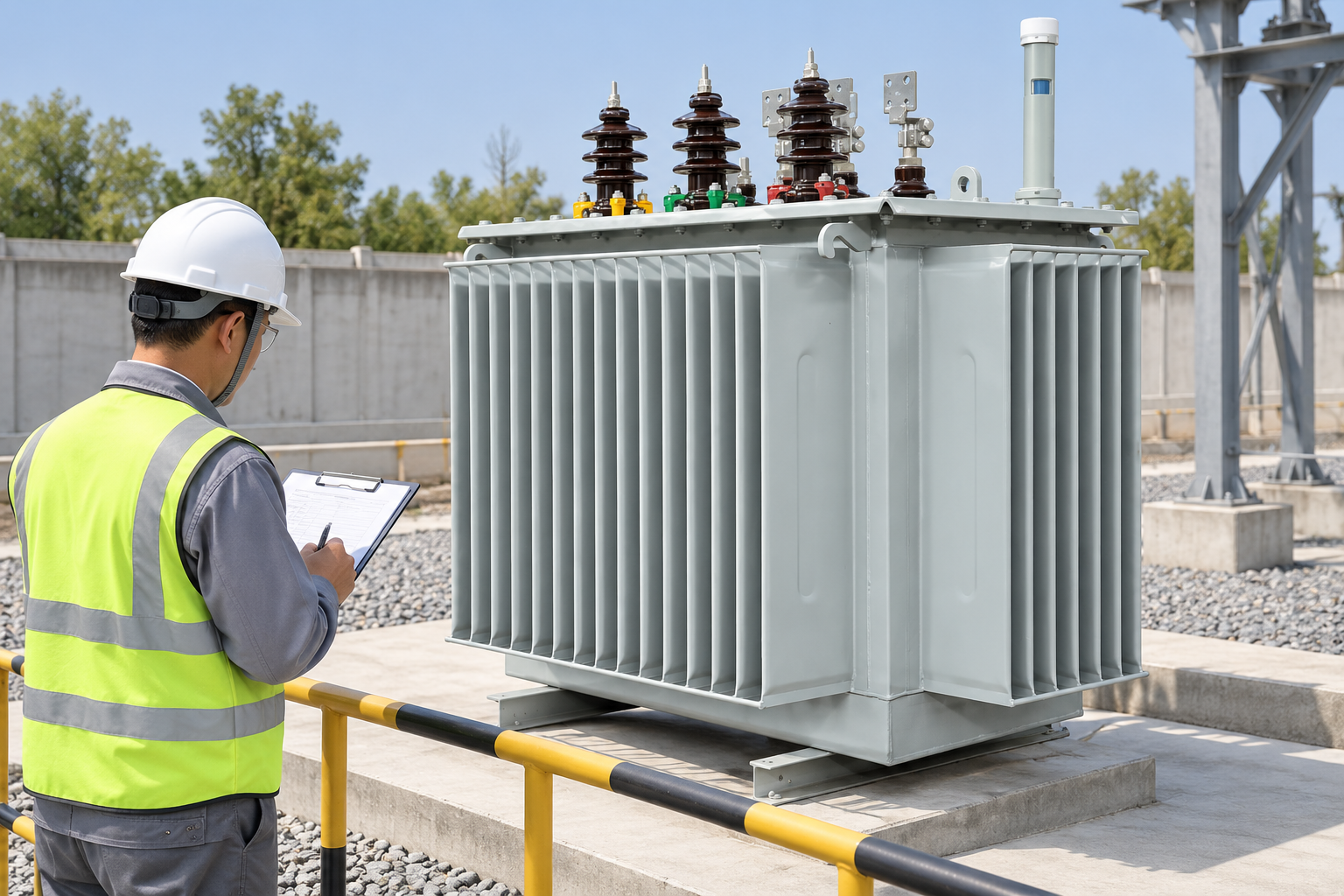
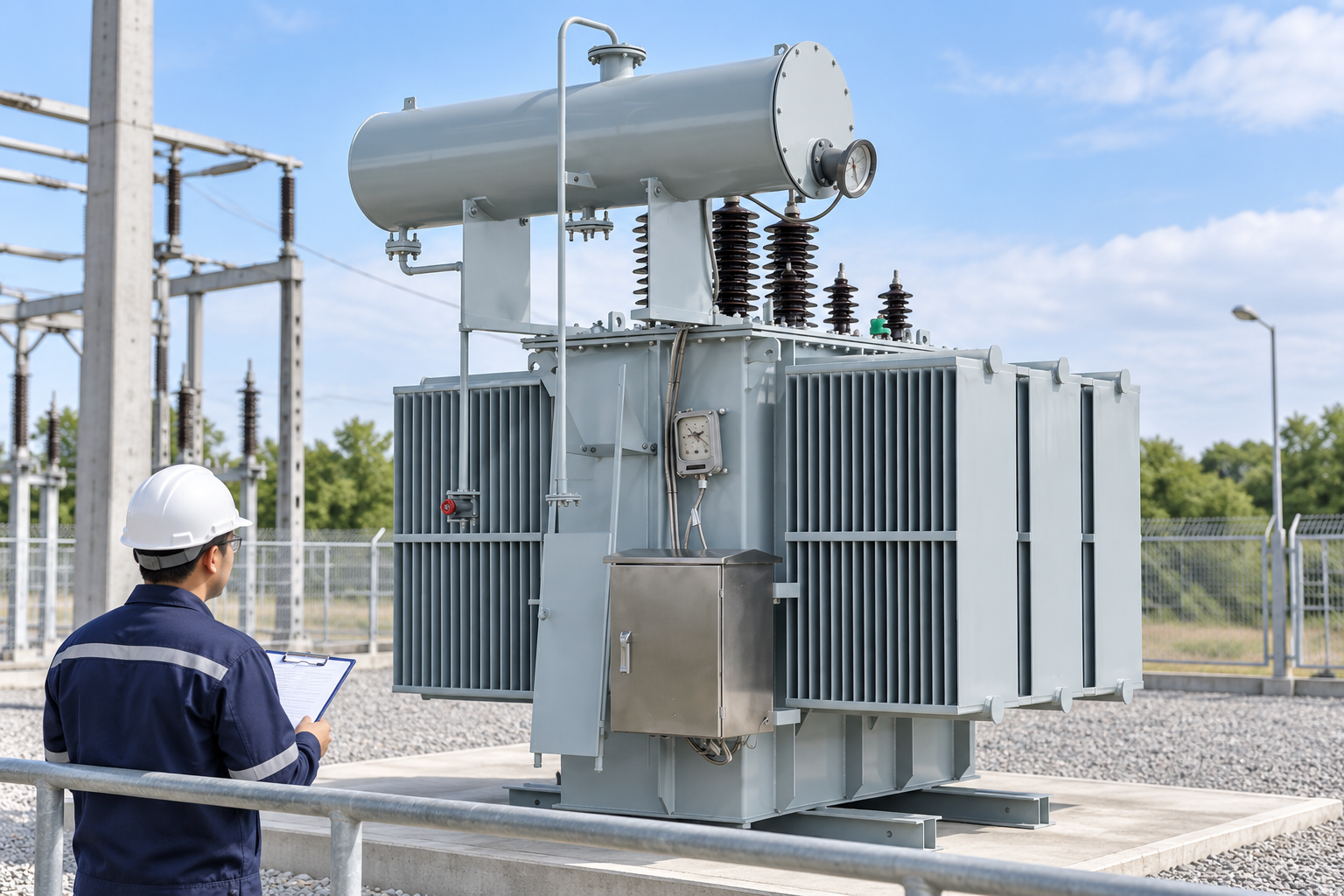
Compare oil-expansion arrangements in the supplied designs
Begin by checking the general arrangement drawing rather than relying on a product name. The sealed distribution-transformer reference used here has a corrugated tank and no separate horizontal conservator. The conservator reference has a distinct cylindrical reservoir above the main tank. These visible differences explain the comparison, but they do not establish identical ratings or interchangeable accessories. Ask the supplier to identify the actual expansion arrangement, filling procedure, permissible transport condition and pressure protection for the offered unit. Do not assume that every sealed transformer uses the same tank construction.
For the sealed design, determine how the specified equipment accommodates oil expansion and contraction through its operating range. Obtain the manufacturer’s requirements for filling, leak inspection, pressure relief and temperature monitoring. A sealed tank reduces routine contact between the insulating liquid and ambient air, but a damaged seal or incorrect filling can undermine that benefit. Inspection should therefore concentrate on the integrity of joints, bushings and fittings, as well as evidence of abnormal pressure or leakage. Opening the tank or adding oil requires the manufacturer’s approved procedure; it is not a routine response to an uncertain level reading.
For a conservator design, establish whether air contacts the oil directly or whether a bladder or diaphragm separates them. Confirm the breather arrangement, oil-level indication and applicable alarm devices from the supplied drawings. A conservator’s presence alone does not prove that a particular gas-actuated relay, moisture-control system or monitoring package is fitted. Level readings also need interpretation against the manufacturer’s temperature reference. Record the ambient and oil temperatures when investigating an unexpected indication, then compare the reading with the approved operating instructions before deciding whether fluid is missing.
Make the procurement comparison under the same site conditions. Consider inspection access, staff capability, environmental exposure, spare parts and the consequences of an outage. Ask both suppliers for their scheduled inspections and abnormal-condition response requirements. Compare those documents alongside losses, insulation levels, impedance and required accessories instead of choosing solely on a sealed-versus-conservator label. A useful acceptance record includes photographs of the actual expansion system, accessory identification, leak inspection results and the correct operating manual. Neither construction removes the need for safe isolation, condition monitoring or project-specific engineering.
Используйте стандарты и подтверждающие их данные от производителя вместе
Стандарты определяют рамки, тесты концепций и терминологии, в то время как документация производителя определяет проверенные эксплуатационные и конструктивные ограничения поставленного оборудования. Стандартный документ не может подтвердить приемлемость несертифицированной модификации, а брошюра не может заменить проектную документацию или правила безопасности.
При закупках необходимо запросить стандартное издание, объем проверки конструкции или типового испытания, протоколы обследований, ограничения по высоте и любую коррекцию для конкретного типа оборудования. Сохранить эти данные в разделе «Продукция». При споре о результатах сравнения необходимо сравнить определения, условия испытаний и границы с целью проверки их точности.
Планирование установки и ввода в эксплуатацию
Installation quality often determines whether a sound design remains sound in the field. Confirm foundations, access, lifting, clearances, ventilation, cable bend radius, earthing, labels and control interfaces before energization. Use the approved method statement and permit system.
Проверка работоспособности должна переходить от проверки документов к визуальному осмотру, механической проверке, электрической непрерывности, функциональной логике, проверке защиты или управления и окончательной восстановлению. Записывайте идентификацию оборудования, настройки, исходные значения, исключения и имя лица, проверившего оборудование. Когда-либо изолируйте оборудование, если проверка или осмотр выявляет опасность.
Контроль за изменениями и передачей полномочий
Изменение кабельного маршрута, настройки реле, положения кнопок, пути охлаждения или подключения к защитному заземлению может изменить исходный проект. Процесс изменения должен осуществляться под контролем владельца, с проведением технического обзора, пересмотра чертежей и подтверждения приемлемости. Временные испытательные устройства должны быть сняты или четко обозначены перед передачей.
Конечный пакет должен включать чертежи объекта, испытательные листы, утвержденные настройки, идентификацию оборудования, инструкции по обслуживанию, отклонения и записи о подготовке. Будущий оператор должен иметь возможность воспроизвести решение без необходимости полагаться на память или немаркированную фотографию.
Безопасность
Электрооборудование может сохранять энергию и получать питание от более чем одного источника. Эта статья не является инструкцией по переключению. Опытному персоналу следует соблюдать местные требования по изоляции, проверке отсутствия напряжения, заземлению и надзору. Никогда не пытайтесь добраться до разряженного помещения или отключать блокировку для проведения измерения.
Если тест не проходит, корпус поврежден, наблюдается аномальный шум или выброс, или фактическая конфигурация неясна, необходимо сохранить систему в безопасном состоянии и обратиться к ответственному инженеру. Повторное включение без диагностики может привести к увеличению повреждений и рисков.
Use the result in procurement
Turn the topic into a clear inquiry package. State the required voltage, current, fault or switching duty, environment, accessories, documents, routine tests, type-test or design-verification evidence, spare parts and service assumptions. Ask suppliers to identify exclusions and site conditions instead of treating a blank row as accepted.
A comparison matrix is useful when each row is marked confirmed, excluded or requiring clarification. Link the matrix to the product drawing and the network or building study. This avoids a late discovery that the quoted equipment uses a different control voltage, enclosure, module or test boundary.
Verify the field configuration
The final installed equipment should match the approved drawing, nameplate, cable interface, control logic and clearances. Record the instrument, date, operating state, method, raw results and restoration check. Photographs should identify the actual asset without exposing sensitive information.
When the field condition differs, keep the item open and obtain engineering disposition. Do not solve a missing prerequisite with a generic catalog value. The record should let a future operator understand what was checked and why the result was accepted.
Maintain an auditable record
Retain the approved calculation or study, supplier evidence, settings, test sheets, deviations, as-built drawing, image record and maintenance instructions together. This is especially important when the equipment is modified, the network topology changes or a new operating mode is introduced.
Review the topic again after a protection change, transformer replacement, control firmware change, cable reroute, room modification or unusual event. A short controlled update is safer than allowing an old assumption to silently become the design basis.
Recheck after change
A technically correct selection can become unsuitable when the source, load, protection setting, cable route, room condition or control mode changes. Compare the change with the original design basis and identify any new duty or interface.
Keep the revised decision, approval, test result and as-built update together. This small discipline prevents a later team from relying on a superseded assumption or an unlabelled field modification.
Close the review loop
Finish by stating the owner, acceptance condition, open exception and next review date. A clear close-out prevents an apparently complete checklist from hiding a missing drawing, test or approval.
Use the final record to train operations and maintenance teams. The result should be understandable to a qualified person who was not present during design or commissioning.
Как использовать результат в проекте
Начните с опубликованного проекта и окончательной идентичности оборудования. Обратите внимание на эксплуатационное состояние, точку измерения, условия окружающей среды и обоснование решения, которое должно быть подтверждено документами. Затем сравните запись с применимым стандартом, инструкцией производителя и планом приемки проекта. Если отсутствует предпосылка, оставьте элемент в открытом состоянии, а не заполните пробел общим значением. Это обеспечит командам по закупкам, вводу в эксплуатацию и эксплуатации единую точку отсчета.
При запросе у поставщика необходимо уточнить основу расчёта, проверенную процедуру, ограничения, результаты испытаний и отклонения. При строительстве необходимо записать имя лица, инструмент, дату, изолированную зону и проверку восстановления. Сжатый отчет более полезен, чем длинный доклад, который скрывает тот факт, который необходим для утверждения следующего шага.
| Проверьте | Доказательства | Использование решения |
|---|---|---|
| Определение | Границы, идентификация оборудования и состояние эксплуатации | Prevents teams comparing different quantities. |
| Основные принципы проектирования | Оценка, окружающая среда и предположения по сфере ответственности | Connects the answer to the installation. |
| Проверка | Одобренный метод, инструмент, исходный результат и основа для принятия решения | Создает поддающийся проверке запис. |
| Контроль за изменениями | Отклонение, отзыв владельца и пересмотр фактического состояния | Прекращение скрытых изменений поля делает их рискованными. |
| Передача | Настройки, испытания, фотографии, техническое обслуживание и исключения | Поддерживает безопасную дальнейшую эксплуатацию. |
Связанные с продуктом и инженерные руководства
Для соответствия контексту продукции Shenheng см. соответствующая страница продукта. По теме в целом читайте инженерный справочник для родителей. Связанная статья: Первая связанная с этим статья и вторая связанная статья.
Источники и стандарты
IEC 60076-1: General transformer requirements and liquid preservation systems · IEC 60076-7: Loading and thermal ageing of mineral-oil-immersed transformers
Видео для контекста системы
This neutral Practical Engineering explainer gives background on substations, transformers and switchgear. It is educational context, not a switching or test instruction.

Часто задаваемые вопросы
Каков первый шаг?
Define the exact sealed vs conservator transformer boundary, equipment identity and operating state before comparing a value or feature.
Может ли страница каталога заменить проектную инженерную подготовку?
Нет. В связанной с ней странице продукта указана соответствующая линейка оборудования Shenheng. Доставленный модель, комплектующие, стандарты и план приемки проекта определяют окончательное решение.
Какие доказательства следует сохранить?
Сохраните утвержденный чертеж, расчет или метод испытаний, исходные измерения, фотографии, данные о инструменте, отклонения, настройки и окончательный отчет о состоянии объекта.
Разрешает ли эта статья работать на дому?
Нет. Опытный персонал должен соблюдать программу электробезопасности на объекте, инструкции производителя и инструкции по изоляции.




