
 Shenheng Power Equipment Co., Ltd.



sealed vs conservator transformer requires a clear engineering boundary before it can support a purchase, inspection or commissioning decision. Sealed transformer versus conservator transformer is a construction and maintenance decision, not a universal ranking. A sealed oil transformer limits atmospheric contact through its tank and pressure arrangement. A conservator transformer uses an expansion vessel and oil-preservation system. Compare moisture control, thermal expansion, protection, dimensions, environment, maintenance and the owner’s service capability.
Sealed and conservator transformer construction
A fully sealed oil transformer separates the oil from atmospheric contact through a sealed tank and pressure arrangement. A conservator transformer provides an expansion volume and breathing or oil-preservation system. The choice affects moisture control, inspection, dimensions, protection and maintenance.
Compare tank design, oil volume, expansion path, pressure relief, temperature indication, bushings, site environment and service procedure. A sealed construction is not automatically maintenance-free, and a conservator arrangement is not automatically unsuitable for outdoor service.
Compare oil-expansion arrangements in the supplied designs
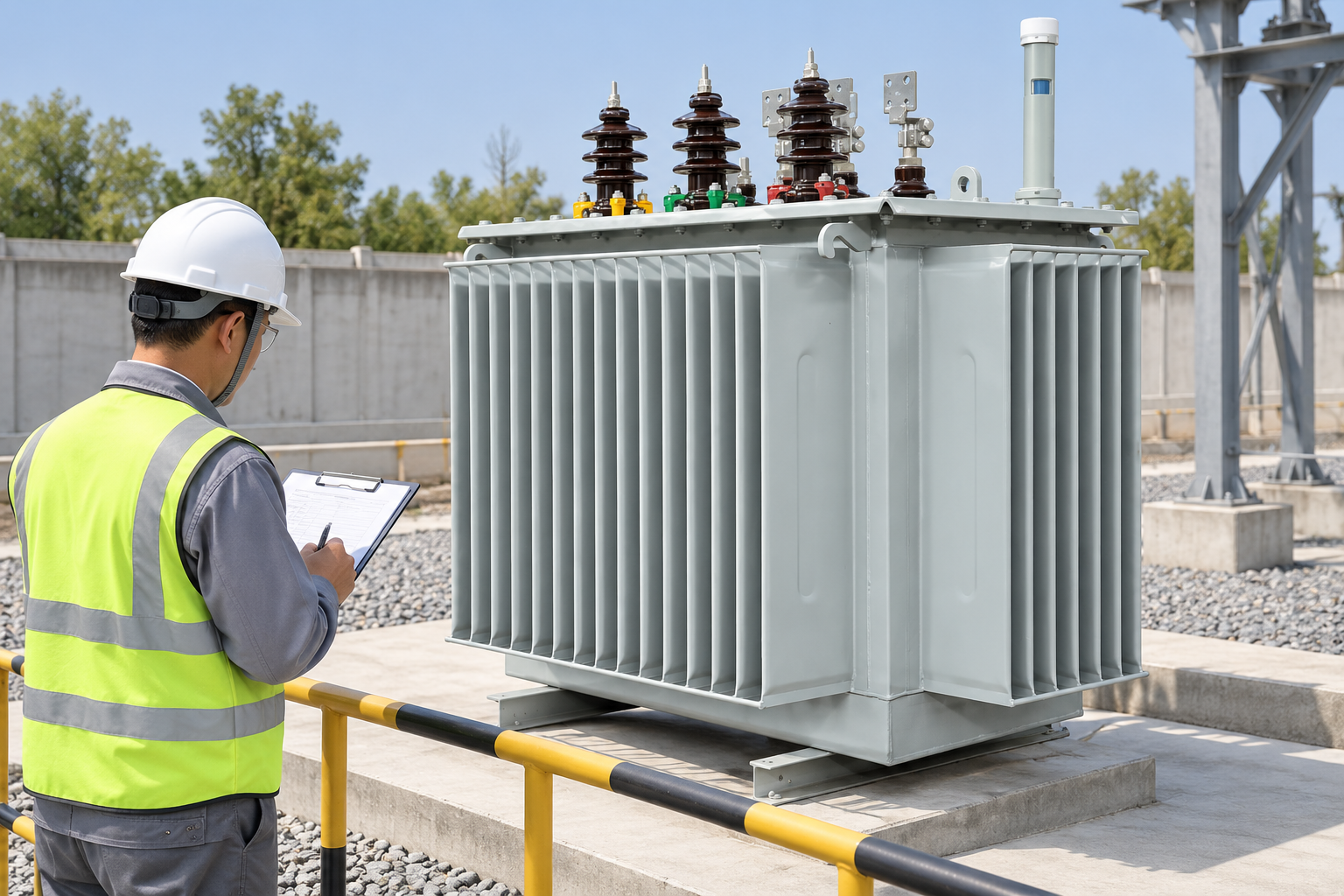
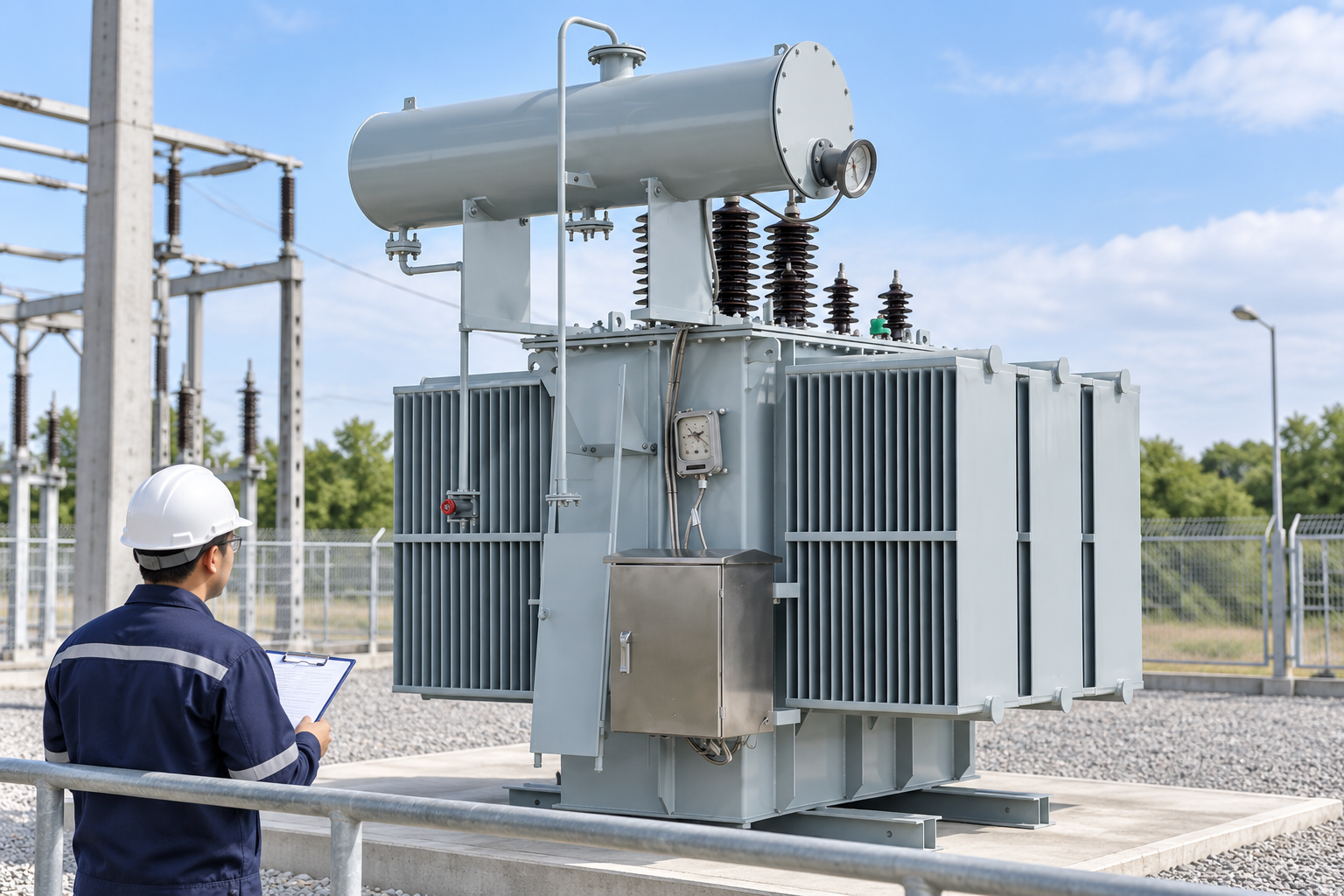
Begin by checking the general arrangement drawing rather than relying on a product name. The sealed distribution-transformer reference used here has a corrugated tank and no separate horizontal conservator. The conservator reference has a distinct cylindrical reservoir above the main tank. These visible differences explain the comparison, but they do not establish identical ratings or interchangeable accessories. Ask the supplier to identify the actual expansion arrangement, filling procedure, permissible transport condition and pressure protection for the offered unit. Do not assume that every sealed transformer uses the same tank construction.
For the sealed design, determine how the specified equipment accommodates oil expansion and contraction through its operating range. Obtain the manufacturer’s requirements for filling, leak inspection, pressure relief and temperature monitoring. A sealed tank reduces routine contact between the insulating liquid and ambient air, but a damaged seal or incorrect filling can undermine that benefit. Inspection should therefore concentrate on the integrity of joints, bushings and fittings, as well as evidence of abnormal pressure or leakage. Opening the tank or adding oil requires the manufacturer’s approved procedure; it is not a routine response to an uncertain level reading.
For a conservator design, establish whether air contacts the oil directly or whether a bladder or diaphragm separates them. Confirm the breather arrangement, oil-level indication and applicable alarm devices from the supplied drawings. A conservator’s presence alone does not prove that a particular gas-actuated relay, moisture-control system or monitoring package is fitted. Level readings also need interpretation against the manufacturer’s temperature reference. Record the ambient and oil temperatures when investigating an unexpected indication, then compare the reading with the approved operating instructions before deciding whether fluid is missing.
Make the procurement comparison under the same site conditions. Consider inspection access, staff capability, environmental exposure, spare parts and the consequences of an outage. Ask both suppliers for their scheduled inspections and abnormal-condition response requirements. Compare those documents alongside losses, insulation levels, impedance and required accessories instead of choosing solely on a sealed-versus-conservator label. A useful acceptance record includes photographs of the actual expansion system, accessory identification, leak inspection results and the correct operating manual. Neither construction removes the need for safe isolation, condition monitoring or project-specific engineering.
Gebruik standaarden en bewijzen van de fabrikant samen
Normen definiëren het kader, testconcepten en terminologie, terwijl fabrikadoppervlakten de geverifieerde constructie- en werkingseigenschappen van de geleverde apparatuur definiëren. Een standaardlink kan niet bewijzen dat een niet-gecontroleerde aanpassing acceptabel is, en een brochure kan geen vervanging zijn voor de projectspecificatie of veiligheidsvoorschriften.
Voor aankopen moet u de standaardversie, de scope voor ontwerpverificatie of typeproeven, routineproefgegevens, installatiegrenzen en eventuele hoogte- of omgevingscorrecties aanvragen. Bewaar de bewijsstukken bij het dossier van het asset. Wanneer een resultaat in twijfel wordt getrokken, moet u de definities, testomstandigheden en grenzen vergelijken voordat u de cijfers vergelijkt.
Plan voor installatie en inbedrijfstelling
Installation quality often determines whether a sound design remains sound in the field. Confirm foundations, access, lifting, clearances, ventilation, cable bend radius, earthing, labels and control interfaces before energization. Use the approved method statement and permit system.
De inbedrijfstelling moet plaatsvinden via visuele inspectie, mechanische werking, elektrische continuïteit, functionele logica, beschermings- of controlesessies en definitieve herstelwerkzaamheden. Noteer de identificatie van het instrument, de instellingen, de ruwe waarden, de uitzonderingen en de persoon die de controle heeft uitgevoerd. Houd de apparatuur afgesloten wanneer een test of inspectie een gevaar oplevert.
Controleveranderingen en overdracht
Een wijziging in de kabelroute, relaisinstelling, aansluitpositie, koelroute of aarding kan de oorspronkelijke ontwerpbasis veranderen. Volg een gecontroleerde wijzigingsprocedure met een eigenaar, technische beoordeling, revisie van de tekeningen en bewijs van acceptatie. Tijdelijke testopstellingen moeten worden verwijderd of duidelijk gemarkeerd voordat de overdracht plaatsvindt.
Het definitieve pakket moet bestaan uit opgeleverde tekeningen, testbladen, goedgekeurde instellingen, identificatie van de apparatuur, onderhoudsinstructies, afwijkingen en opleidingsgegevens. Een toekomstige gebruiker moet in staat zijn om de beslissing te reproduceren zonder gebruik te maken van geheugen of een ongelabelde foto.
Veiligheidsopmerking
Elektrische apparatuur kan energie vasthouden en kan worden aangesloten op meer dan één bron. Dit artikel is geen instructie voor schakelen. Gequalificeerd personeel moet de lokale voorschriften, isolatie, verificatie van het spanningsniveau, aarding en toezicht volgen. Probeer nooit in een aangesloten ruimte te komen of een afstandsbediening los te koppelen om een meting te verrichten.
Als een test mislukt, een behuizing beschadigd is, abnormale geluiden of uitstroming worden waargenomen of de daadwerkelijke configuratie niet duidelijk is, houd het apparaat in een veilige toestand en neem contact op met de verantwoordelijke technicus. Herhaalde inschakeling zonder diagnose kan schade en risico vergroten.
Use the result in procurement
Turn the topic into a clear inquiry package. State the required voltage, current, fault or switching duty, environment, accessories, documents, routine tests, type-test or design-verification evidence, spare parts and service assumptions. Ask suppliers to identify exclusions and site conditions instead of treating a blank row as accepted.
A comparison matrix is useful when each row is marked confirmed, excluded or requiring clarification. Link the matrix to the product drawing and the network or building study. This avoids a late discovery that the quoted equipment uses a different control voltage, enclosure, module or test boundary.
Verify the field configuration
The final installed equipment should match the approved drawing, nameplate, cable interface, control logic and clearances. Record the instrument, date, operating state, method, raw results and restoration check. Photographs should identify the actual asset without exposing sensitive information.
When the field condition differs, keep the item open and obtain engineering disposition. Do not solve a missing prerequisite with a generic catalog value. The record should let a future operator understand what was checked and why the result was accepted.
Maintain an auditable record
Retain the approved calculation or study, supplier evidence, settings, test sheets, deviations, as-built drawing, image record and maintenance instructions together. This is especially important when the equipment is modified, the network topology changes or a new operating mode is introduced.
Review the topic again after a protection change, transformer replacement, control firmware change, cable reroute, room modification or unusual event. A short controlled update is safer than allowing an old assumption to silently become the design basis.
Recheck after change
A technically correct selection can become unsuitable when the source, load, protection setting, cable route, room condition or control mode changes. Compare the change with the original design basis and identify any new duty or interface.
Keep the revised decision, approval, test result and as-built update together. This small discipline prevents a later team from relying on a superseded assumption or an unlabelled field modification.
Close the review loop
Finish by stating the owner, acceptance condition, open exception and next review date. A clear close-out prevents an apparently complete checklist from hiding a missing drawing, test or approval.
Use the final record to train operations and maintenance teams. The result should be understandable to a qualified person who was not present during design or commissioning.
Hoe u het resultaat kunt gebruiken in een project
Start met het vrijgegeven ontwerp en de definitieve uitrustingsidentiteit. Noteer de bedrijfsstatus, meetpunt, omgevingsomstandigheden en de beslissing die de bewijsstukken moeten ondersteunen. Vergelijk vervolgens het record met de toepasselijke standaard, de instructies van de fabrikant en het projectacceptatieplan. Als een voorwaarde ontbreekt, houd het item dan open in plaats van de leemte te vullen met een generieke waarde. Dit geeft de teams voor inkoop, oplevering en bedrijfsvoering hetzelfde referentiepunt.
Voor een leverancieraanvraag moet u de berekeningsgrondslag, de geverifieerde regeling, de grenzen, de testgegevens en de afwijkingen vragen. Voor werkzaamheden op locatie moet u de persoon, het instrument, de datum, de isolatiegrens en de herstelcontrole vastleggen. Een beknopt dossier is nuttiger dan een lange rapportage die de ene vereiste informatie verbergt die nodig is om de volgende stap goed te keuren.
| Controleer | Bevindingen | Besluitgebruik |
|---|---|---|
| Omschrijving | Grens, identificatie van apparatuur en bedrijfsstatus | Prevents teams comparing different quantities. |
| Ontwerpfundament | Beoordelingen, milieu- en dienstverleningseisen | Connects the answer to the installation. |
| Verificatie | Goedgekeurde methode, instrument, ruwe resultaten en acceptatiegrondslag | Creëert een audittabel. |
| Controle van wijzigingen | Afwijking, herziening van eigenaar en revisie van de werkelijke situatie | Het voorkomt dat verborgen veldveranderingen een risico vormen. |
| Overdracht | Instellingen, tests, foto's, onderhoud en uitzonderingen | Staat garant voor een veilige toekomstige werking. |
Gerelateerde product- en engineeringgidsen
Voor de bijpassende Shenheng-productcontext, zie de betreffende productpagina. Voor het bredere onderwerp, lees de ouderlijke technische gids. Verdere lezing: Eerste gerelateerde handleiding en tweede gerelateerde gids.
Bronnen en standaarden
IEC 60076-1: General transformer requirements and liquid preservation systems · IEC 60076-7: Loading and thermal ageing of mineral-oil-immersed transformers
Video voor systeemcontext
This neutral Practical Engineering explainer gives background on substations, transformers and switchgear. It is educational context, not a switching or test instruction.

Veelgestelde vragen
Wat is de eerste stap?
Define the exact sealed vs conservator transformer boundary, equipment identity and operating state before comparing a value or feature.
Kan een cataloguspagina projectengineering vervangen?
Nee. De gekoppelde productpagina identificeert een relevante Shenheng-apparatenfamilie. Het geleverde model, toebehoren, standaarden en projectacceptatieplan vormen de basis voor de definitieve beslissing.
Welke bewijzen moeten worden bewaard?
Bewaar de goedgekeurde tekening, berekening of testmethode, de ruwe metingen, foto's, details van het instrument, afwijkingen, instellingen en de definitieve, opgeleverde documentatie.
Bevat dit artikel toestemming voor live-werk?
Neen. Gequalificeerd personeel moet zich houden aan het elektrische veiligheidsprogramma van de locatie, de isolatiemaatregelen en de instructies van de fabrikant.




