Shenheng Power Equipment Co., Ltd.
- Home
- Products
Products
Since 2001, Shenheng Power has been a trusted manufacturer of power transmission and distribution equipment, delivering reliable electrical solutions globally.
- Solutions
- News & Blog
- Service
- About Us
- Contact Us
Since 2001, Shenheng Power has been a trusted manufacturer of power transmission and distribution equipment, delivering reliable electrical solutions globally.
LV switchgear enclosure panel replacement verification starts with the original assembly design. A spare panel must restore the intended protective functions, not merely cover the opening. Compare its identity, material, dimensions, fixings, ventilation and protective bonding provisions with the approved drawings, then obtain a documented decision on the checks required after installation. A panel with the same outside dimensions can still change access to live parts, airflow or mechanical support. This guide helps owners and procurement teams define the evidence needed for an ordinary maintenance replacement; it does not authorize a field redesign or establish conformity from photographs.
For a Shenheng low voltage distribution cabinet, begin with the actual order number and as-built documentation. A website photograph helps identify the product family, but cannot establish the panel revision, assembly rating or construction hidden behind the door. The framework in our IEC 61439 guide provides the broader assembly context. Here the narrower decision is whether a proposed enclosure part is a documented replacement or a change that needs additional engineering review.
The word panel may mean a removable side cover, a rear cover, a door, a gland plate or a barrier inside a compartment. These parts do different jobs. A side sheet may form an external enclosure boundary, while a gland plate also supports cable entries and their sealing arrangement. An internal barrier can separate compartments even though it is not exposed to the room. Record the exact location before requesting a quotation.
Photograph the installed assembly with the compartment identity visible, under the site’s approved access arrangements. Add drawing references and the reason for replacement: corrosion, impact damage, missing fixings, distortion or an unauthorized opening. Describe observed damage without assuming its cause. A dent following a reported handling incident requires a different investigation from a flat panel removed during routine access.
Confirm what the replacement package includes. A quoted sheet without seals, captive nuts, retaining devices or bonding provisions may be incomplete. Ask the supplier to identify which original accessories transfer and which must be renewed. This avoids accepting a nominally correct metal part with an undefined installation method.
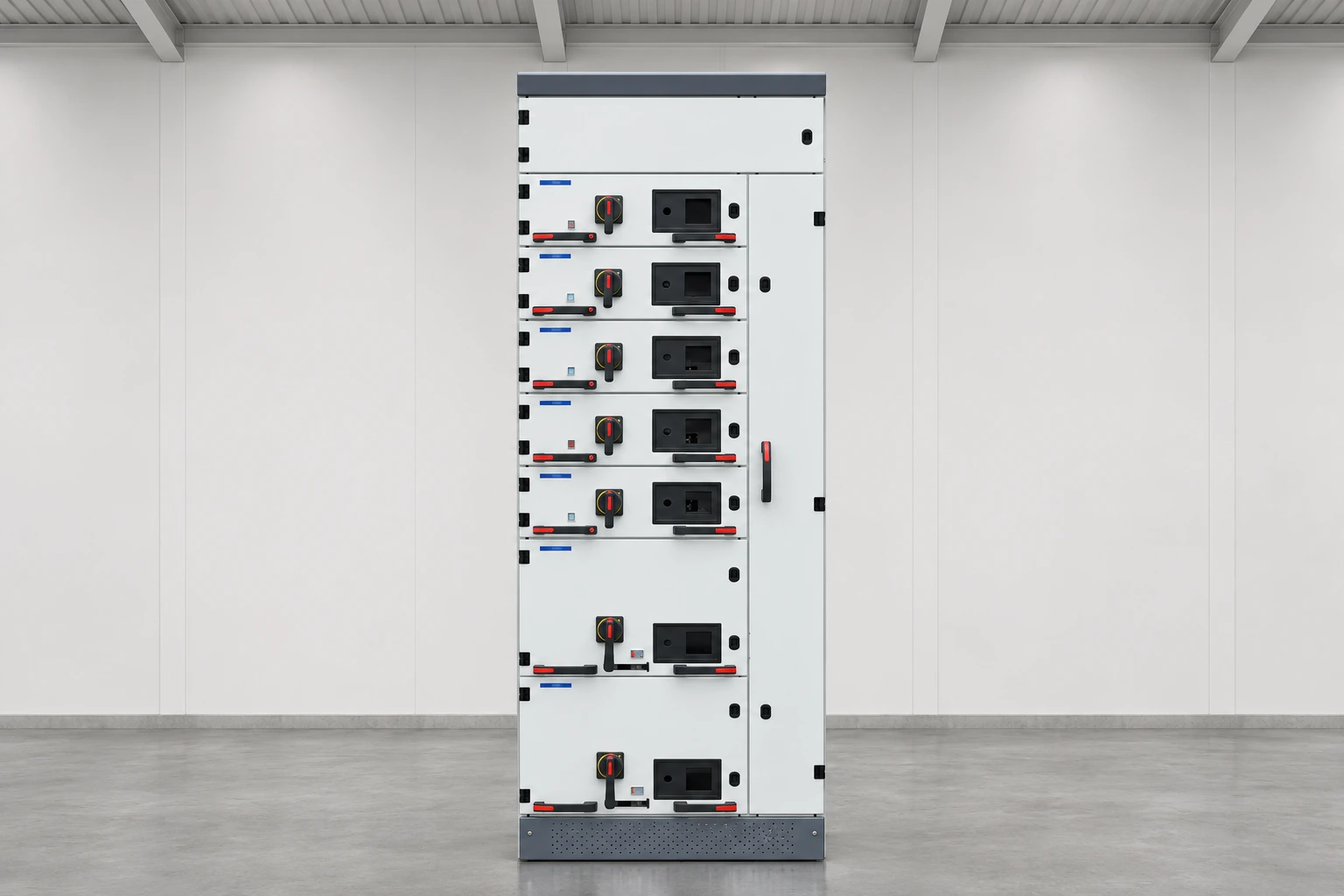
Use the following qualitative review to prepare a request for approval. It is a procurement and maintenance planning checklist, not a substitute for the manufacturer’s acceptance limits. The IEC publication page for IEC 61439-1 identifies construction, service conditions and verification as part of the standard’s scope; the applicable assembly standard and project documents determine the detailed requirements.
| Review area | Evidence to request | Reason to stop and clarify |
|---|---|---|
| Part identity | Assembly serial number, panel part number and revision | Supplier identifies only a cabinet family or nominal size |
| Mechanical construction | Approved material, thickness, folds, mounting points and fasteners | Different bends, unsupported edges or new drilling proposed |
| Access protection | Original overlaps, openings, seals and retaining arrangement | A gap remains or removal changes who can reach live parts |
| Ventilation | Drawing of intended openings and clear air paths | Perforations are added, removed or blocked |
| Protective measures | Required bonding method and approved contact provisions | Paint or changed fixings interrupt an intended conductive path |
| Installation acceptance | Written inspection and test scope, responsible approver | A visual fit alone is offered as complete verification |
The purpose is to make each uncertainty visible before ordering. Do not fill missing evidence with measurements borrowed from a similar cabinet. Different assemblies within one product range may use different internal arrangements, environmental provisions or access restrictions.
A replacement drawing should identify more than width and height. Edge returns, stiffeners, overlaps and fastener positions affect how the panel sits and remains secured. A flatter sheet may look acceptable while leaving the edge unsupported. A different screw arrangement can change service access and the ability to maintain the intended closure after repeated removal.
Ask whether the proposed material and finish are approved for the installed environment. If corrosion triggered replacement, identify whether water entry, coating damage or the surrounding atmosphere also needs attention. Replacing a corroded part without understanding the exposure may leave the same failure mechanism in place. Do not select a different metal or coating simply because it is described as more durable; compatibility with the rest of the enclosure still needs review.
Avoid treating extra sealant as a remedy for poor fit. It can conceal an incorrect overlap, obstruct drainage or make future inspection difficult. Likewise, improvised washers and enlarged holes may compensate for a mismatch while changing the original mounting detail. Record any proposed deviation and obtain a decision before the part reaches the installation stage.
An enclosure opening has several possible functions. It may admit cooling air, provide an approved cable route or give controlled access for maintenance. A replacement must preserve the intended function at that location. More openings are not automatically better ventilation, and a solid replacement is not automatically better protection.
Compare the pattern and location of louvers, perforations and overlaps with the approved part. Check for interference with nearby cable routes and internal components using the actual drawings. When the original arrangement is unclear, ask the assembly manufacturer to identify it rather than using the visible front of another installation as a template.
Our low voltage switchgear IP rating guide explains why an enclosure rating refers to defined construction and conditions. A rating printed on a spare enclosure component does not by itself prove the completed, modified assembly retains its original protection. Keep the verification decision tied to the installed arrangement and the work actually performed.
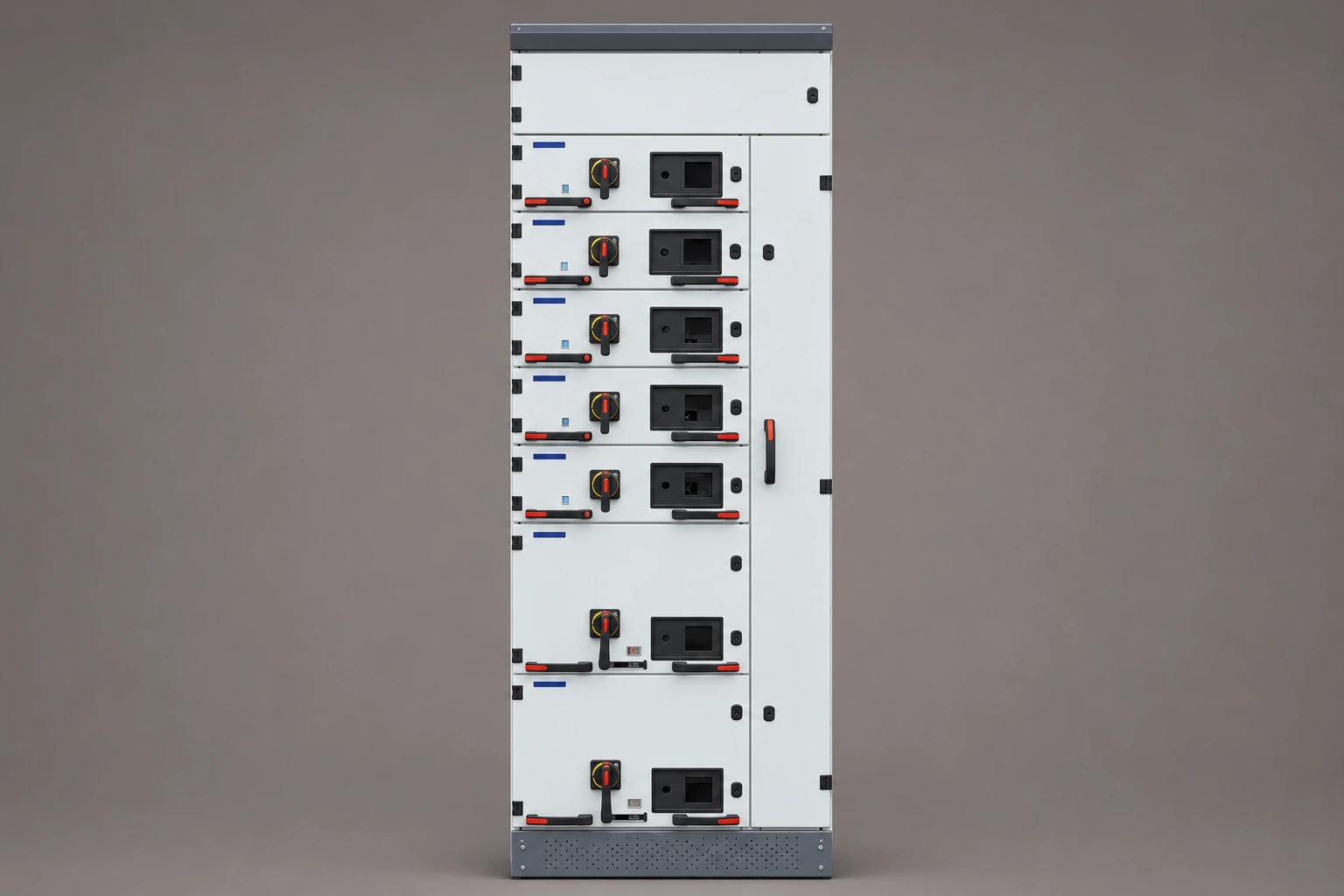
Where the original design requires an electrical connection through a panel, door or dedicated bonding conductor, restore that arrangement using approved components and contact details. Do not assume that any metal-to-metal fixing gives the intended result. Surface treatment, fixing geometry and the original protective scheme all matter.
For a door, consider the hinge, latch and bonding arrangement as related interfaces. The articles on door hinge replacement and door earth bonding strap replacement cover those separate decisions. Replacing a side panel does not automatically require changing those components; inspect only the interfaces affected by the actual work and any associated damage.
A panel may also carry labels or support accessories. Document what must be transferred, including orientation and attachment method. If a proposed replacement moves an indicator or adds a component, treat that as a design question rather than routine sheet-metal work. Keep drilling and accessory mounting outside the work scope until the relevant drawings are approved.
The HSE maintenance guidance emphasizes planned maintenance and competent personnel. For an electrical assembly, the person responsible for the installation must define the safe work boundary and access conditions before panels are removed. This article does not provide an isolation sequence or permission to work near energized parts.
The acceptance plan should name the part, the approved drawing revision, the installation instructions and the person who will review the completed evidence. Include how the team will verify correct seating, complete fixings, intended openings and the restoration of affected protective measures. The manufacturer or responsible engineer should determine any electrical checks and their acceptance criteria.
Separate design evidence from inspection of workmanship. Documentation may establish that a specified part belongs to an approved design, while inspection confirms that the correct part was installed correctly. Neither answers the other question automatically. If the supplier proposes a different arrangement, ask which characteristics require further verification and who accepts responsibility for that conclusion.
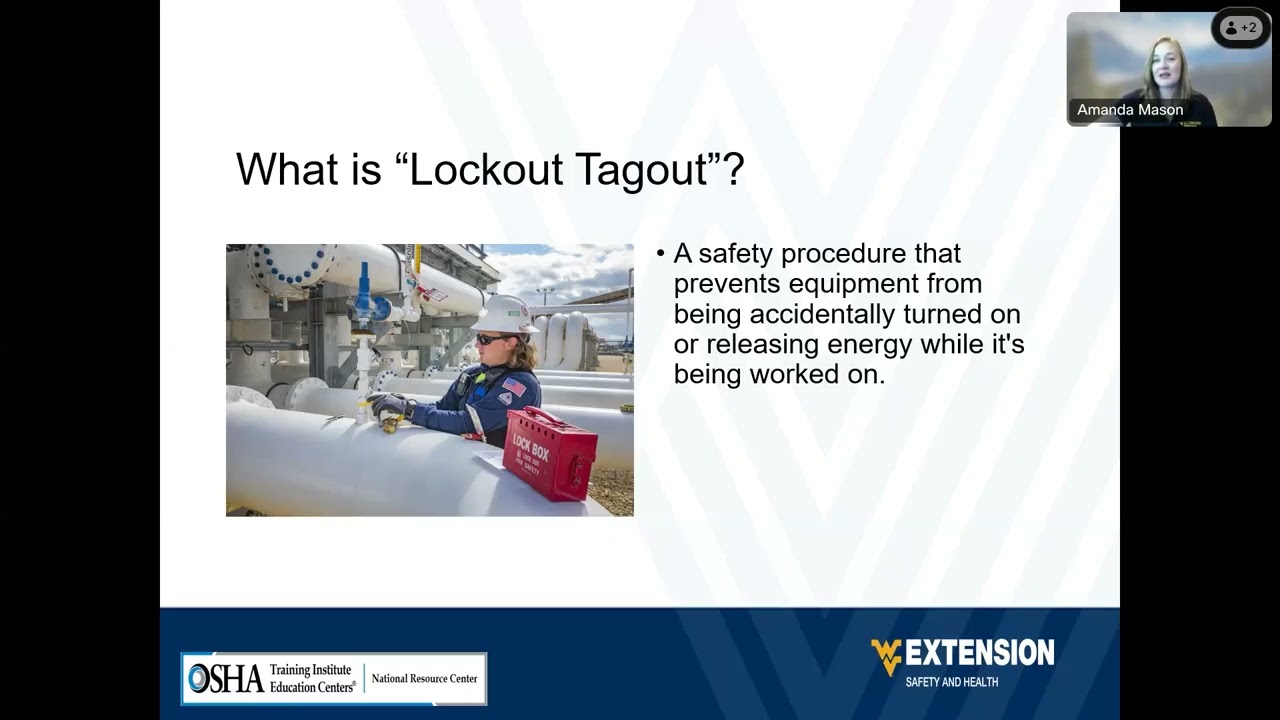
Further learning: Stand Up For Safety and Health – Lockout tagout — USDepartmentofLabor. Open on YouTube.
The video introduces control of hazardous energy before maintenance. It supplements the work-planning discussion and does not establish a cabinet-specific procedure or authorize access to this assembly.
Send one package containing the cabinet identity, affected compartment, original drawing, photographs, damage description and required delivery scope. Ask for a quotation against a named part and revision, including seals and fasteners where applicable. Require the supplier to list exclusions and differences explicitly so a commercial comparison does not hide a technical substitution.
Consider a hypothetical rear-cover replacement after local corrosion. One offer reproduces the documented part and identifies the mounting kit. Another offers a same-size ventilated sheet. The second proposal changes the opening arrangement and therefore needs a separate engineering decision; a lower price or shorter lead time cannot resolve that uncertainty. The useful comparison is the complete approved scope, not just the cost of metalwork.
At receipt, keep the part identification and inspection record together. If the delivered part differs from the approved drawing, quarantine the discrepancy for review instead of modifying it to fit. After installation, retain the final photographs, completed checks, any approved deviations and the release decision with the assembly’s maintenance history. This makes the next replacement easier to evaluate and reduces repeated guesswork.
No. Size is only one interface. The material, folds, fixings, openings, sealing and any bonding provisions must also match the approved requirements. Where the proposal differs, the responsible manufacturer or engineer must define the additional review needed before acceptance.
Only after a documented review of the affected assembly design. Closing ventilation openings can change cooling conditions, while adding openings can affect protection. Do not assume either change is harmless because the panel fits the mounting points.
Use the protective arrangement specified for that assembly and part. A universal answer would ignore differences in construction and protective measures. Confirm the original requirements and the checks needed to demonstrate their restoration after the work.
Keep the assembly identity, approved part and revision, reason for replacement, installation instructions, completed inspection and test evidence, approved deviations and named release decision. Record what was verified and any remaining restrictions so future teams can understand the installed condition.