
 Shenheng Power Equipment Co., Ltd.



sealed vs conservator transformer requires a clear engineering boundary before it can support a purchase, inspection or commissioning decision. Sealed transformer versus conservator transformer is a construction and maintenance decision, not a universal ranking. A sealed oil transformer limits atmospheric contact through its tank and pressure arrangement. A conservator transformer uses an expansion vessel and oil-preservation system. Compare moisture control, thermal expansion, protection, dimensions, environment, maintenance and the owner’s service capability.
Sealed and conservator transformer construction
A fully sealed oil transformer separates the oil from atmospheric contact through a sealed tank and pressure arrangement. A conservator transformer provides an expansion volume and breathing or oil-preservation system. The choice affects moisture control, inspection, dimensions, protection and maintenance.
Compare tank design, oil volume, expansion path, pressure relief, temperature indication, bushings, site environment and service procedure. A sealed construction is not automatically maintenance-free, and a conservator arrangement is not automatically unsuitable for outdoor service.
Compare oil-expansion arrangements in the supplied designs
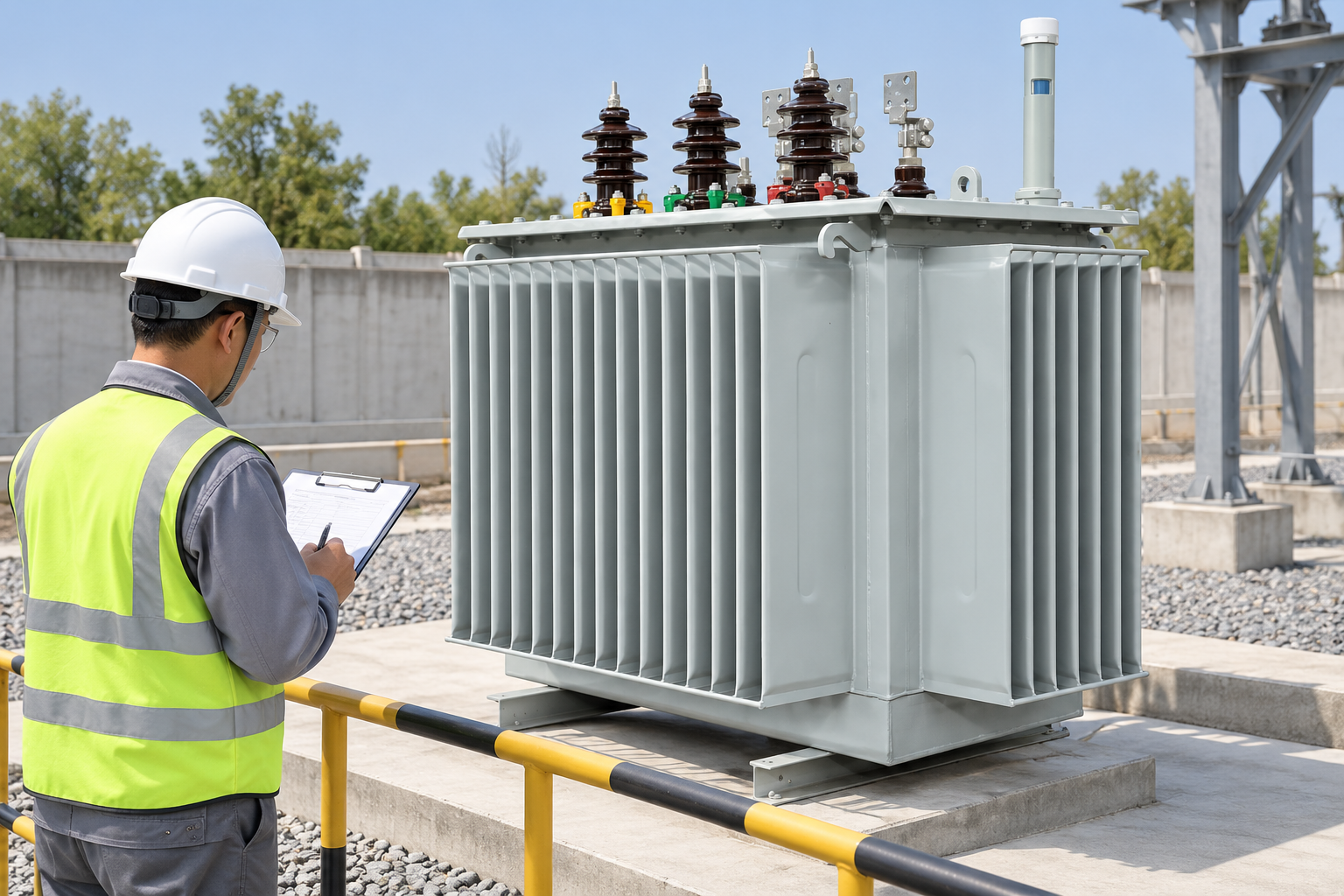
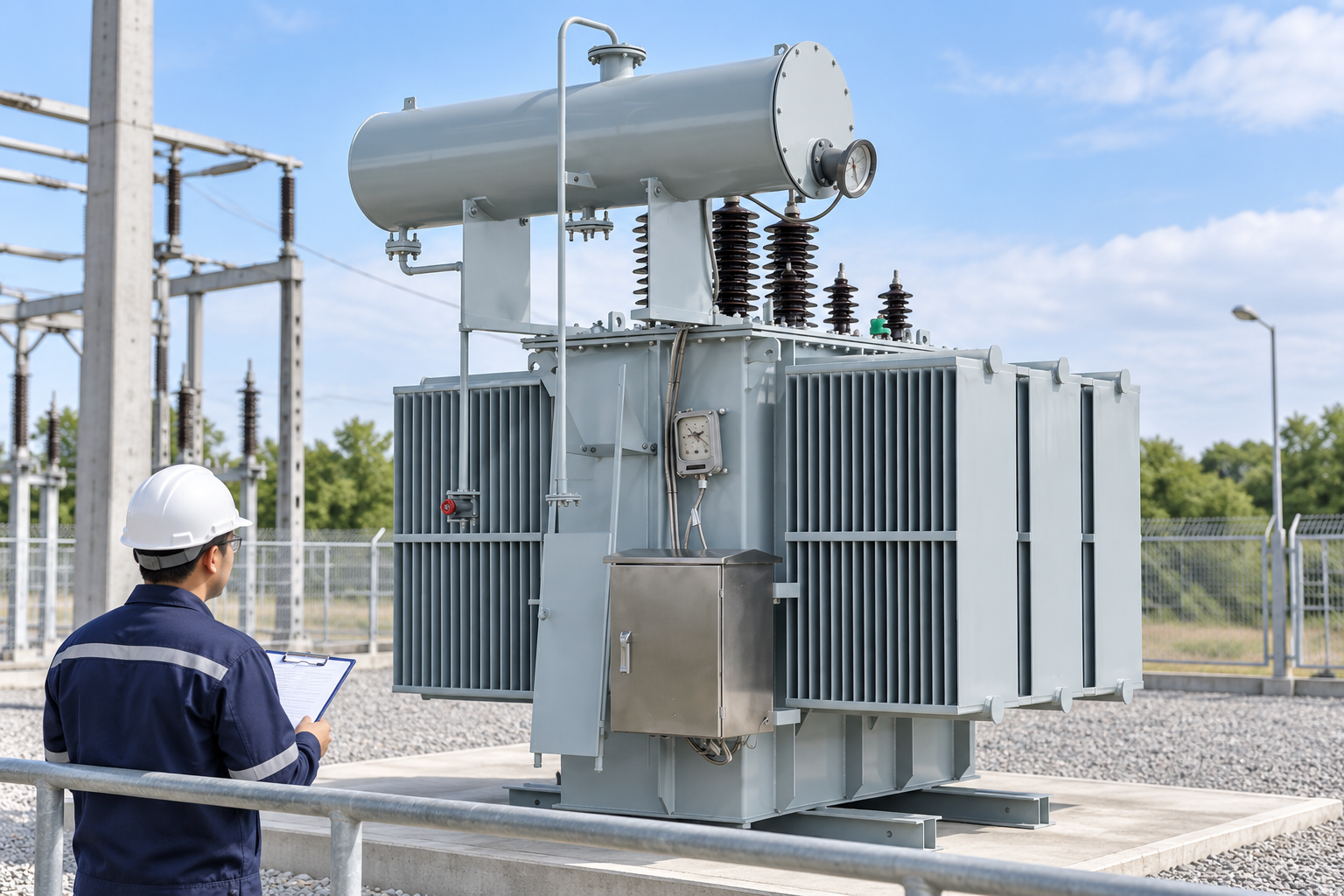
Begin by checking the general arrangement drawing rather than relying on a product name. The sealed distribution-transformer reference used here has a corrugated tank and no separate horizontal conservator. The conservator reference has a distinct cylindrical reservoir above the main tank. These visible differences explain the comparison, but they do not establish identical ratings or interchangeable accessories. Ask the supplier to identify the actual expansion arrangement, filling procedure, permissible transport condition and pressure protection for the offered unit. Do not assume that every sealed transformer uses the same tank construction.
For the sealed design, determine how the specified equipment accommodates oil expansion and contraction through its operating range. Obtain the manufacturer’s requirements for filling, leak inspection, pressure relief and temperature monitoring. A sealed tank reduces routine contact between the insulating liquid and ambient air, but a damaged seal or incorrect filling can undermine that benefit. Inspection should therefore concentrate on the integrity of joints, bushings and fittings, as well as evidence of abnormal pressure or leakage. Opening the tank or adding oil requires the manufacturer’s approved procedure; it is not a routine response to an uncertain level reading.
For a conservator design, establish whether air contacts the oil directly or whether a bladder or diaphragm separates them. Confirm the breather arrangement, oil-level indication and applicable alarm devices from the supplied drawings. A conservator’s presence alone does not prove that a particular gas-actuated relay, moisture-control system or monitoring package is fitted. Level readings also need interpretation against the manufacturer’s temperature reference. Record the ambient and oil temperatures when investigating an unexpected indication, then compare the reading with the approved operating instructions before deciding whether fluid is missing.
Make the procurement comparison under the same site conditions. Consider inspection access, staff capability, environmental exposure, spare parts and the consequences of an outage. Ask both suppliers for their scheduled inspections and abnormal-condition response requirements. Compare those documents alongside losses, insulation levels, impedance and required accessories instead of choosing solely on a sealed-versus-conservator label. A useful acceptance record includes photographs of the actual expansion system, accessory identification, leak inspection results and the correct operating manual. Neither construction removes the need for safe isolation, condition monitoring or project-specific engineering.
Korzystaj z norm i dokumentacji producenta
Normy określają ramy, koncepcje i terminologię testową, podczas gdy dokumenty producenta określają zweryfikowane granice konstrukcyjne i eksploatacyjne dostarczanego sprzętu. Standardowe dokumenty nie mogą udowodnić, że niezweryfikowana zmiana jest dopuszczalna, a broszura nie może zastąpić specyfikacji projektu ani zasad bezpieczeństwa.
W przypadku zamówień należy zwrócić się o standardową wersję, zakres weryfikacji projektu lub badań typu, regularne raporty z testów, ograniczenia dotyczące instalacji oraz wszelkie korekty dotyczące wysokości lub środowiska. Dowody należy przechowywać wraz z dokumentacją dotyczącą zasobu. W przypadku sporu wynikowego należy porównać definicje, warunki testów oraz granice przed porównaniem liczb.
Plan instalacji i uruchomienia
Installation quality often determines whether a sound design remains sound in the field. Confirm foundations, access, lifting, clearances, ventilation, cable bend radius, earthing, labels and control interfaces before energization. Use the approved method statement and permit system.
Przesunięcie procedury uruchamiania z kontroli dokumentów do wizualnej kontroli, działania mechanicznego, ciągłości elektrycznej, logicznej funkcjonalności, testów ochrony lub sterowania oraz końcowego odzyskania stanu urządzenia. Zapisz identyfikację instrumentu, ustawienia, wartości surowe, wyjątki oraz osobę, która przeprowadziła kontrolę. Zabezpiecz urządzenie w czasie wykonywania testów lub kontroli, w których występuje zagrożenie.
Zmiany w kontroli i przekazanie odpowiedzialności
Zmiana trasy kabla, ustawienia przekaźnika, położenia zacisku, drogi chłodzenia lub połączenia uziemienia może zmienić oryginalne założenia projektowe. Wdrożyć należy kontrolowany proces zmiany wraz z udziałem właściciela, przeglądem technicznego, modyfikacją rysunków oraz dokumentami potwierdzającymi przyjęcie zmiany. Przeszkadzające środki testowe muszą zostać usunięte lub wyraźnie oznakowane przed przekazaniem urządzenia.
Ostateczny pakiet powinien zawierać rysunki stanu technicznego, arkusze testowe, zatwierdzone ustawienia, identyfikację sprzętu, instrukcje konserwacji, odchylenia oraz zapisy szkoleń. Przyszły operator powinien być w stanie odtworzyć decyzję bez polegania na pamięci lub nieoznakowanym zdjęciu.
Uwaga bezpieczeństwa
Urządzenia elektryczne mogą przechowywać energię i być zasilane z więcej niż jednego źródła. Niniejszy artykuł nie stanowi instrukcji dotyczącej przerywania zasilania. Wykwalifikowana osoba musi przestrzegać lokalnych przepisów, zasad izolacji, kontroli braku napięcia, uziemienia i wymagań dotyczących nadzoru. Nigdy nie należy sięgać do zasilanego urządzenia ani nie należy blokować mechanizmu blokującego w celu wykonania pomiaru.
Jeśli test zakończy się niepowodzeniem, uszkodzona zostanie obudowa, zaobserwowane zostaną nieprawidłowe sygnały lub wyładowanie, a rzeczywista konfiguracja nie jest jasna – należy utrzymać urządzenie w bezpiecznym stanie i zgłosić to odpowiedzialnemu inżynierowi. Ponowne uruchomienie bez diagnozy może zwiększyć ryzyko uszkodzenia.
Use the result in procurement
Turn the topic into a clear inquiry package. State the required voltage, current, fault or switching duty, environment, accessories, documents, routine tests, type-test or design-verification evidence, spare parts and service assumptions. Ask suppliers to identify exclusions and site conditions instead of treating a blank row as accepted.
A comparison matrix is useful when each row is marked confirmed, excluded or requiring clarification. Link the matrix to the product drawing and the network or building study. This avoids a late discovery that the quoted equipment uses a different control voltage, enclosure, module or test boundary.
Verify the field configuration
The final installed equipment should match the approved drawing, nameplate, cable interface, control logic and clearances. Record the instrument, date, operating state, method, raw results and restoration check. Photographs should identify the actual asset without exposing sensitive information.
When the field condition differs, keep the item open and obtain engineering disposition. Do not solve a missing prerequisite with a generic catalog value. The record should let a future operator understand what was checked and why the result was accepted.
Maintain an auditable record
Retain the approved calculation or study, supplier evidence, settings, test sheets, deviations, as-built drawing, image record and maintenance instructions together. This is especially important when the equipment is modified, the network topology changes or a new operating mode is introduced.
Review the topic again after a protection change, transformer replacement, control firmware change, cable reroute, room modification or unusual event. A short controlled update is safer than allowing an old assumption to silently become the design basis.
Recheck after change
A technically correct selection can become unsuitable when the source, load, protection setting, cable route, room condition or control mode changes. Compare the change with the original design basis and identify any new duty or interface.
Keep the revised decision, approval, test result and as-built update together. This small discipline prevents a later team from relying on a superseded assumption or an unlabelled field modification.
Close the review loop
Finish by stating the owner, acceptance condition, open exception and next review date. A clear close-out prevents an apparently complete checklist from hiding a missing drawing, test or approval.
Use the final record to train operations and maintenance teams. The result should be understandable to a qualified person who was not present during design or commissioning.
Jak wykorzystać wynik w projekcie
Rozpocznij od opracowanego projektu i końcowej identyfikacji wyposażenia. Zwróć uwagę na stan eksploatacji, punkt pomiarowy, warunki środowiskowe oraz uzasadnienie decyzji, na której podstawie dokumentacja ta została opracowana. Następnie porównaj zapis z odpowiednimi standardami, instrukcjami producenta oraz planem akceptacji projektu. Jeśli warunek wstępny nie jest spełniony, zachowaj dokumentację w stanie otwartym, zamiast uzupełniać luki za pomocą ogólnych wartości. Dzięki temu zespoły ds. zamówień, uruchomienia i eksploatacji mają ten sam punkt odniesienia.
W przypadku zapytania od dostawcy należy poprosić o podanie podstawy obliczeń, sprawdzonego układu, ograniczeń, dokumentów testowych oraz odchyleń. W przypadku prac na placu budowy należy zanotować osobę, instrument, datę, granicę izolacji oraz kontrolę przywracania jej stanu. Krótki zapis jest bardziej przydatny niż długie sprawozdanie, które ukrywa fakt niezbędny do zatwierdzenia kolejnego etapu.
| Sprawdź | Dowody | Wykorzystanie decyzji |
|---|---|---|
| Definicja | Granica, identyfikacja sprzętu i stan eksploatacji | Prevents teams comparing different quantities. |
| Podstawa projektowa | Oceny, środowisko i założenia dotyczące obowiązków | Connects the answer to the installation. |
| Weryfikacja | Zatwierdzona metoda, instrument, wynik surowy oraz podstawy akceptacji | Tworzy rejestr podlegający kontroli. |
| Kontrola zmian | Odchylenie, przegląd właściciela oraz wersja gotowa | Przerwy w ukrytych zmianach pól czynią je ryzykowymi. |
| Przekazanie | Ustawienia, testy, zdjęcia, konserwacja i wyjątki | Wspiera bezpieczną pracę w przyszłości. |
Linki do produktów i poradników technicznych
Więcej informacji na temat dopasowania produktu Shenheng można znaleźć w dotycząca strony produktu. W sprawie szerszej tematyki, przeczytaj instrukcja rodzicielska. Literatura do zapoznania się: Pierwsze powiązane przewodniki i drugi odpowiedni przewodnik.
Źródła i standardy
IEC 60076-1: General transformer requirements and liquid preservation systems · IEC 60076-7: Loading and thermal ageing of mineral-oil-immersed transformers
Wideo dla kontekstu systemowego
This neutral Practical Engineering explainer gives background on substations, transformers and switchgear. It is educational context, not a switching or test instruction.

Często zadawane pytania
Jaki jest pierwszy krok?
Define the exact sealed vs conservator transformer boundary, equipment identity and operating state before comparing a value or feature.
Czy strona katalogowa może zastąpić inżynierię projektową?
Nie. Podana strona produktu wskazuje na odpowiednią rodzinę urządzeń Shenheng. Dostarczany model, akcesoria oraz standardy oraz plan akceptacji projektu stanowią podstawę dla ostatecznej decyzji.
Jakie dowody należy zachować?
Zachować zatwierdzony rysunek, obliczenie lub metodę badań, dane pomiarowe, fotografie, dane techniczne instrumentu, odchylenia, ustawienia i ostateczny dokument techniczny.
Czy ten artykuł zezwala na pracę na żywo?
Nie. Wykwalifikowany personel musi przestrzegać programu bezpieczeństwa elektrycznego na placu budowy, a także instrukcji producenta.




