Shenheng Power Equipment Co., Ltd.
- Home
- Products
Products
Since 2001, Shenheng Power has been a trusted manufacturer of power transmission and distribution equipment, delivering reliable electrical solutions globally.
- Solutions
- News & Blog
- Service
- About Us
- Contact Us
Since 2001, Shenheng Power has been a trusted manufacturer of power transmission and distribution equipment, delivering reliable electrical solutions globally.
Project engineers preparing an 11kV breaker package for an incoming feeder, tie breaker, or transformer protection position need a short specification sequence before vendors interpret duty differently.
This checklist translates common MV breaker gaps into reviewable fields — interrupting duty, insulation coordination, mechanism requirements, and protection interfaces. Use it with your fault study and single-line diagram; it is not a replacement for relay coordination sign-off.
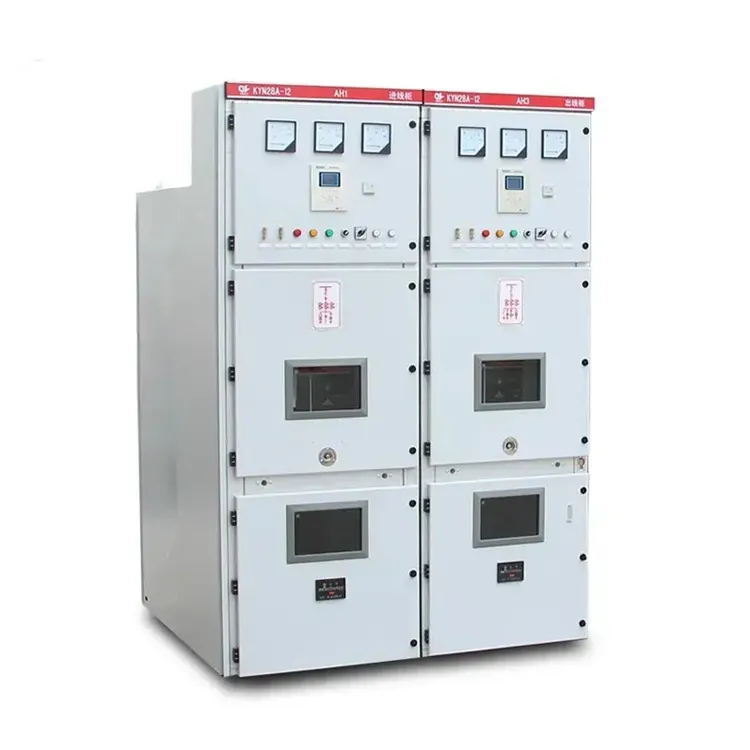
An RFQ that lists “11kV vacuum breaker” without prospective fault current, TRV class, or operating sequence invites unequal interpretations. One vendor sizes for symmetrical duty only; another includes motor-operated racking and auxiliary contacts that the protection scheme never defined.
Writing the checklist early gives protection, civil, and operations the same reference while cubicle layouts are still flexible. It also reduces late changes when the utility requests additional interlocking or metering CT classes.
Background on breaker selection within switchgear appears in the 11kV vacuum circuit breaker selection guide and vacuum circuit breaker testing basics.
| Field | Why it must appear on the 11kV breaker spec | Typical source |
|---|---|---|
| Rated voltage / insulation level | Sets clearance and BIL coordination | Single-line diagram |
| Rated continuous current | Thermal design of contacts and bus | Load study |
| Short-circuit breaking current (sym/asym) | Interrupting capability | Fault study |
| Making capacity | Closing onto faults | Fault study |
| Operating duty class (O-0.3s-CO etc.) | Type-test alignment | Protection engineer |
| TRV parameters | Transient recovery voltage margin | Consultant note |
| Mechanism type (spring, permanent magnet) | Maintenance and auxiliary power | Operations |
| Auxiliary contact count | Interlocking and SCADA mapping | Relay scheme |
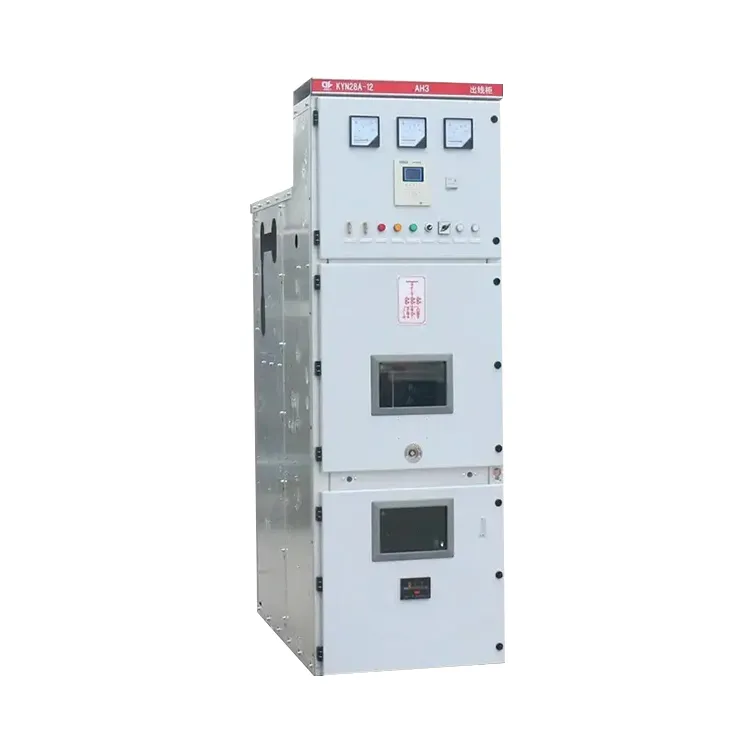
Important: Interrupting duty must match the approved fault study X/R ratio and operating sequence; applying a generic kA rating without duty class alignment violates the type-test basis described in IEC 62271-100.
Record altitude, pollution degree, and indoor/outdoor enclosure requirements at the same revision so mechanism heaters and insulation gaps are not added as variations.
Indoor metal-clad panels with withdrawable VCBs dominate commercial substations and industrial MV rooms where interlocking and arc mitigation classes are specified. Outdoor breaker installations appear in utility extensions and padmount schemes where enclosure rating and clearance for live work drive the design.
Compare panel-based versus standalone breaker needs against the medium voltage switchgear explained article when the project mixes incoming and feeder functions in one lineup.
Corrosive or high-altitude sites may require derated insulation or upgraded heaters on the mechanism — state those conditions explicitly rather than relying on “standard outdoor service.”
| Document / item | Purpose | When to request |
|---|---|---|
| Type test certificate summary | Proves interrupting and making duty | Before award |
| Single-line and auxiliary diagram | Interlock and CT mapping | Design freeze |
| Mechanism timing chart | Protection coordination inputs | Relay design |
| FAT witness points | Closing, opening, anti-pump checks | Purchase order |
| Nameplate data template | As-built records | Before shipment |
| Spare contactor / vacuum bottle list | Outage planning | Contract negotiation |
| O&M manual | Mechanism lubrication and intervals | Handover |
Include the operating sequence and any bus transfer logic so factory wiring matches the relay philosophy.
Verify racking interlocks, earthing switches, and door interlocks against the approved sequence before energization. Measure mechanism charging time, contact gap, and timing tests against manufacturer tolerances.
Maintenance access for vacuum bottle inspection, mechanism lubrication, and auxiliary contact replacement should be designed into the aisle layout — cramped rooms turn routine inspections into planned outages.
Coordinate SCADA feedback for breaker position, spring charged status, and trip coil monitoring during commissioning so operators inherit a usable HMI baseline.
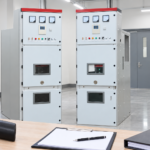
For many 11kV feeder applications integrated in a metal-clad lineup, start review with Shenheng Power’s KYN28-12 medium voltage switchgear with VCB options catalog scope on the product page.
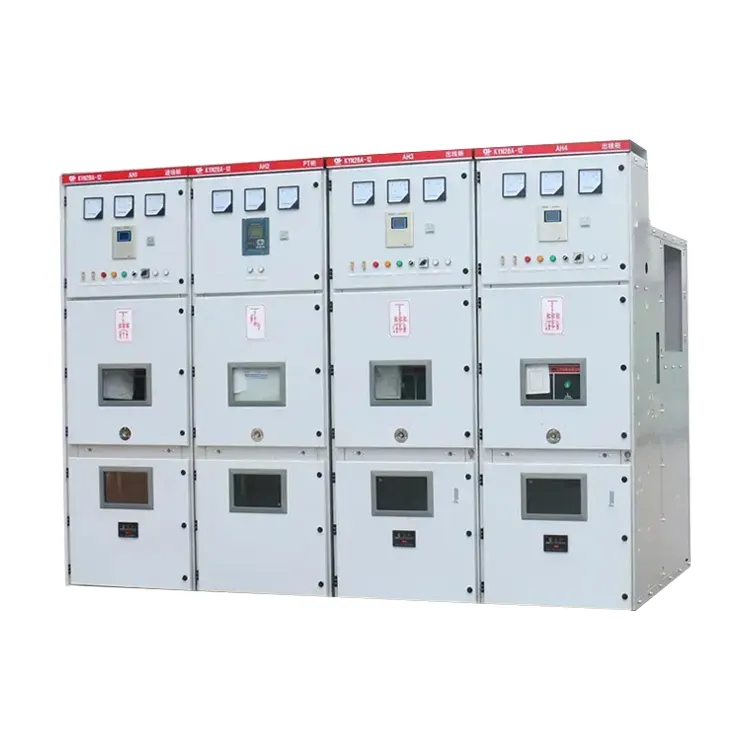
Scope limits: This path supports typical 12kV-class indoor distribution boards documented on the product page. It is not a substitute for project-specific studies when outdoor standalone breakers, generator duty, or national utility type tests outside published scope are required.
If the study points to ring-main or outdoor RMU architecture instead, review the ring main unit selection guide and contact Shenheng Power engineering with the fault study inputs.
Rated voltage, insulation level, and the short-circuit breaking current taken from the approved fault study at the breaker location.
Duty class defines the opening/closing sequence used during type tests; mismatch can invalidate the selected breaker for reclosing or rapid auto-reclose schemes.
Witness closing, opening, anti-pump, and interlock tests when the purchase order includes critical feeders or utility interface points.
Timing charts, auxiliary contact layouts, and trip coil ratings for relay coordination and SCADA mapping.
Utility padmount layouts, standalone tie points, or schemes that do not require a full metal-clad lineup may favor outdoor breaker assemblies.
Type test summaries, wiring diagrams, timing records, nameplate data, O&M manuals, and spare parts lists aligned to the purchase-order revision.