شركة شنغهنغ لعدات الطاقة المحدودة.



transient recovery voltage circuit breaker requires a clear engineering boundary before it can support a purchase, inspection or commissioning decision. Transient recovery voltage, or TRV, is the voltage that appears across a circuit breaker’s terminals after current interruption. The breaker must regain dielectric strength faster than the recovery voltage rises. TRV depends on the network, source, transformer, cable, fault location, earthing and interruption instant, so a breaker selection cannot rely on normal voltage and short-circuit RMS current alone.
Define TRV and recovery duty
TRV is a time-varying recovery voltage after the arc is extinguished. Peak value, rate of rise and the relevant fault type all matter. The breaker’s dielectric recovery and tested duty must be compatible with the system transient.
Keep the voltage class, fault current, network topology, power factor or time constant, fault location, source contribution and clearing sequence visible in the study. Do not compare a TRV peak with a breaker RMS current rating.
Review the network source and fault path
Transformer leakage, cable capacitance, busbar geometry, line length, grounding and source strength shape the transient. Short-line, terminal, transformer and bus faults can produce different stresses.
Ask the system engineer for the worst credible fault at each breaker terminal. Re-check after a transformer, cable, capacitor, generator or earthing change. A value from a neighboring feeder is not evidence for this breaker.
Match the breaker and assembly evidence
The interrupter, contact gap, insulation, grading, truck, primary disconnects, shutters and enclosure form the tested arrangement. A standalone breaker test does not validate a modified cubicle.
Request the relevant design verification or type-test scope and compare rated voltage, short-circuit duty, operating sequence and TRV envelope. Keep the approved drawings and routine tests with the asset file.
Coordinate protection and interruption time
Relay detection, CT performance, breaker opening time and arc duration affect the transient and the thermal or mechanical duty. A protection change can alter the interruption point and the stress seen by the breaker.
Record settings, CT data, breaker operating time and backup clearing. Confirm the breaker can perform the required sequence without relying on an unverified emergency delay or a forced interlock bypass.
Consider mitigation carefully
Surge arresters, pre-insertion devices, controlled switching or network changes can influence transients, but each option has its own design and maintenance limits. Do not add a device simply because a waveform looks alarming.
Compare the mitigation with the system study, insulation coordination, space, control logic and verified assembly. Obtain an approved design change and test plan before installation.
Verify with tests and records
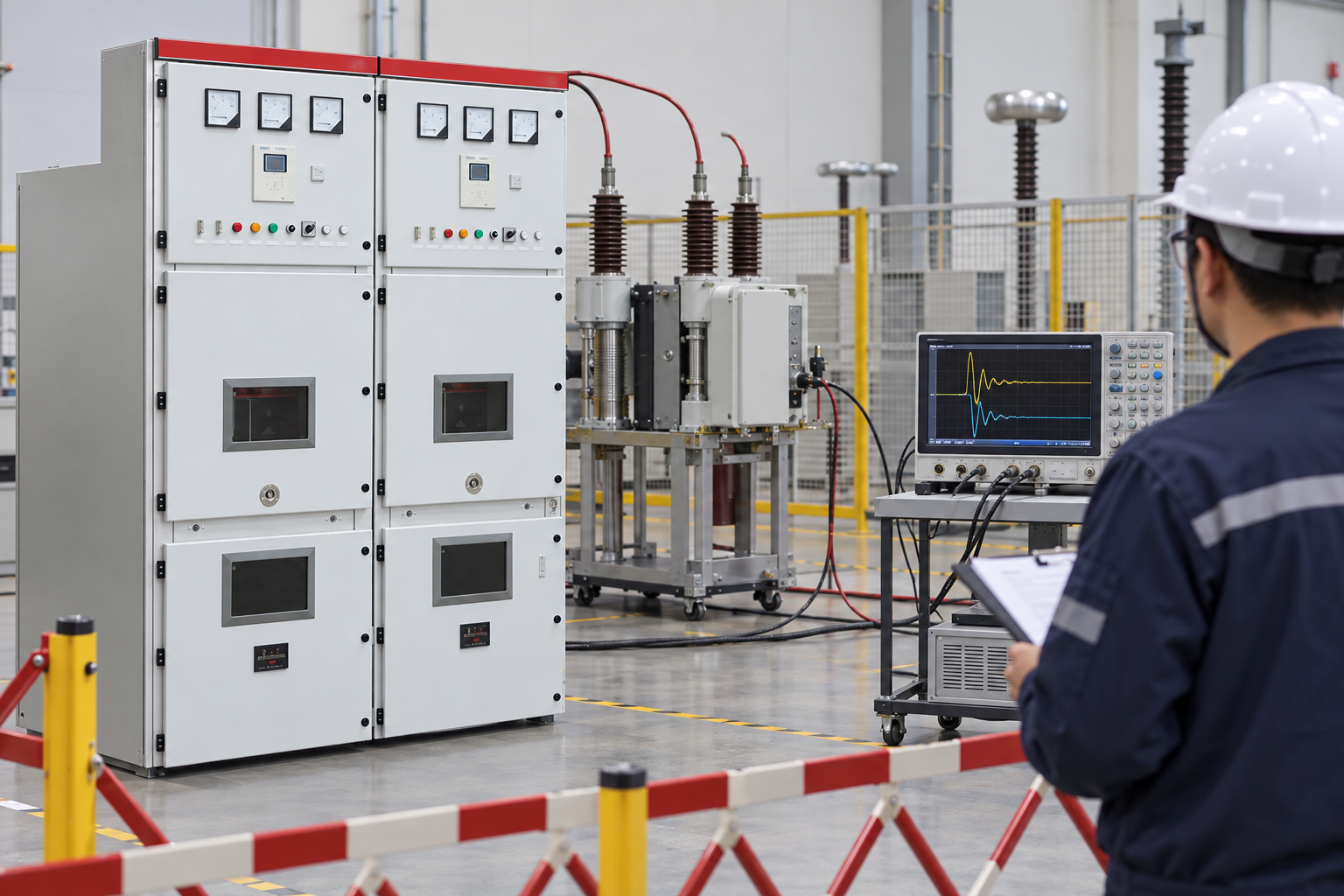
Commissioning should confirm breaker timing, mechanism, interlocks, position feedback, protection logic and the intended test boundary. A field waveform is useful only when instrument bandwidth, wiring and test method are documented.
Retain raw records, instrument details, settings, fault-study revision, deviations and final as-built drawings. Revisit TRV when the network or breaker arrangement changes.
Separate interruption current from recovery-voltage duty
A circuit breaker’s short-circuit current rating and its recovery-voltage duty describe different stresses. After current interruption, the voltage appearing across the opening contacts depends on the connected network and the interrupted fault. The breaker must recover its insulating capability while that voltage develops. A satisfactory current rating therefore does not automatically establish suitability for every transient recovery voltage condition. Begin the review with the actual circuit arrangement and the manufacturer’s assessed duties rather than treating the maximum fault-current figure as the only acceptance criterion.
Define the fault locations and operating configurations that the study must cover. A transformer-limited fault, a fault near the breaker and other network conditions can present different recovery-voltage characteristics. Record which sources, cables, transformers, reactors and grounding arrangements are in service for each case. Avoid assuming that the configuration producing the highest fault current also produces the most demanding recovery-voltage waveform. The engineer’s study should explain which cases govern and how they compare with the applicable breaker capability and test evidence.
Review the waveform characteristics specified by the applicable standard and equipment evidence, including the voltage development over time. Do not invent a universal acceptable rate of rise or apply a numerical limit from a different voltage class. Obtain the relevant manufacturer’s data and the project study assumptions. If a simulation is used, retain the model boundaries, input data and sensitivity review so the result can be reproduced. Cable length, transformer parameters or added equipment may change the modeled response; a later network modification can therefore require another review even if the installed breaker has not changed.
Mitigation should address the identified cause and be checked against the complete system. Adding a surge arrester or capacitor without an engineering assessment can introduce different stresses or fail to address the governing duty. If the study indicates that the specified breaker capability is inadequate, obtain a manufacturer-supported solution and revise the design documentation before acceptance. Keep the protection settings, interruption timing assumptions, network study and breaker evidence together. This review is a specification and coordination task; it does not authorize field personnel to create faults or conduct unapproved switching experiments to test the conclusion.
استخدام المعايير والأدلة الصادرة من المصنع معًا
تحدد المعايير الإطار والنظريات والمصطلحات الاختبارية، بينما تحدد وثائق المصنع حدود البناء والتشغيل المعتمدة للمعدات المقدمة. ولا يمكن لروابط معيارية أن تثبت أن تعديلات غير معتمدة مقبولة، كما لا يمكن لكتيبات المبيعات أن تحل محل مواصفات المشروع أو قواعد السلامة.
في حالة الشراء، يرجى طلب نطاق الاختبارات القياسية أو اختبار التصميم أو اختبارات النوع، وسجلات الاختبارات الروتينية، وحدود التركيب، وأي تصحيحات تتعلق بالارتفاع أو البيئة. قم بتخزين الأدلة مع سجلات الأصول. عند مناقشة نتائج الاختبار، قم بمقارنة التعاريف وشروط الاختبارات والحدود قبل مقارنة الأرقام.
تخطيط التثبيت والتسليم
تحدد جودة التركيب غالبًا ما إذا بقي التصميم الصوتي سليماً في الموقع. تأكد من أسس التركيب والوصول إليه ورفع الأثقال والمسافات الحرجة والتهوية ومسافة الانحناء للأسلاك والأسلاك الكهربائية واللواصقات ومنافذ التحكم قبل بدء التشغيل. استخدم بيان الطريقة المعتمد ونظام التصاريح. ولا يشكل وجود خزانة نظيفة دليلاً على أن كل رابط أو رابطة أو مستشعر متصل بشكل صحيح.
ينبغي أن يتجاوز تشغيل الجهاز فحص الوثائق إلى الفحص البصري، والتشغيل الميكانيكي، واستمرار التيار الكهربائي، والمنطق الوظيفي، واختبارات الحماية أو التحكم، والاستعادة النهائية. يجب تسجيل هوية الجهاز وإعداداته والقيم الخام واستثناءاته، وكذلك هوية الشخص الذي أجرى الاختبار أو الفحص. يجب عزل المعدات عند تعرضها لأي خطر أثناء الاختبار أو الفحص.
تحويل السلطة والتسليم
قد يؤدي تغيير مسار الكابل أو إعداد الترددات أو موضع الفتحة أو مسار التبريد أو وصلة الأرض إلى تغيير الأساس التصميمي الأصلي. استخدم عملية تغيير محكومة مع مالك المشروع، واستعرضها، وراجعها، واعتمدها. يجب إزالة الترتيبات الاختبارية المؤقتة أو وضع علامات واضحة عليها قبل التسليم.
ينبغي أن يتضمن الحزمة النهائية رسومات للموقع، وصورًا من الاختبارات، وإعدادات معتمدة، وتحديد هوية المعدات، وإرشادات الصيانة، والتحذيرات، وسجلات التدريب. ويجب أن يكون قادرًا مشغل المستقبل على إعادة إنتاج القرار دون الاعتماد على الذاكرة أو صورة بلا تسمية.
ملاحظة السلامة
يمكن أن يحتفظ المعدات الكهربائية بالطاقة ويمكنها أن تتم تغذيتها من أكثر من مصدر. هذه المقالة ليست تعليمات لتغيير الإجراءات. يجب على الموظفين المؤهلين اتباع اللوائح المحلية، والتقيّد بالتباعد، والتحقق من انعدام الجهد، وقيامهم بتثبيت أسلاك التوصيل والإشراف على العملية. لا تلمسوا قط مقصورة مشغولة أو تفلتوا من نظام التثبيت الأمني لإجراء قياس.
إذا فشل الاختبار أو أصيب الغلاف بأضرار، أو لوحظ وجود ضوضاء غير طبيعية أو انبعاثات، أو لم يتضح التصميم الفعلي، فاحفظ الجهاز في وضع آمن وقم بتسليط الضوء على المهندس المسؤول. قد يؤدي تكرار التشغيل دون تشخيص إلى زيادة الضرر والمخاطر.
كيفية استخدام النتيجة في مشروع
ابدأ من التصميم المتاح وتحديد هوية المعدات النهائية. لاحظ الحالة التشغيلية ونقطة القياس والظروف البيئية والقرارات التي يجب أن تدعمها الأدلة. ثم قارن السجل مع المعيار المعمول به، وإرشادات الشركة المصنعة، وخطة قبول المشروع. وفي حال عدم وجود شرط أساسي، ابق البند مفتوحًا بدلاً من ملأ الفجوة بقيمة عامة. هذا يمنح فرق المشتريات والتشغيل نقطة مرجعية واحدة.
في حال طلبك من المورد، اسأل عن أساس الحساب، والتنظيم المعتمد، والحدود، وسجلات الاختبارات والخلل. وفي حالة أعمال الموقع، قم بتسجيل الشخص، والأداة، والتاريخ، وحاجز العزل، وفحوصات الترميم. إن تسجيل بسيط هو أكثر فائدة من التقرير الطويل الذي يغفل المعلومات الأساسية اللازمة للموافقة على الخطوة التالية.
| تحقق | الأدلة | استخدام القرار |
|---|---|---|
| تعريف | الحدود، هوية المعدات وحالة التشغيل | يمنع الفرق المختلفة من مقارنة كميات مختلفة. |
| أساس التصميم | تقييمات، بيئة وظروف العمل | يُربط الإجابة بالتركيب الفعلي. |
| التحقق | الطريقة المعتمدة والأداة المستخدمة والنتيجة الخامة ومبدأ القبول | يخلق سجل قابل للتدقيق. |
| تحكم التغيير | التجاوز، مراجعة المالك والتعديل المنجز | يمنع تغييرات الحقول المخفية من أن تصبح خطراً. |
| تسليم | الإعدادات والاختبارات والصور والصيانة والاستثناءات | يدعم التشغيل الآمن في المستقبل. |
دليل المنتجات والتكنولوجيا ذات الصلة
للحصول على سياق المنتج Shenheng المطابق، راجع صفحة المنتج المعنية. بالنسبة للموضوع الأوسع، اقرأ دليل الهندسة الأب. قراءة ذات صلة: دليل أول متعلق و دليل آخر ذو صلة.
المصادر والمعايير
IEC 62271-100: Alternating-current circuit-breakers · IEC 62271-200: AC metal-enclosed switchgear
صورة فيديو للبيئة النظامية
يوفر هذا الفيديو التعليمي الصادر عن Practical Engineering معلومات أساسية عن محطات الطاقة، والمحولات، والمولدات الكهربائية. إنه إطار تعليمي، وليس تعليمات بشأن تبديل التيار الكهربائي أو الاختبارات.

الأسئلة الشائعة
ما هي الخطوة الأولى؟
Define the exact transient recovery voltage circuit breaker boundary, equipment identity and operating state before comparing a value or feature.
هل يمكن أن تحل صفحة الكتالوج محل مهندسي المشروع؟
لا. تحدد صفحة المنتج المرتبطة عائلة معدات شينغينغ ذات صلة. وتحدد الطرازات والمعدات والإجراءات القياسية المضمنة وخطة قبول المشروع القرار النهائي.
ما هي الأدلة التي ينبغي الاحتفاظ بها؟
احتفظ بالرسمة المعتمدة، والحساب أو طريقة الاختبار، والقراءات الخامة، والصور الفوتوغرافية، وتفاصيل الأجهزة، والقصورات، والإعدادات، والسجل النهائي للمشروع كما هو.
هل يُمكِّن هذا المقال من العمل المباشر؟
لا. يجب على الموظفين المؤهلين اتباع برنامج السلامة الكهربائية للموقع، وإرشادات الشركة المصنّعة، والتقيّد بها.