Depuis 2001, Shenheng Power est un fabricant de confiance d'équipements de transmission et de distribution d'énergie, fournissant des solutions électriques fiables à l'échelle mondiale.
Forts d'un système complet de service après-vente, nous fournissons des conseils techniques d'experts, des conseils sur les produits et des services OEM et ODM flexibles pour vos projets.
Depuis 2001, Shenheng Power est un fabricant de confiance d'équipements de transmission et de distribution d'énergie, fournissant des solutions électriques fiables à l'échelle mondiale.
Transformer Oil Metal Passivator Monitoring: Report Review
Release Time: 2026-10-29
Transformer oil metal passivator monitoring measures a declared protective additive and follows its concentration alongside treatment history, oil identity and other condition evidence. It does not directly measure copper surface protection or prove that corrosive sulfur has been removed. A useful report identifies the compound, analytical method, reporting limit and sampling date, then explains whether the result is comparable with the previous sample. The practical question is whether an established protection strategy remains supported by evidence, rather than whether one number can certify the entire transformer.
This guide is for owners reviewing mineral insulating oil in an oil immersed transformer. It separates additive monitoring from inhibitor testing and corrosive sulfur screening. Sampling, chemical treatment and electrical work require qualified personnel and an approved equipment procedure; the review steps below are for interpreting records, not for carrying out an online intervention.
What a metal passivator result actually represents
A laboratory result describes the concentration of the particular substance covered by its method in the submitted specimen. The name of that substance matters. A report that says only “passivator” leaves open which compound was calibrated and whether other additives were included. Request the chemical identity or the laboratory’s defined measurand before comparing different suppliers’ certificates.
The CIGRE technical brochure on new laboratory methodologies for insulating liquids discusses metal passivators separately from oxidation inhibitors and describes chromatographic approaches to additive analysis. Its discussion supports treating additive identity and method selection as essential context. It should not be read as a universal dosing instruction for every oil formulation or transformer design.
The reported liquid concentration also differs from a direct observation of internal surfaces. Equipment materials, operating history and the original reason for treatment remain relevant. A concentration that matches an owner’s established criterion is one part of the assessment, not evidence that all internal insulation is undamaged.
Keep passivator, inhibitor and sulfur questions separate
An oxidation inhibitor and a metal passivator have different purposes. A satisfactory inhibitor content report cannot replace a missing passivator result. Likewise, the absence of a declared passivator in a new oil certificate does not automatically establish a defect: first determine what formulation was purchased and whether a passivation strategy was specified.
A corrosive sulfur assessment addresses laboratory behavior under its specified conditions. It is complementary to additive concentration. Neither result should be substituted for the other in a purchase specification or maintenance decision. A treatment history may explain why both were requested, but it does not collapse them into one measurement.
Question de l'étude
Record to request
What it cannot establish alone
Which protection additive was specified?
Oil declaration, compound identity and treatment approval
Current concentration in the transformer
How much of the measured compound remains?
Method-defined passivator result with units and reporting limit
Condition of every copper surface
Has the oil history changed?
Top-up, replacement and processing records
Whether a concentration change represents chemical loss
Is the wider risk assessment consistent?
Corrosive sulfur results and relevant engineering review
Automatic permission to continue or change service
This is a document review table, not a set of numerical acceptance limits. The applicable oil specification, equipment manufacturer and owner’s risk process must define the acceptance basis.
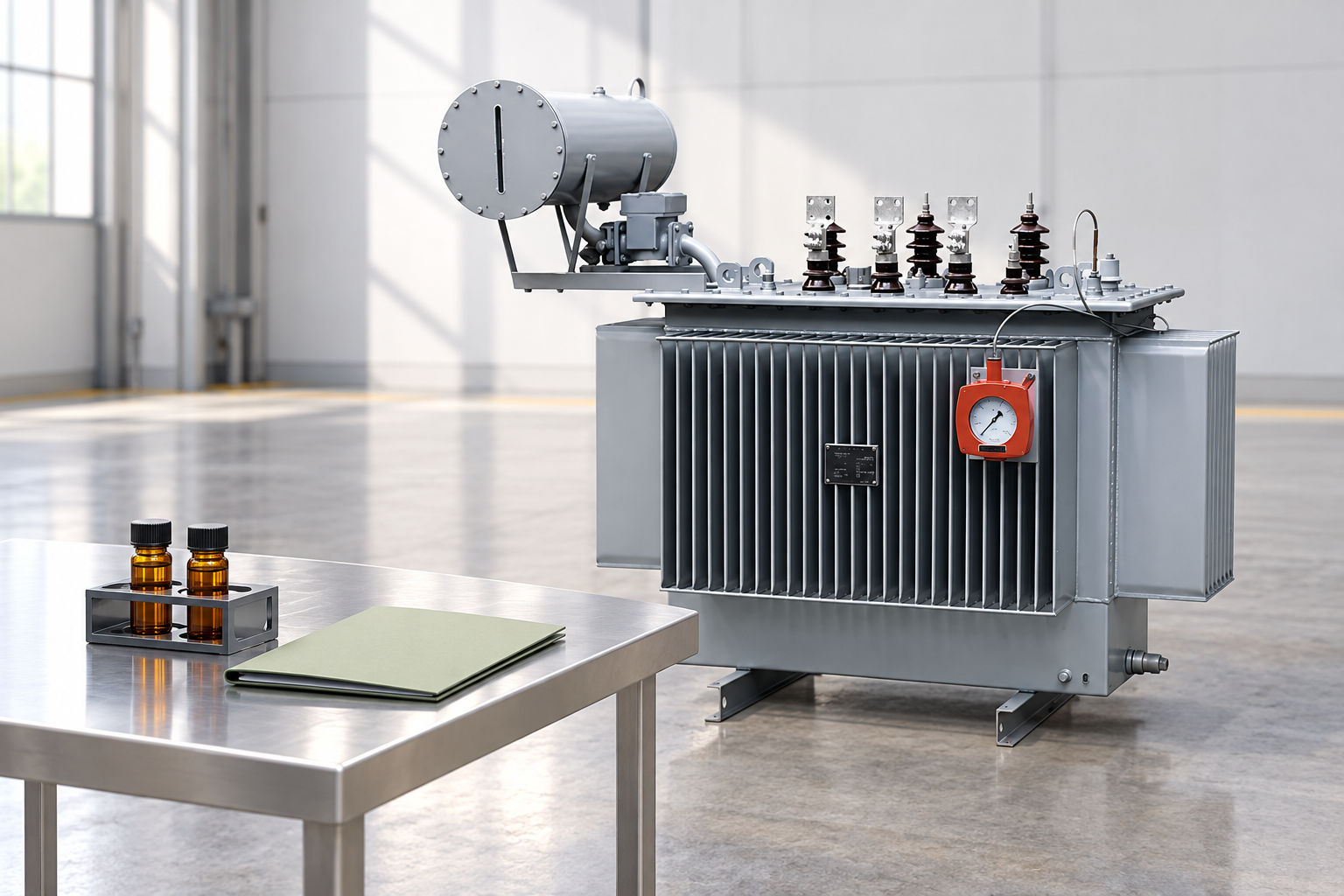
Conceptual reference-based illustration of sample traceability; no operating test is shown.
Build a comparable concentration trend
Start with the earliest reliable baseline associated with the oil actually in the tank. A supplier batch certificate before filling, a post-filling sample and a post-treatment sample answer different questions. Keep these stages separate in the record. Otherwise a change created by filling or mixing can be mistaken for a change that occurred in service.
For each later entry, record sampling point and specimen traceability, equipment identity, oil type, laboratory, compound, method edition, units and reporting limit. Retain the full report rather than transcribing only the concentration into a spreadsheet. The qualifiers and laboratory comments may become important when a later result appears inconsistent.
If the laboratory or method changes, ask whether the two result series are technically comparable. A different calibration target, separation method or reporting convention can produce a discontinuity that deserves investigation before being called depletion. Do not silently join incompatible results with a smooth trend line.
When results are reported below a limit, preserve that wording. “Below reporting limit” is not a measured zero. Substituting zero can exaggerate a decline and make subsequent calculations appear more precise than the analysis supports.
Check oil additions and processing before diagnosing a fall
Ask whether oil was topped up, partly replaced, filtered, reclaimed or transferred between containers since the previous sample. Record dates, approximate quantities where known, batch identities and the stated additive package of the introduced oil. These records provide a plausible context for dilution or other changes without assuming the cause in advance.
A simple mass balance can help frame a question, but it should use verified volumes or masses and compatible concentration units. If those inputs are missing, label the calculation as a scenario rather than a reconstruction of what happened. Density, residual tank contents and mixing uncertainty may limit the accuracy of an apparent dilution estimate.
Do not recommend adding a product solely to restore a historical number. Compatibility, approved formulation, mixing procedure and the reason for the original treatment require review. A concentration target taken from another fleet or another additive is not an adequate instruction for this transformer.
Respond to an unexpected result in stages
First verify the specimen and report identity. Confirm that the sample belongs to the correct transformer and was not confused with a bulk oil sample or a treated storage tank. Check whether the report uses a different unit or compound name from earlier records. These checks are inexpensive and can prevent an unnecessary intervention.
Next ask the laboratory about analytical uncertainty, reporting range and any matrix or identification concerns. If the result could change a maintenance decision, discuss confirmation sampling under the owner’s established process. The timing and scope of that confirmation should reflect equipment importance and the wider condition assessment, rather than an arbitrary interval from a general article.
Finally, review the confirmed finding with the equipment specialist responsible for the protection strategy. The outcome might be continued observation, a broader oil assessment or a controlled treatment investigation. Keep the decision, supporting evidence and responsible person in the asset record so that the next reviewer understands why an action was taken.
Conceptual illustration of treatment records and specimen handling, separate from the equipment.
Read gas results with the treatment history available
Additive history can provide context for gas interpretation, but it must not become a reason to dismiss an alarm. If a gas pattern changes after a treatment, provide the laboratory and diagnostic engineer with the additive identity, treatment date and relevant earlier samples. They can consider the history alongside electrical, thermal and operational evidence.
Keep the monitoring questions separate in the work order. The team reviewing additive concentration should know whether a gas investigation is also open. Conversely, a gas reviewer should not have to infer that the oil was treated from an unexplained change in the chemistry records.
IEC 60422:2024 provides a framework for supervision and maintenance of mineral insulating oil, while its public scope distinguishes oil maintenance from equipment condition monitoring by dissolved gases and other means. That boundary is useful when defining who owns each part of the assessment.
Use the result in a procurement or maintenance file
For a replacement or new oil immersed power transformer, specify what documentation is required about the proposed liquid and any declared additives. Do not infer the oil formulation from a product photograph or a general equipment description. Ask the supplier to confirm the actual offered configuration and supporting documents.
Connect this evidence with the broader oil immersed transformer selection review. The passivator report answers a chemical monitoring question; rating, insulation coordination, cooling and service conditions still require their own engineering checks.
A clear handover file should identify the baseline, future review responsibility and the events that trigger reassessment. That makes the result useful after the purchase team has handed the transformer to the operating team.
Further learning: how HPLC separates compounds
The nptelhrd lecture below explains high performance liquid chromatography as analytical background. It helps readers understand why compound identity and calibration matter. It is not a demonstration of this transformer’s oil, a complete IEC procedure or a treatment recommendation.
Does a low passivator result prove the oil is corrosive?
No. It describes the measured additive under the stated method. Corrosive behavior, treatment history and equipment risk require complementary evidence.
Can inhibitor testing replace passivator monitoring?
No. The compounds and purposes differ. Request the specific test required by the oil formulation and the approved monitoring strategy.
Should a passivator always be added after a low result?
No. Confirm the result and review the approved formulation, compatibility and treatment rationale with the responsible specialist before deciding on an intervention.
What should be recorded after an oil top-up?
Record the date, introduced batch, quantity when known, oil identity and declared additive package, then associate subsequent samples with that event.
Shenheng Electric Power s'engage à devenir un leader mondial des solutions d'équipements électriques, aidant les clients à réaliser une gestion de l'énergie sûre, efficace et durable.

 Shenheng Power Equipment Co., Ltd.