Depuis 2001, Shenheng Power est un fabricant de confiance d'équipements de transmission et de distribution d'énergie, fournissant des solutions électriques fiables à l'échelle mondiale.
Forts d'un système complet de service après-vente, nous fournissons des conseils techniques d'experts, des conseils sur les produits et des services OEM et ODM flexibles pour vos projets.
Depuis 2001, Shenheng Power est un fabricant de confiance d'équipements de transmission et de distribution d'énergie, fournissant des solutions électriques fiables à l'échelle mondiale.
Entrées de conception de salle pour la ventilation de transformateurs de type sec
Release Time: 2026-07-22
Buyers specifying dry type transformer ventilation for indoor distribution rooms need a practical way to connect transformer losses, enclosure openings, and HVAC airflow paths before civil and mechanical designs freeze.
This guide summarizes decision steps used by EPC teams and facility engineers when they align cast resin or other dry-type selections with room heat rejection, ambient limits, and delivery documentation. Use it as a coordination checklist—not as a substitute for project-specific mechanical or electrical approval.
Partie 1. Pourquoi ce sujet est important dans les projets BT-HT
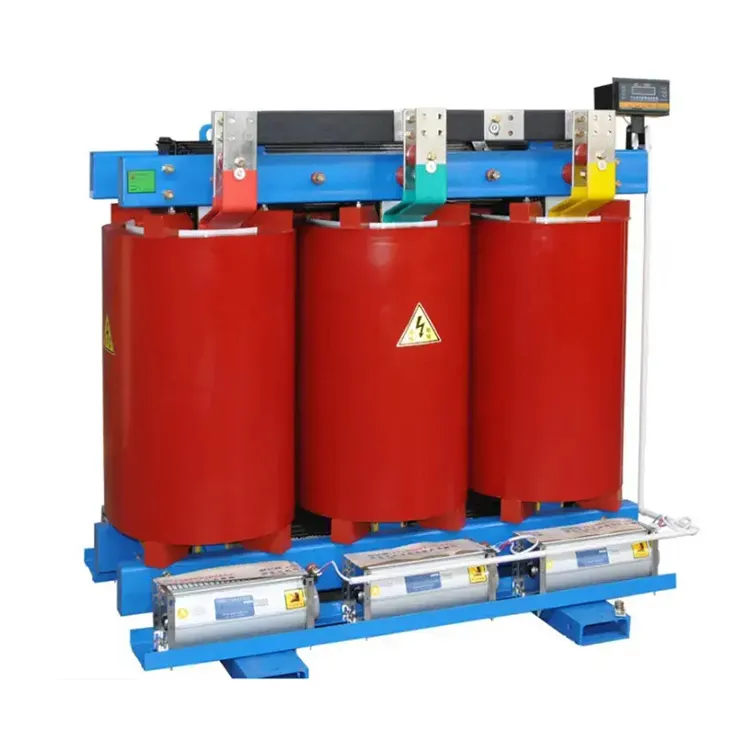
Indoor MV-LV rooms fail quietly when procurement teams treat nameplate kVA as the room heat load. Dry-type units reject heat through ambient air; if inlet temperature, free area, or exhaust path is wrong, windings run hotter than the approved design case.
For dry type transformer ventilation, the purchase and HVAC packages should share measurable inputs—loss schedule at the stated duty, cooling mode, enclosure openings, ambient and altitude—rather than a single catalog airflow ratio copied from another site.
Lock these inputs before normalizing bids and HVAC calculations:
Entrée
Pourquoi c'est important
Source typique
No-load and load loss at stated duty
Heat-rejection basis for the room
OEM loss schedule
Cooling mode (AN / AF or equivalent)
Whether fans are part of the rated duty
Datasheet and controls narrative
Ambient temperature and measurement point
Inlet-air design temperature
Fiche technique du site
Altitude
Cooling and insulation assumptions
Civil / GIS survey
Enclosure openings and free area
Effective airflow path, not architectural opening alone
GA drawing and OEM notes
Recirculation and exhaust discharge
Prevents hot air returning to the intake
HVAC layout
Request outline drawings with cooling-air direction early so civil, HVAC, and commissioning teams can work in parallel.
Partie 3. Application et limites d'exploitation
Natural ventilation may work in one room and fail in another with the same transformer. The answer depends on approved losses, inlet-air condition, available height, louver free area, duct resistance, and contamination filters that raise pressure drop.
Enclosed or totally enclosed arrangements change how air reaches the windings. Do not assume an open-room rule of thumb still applies after an IP-rated shell, acoustic shroud, or filtered intake is added.
Harmonic-rich loads, continuous high ambient, or multiple energized units in one room increase the heat case. Record diversity, fan redundancy, and alarm actions when several dry-type units share the same ventilation plant.
For hospital and occupied-building context where dry type is preferred for fire planning, see dry type vs oil immersed for hospitals—ventilation and access still belong in the same room package.
Partie 4. Documentation et liste de contrôle pour la demande de prix
Document / article
But
Quand demander
Loss schedule at rated and agreed overload duty
Heat balance basis
Before HVAC freeze
GA drawing with cooling-air arrows and clearances
Civil and airflow coordination
Phase de conception
Enclosure / IP and opening schedule
Free-area and filtration pressure drop
Before PO
Ambient, altitude, and contamination statement
Derating and filter strategy
RFQ attachment
Fan control, redundancy, and alarm narrative
Mechanical-electrical interface
Revue de conception
Commissioning temperature and airflow checks
Verify room against design case
Avant la mise sous tension
Attach this table to RFQs so vendors and HVAC contractors return comparable packages.
Partie 5. Notes d'installation, de test ou de maintenance
Installation quality often decides whether the designed airflow path survives construction. Confirm that cable trays, fire dampers, acoustic panels, and storage do not block OEM clearances or enclosure intakes.
Before energization, plan baseline temperature checks under the agreed load case where practical, verify fan start/stop logic, and record nameplate data against the approved drawing revision.
Maintenance access should stay in the layout: filter change routes, fan service space, infrared viewing of terminations, and cleaning of ventilation paths. Facility practices for cast resin units are summarized in conseils d'entretien pour transformateur de type sec en résine coulée.
Partie 6. Recommandation de produit et limite d'ajustement
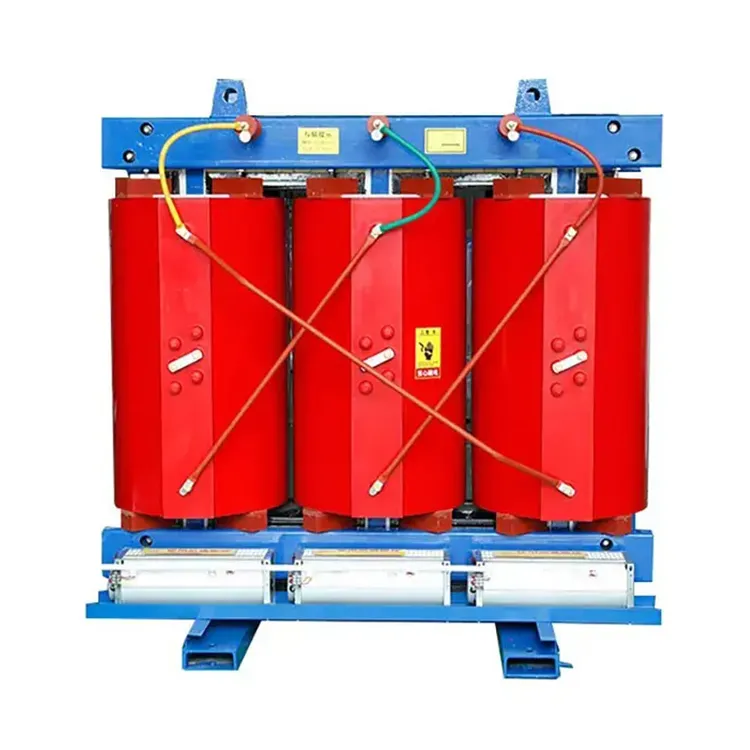
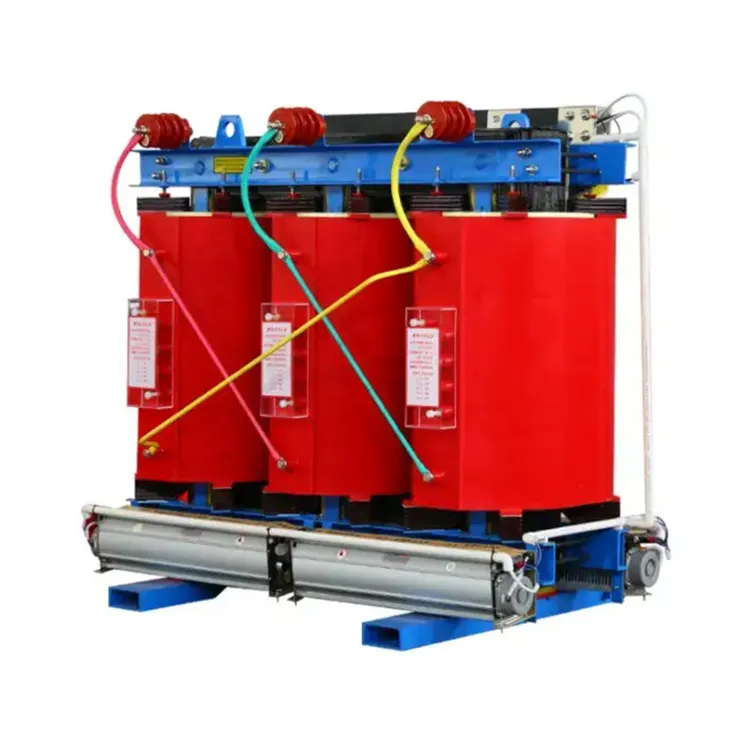
For many dry type transformer ventilation reviews tied to indoor 11 kV distribution, Shenheng Power publishes a relevant catalog starting point at transformateur de type sec en résine coulée 11 kV.
Ajuster la limite : Cette recommandation supporte les usages typiques en distribution et dans l'industrie documentés sur la page produit. Elle est non a substitute for project-specific heat-balance, fire strategy, or HVAC design when unusual altitude, enclosure filtration, multi-unit rooms, or national utility rules apply.
Si votre étude pointe vers une combinaison kVA, une tension ou une classe de refroidissement différente, examinez le contexte plus large Transformateur de type sec catégorie et soumettre les contributions d'étude via Contacter Shenheng Power.
Partie 7. Erreurs courantes des acheteurs
Sizing room airflow from nameplate kVA instead of the approved loss schedule at the stated duty.
Freezing HVAC layouts before OEM cooling-air direction and enclosure openings are on the GA drawing.
Ignoring altitude, high ambient, or filter pressure drop in the RFQ.
Blocking intakes with trays, dampers, or storage after civil handover.
Comparing quotations without the same ambient reference and documentation package.
FAQ
How much ventilation does a dry type transformer room need?
Enough to reject the approved transformer losses at the design ambient while keeping the OEM temperature limits. There is no universal cubic-meter-per-kVA rule that replaces the project heat balance.
Should ventilation be sized from kVA or from transformer losses?
Use the OEM loss schedule at the agreed duty. Nameplate kVA alone does not define continuous heat rejection.
When is natural ventilation enough for an indoor dry-type unit?
Only when the approved loss case, inlet temperature, height, free area, and recirculation checks show adequate airflow without mechanical assistance. Enclosed or filtered arrangements often change that conclusion.
What ambient and altitude data belong in the RFQ?
State design ambient, measurement location for inlet air, site elevation, and any contamination or filtration assumptions that affect cooling.
How do enclosure openings change the airflow path?
Openings and free area define how cooling air reaches the windings and leaves the equipment boundary. Architectural opening size is not the same as effective free area after screens or filters.
What documents should HVAC and electrical teams exchange before PO?
Share the loss schedule, GA with cooling-air arrows, enclosure/opening data, ambient-altitude statement, fan and alarm narrative, and commissioning check expectations.
Shenheng Electric Power s'engage à devenir un leader mondial des solutions d'équipements électriques, aidant les clients à réaliser une gestion de l'énergie sûre, efficace et durable.

 Shenheng Power Equipment Co., Ltd.