Depuis 2001, Shenheng Power est un fabricant de confiance d'équipements de transmission et de distribution d'énergie, fournissant des solutions électriques fiables à l'échelle mondiale.
Forts d'un système complet de service après-vente, nous fournissons des conseils techniques d'experts, des conseils sur les produits et des services OEM et ODM flexibles pour vos projets.
Depuis 2001, Shenheng Power est un fabricant de confiance d'équipements de transmission et de distribution d'énergie, fournissant des solutions électriques fiables à l'échelle mondiale.
Drainage de toiture des postes électriques compacts : liste de contrôle pour l’inspection des infiltrations d’eau
Date de publication : 2026-11-11
Compact substation roof drainage should direct rain away from the enclosure’s vulnerable interfaces without obstructing the equipment’s ventilation, access or approved construction. When water ingress is suspected, identify the actual path before adding sealant, drilling holes or fitting a gutter. Review roof condition, joints, runoff at doors, surrounding ground levels and other openings as separate boundaries. Ask the manufacturer and responsible site engineer to define safe inspection, the repair scope and acceptance evidence. A visible wet patch inside the enclosure does not by itself prove that the roof is the source.
This guide supports maintenance planning and defect reporting. It is not permission to climb onto a substation, open energized compartments or carry out an improvised water test. The actual inspection needs authorized access and equipment-specific precautions.
Separate rainfall entry from condensation and other water paths
Begin with observations: where moisture appeared, when it was first noticed, recent weather and whether the condition changes with rain. Keep facts distinct from conclusions. Water at the base might come from a cable route or site drainage; moisture on internal surfaces might involve condensation. These require different investigations.
Record the enclosure identity, affected compartment and location of each observation. Photographs should show enough context for a reviewer to understand where the mark lies. Avoid a close-up that removes the relationship to roof joints, doors and nearby openings.
Pour un Substation extérieure compacte, the supplied roof and enclosure design are the starting point. Do not infer a drainage feature or permissible roof loading from its photograph. Obtain the drawings and maintenance instructions for the actual unit and site arrangement.
Inspect from an authorized safe position
Plan who may enter the area, how close they can approach and what equipment is needed to observe the roof. An apparently simple external inspection can introduce electrical, access or work-at-height hazards. Do not climb onto the enclosure to obtain a better photograph without an approved method.
Le Electricity North West substation condition-capture document distinguishes roof, ceiling, rainwater goods and cable-trench observations in its own inspection system. It also restricts roof access for those checks. Use it as a utility example, not as a universal procedure or authorization for a different installation.
Ask the asset operator to approve the actual inspection boundary. If internal observations are required, the electrical access arrangements must be defined before a door is opened. A maintenance report should say which areas were inspected and which remained inaccessible.
Follow the water path across interfaces
Where safe and permitted, review the roof surface, its joints and edges, any approved rainwater fittings and the direction of runoff. Look for damage, separation, corrosion, debris or evidence that water is being directed toward a door or opening. Record the observation without assuming a particular repair.
Consider the enclosure as part of its installed environment. Nearby structures, roof runoff from another building, paving changes or vegetation may alter exposure after the substation was commissioned. An equipment repair may not resolve a site-level source of water.
Review boundary
Éléments de preuve à enregistrer
Question for the responsible reviewer
Roof surface
Location of damage, corrosion or debris
Is the roof construction intact?
Roof joints and edges
Visible discontinuity and runoff direction
Where can rain cross the intended boundary?
Doors below runoff
Staining, closure condition and water path
Is water being directed toward the door perimeter?
Approved rainwater fittings
Damage or blockage where fitted
Does the original drainage arrangement remain functional?
Ground and base
Ponding and nearby level changes
Is the enclosure exposed from below instead?
Cable routes
Water evidence at entries and trenches
Is the roof being blamed for another entry path?
Internal observations
Exact compartment and location, if access authorized
Does the evidence support the suspected route?
This table organizes observations. It does not specify a roof slope, gutter size, water-test pressure or acceptance limit.
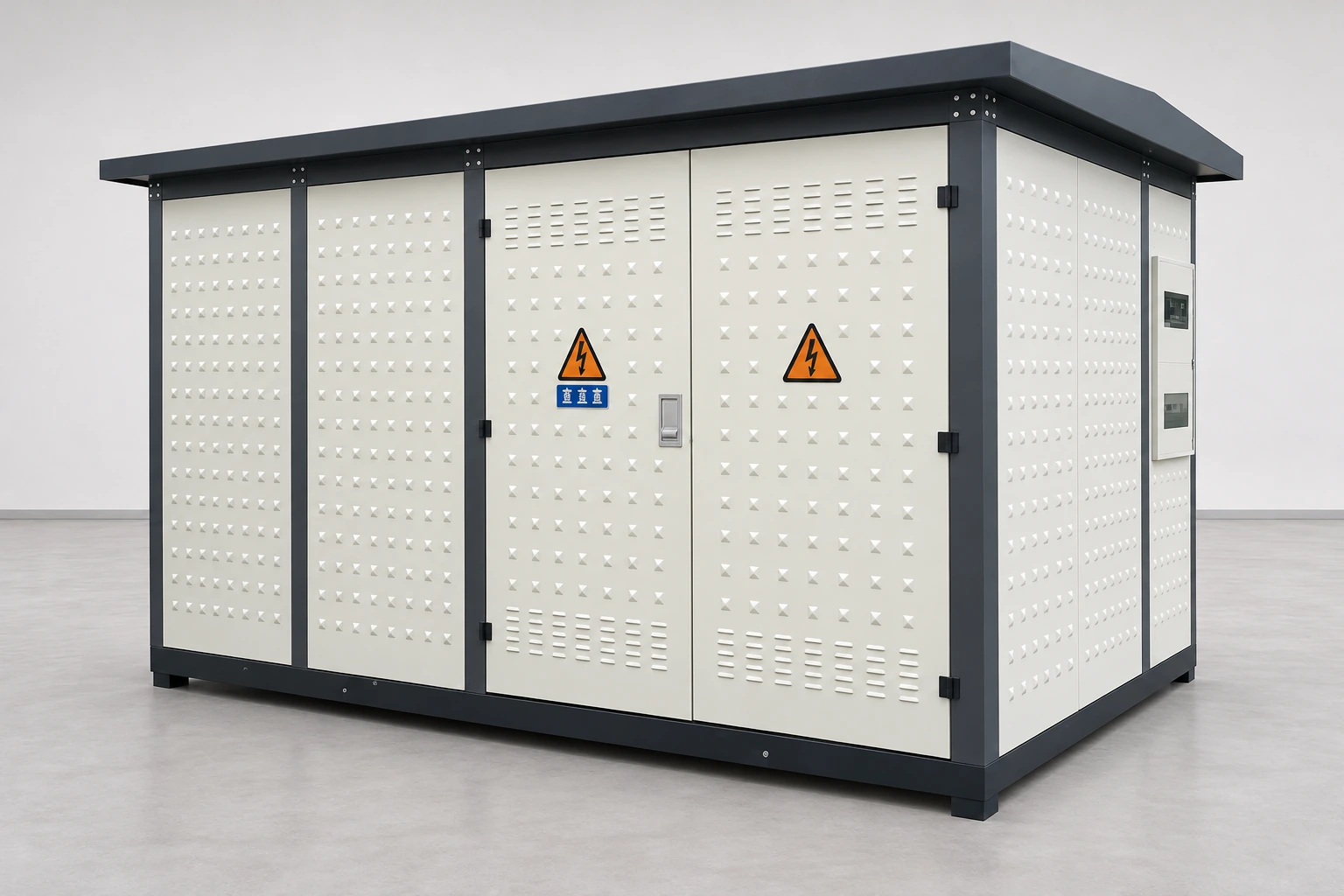
Illustration de référence du produit basée sur l'image du produit Shenheng ; il ne s'agit pas d'un enregistrement réel de maintenance, de test ou de site client.
Check the door interface without treating every problem as a gasket failure
Runoff can expose a door perimeter to water even when the original seal is not the only defect. Review the intended relationship between roof edges, door frame and closure. Ask the manufacturer whether the observed runoff matches the supplied design or suggests damage or installation changes.
cURL Too many subrequests by single Worker invocation. To configure this limit, refer to https://developers.cloudflare.com/workers/wrangler/configuration/#limits.
cURL Too many subrequests by single Worker invocation. To configure this limit, refer to https://developers.cloudflare.com/workers/wrangler/configuration/#limits
cURL Too many subrequests by single Worker invocation. To configure this limit, refer to https://developers.cloudflare.com/workers/wrangler/configuration/#limits Guide de fondation de sous-station compacte cURL Too many subrequests by single Worker invocation. To configure this limit, refer to https://developers.cloudflare.com/workers/wrangler/configuration/#limits.
cURL Too many subrequests by single Worker invocation. To configure this limit, refer to https://developers.cloudflare.com/workers/wrangler/configuration/#limits.
Avoid alterations that compromise the enclosure
Adding gutters, changing roof panels or drilling openings can affect corrosion protection, enclosure strength, ventilation, access or other approved features. Ask the manufacturer to review the proposed repair and identify any revised drawings or tests. A contractor’s standard building detail is not automatically suitable for electrical equipment.
IEC 60529 concerns the classification of enclosure protection. A site-applied product described as waterproof does not independently establish the repaired substation’s IP performance. Acceptance needs a basis appropriate to the complete arrangement and the scope of the change.
Do not block ventilation openings to make the enclosure appear more weather-tight. Cooling and enclosure protection must be considered together. If a repair proposal affects either, the responsible engineer should review the consequences before work is authorized.
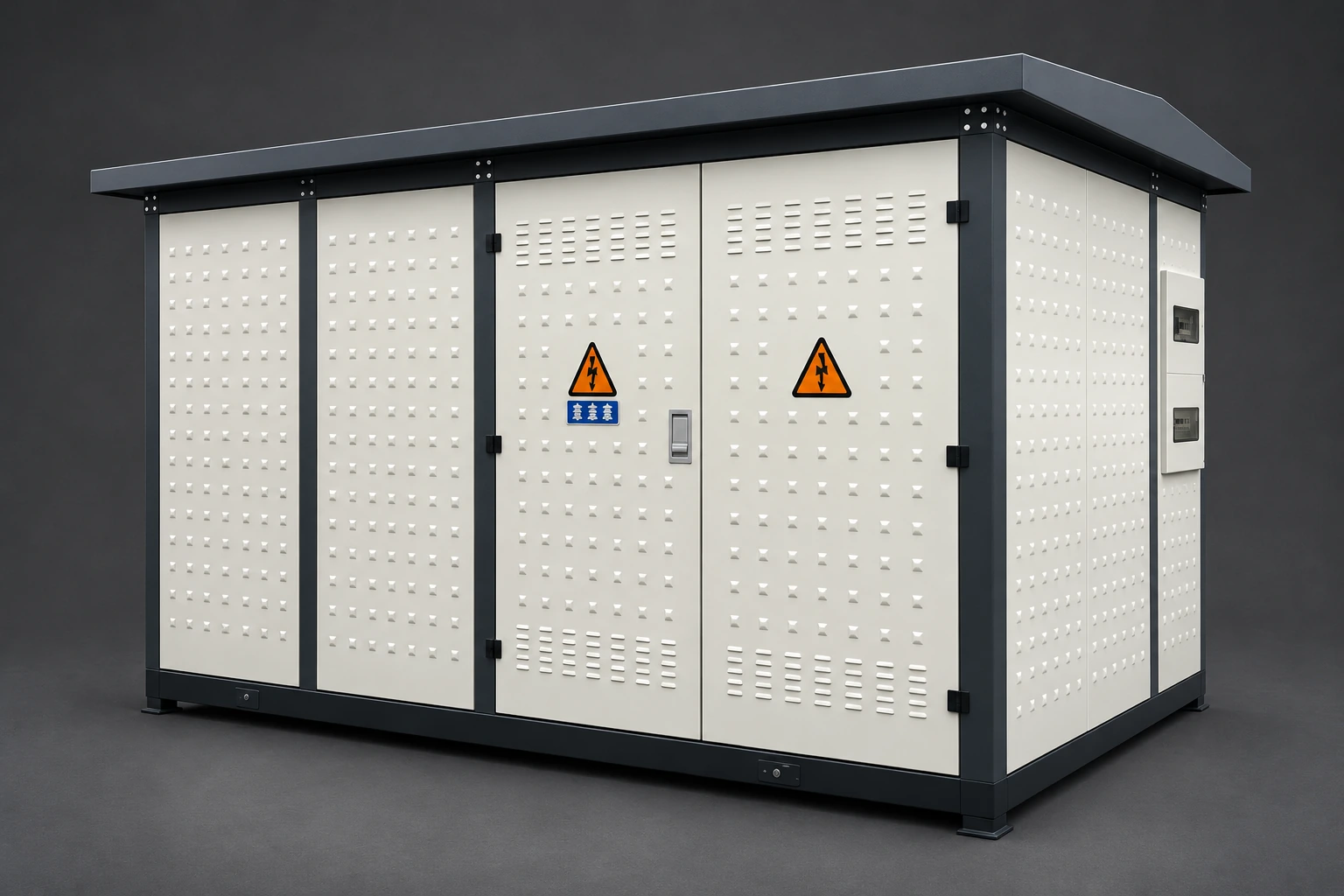
Illustration de référence du produit basée sur l'image du produit Shenheng ; il ne s'agit pas d'un enregistrement réel de maintenance, de test ou de site client.
Prepare a useful manufacturer or contractor request
Provide the substation identity, roof drawing where available, photographs, observed water locations, weather context and any installation changes. State which areas were inaccessible and which conclusions remain uncertain. Ask the supplier to identify whether further inspection is needed before quoting a permanent repair.
Request an itemized scope covering the suspected source, supporting surfaces, approved materials and final acceptance. Make exclusions visible, especially electrical isolation, internal inspection, civil drainage work or replacement of damaged enclosure parts. A roof-only quotation may not address the actual entry path.
If temporary measures are proposed, request their approval, limitations and review date. They should not obstruct ventilation, access, security or drainage. Record the permanent work still required so a temporary response does not disappear into the maintenance history as a completed repair.
Verify the result against the original problem
Agree the final checks before work starts. The package should establish which repaired interfaces are inspected, whether additional testing is required and how later observations will be recorded. Any water test needs a specifically approved safe method; this article does not supply one.
Retain the final material and component identities, drawings, repair photographs and acceptance records. If the evidence does not confirm the original source, keep the uncertainty visible. A dry inspection on a rain-free day does not necessarily resolve a recurring rainfall-related complaint.
Utilisez le prefabricated substation overview for broader equipment context. Good defect records help the owner choose between a localized enclosure repair, a civil drainage correction and further investigation. They also avoid ordering unrelated work simply because all three conditions involve water.
Safety background for maintenance access
The following US Department of Labor video explains hazardous energy control. It is relevant general background for planning authorized internal observations or repairs near an electrical asset. It does not demonstrate roof inspection, authorize climbing or establish a safe water-testing method.
Pour approfondir : Stand Up For Safety and Health – Consignation et déconsignation (Lockout/Tagout) — Ministère du Travail français. Disponible sur YouTube.
Foire aux questions
La présence d’eau à l’intérieur d’un poste électrique compact prouve-t-elle que le toit fuit ?
No. Water can enter through other boundaries, and condensation can produce a different moisture pattern. Record the location, timing, weather and surrounding evidence, then have the responsible team investigate the path instead of assuming the roof is the cause.
Puis-je installer une gouttière pour empêcher l’eau d’atteindre les portes ?
Uniquement après un examen approuvé de l’enveloppe réelle du bâtiment et de son installation. Une modification de la gouttière ou de la toiture peut avoir une incidence sur l’accès, la corrosion, le drainage et d’autres caractéristiques de conception. Demandez au fabricant et à l’ingénieur du site de définir la réparation appropriée ainsi que les justificatifs nécessaires à son acceptation.
Faut-il obturer les ouvertures de ventilation pour empêcher la pluie de pénétrer ?
N'effectuez pas cette modification sans l'approbation du service d'ingénierie. La ventilation fait partie du dispositif de fonctionnement de l'équipement, et toute obstruction peut entraîner un autre problème. La réparation doit tenir compte à la fois de la protection contre les intempéries et des exigences de refroidissement du transformateur.
Comment faut-il clôturer une réclamation récurrente concernant une infiltration d’eau ?
Close it against defined evidence covering the identified source, approved repair and agreed checks. Keep unresolved limitations visible and follow the authorized monitoring plan if needed. A new layer of sealant or a dry photograph alone is not a complete explanation of the result.
Shenheng Electric Power s'engage à devenir un leader mondial des solutions d'équipements électriques, aidant les clients à réaliser une gestion de l'énergie sûre, efficace et durable.

 Shenheng Power Equipment Co., Ltd.