Kể từ năm 2001, Shenheng Power đã là nhà sản xuất thiết bị truyền tải và phân phối điện đáng tin cậy, cung cấp các giải pháp điện năng đáng tin cậy trên toàn cầu.
Được hỗ trợ bởi hệ thống hậu mãi toàn diện, chúng tôi cung cấp dịch vụ tư vấn kỹ thuật chuyên gia, hướng dẫn sản phẩm và các dịch vụ OEM & ODM linh hoạt cho các dự án của bạn.
Kể từ năm 2001, Shenheng Power đã là nhà sản xuất thiết bị truyền tải và phân phối điện đáng tin cậy, cung cấp các giải pháp điện năng đáng tin cậy trên toàn cầu.
IEC 62271-200 Guide for Medium Voltage Switchgear Buyers
Release Time: 2026-10-12
IEC 62271-200 addresses AC metal-enclosed switchgear and controlgear for rated voltages above 1 kV and up to and including 52 kV. For a buyer, the useful question is whether the offered assembly, ratings, classifications and installation conditions match the project. A statement that equipment follows IEC 62271-200 is not a complete specification or proof that every configuration has been tested. Ask for the agreed edition, declared ratings, classification details and supporting reports, then compare their scope with the actual panel arrangement. Keep standard compliance, protection design and safe operating procedures as separate approval responsibilities.
Identify the standard and edition in the purchase specification
Các IEC publication page for IEC 62271-200:2021 states the scope for prefabricated metal-enclosed AC assemblies, including indoor and outdoor applications. It also identifies the 2021 publication as a revision of the earlier edition. The 2024 amendment is separately identified by IEC. Record the edition and amendments required by the contract rather than writing only a standard number.
Do not apply the standard to every electrical cabinet because it contains switchgear. Low-voltage assemblies fall within a different standards framework. A prefabricated substation can involve additional requirements beyond those for its medium-voltage assembly. The project specification should identify the applicable standards for the complete supplied scope and resolve any conflicting references before procurement.
An older report should not be dismissed or accepted solely because of its date. Ask the responsible engineer to compare its edition and tested design with the specified requirements. If an offered product relies on an existing test family, require the supplier’s documented justification for applicability to the ordered variant. A report cover page cannot establish that relationship by itself.
Start with the electrical ratings the system needs
Confirm rated voltage, frequency, current and insulation requirements against the network and operating conditions. Then check short-time withstand current, its duration and peak withstand requirements using the approved fault study. These ratings serve different purposes. A high continuous-current rating cannot compensate for an inadequate short-circuit duty.
Coordinate circuit-breaker ratings and capabilities with the assembly requirements. The breaker is an important component, but its individual documentation does not automatically prove the complete cabinet assembly. Busbars, connections, earthing circuits and other parts of the lineup also need appropriate evidence for their duties.
Các medium voltage short-circuit rating guide explains the inputs needed for that rating review. Keep the calculation and report acceptance with the responsible engineer. Avoid specifying a fault level from a previous project without checking transformer impedance, network contribution and planned system extensions.
Understand classifications as operating constraints
Loss of service continuity, commonly abbreviated LSC, describes how access to particular compartments relates to continuity of service in the assembly. The correct selection depends on the intended maintenance and isolation arrangement. It is not a promise that every part can be opened while the remaining equipment stays energized.
Partition classification describes relevant separation characteristics. Compartment access also depends on the design and specified method of control, such as interlocks or procedures. Ask the supplier to identify each accessible compartment and explain the required condition for access. Tie that explanation to drawings and operating instructions rather than to a generic sales description.
Compare these classifications with the site’s maintenance strategy. If a cable compartment must be accessed during a particular outage arrangement, ask exactly what remains available and what must be isolated. Review the fixed versus withdrawable switchgear guide for a related mechanical decision, while keeping removability separate from the declared IEC classifications.
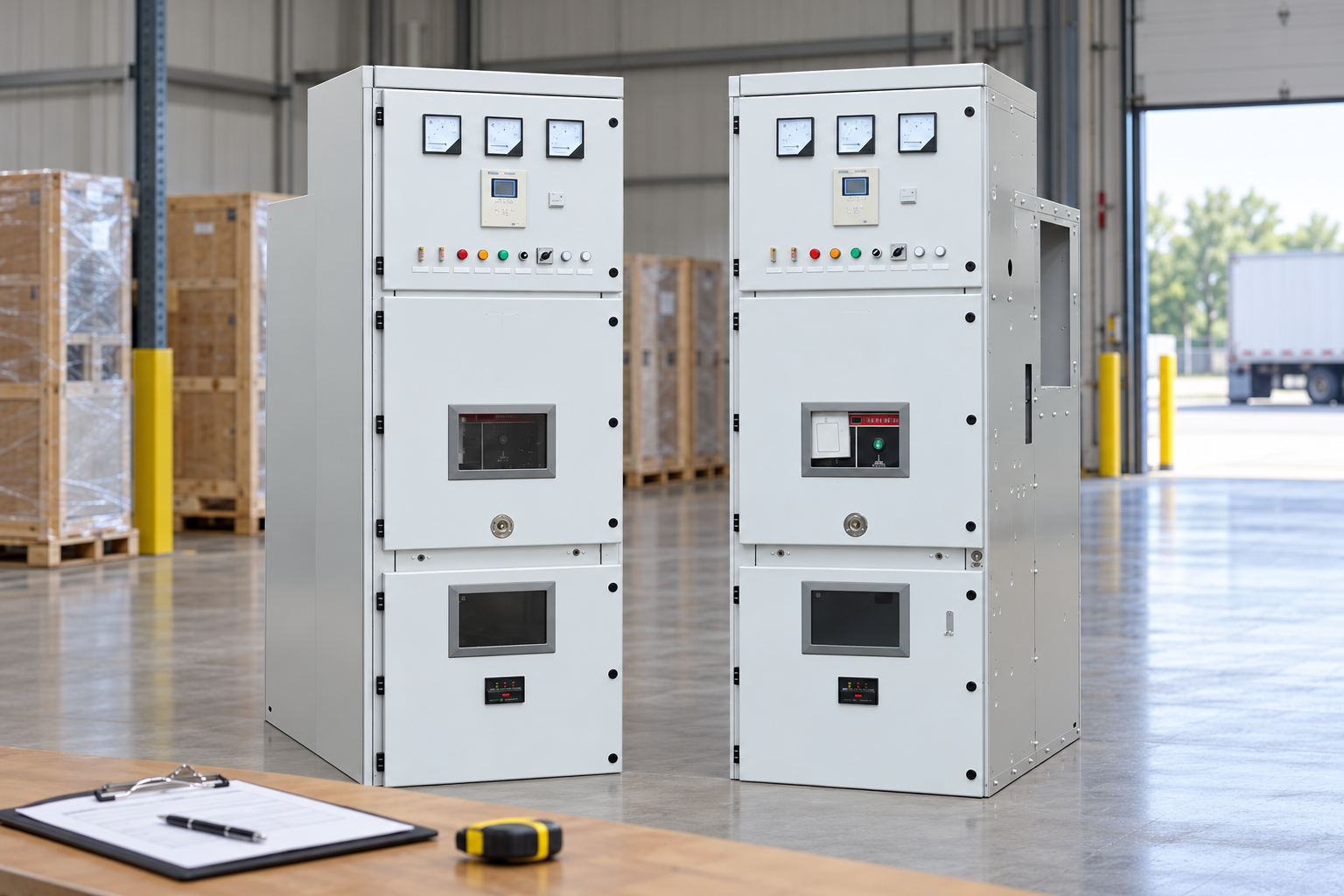
Match equipment identity and layout to the approved document package. Reference-based illustration.
Specification area
What to request
What the evidence must establish
Electrical ratings
Rating schedule and relevant test documentation
Suitability for the approved network duties and ordered design
Service continuity
Full LSC designation and compartment access explanation
Which operating conditions permit the planned maintenance task
Partitions and access
Declared classification, drawings and instructions
Separation and access provisions of the supplied assembly
Internal arc
Complete IAC designation and test scope where specified
Tested accessibility, sides, current, duration and installation conditions
Cài đặt
Layout and required room or exhaust provisions
Compatibility between tested assumptions and the proposed site
This table organizes purchasing evidence. It does not reproduce the standard’s clauses or assign classifications to Shenheng products. Use the specified standard and controlled test documentation to determine the actual requirements.
Internal arc classification needs its full context
Internal arc classification is often summarized as IAC. When the project requires it, obtain the complete designation and relevant test information. Check the accessibility conditions, designated sides, test current and duration, and the arrangement covered by the report. A single phrase such as arc resistant omits important application limits.
Installation conditions can affect the meaning of the test evidence. Room clearances, exhaust paths, ducts, pressure relief and other provisions must be checked against the tested arrangement and supplier instructions. Do not remove or modify an exhaust component merely because it complicates the building layout. Resolve the conflict before equipment approval.
Internal arc classification does not make opening equipment during unsafe conditions acceptable. It also does not replace an arc-flash assessment, protection coordination or safe working procedures. The switchgear internal arc classification guide addresses that specific topic; this buyer guide keeps it within the larger assembly approval process.
Review reports against the ordered assembly
Request reports that identify the tested product, construction and configuration. Compare them with the proposed voltage, current, lineup arrangement, switching devices and significant enclosure features. Ask which variations are covered and how the supplier supports that conclusion. Similar appearance alone is not a sufficient basis for extending evidence to a different assembly.
Separate type-test evidence from routine tests on supplied equipment. Type tests address representative design characteristics; routine tests address the manufactured equipment within the specified scope. Neither should be confused with a site’s final installed-circuit checks. An order should identify the reports, certificates and inspection records to be delivered at each stage.
Các IOGP JIP33 switchgear supplementary specification illustrates how a purchaser can add a structured project specification around the base standard. It is a dated supplementary document, not a substitute for the current edition required by your contract. Use it as a reference for organizing requirements, and review applicability before adopting any provision.
Include real service and site conditions
Record indoor or outdoor installation, environmental conditions and any special service requirements. Altitude, ambient temperature, humidity, contamination and condensation can affect equipment selection. Obtain the supplier’s applicable limits and any required derating or additional provisions. Do not assume that a standard test result covers every possible site environment.
Check cable entry, cable sizes, termination access, earthing connections and lifting or transport arrangements. Verify dimensions against the room, access route and maintenance clearances. A technically suitable assembly that cannot be installed or serviced as designed is not a complete procurement solution.
Plan the interface with protection and control systems. The standard number does not define your approved relay settings, CT selection, communication design or trip matrix. Provide these requirements separately. The proposed panel must integrate them without undermining the assembly construction and operating arrangements supported by its documentation.
Installation provisions must agree with the supplied equipment instructions. Reference-based illustration.
Factory and site acceptance should close different questions
Before factory acceptance, agree the inspection plan, hold points, test scope and document list. Check identity, ratings, construction, wiring and the agreed functional checks. Record deviations and their disposition. A witnessed test should leave traceable results, not only photographs of a panel with an inspection sticker.
At site, confirm that transport, installation and connection have preserved the intended arrangement. Check the completed layout and the provisions assumed by the equipment documentation. Review the protection and control circuits, earthing and operating procedures within the approved commissioning scope. Do not treat a routine factory report as proof of the final installed system.
Các switchgear factory acceptance checklist helps organize the manufacturing-stage review. Use the corresponding site acceptance process for installed equipment. Keep any commissioning energization decision with the authorized project team after outstanding issues have been resolved.
Build a quotation comparison that reveals exclusions
Cho thiết bị đóng cắt trung thế, supply a single-line diagram, rating schedule, classification requirements and site layout. Request a point-by-point compliance schedule with exceptions clearly identified. Do not infer unlisted certification or ratings from this article or from the illustrative product images.
Compare quotations using the same evidence requirements. One offer may include detailed reports and installation provisions while another supplies only a general compliance statement. Identify costs and responsibilities for testing, document review, protection engineering and commissioning. Resolve exceptions before purchase because later changes can affect both delivery and design evidence.
Make document approval a visible project milestone. The final deliverable should connect the ordered assembly to its drawings, rating schedule, test records and operating instructions. That package is more useful to future maintenance personnel than an isolated statement of compliance with a standard number.
Further learning: switching equipment test principles
Further learning: Circuit Breakers and Fuses Testing of High Voltage AC Circuit Breakers – Circuit Breakers and Fuses — Ekeeda. Educational background; this is not an operating authorization. Mở video trên YouTube.
The educational video explains testing background for switching equipment. It does not demonstrate certification of the pictured product or replace the assembly reports required by IEC 62271-200. Use it to distinguish equipment test principles from the specific evidence supplied for your order.
Các câu hỏi thường gặp
Does IEC 62271-200 cover low-voltage switchboards?
Its stated voltage scope is above 1 kV up to and including 52 kV for the applicable AC metal-enclosed assemblies. Low-voltage switchboards require the appropriate low-voltage standards framework. Identify all applicable standards for the supplied scope rather than assigning one number to an entire substation.
Is an IAC statement enough to approve internal arc performance?
No. Obtain the full designation, relevant report and installation requirements. Check their applicability to the ordered assembly and proposed site. Classification does not authorize unsafe access or remove the need for protection coordination and appropriate working procedures.
Does a circuit-breaker report prove the complete switchgear assembly?
No. Component evidence and assembly evidence answer different questions. Review the complete panel construction, ratings and relevant test scope. The ordered assembly must be supported by suitable documentation rather than by an unrelated component report alone.
What should a buyer request first?
Ask for the proposed rating schedule, specified standard edition, declared classifications, layout and a compliance schedule showing exceptions. Then request the supporting test evidence and installation instructions so the responsible engineer can assess the actual offered configuration.
Shenheng Electric Power cam kết trở thành công ty dẫn đầu toàn cầu về các giải pháp thiết bị điện, giúp khách hàng đạt được quản lý điện năng an toàn, hiệu quả và bền vững.

 Công ty TNHH Thiết bị Điện Thâm Hằng.