Desde 2001, a Shenheng Power tem sido um fabricante de confiança de equipamento de transmissão e distribuição de energia, fornecendo soluções elétricas fiáveis a nível global.
Apoiados por um sistema pós-venda completo, fornecemos consultoria técnica especializada, orientação de produtos e serviços flexíveis de OEM e ODM para os seus projetos.
Desde 2001, a Shenheng Power tem sido um fabricante de confiança de equipamento de transmissão e distribuição de energia, fornecendo soluções elétricas fiáveis a nível global.
Transformer Paper Degree of Polymerization Test: Sampling and Meaning
Release Time: 2026-10-27
A transformer paper degree of polymerization test measures the average cellulose chain length in a physical insulation-paper specimen, commonly through a viscometric laboratory method. It is a direct examination of the submitted solid material, unlike oil tests that measure indirect ageing markers. Its central limitation is representativeness: a result from one accessible piece of paper cannot automatically describe the hottest or weakest insulation elsewhere in the winding. Use the test to answer a defined condition-assessment question, with a documented sample location and laboratory method, rather than treating one number as the remaining life of the entire transformer.
What degree of polymerization means
Cellulose consists of chains of repeating units. Degree of polymerization, usually abbreviated DP, describes chain length, and an average is needed because a paper specimen contains a distribution of molecular lengths. Ageing can shorten those chains. The result therefore provides information about the condition of the sampled paper, but it does not directly measure every mechanical property, every insulation location or the electrical performance of the complete transformer.
O oficial ASTM D4243 method page identifies a viscometric assessment for electrical papers. The reported average depends on the measurement approach. Retain the laboratory’s exact description instead of comparing different molecular averages as though they were interchangeable. This guide does not reproduce the laboratory procedure or specify a universal replacement threshold.
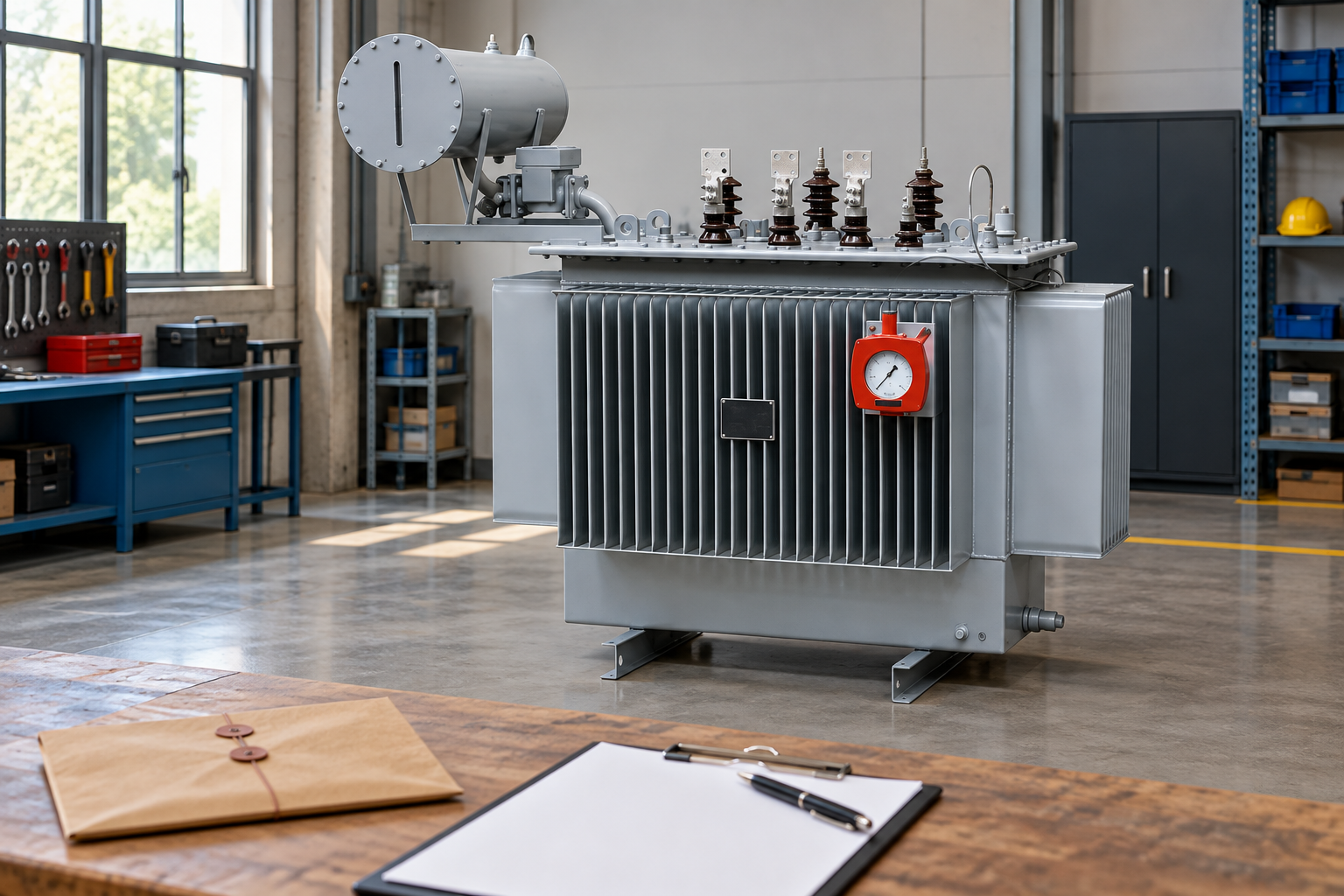
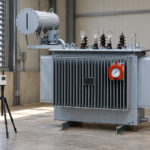
Conceptual documentation scene; no insulation removal or active inspection is shown.
Direct paper testing and oil markers answer different questions
A paper specimen gives local material evidence. An oil sample can be obtained for a different purpose and may contain chemical markers associated with insulation ageing, but those markers are affected by operating and maintenance history. An estimate derived from oil chemistry must not be relabelled as a measured paper DP result. Keep “measured,” “estimated” and “inferred” clearly separated in the asset record.
O CIGRE discussion of solid transformer insulation at end of life highlights uncertainty in interpreting oil-based ageing evidence. For practical assessment, preserve oil-change and treatment history alongside the laboratory reports. A change in an indirect marker does not necessarily mean the physical paper has recovered, and a direct specimen does not automatically validate every historical correlation.
Decide whether a physical specimen is justified
Obtaining paper may require access that is unavailable during ordinary operation. The decision belongs within an approved engineering and safety plan, often associated with a justified inspection, repair or end-of-life investigation. Do not open equipment or disturb winding insulation simply because a laboratory can perform the test. The value of the information must be weighed against the access, contamination and damage risks.
Before any intervention, identify the decision that the result could change. Examples include documenting material condition during an already planned repair, comparing locations in a controlled investigation, or understanding a retired unit. If every possible result would leave the decision unchanged, another investigation may be more useful. Collection must be designed by qualified personnel with manufacturer input where appropriate; this article is not a specimen-removal instruction.
Sample location is part of the result
A useful record identifies the winding or structural location, accessible surface, component association and reason for selecting that specimen. Photographs and a location diagram can help preserve context, provided they are created within the approved work plan. A bag labelled only with the transformer number loses information that cannot be reconstructed by even a careful laboratory analysis.
Thermal and moisture conditions can vary through the insulation system. An easily reached piece may not represent a thermally stressed region. Report this limitation explicitly, especially when only one location is available. Multiple specimens can improve spatial understanding when safely obtainable, but they still require an agreed sampling rationale. An average of several convenient locations is not automatically an average condition for the winding.
A specimen-to-decision checklist
Stage
Provas a reter
Interpretation limit
Assessment question
Repair, investigation or retirement decision
A test cannot answer an undefined decision.
Location
Traceable specimen position and photographs
Accessible paper may not be the most stressed paper.
Material
Known paper or board identity and history
Different materials may need different context.
Handling
Laboratory instructions and chain of custody
Uncontrolled preparation can weaken comparability.
Laboratory result
Method, reported average and qualifications
Do not mix different molecular averages silently.
Engineering review
Other findings and decision rationale
One specimen is not whole-transformer remaining life.
This table organizes evidence rather than prescribing numerical acceptance criteria. Laboratory method boundaries come from the official method description above; the review questions help an owner preserve the connection between a material result and a maintenance decision.
Agree handling requirements with the laboratory
Ask the laboratory what material quantity, packaging, identification and preparation information it needs before collecting anything. Different conditions or contaminant histories may require discussion. Do not wash, dry, combine or otherwise prepare a specimen using an improvised field method. A laboratory should know what happened to the material between collection and receipt, including any treatment performed during the inspection.
Maintain separate identifiers for separate locations. Combining paper from several places may destroy the spatial information that made direct testing valuable. If a composite sample is proposed, state why it is suitable for the engineering question and how the composite was formed. Retain the original location register and distinguish a composite result from individual specimen results in every later report.
Read the report without inventing a life forecast
Check specimen identity, method reference, result type, preparation notes and any laboratory qualification. Ask whether duplicates or supporting quality information were obtained where relevant. An unexplained difference between two reports may reflect location or method rather than a sudden change in material condition. Confirm that the specimens are actually comparable before calculating a percentage change.
A DP value alone does not specify years of service remaining. Future loading, temperature, moisture, oxygen exposure, mechanical demands and the consequences of failure all affect an asset decision. Avoid taking a generic chart from another transformer population and applying it as a precise countdown. If a life estimate is required, document the model, assumptions, validation range and uncertainty separately from the measured specimen result.
Keep specimen location records with the laboratory report and subsequent engineering review.
Connect DP evidence with other condition information
Transformer oil methanol analysis provides an indirect marker perspective. Compare its history with the physical specimen assessment without assuming a universal conversion. Oil processing and differing material conditions can complicate interpretation. State explicitly when the available information supports a broad concern but does not support an exact numerical relationship.
O transformer temperature-rise discussion addresses thermal requirements rather than a direct paper-age measurement. Review operating records, cooling performance and unusual events as context for the laboratory finding. A compliant historical temperature record does not guarantee that every insulation location experienced identical conditions, and a material result cannot retrospectively reconstruct every operating event.
For procurement or replacement planning, the oil immersed transformer selection guide helps organize service requirements. The reference oil immersed transformer product establishes the relevant equipment category, not a promise of a particular paper material, DP baseline or laboratory package. Confirm those requirements in the actual technical agreement.
Write a conclusion that another engineer can audit
A defensible conclusion states what was tested, where it came from, what the laboratory found and what remains unknown. It then explains how that evidence combines with the wider inspection to support the proposed action. Separate an observation such as “this specimen shows reduced chain length” from a decision such as repair, further investigation or replacement. The latter requires a broader justification.
Preserve the report, photographs, sampling register, operating timeline and decision record together. If later work obtains additional specimens, compare locations rather than overwriting the first result with a new single asset score. This preserves useful evidence for future maintenance and helps prevent an apparently simple number from becoming an unsupported claim about the entire insulation system.
Where percentage loading calculations inform future operation, remember that electrical loading and material condition are related but distinct assessments. A DP report does not authorize a new loading level; the responsible engineer must check the equipment’s thermal and operational constraints.
Background: why viscosity can reveal molecular size
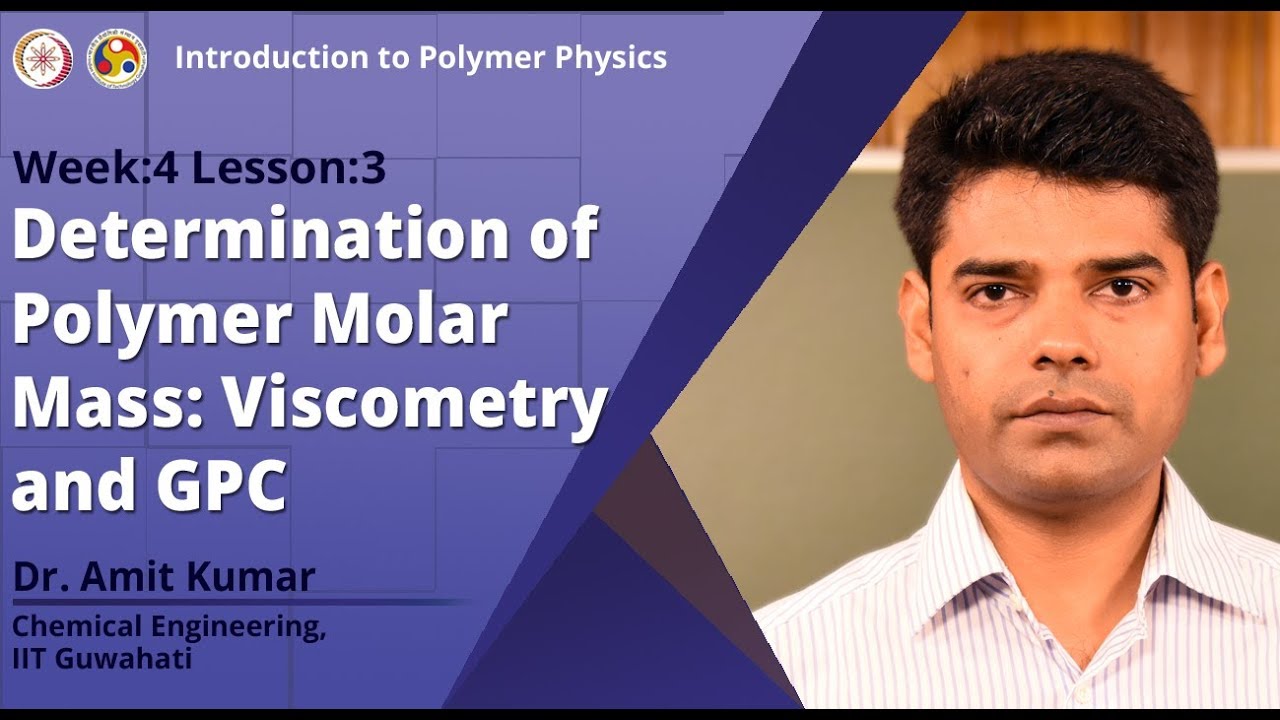
The NPTEL IIT Guwahati lecture below explains polymer molar-mass assessment using viscometry and GPC. It provides general measurement background, not the ASTM electrical-paper procedure or transformer replacement criteria.
Can transformer oil be directly tested for paper DP?
A direct paper DP measurement requires a physical paper specimen. Oil markers can support an indirect assessment, but that estimate should remain labelled separately from measured solid-insulation evidence.
Does one paper sample represent the complete winding?
Not automatically. Its location, accessibility and operating context determine representativeness. State the sampling limitation and avoid claiming that an accessible specimen describes the weakest location.
Does a DP result give exact remaining years?
No. A life forecast requires additional assumptions and condition information. Keep any model and its uncertainty separate from the laboratory’s measured result.
Should a transformer be opened just to obtain paper?
Only if a qualified engineering review justifies the intervention and an approved work plan controls the risks. Test availability alone is not sufficient justification for disturbing insulation.
A Shenheng Electric Power está empenhada em tornar-se líder global em soluções de equipamentos elétricos, ajudando os clientes a alcançar uma gestão de energia segura, eficiente e sustentável.
Se tiver alguma dúvida ou precisar de ajuda, não hesite em contactar a nossa equipa.
N.º 168, Estrada South Sixth de Punan, Zona de Desenvolvimento Económico de Yueqing, Cidade de Yueqing, Cidade de Wenzhou, Província de Zhejiang, China

 Shenheng Power Equipment Co., Ltd.