
 Shenheng Power Equipment Co., Ltd.



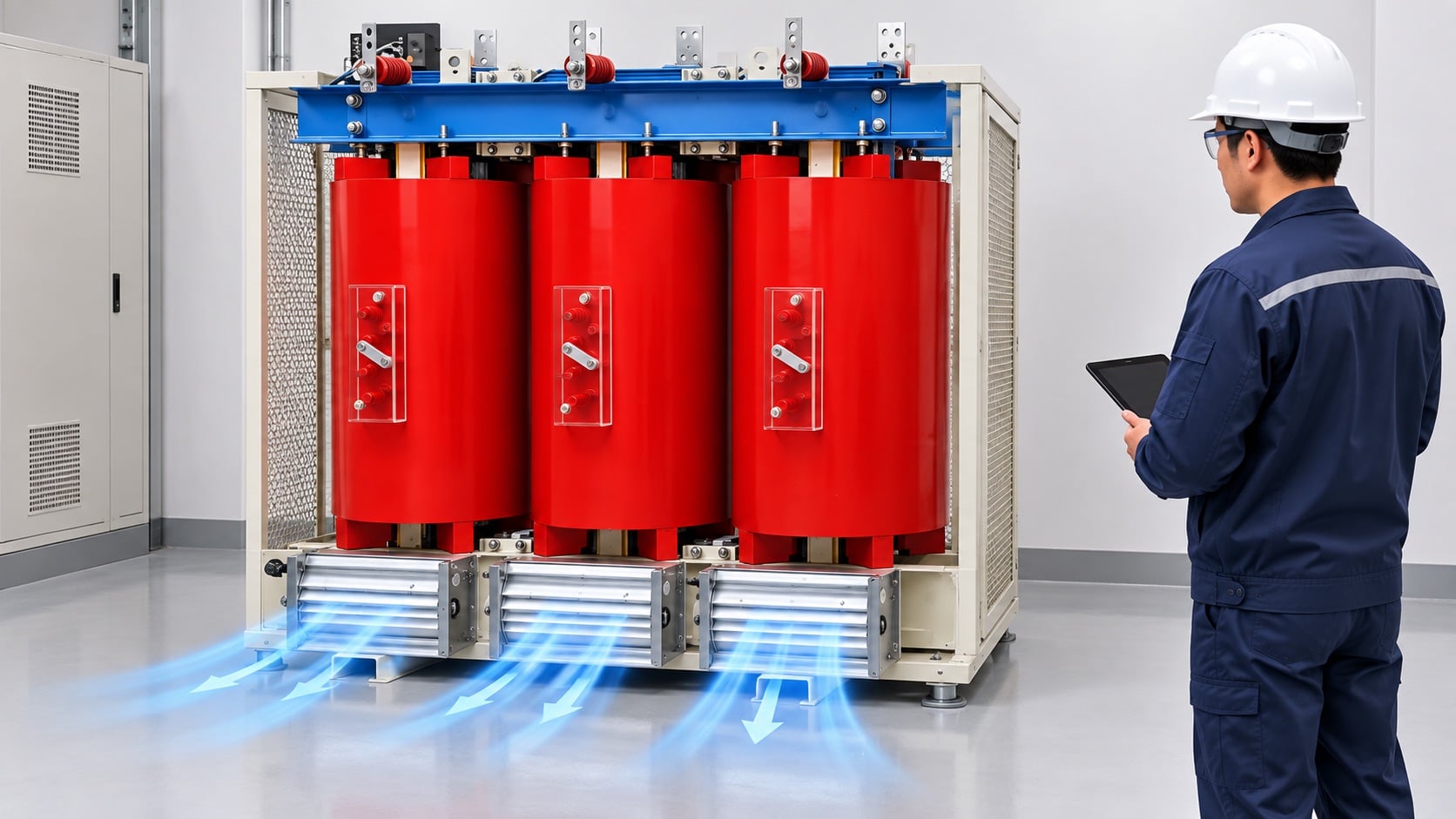
dry type transformer fan control is a focused engineering question that needs a defined boundary before a calculation, inspection or commissioning decision is made. Dry type transformer fan control manages forced-air cooling when the transformer temperature or load reaches the manufacturer’s defined operating point. Fans can increase available capacity or control winding temperature, but they do not make any dry type transformer universally suitable for overload. The control system must coordinate sensors, fan starters, protection, alarms, manual test mode and loss-of-fan response. Correct ventilation and clearances remain necessary even when fans are installed. Use the actual transformer manual and approved control drawing for setpoints and wiring.
Natural cooling and forced air
A dry type transformer may operate with natural air circulation under normal load and use fans during higher loading. The cooling designation, sensor location, fan capacity and enclosure arrangement are part of the verified design. A fan blowing across a blocked outlet cannot deliver the expected heat removal. Before discussing control, confirm the room, louver, filter and cable-entry arrangement.
IEC 60076-11 covers dry-type power transformer requirements, and IEC 60076-12 addresses loading guidance for dry-type transformers. These standards define families of requirements, not a universal fan setpoint. The supplier should identify the cooling mode and provide the control logic for the offered transformer.
Sensors and control points
Temperature sensors may be embedded in windings, attached to a core area or located at another manufacturer-defined point. The controller may use the highest phase, a calculated value, or a staged threshold. Do not move a sensor or replace it with a different resistance curve without approval. Verify sensor type, terminal numbering, polarity where applicable and alarm contacts during commissioning.
The control panel should distinguish normal fan operation, fan failure, high temperature, sensor fault and transformer trip. A single green lamp does not provide enough information for a critical installation. Record the sensor calibration or acceptance check and keep the controller manual with the transformer records.
Automatic, manual and test modes
Automatic mode should follow the approved temperature or load logic. Manual mode can be useful for maintenance, but it must be protected against being left active or bypassing a trip. A spring-return test switch, key control or supervised software command may be required by the project. Clearly label the control states on the drawing and local panel.
Fan operation at no load can create noise and unnecessary wear. Delayed start or stop may be used to avoid rapid cycling, but the time must come from the design. Do not invent a delay because it sounds reasonable. Confirm the controller response at low temperature, threshold crossing, sensor failure and loss of auxiliary power.
Fan selection and airflow
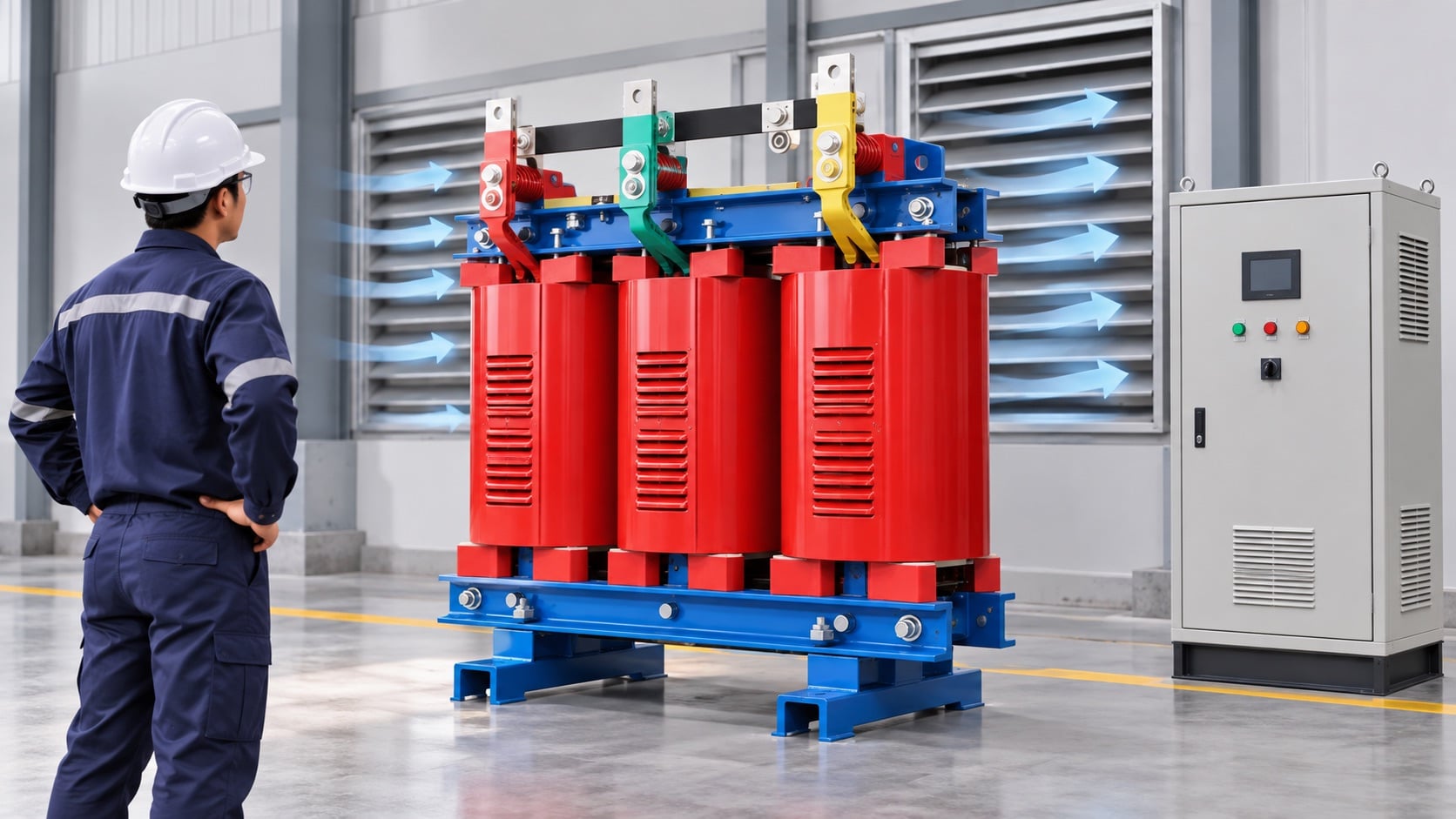
Fans must be matched to the transformer enclosure, pressure drop, acoustic requirements, dust level and ambient. Airflow should move through the intended heat path rather than recirculate inside a cabinet. Filters and louvers need access for inspection. Cable trays, fire barriers and walls can change the original airflow and should be included in the installation review.
The product page linked here shows a cast-resin transformer category. It is not evidence of a specific fan rating or control setpoint. Ask the supplier for the fan model, power supply, protection device, airflow basis and maximum permitted ambient. Confirm that the forced-air rating applies to the complete installed arrangement.
Protection and interlocks
Each fan motor needs the specified short-circuit and overload protection, isolation and earthing. The transformer should not silently remain in a high-load operating state when all fans have failed. The control scheme may alarm first and trip later depending on the thermal study and owner requirements. Interlock logic must be documented.
Separate transformer protection from fan protection in the schematic. A fan breaker trip should not automatically trip the transformer unless the approved philosophy says so, but it should create a visible alarm and change the available loading state. Verify local and remote indications and alarm priorities in the control room.
Commissioning sequence
Inspect fan guards, rotation, bearings, mounting, vibration, filters and clearances before applying auxiliary power. Prove the sensor inputs, controller thresholds using a safe simulation, fan start/stop, alarm contacts and trip logic. Confirm phase sequence and motor current where applicable. Do not put hands near rotating equipment.
After functional testing, run the transformer at a representative load and record temperatures, fan status, ambient and airflow observations. Check for hot spots, unusual noise or recirculation. A thermal survey of accessible surfaces can support trending but cannot replace internal design evidence. Store the final setpoints and test result with the asset ID.
Maintenance and failure modes
Common issues include blocked filters, failed contactors, loose sensor terminals, incorrect sensor type, seized bearings, noisy fans and a controller left in manual mode. A fan can run while airflow is inadequate if the impeller, filter or direction is wrong. Maintenance should inspect the whole heat path, not only the run lamp.
Trend temperature and fan runtime together. A rising temperature at unchanged load may indicate airflow degradation or sensor drift. If a fan is unavailable, follow the manufacturer emergency-loading limits and reduce load as required. Do not improvise a portable fan inside an energized enclosure.
RFQ and handover checklist
Ask for cooling designation, sensor type and location, control schematic, fan schedule, setpoints, alarm and trip matrix, auxiliary voltage, motor protection, enclosure airflow, noise limits, spare parts and maintenance intervals. Require a test procedure covering normal, alarm, failure and restoration states.
At handover, retain as-built wiring, controller configuration, fan rotation check, sensor records, protection settings and thermal baseline. Link the temperature monitoring guide for trending and the clearance guide for airflow and installation conditions.
| Sprawdź | Dowód do nagrania | Dlaczego to ważne |
|---|---|---|
| Definicja | Formuła, stany graniczne i stan działania | Zapobiega porównywaniu przez dwie drużyny różnych ilości. |
| Wyposażenie | Ocenzurowany napięcie, prąd, konstrukcja i zatwierdzony rysunek | Łączy obliczenie lub listę kontrolną z rzeczywistym produktem. |
| Warunki | Środowisko, temperatura, współczynnik mocy lub zanieczyszczenie, w zależności od przypadku | Wyjaśnia, dlaczego zachowanie pól może różnić się od wartości z katalogu. |
| Weryfikacja | Metoda testowania, przyrząd, wynik i podstawy akceptacji | Tworzy sprawdzalny zapis uruchomienia. |
| Kontrola zmian | Odchylenie, zatwierdzenie przez właściciela oraz korekta w stosunku do stanu faktycznego | Zapobiega sytuacji, w której nieprzeczytana zmiana witryny staje się ukrytym ryzykiem. |
Linki do produktów i poradników technicznych
Więcej informacji na temat dopasowania produktu Shenheng można znaleźć w dotycząca strony produktu. W sprawie szerszej tematyki, przeczytaj instrukcja rodzicielska. Literatura do zapoznania się: Pierwsze powiązane przewodniki i drugi odpowiedni przewodnik.
Źródła i standardy
Źródło władz 1 · Źródło władz 2
Jak wykorzystać wynik w projekcie
Rozpocznij od identyfikacji końcowego wyposażenia i opracowanego projektu. Zwróć uwagę na stan eksploatacji, punkt pomiarowy, warunki środowiskowe oraz decyzję, którą wynik musi potwierdzić. Następnie porównaj dowody z obowiązującymi standardami, instrukcjami producenta oraz planem akceptacji projektu. Jeśli którykolwiek z warunków wstępnych jest niedociągnięciem, zachowaj element włączony w system, zamiast uzupełniać luki generowaniem wartości ogólnej. Ta metoda pozwala kupującemu, inżynierowi odpowiedzialnemu za uruchomienie i zespołowi ds. operacji omówić ten sam zasób fizyczny.
W przypadku zapytania od dostawcy należy poprosić o podanie podstawy obliczeń, sprawdzonego układu, ograniczeń, dokumentacji badań oraz odchyleń. W przypadku prac na placu budowy należy zanotować osobę, urządzenie, datę, granicę izolacji oraz kontrolę przywracania stanu pierwotnego. Krótki, ale pełny zapis jest bardziej przydatny niż długi raport, który ukrywa fakt niezbędny do zatwierdzenia kolejnego etapu.
Bezpieczeństwo i kontrola zmian
Urządzenia elektryczne mogą przechowywać energię lub pobierać energię z więcej niż jednego źródła. Prace narażające przewody elektryczne, usuwające bariery lub zmieniające funkcję zabezpieczeń lub sterowania wymagają zatwierdzonego pozwolenia, izolacji, weryfikacji braku napięcia oraz kwalifikowanego nadzoru. Ten artykuł nie powinien być używany jako instrukcja dotycząca przesyłania energii. Jeśli zainstalowana instalacja różni się od rysunku, należy zatrzymać się i uzyskać zezwolenie techniczne przed kontynuowaniem prac.
Po wykonaniu testu lub przeglądzie należy przywrócić pokrywy, osłony, zawiasy, zabezpieczenia, etykiety i ustawienia. Wykonaj niezależną kontrolę najważniejszych etapów napraw. Zapisuj wyjątki i powiązaj je z końcowym rekordem aktywów. Dzięki temu zespoły konserwacyjne w przyszłości nie będą polegać na tymczasowym stanie testowym.
Kiedy dowody są niekompletne, należy zidentyfikować brakujące dane i przypisać je do właściciela przeglądu. Nie należy powtarzać wartości oceny, wartości punktu wyjściowego, wartości dopuszczalnej lub wyniku testu z innej rodziny produktów. Wartość rodziny produktów, klasę napięcia i środowisko lokalne należy utrzymywać w stałym zakresie od pierwszego obliczenia do zakończenia procesu przekazania. Dzięki temu późniejsze porównania trendów stają się sensowne i pozwalają dostawcy na przedstawienie jasnego zestawu pytań.
Wideo dla kontekstu systemowego
To neutralne wyjaśnienie z serii Practical Engineering dostarcza przydatnych informacji na temat stacji przesyłowych, transformatorów i rozdzielni. Jest to materiał edukacyjny, a nie instrukcja do realizacji konkretnego projektu.

Często zadawane pytania
Jakie jest główne niepowodzenie, którego należy unikać?
Treating one percentage, dimension or indicator as a universal acceptance value. The dry type transformer fan control decision must use the applicable standard, actual equipment and documented conditions.
Czy strona produktu może zastąpić inżynierię projektową?
Nie. Linkowana strona produktu wskazuje na odpowiednią kategorię produktów Shenheng. Oceny, akcesoria, ustawienia i wartości akceptacyjne muszą pochodzić z dokumentów projektu oraz dostarczonego sprzętu.
Czego należy trzymać do przekazania?
Zachować zatwierdzony rysunek, dane z prób, metodę testowania, informacje o instrumentach, odchylenia, końcowe ustawienia oraz dokumentację stanu gotowego urządzenia, aby można było odtworzyć wynik.
Czy to wytyczne zezwalają na pracę na żywo?
Nie. Wykwalifikowany personel musi przestrzegać programu bezpieczeństwa elektrycznego na placu budowy, a także instrukcji producenta.




