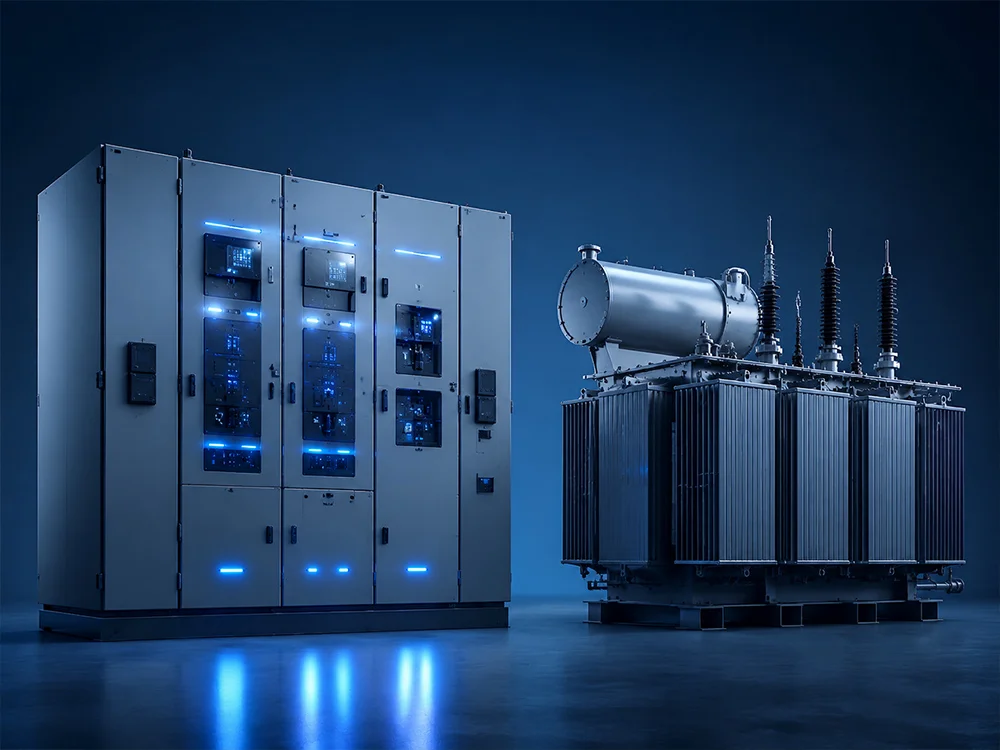
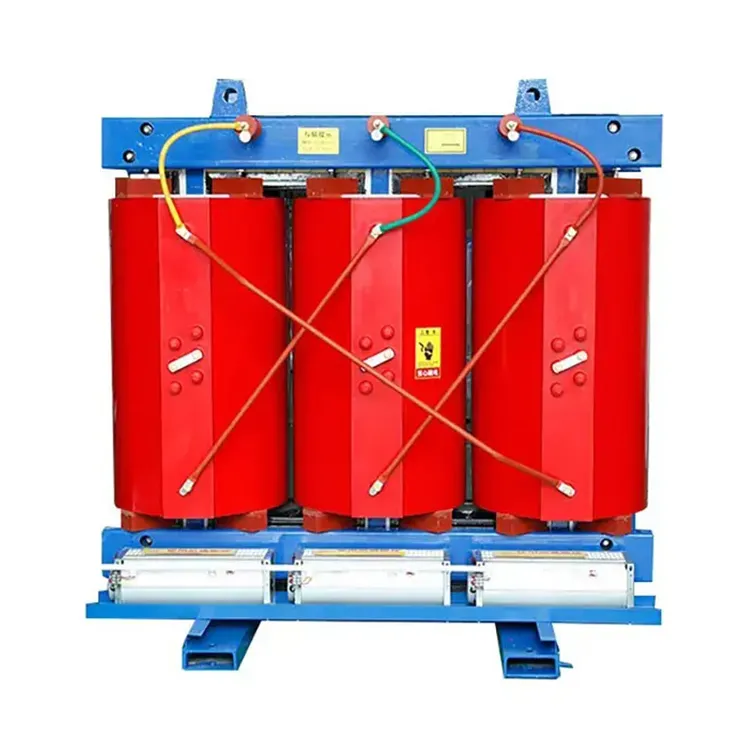
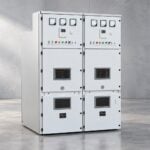
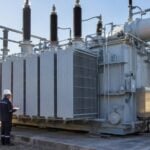
W miarę przyspieszania globalnej elektryfikacji, przemysł oblicza się ze wzrastającym zapotrzebowaniem na bezpieczniejsze, bardziej niezawodne i energooszczędne rozwiązania w zakresie dystrybucji energii. Transformator żywiczny stał się preferowanym wyborem dla wielu nowoczesnych systemów elektrycznych ze względu na swoją konstrukcję odporną na ogień, niskie wymagania konserwacyjne oraz cechy przyjazne dla środowiska. W przeciwieństwie do tradycyjnych transformatorów olejowych, transformatory suche wykorzystują stałe materiały izolacyjne i systemy chłodzenia oparte na powietrzu, co czyni je idealnymi do instalacji wewnątrz budynków oraz w miejscach wrażliwych środowiskowo.
Gwałtowny rozwój centrów danych opartych na sztucznej inteligencji (AI), projektów energii odnawialnej, infrastruktury ładowania pojazdów elektrycznych (EV) oraz rozwoju inteligentnych sieci energetycznych stymuluje innowacje w całej branży transformatorów. Wśród różnych typów transformatorów, transformatory suche zyskują na znaczeniu, ponieważ zapewniają niezawodne przetwarzanie napięcia, jednocześnie spełniając surowsze wymagania dotyczące bezpieczeństwa i zrównoważonego rozwoju.
Dla inżynierów elektryków, wykonawców EPC i nabywców przemysłowych wybór odpowiedniego elektryczne rozwiązanie transformatorowe wiąże się z czymś więcej niż tylko wyborem napięcia i pojemności. Kupujący muszą ocenić wydajność, parametry izolacji, metody chłodzenia, poziom hałasu, wymagania dotyczące certyfikacji oraz długoterminowe koszty eksploatacji.
Ten przewodnik wyjaśnia podstawy transformatorów suchych, porównuje różne technologie transformatorów, omawia ich zastosowania przemysłowe oraz zapewnia praktyczne wskazówki dotyczące wyboru odpowiedniego rozwiązania dla współczesnych systemów elektroenergetycznych.
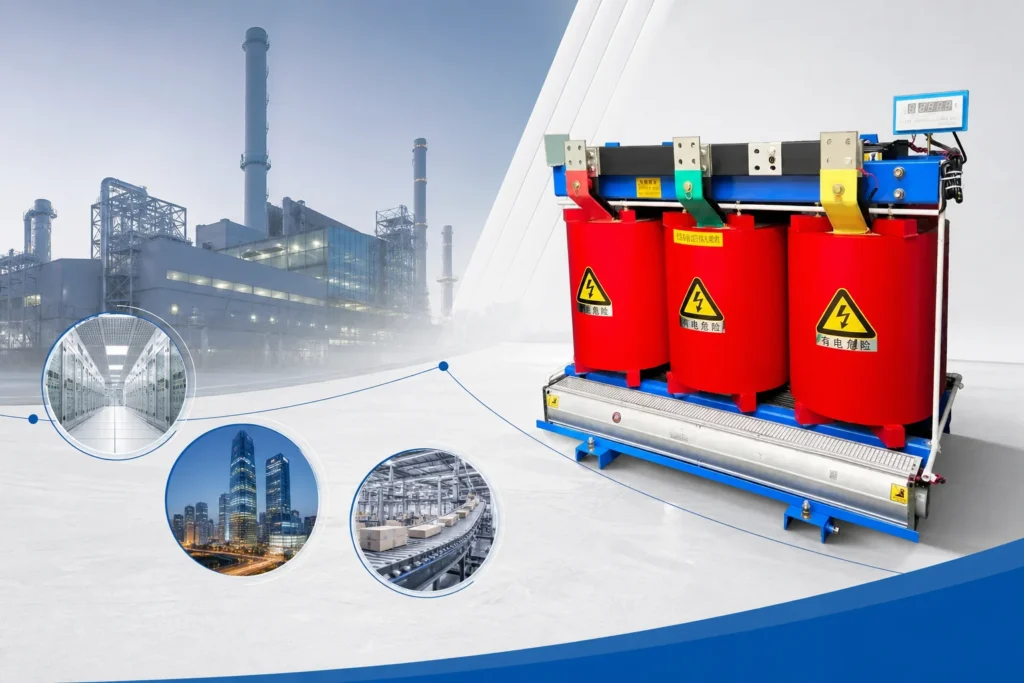
Suchy transformator to transformator elektryczny który przekazuje energię między obwodami poprzez indukcję elektromagnetyczną, wykorzystując izolację stałą zamiast ciekłych materiałów dielektrycznych.
Główną funkcją transformatora jest podwyższanie lub obniżanie poziomów napięcia, co umożliwia wydajne przesyłanie energii oraz bezpieczną dystrybucję elektryczności.
Typowy transformator żywiczny składa się z kilku kluczowych elementów:
| Komponent |
Funkcja |
| Rdzeń magnetyczny |
Zapewnia ścieżkę o niskiej reluktancji dla strumienia magnetycznego i poprawia wydajność transferu energii |
| Uzwojenie pierwotne |
Odbiera elektryczną energię wejściową |
| Uzwojenie wtórne |
Zapewnia przekształcone napięcie wyjściowe |
| System izolacyjny |
Zapewnia izolację elektryczną i ochronę termiczną |
| Konstrukcja chłodząca |
Steruje temperaturą roboczą |
Uwaga: Ponieważ transformatory suche nie zawierają oleju izolacyjnego, znacznie ograniczą zagrożenie pożarowe i eliminują ryzyko związane z wyciekiem oleju. Czyni je to odpowiednimi do budynków komercyjnych, zakładów przemysłowych, szpitali oraz innych miejsc, w których bezpieczeństwo jest priorytetem.
Zasada działania transformatora suchego opiera się na indukcji elektromagnetycznej.
Gdy prąd przemienny przepływa przez uzwojenie pierwotne, generuje on zmieniające się pole magnetyczne wewnątrz rdzenia transformatora. Strumień ten indukuje napięcie w uzwojeniu wtórnym, co umożliwia przesyłanie energii elektrycznej z jednego obwodu do drugiego przy innym poziomie napięcia.
Podstawowy proces konwersji energii to:
Energia elektryczna → Strumień magnetyczny → Transformacja napięcia → Dystrybucja mocy
Współczynnik transformacji napięcia zależy od liczby zwojów w uzwojeniu pierwotnym i wtórnym. Regulując konstrukcję uzwojenia, producenci mogą wytwarzać transformatory odpowiednie dla różnych poziomów napięcia, w tym:
-
Systemy niskiego napięcia (NN)
-
Rozdział energii średniego napięcia (SN)
-
Przemysłowe sieci elektroenergetyczne
Nowoczesne transformatory suche wykorzystują również zaawansowane technologie izolacyjne oraz konstrukcyjne rozwiązania w zakresie zarządzania termicznego, aby zwiększyć niezawodność w ciągłych warunkach pracy.
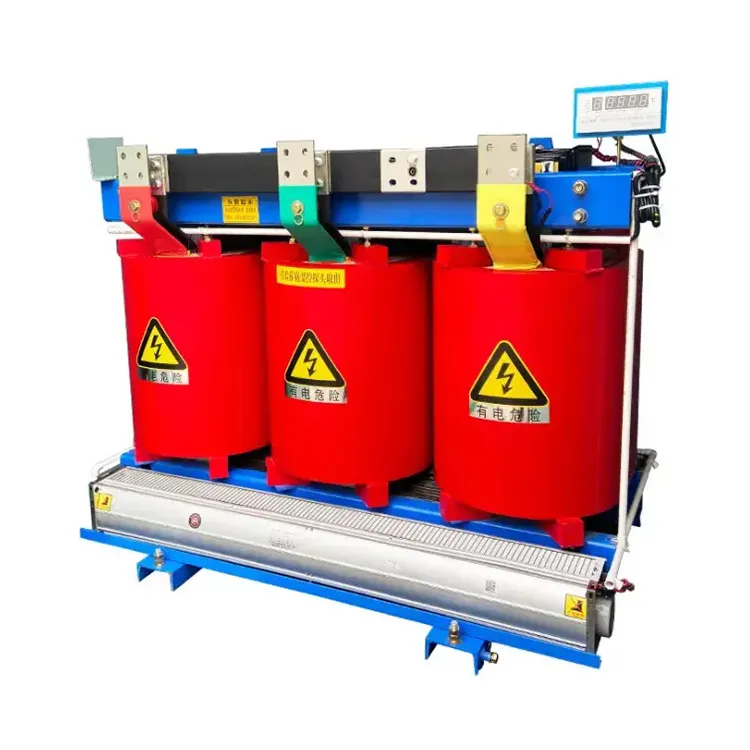
Transformatory można klasyfikować według technologii izolacji, poziomu napięcia oraz wymagań aplikacji.
Do najpopularniejszych typów transformatorów należą:
| Typ transformatora |
System izolacji |
Typowe zastosowania |
| Transformator suchy |
Izolacja powietrzna i stała |
Budynki komercyjne, fabryki, centra danych |
| Transformator żywiczny |
Zalewanie żywicą epoksydową |
Trudne środowiska przemysłowe |
| Transformator VPI |
Impregnacja próżniowo-ciśnieniowa |
General industrial applications |
| Oil Filled Transformer |
Mineral oil insulation |
Outdoor substations |
| Power Transformer |
Oil-based high voltage insulation |
Transmission networks |
Transformator suchy
Dry type transformers are designed for applications requiring high safety, reliability, and environmental protection. They are commonly installed indoors where fire prevention and limited maintenance are important.
Transformator żywiczny
A cast resin transformer uses epoxy resin to encapsulate windings, improving resistance against moisture, dust, and harsh environmental conditions.
Typical applications include:
Transformator VPI
Vacuum Pressure Impregnation (VPI) transformers use resin-treated insulation systems to improve mechanical strength and thermal performance.
They are widely used in industrial power distribution systems where reliability and cost efficiency are important.
One of the most common questions from electrical professionals is how dry type transformers compare with oil-filled transformer designs.
| Feature |
Transformator suchy |
Oil Filled Transformer |
| Insulation method |
Solid insulation |
Mineral oil |
| Fire safety |
High |
Requires additional protection |
| Environmental risk |
No oil leakage |
Possible oil contamination |
| Maintenance |
Low maintenance |
Requires oil testing |
| Installation |
Mainly indoor |
Mainly outdoor |
| Initial investment |
Higher |
Lower |
Dry type transformers are usually selected for buildings, hospitals, airports, and data centers where safety and reliability are critical.
Oil-filled transformers remain widely used in outdoor substations and utility applications where very high power capacity is required.
Several market trends are accelerating the adoption of dry type transformer technology.
Enhanced Fire Safety
Because dry transformers contain no flammable insulating oil, they provide improved fire protection.
This makes them suitable for:
-
Hospitals
-
Airports
-
Shopping malls
-
High-rise buildings
-
Centra danych
Environmental Protection
Modern industries increasingly focus on sustainable electrical infrastructure.
Dry type transformers offer advantages including:
Lower Maintenance Requirements
Compared with oil transformers, dry type transformers require fewer maintenance procedures because they eliminate:
-
Oil quality testing
-
Oil replacement
-
Leakage inspections
This reduces operational costs throughout the transformer lifecycle.
The application range of dry type transformers continues expanding due to global electrification trends.
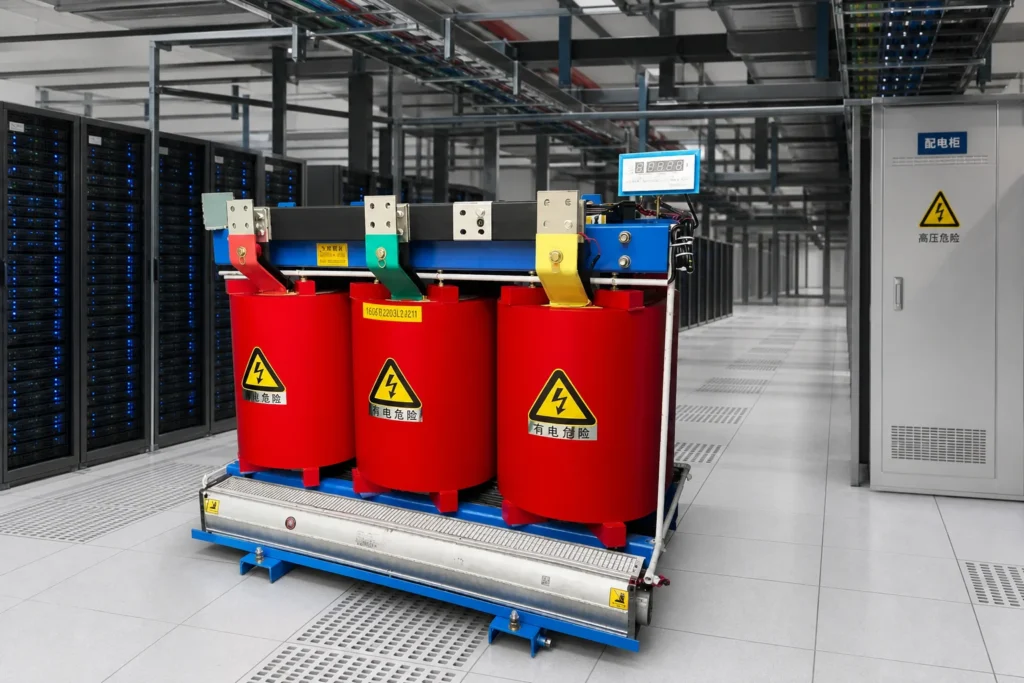
Dry Type Transformers for AI Data Centers
The rapid growth of artificial intelligence has significantly increased electricity demand from data centers.
AI computing facilities require:
Dry type transformers are increasingly used in data center electrical systems because they provide:
Renewable Energy Systems
Renewable energy projects require reliable voltage conversion between generation equipment and electrical grids.
Dry transformers are commonly applied in:
The oil-free design makes them attractive for environmentally sensitive renewable energy projects.
Infrastruktura ładowania pojazdów elektrycznych
The expansion of electric vehicles requires stronger distribution infrastructure.
Dry type transformers support EV charging stations by providing:
Industrial Manufacturing
Factories using automation systems and advanced machinery require stable power quality.
Typical applications include:
Transformer selection should consider more than voltage and capacity. Several technical factors influence efficiency, reliability, and service life.
Thermal Management and Cooling Methods
Temperature control is critical because excessive heat can accelerate insulation aging.
Common cooling methods include:
| Cooling Class |
Description |
| AN |
Natural air cooling |
| AF |
Forced air cooling with fans |
Proper thermal design helps maintain stable operation and extend transformer lifespan.
System izolacji
The insulation system determines the transformer’s temperature resistance and reliability.
Common insulation classes include:
-
Class F insulation
-
Class H insulation
Higher insulation grades allow transformers to operate under demanding industrial conditions.
Partial Discharge Performance
For medium voltage dry type transformers, partial discharge (PD) performance is an important reliability indicator.
Low PD levels indicate:
Noise Reduction Design
Noise performance has become increasingly important for indoor installations.
Modern designs reduce transformer noise through:
-
Optimized magnetic core structures
-
Improved vibration control
-
Advanced manufacturing processes
Choosing the correct transformer requires evaluating technical and operational requirements.
Voltage and Capacity
Key parameters include:
Installation Environment
Engineers should consider:
Efficiency and Energy Loss
High-efficiency transformers reduce:
Total Cost of Ownership (TCO)
Professional buyers increasingly evaluate lifecycle value rather than only initial purchase price.
TCO includes:
For international projects, transformer compliance is a key purchasing factor.
Dry type transformers are commonly designed according to internationally recognized standards, including the IEC 60076 Power Transformer Standard, which defines requirements for transformer design, testing, and performance evaluation.
Common standards include:
| Standard |
Application |
| IEC 60076 |
International transformer requirements |
| IEEE C57 |
North American transformer standards |
| ANSI |
Electrical equipment requirements |
Before purchasing, buyers should verify:
Even high-quality transformers may experience reduced performance if installation conditions are unsuitable.
Poor Ventilation
Insufficient airflow can increase operating temperature and shorten insulation life.
Incorrect Transformer Sizing
Oversized or undersized transformers may result in:
Ignoring Harmonic Loads
Modern electrical equipment such as:
can introduce harmonic currents.
Transformer selection should consider harmonic distortion levels to ensure reliable operation.
The transformer industry is moving toward digital monitoring and intelligent power management.
Modern transformer development focuses on improving efficiency and reliability through technologies promoted by organizations such as the Stowarzyszenie Standardów IEEE.
Future trends include:
IoT-Based Monitoring
Smart sensors can monitor:
-
Temperature
-
Load conditions
-
Partial discharge
-
Operating status
Predictive Maintenance
Data analysis enables early detection of potential problems and reduces unexpected downtime.
Sustainable Transformer Technology
Future designs will focus on:
As electrical systems become more complex, customers require more than standard transformer products. They need reliable engineering support and customized solutions.
Our dry type transformer solutions provide:
-
Customized voltage and capacity design
-
Advanced insulation technology
-
Strict quality control
-
International standards compliance
-
Professional technical support
Whether for industrial facilities, renewable energy projects, data centers, or commercial buildings, reliable transformer solutions help ensure safe and efficient power distribution.
Często zadawane pytania
1. What is a dry-type transformer?
A suchy transformator is an electrical transformer that uses solid insulation and air cooling instead of transformer oil. It is widely used in buildings, factories, data centers, and other applications where safety and low maintenance are important.
2. What is the difference between dry-type and oil-type transformers?
Główną różnicą jest metoda izolacji i chłodzenia. Transformatory suche wykorzystują powietrze oraz izolację stałą, podczas gdy transformatory olejowe stosują olej izolacyjny. Transformatory suche oferują lepsze bezpieczeństwo przeciwpożarowe i są często preferowane do instalacji wewnętrznych.
3. What are the 4 types of transformers?
The four common types of transformers include:
Each type is designed for different voltage levels and electrical applications.
4. What are Class 3 transformers?
Transformatory klasy 3 to transformatory małej mocy przeznaczone do zastosowań o ograniczonym poborze energii, takich jak systemy sterowania, urządzenia sygnalizacyjne i obwody niskonapięciowe.
5. How does a dry-type transformer work?
Transformator suchy działa na zasadzie indukcji elektromagnetycznej. Przesyła energię elektryczną między obwodami poprzez zmianę poziomów napięcia dzięki interakcji pomiędzy uzwojeniem pierwotnym a wtórnym.
6. What are the advantages of dry-type transformers?
Główne zalety obejmują wysokie bezpieczeństwo pożarowe, niskie koszty konserwacji, brak ryzyka wycieku oleju, ochronę środowiska oraz niezawodne działanie w zastosowaniach wewnętrznych.
7. Where are dry-type transformers commonly used?
Transformatory typu suchego są powszechnie stosowane w zakładach przemysłowych, budynkach komercyjnych, szpitalach, na lotniskach, w projektach energii odnawialnej, stacjach ładowania pojazdów elektrycznych oraz w centrach danych.
8. How do I choose the right dry-type transformer?
Wybór odpowiedniego transformatora zależy od takich czynników jak klasa napięciowa, moc (kVA), środowisko instalacji, metoda chłodzenia, wymagania dotyczące sprawności oraz obowiązujące normy elektryczne.
Bibliografia
-
IEC 60076 Power Transformer Standards – International Electrotechnical Commission
International requirements for transformer design, testing, insulation, and performance evaluation.
-
IEEE Standards Association – Electrical Engineering Standards
Technical standards and engineering guidance for electrical power systems.
-
International Energy Agency (IEA) – Energy Transition Research
Research and analysis on electrification, renewable energy integration, and future power infrastructure development.
Dry type transformers have become an essential component of modern electrical infrastructure because of their safety, reliability, and environmental advantages.By understanding the different types of transformers, technical performance factors, and application requirements, engineers and buyers can make better decisions when selecting electrical equipment.With continued growth in AI infrastructure, renewable energy, and global electrification, dry type transformers will remain a key technology supporting the future of power distribution.

 Shenheng Power Equipment Co., Ltd.