
 申恒電力設備有限公司.



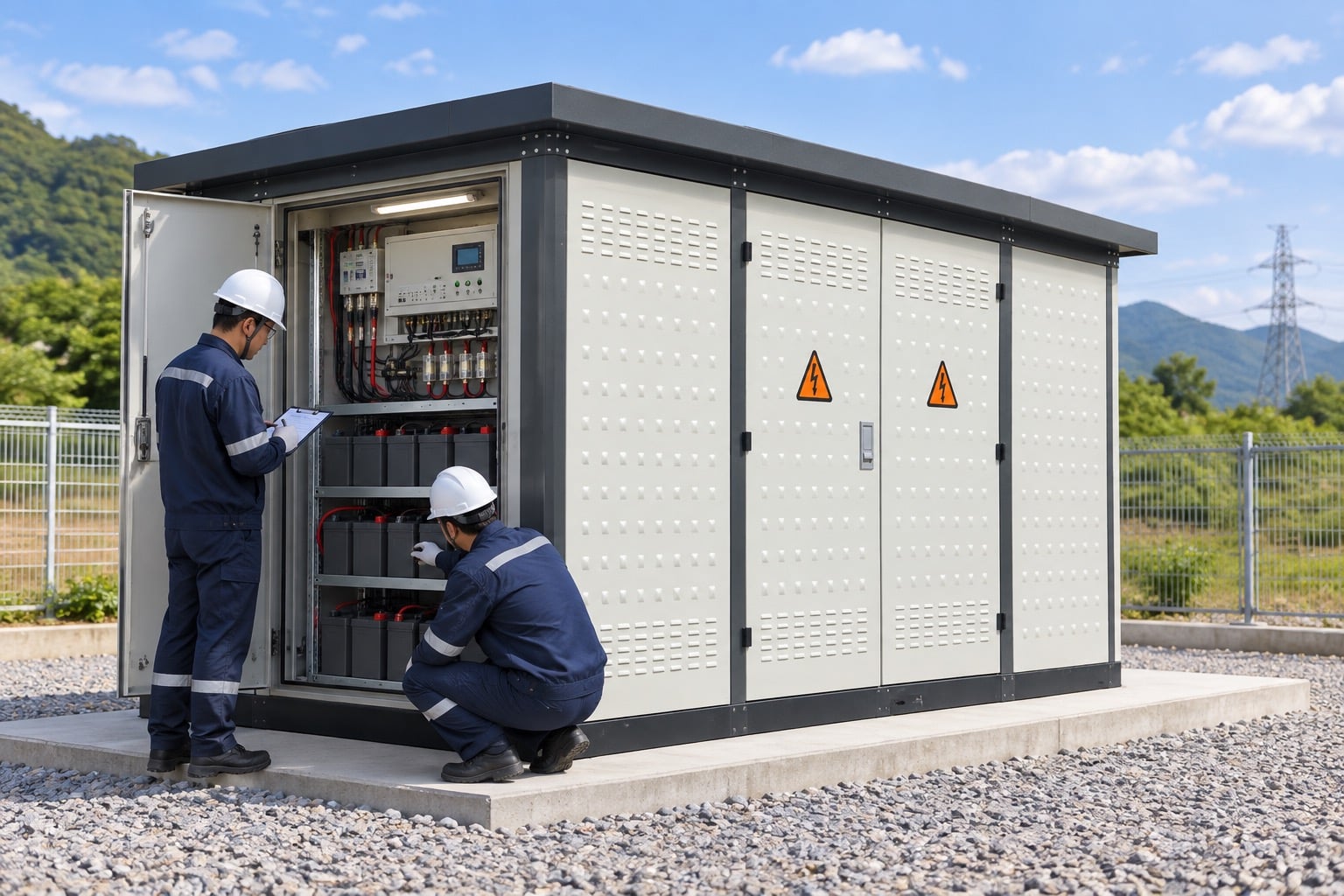
substation battery sizing requires a clear engineering boundary before it can support a purchase, inspection or commissioning decision. A substation battery sizing calculation converts the required DC loads, autonomy time, end voltage, temperature and battery technology into a defensible capacity and configuration. The answer is not simply the largest amp-hour number in a catalog. It must reflect the actual protection, control, breaker trip and close coils, emergency lighting, communications and monitoring duties that remain available when AC auxiliary power is lost.
List every DC load
Begin with a load schedule for the station battery. Separate continuous loads such as relays, RTU, indication and communications from momentary loads such as breaker trip and close coils, motor operators and emergency alarms. Record normal, emergency and restoration states, because a device that is idle in normal service may be essential during a fault or switching sequence.
Ask each package supplier for its maximum and steady-state current, inrush duration, minimum operating voltage and duty sequence. Do not copy a nominal control-power value when the coil, motor or converter has a different end-of-discharge requirement. Include future feeders only when they are approved in the design basis.
Define the duty cycle and autonomy
The duty cycle describes how the battery is expected to perform after loss of the charger. It may include a long continuous load, one or more breaker operations, alarms, communications and a final trip or close sequence. Define the required autonomy in hours and the sequence in seconds or minutes. A battery can have enough total amp-hours but still fail the high-current event at the end of the cycle.
Write the sequence in time order and state which loads overlap. Include a conservative operating case for the most demanding credible outage. The autonomy requirement should come from the utility or project standard, not from an arbitrary multiplier applied to a single reading.
Apply end voltage and temperature
A sizing calculation must use the minimum system voltage at the end of discharge and the correction for the battery installation temperature. Lead-acid and nickel-cadmium technologies have different discharge behavior, maintenance regimes and temperature sensitivity. The manufacturer’s published discharge tables or approved calculation method should be the source of capacity factors.
Check cell count, charger float voltage, low-voltage alarm, disconnect settings and the minimum voltage tolerated by each DC load. A relay may drop out before the battery is fully empty. If the room or outdoor enclosure can become cold or hot, use the temperature range in the design rather than the average climate.
Select battery type and configuration
Compare the required duty with available cell capacity, series cell count, parallel strings, footprint, ventilation, maintenance and replacement plan. The selected battery should support the fault duty, charging method and environment of the compact or conventional substation. Confirm that the charger, DC distribution and protection are compatible with the battery chemistry.
A larger string is not automatically safer if the charger cannot control it or if the DC board has inadequate short-circuit protection. Document the reason for the chosen voltage, cell count and string arrangement. If two strings are used for redundancy, define how load sharing, isolation and testing are managed.
Check charger and DC distribution
The charger must restore the battery after an outage while supplying continuous station loads. Review charger rating, redundancy, boost or equalize functions, ripple, alarms, DC earth-fault monitoring and the distribution-board protective devices. Cable voltage drop and breaker coordination matter during a trip event.
Trace the DC path from cells to fuse or breaker, bus, control circuit and final coil. Confirm polarity, labeling, segregation and the return path. A good battery calculation cannot compensate for an undersized cable, loose termination or a protective device that opens during the required operation.
Verify with a calculation table
Present assumptions, loads, duty sequence, correction factors, selected capacity, reserve and resulting margin in a reviewable table. Make clear which values are measured, supplier-confirmed or design assumptions. Have the responsible protection and auxiliary-power engineer review the final case before purchase or commissioning.
Retain the spreadsheet or calculation note with the battery data sheet, charger schedule, DC schematic, autonomy requirement and test record. Recalculate when protection settings, breaker type, communications equipment, room temperature or future feeder scope changes.
機器の境界を定義する
正確な資産、電圧クラス、構造、およびリリース済みの図面から始めましょう。有用なエンジニアリング回答は、物理的な境界と定義された動作状態と結び付けられます。計算、検査、または比較の開始と終了地点を記録し、意図的に除外された機器を特定します。これにより、一般的なカタログ記述がプロジェクトの承認値と混同されるのを防ぐことができます。.
設計、調達、および導入を通じて製品の同一性を維持してください。付属のモデル、付属品、筐体、ケーブルインターフェース、および環境仮定をメモしてください。設置された配置が図面と異なる場合は、別の製品ファミリーから欠落した値を入力するのではなく、停止して承認された配置を取得してください。.
標準規格とメーカーの証拠を併用する
標準規格はフレームワーク、テストコンセプト、用語を定義しますが、メーカーのドキュメントは供給された機器の検証された構造および動作限界を規定します。標準化されたリンクは、未検証の変更が許容されることを証明するものではなく、パンフレットはプロジェクト仕様または安全規則に代わるものではありません。.
調達については、標準版、設計検証またはタイプテストの範囲、日常検査記録、設置制限、および高度や環境の補正を依頼してください。証拠は資産記録に保管してください。結果が異議を唱えられた場合は、数値の比較前に定義、試験条件、および境界条件を比較してください。.
設置および試運転計画
設置の品質は、現場で音響設計がそのまま残るかどうかを左右します。電源投入前に、基礎、アクセス、持ち上げ、クリアランス、換気、ケーブルの曲げ半径、アース接続、ラベル、および制御インターフェースを確認してください。承認済みの方法書および許可システムを使用してください。きちんとしたキャビネットは、すべての接続、インターロック、またはセンサーが正しく接続されていることを示すものではありません。.
稼働開始は文書確認から視覚検査、機械動作、電気的連続性、機能的論理、保護または制御試験、最終的な修復へと移行すべきです。機器の識別、設定、原値、例外、および検査を行った担当者の記録を記録してください。テストまたは検査により危険性が生じる場合は、機器を隔離してください。.
制御の変更と引き継ぎ
ケーブルルート、リレー設定、タップ位置、冷却経路、またはアース接続の変更は、元の設計基準を変化させる可能性があります。管理者の同意を得た上で、制御された変更プロセスを実施し、技術審査、図面の修正、および承認証拠を保持してください。一時的なテスト手順は引き渡し前に除去または明確に記号化する必要があります。.
最終的なパッケージには、現況図面、テストシート、承認済みの設定、機器識別情報、メンテナンス手順、逸脱点、およびトレーニング記録が含まれるべきです。将来のオペレータは、メモリーや無記名写真に頼ることなく、その決定を再現できるようになるべきです。.
安全上の注意
電気機器はエネルギーを保持し、複数の供給源から電力を供給を受けることができます。この記事はスイッチングに関する指示ではありません。資格を有する職員は、地域の規制、絶縁、電圧の有無の確認、接地、監督の要件に従わなければなりません。電力を供給されているコンパートメントに手を伸ばしたり、ロックを解除したりして測定を行ってはなりません。.
テストが失敗した場合、筐体が損傷している、異常なノイズや放電が発生している、実際の構成が不明な場合は、資産を安全な状態に維持し、担当エンジニアに報告してください。診断なしでの繰り返し電源投入は損傷やリスクを増大させる可能性があります。.

プロジェクトでその結果をどのように利用するか
まず、リリースされた設計と最終的な機器の仕様から始めましょう。操作状態、測定ポイント、環境条件、およびその決定の根拠を記載してください。その後、記録を該当する標準、製造元の指示、およびプロジェクトの承認計画と比較します。前提条件が欠けている場合は、一般的な値でそのギャップを埋めるのではなく、その項目をそのまま残しておいてください。これにより、調達、導入、運用チームに同じ基準が与えられます。.
仕入先からの問い合わせでは、計算方法、確認された手順、制限事項、試験記録、および逸脱点について確認してください。現場作業では、担当者、機器、日付、隔離境界、および復旧確認を記録してください。次のステップの承認に必要な事実を隠してしまう長い報告書よりも、簡潔な記録の方が有用です。.
| 確認 | 証拠 | 決定の使用 |
|---|---|---|
| 定義 | 境界、機器の識別、および動作状態 | 異なるチームが異なる数量を比較することを防ぎます。. |
| 設計基準 | 評価、環境、および義務の前提条件 | 解答と実際のインストールをリンクします。. |
| 確認 | 承認された方法、器具、生の結果、および承認基準 | 監査可能な記録を作成します。. |
| 変更管理 | 偏差値、レビューオーナー、および構築時点での修正内容の確認 | 隠れたフィールドの変更がリスクとなるのを防ぐ。. |
| 引き継ぎ | 設定、テスト、写真、メンテナンス、および例外 | 安全な将来の運用をサポートします。. |
関連製品およびエンジニアリングガイド
Shenheng製品の組み合わせに関する詳細は、こちらをご覧ください。 該当する製品ページ. より広範なトピックについては、こちらをお読みください。 親エンジニアリングガイド. 関連する記事: 最初の関連ガイド そして 2つ目の関連ガイド.
情報源と基準
システムコンテキスト用の動画
このニュートラルなPractical Engineeringの解説では、変電所、変圧器、スイッチ装置の基礎知識が紹介されています。これはスイッチングやテストに関する指示ではなく、教育的な内容です。.

よくある質問
最初のステップは何ですか?
Define the exact substation battery sizing boundary, equipment identity and operating state before comparing a value or feature.
カタログページがプロジェクトエンジニアリングを置き換えることは可能か?
いいえ。リンクされた製品ページには、関連するShenheng機器ファミリーが記載されています。付属のモデル、アクセサリー、規格、およびプロジェクトの承認計画が最終的な決定を下します。.
どのような証拠を保持すべきですか?
承認された図面、計算方法または試験方法、原データ、写真、機器の詳細、偏差、設定、および最終的な竣工図面を保管してください。.
この記事はライブワークを許可していますか?
いいえ。資格を有する職員は、現場の電気安全プログラム、絶縁手順、および製造元の指示に従う必要があります。.




