Depuis 2001, Shenheng Power est un fabricant de confiance d'équipements de transmission et de distribution d'énergie, fournissant des solutions électriques fiables à l'échelle mondiale.
Forts d'un système complet de service après-vente, nous fournissons des conseils techniques d'experts, des conseils sur les produits et des services OEM et ODM flexibles pour vos projets.
Depuis 2001, Shenheng Power est un fabricant de confiance d'équipements de transmission et de distribution d'énergie, fournissant des solutions électriques fiables à l'échelle mondiale.
Transformer Dehydrating Breather Replacement Compatibility: What to Check Before Ordering
Release Time: 2026-11-20
Transformer dehydrating breather replacement compatibility depends on the transformer’s air-preservation arrangement, the approved breather duty and the complete connection assembly. A matching thread or similar-looking desiccant container does not establish suitability. Before ordering, identify the supplied transformer, trace the intended breathing path and obtain the manufacturer’s replacement specification. Review moisture-control capacity, seals, environmental suitability, access and acceptance records together. This guide helps maintenance planners and buyers prepare that review; it does not provide instructions for opening an oil system, bypassing protection or working near energized equipment.
Establish what the breather actually serves
A breather permits controlled air exchange while reducing moisture entering the protected space. However, transformer preservation systems differ. A free-breathing conservator, a conservator with a separating bladder and a sealed tank do not present the same air path. Some arrangements include separate compartments or accessories with their own maintenance requirements. The equipment name alone cannot identify the correct replacement.
Le Bureau de la Reclamation des États-Unis Transformateurs : Bases, Maintenance et Diagnostics explains transformer preservation arrangements and associated maintenance considerations. Use that context to understand why the whole system matters, then apply the actual manufacturer’s documentation. It does not establish that any particular aftermarket breather fits a Shenheng unit.
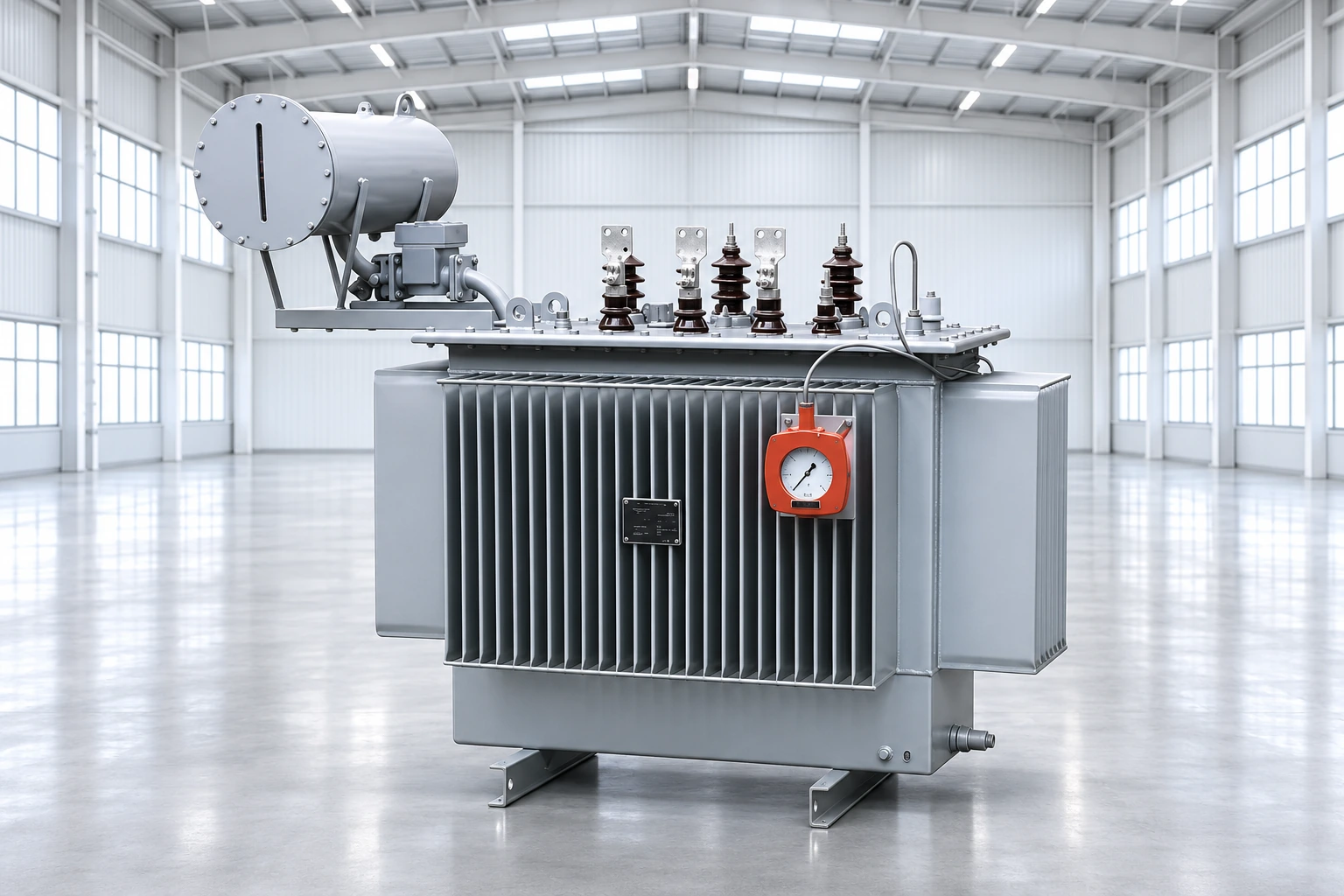
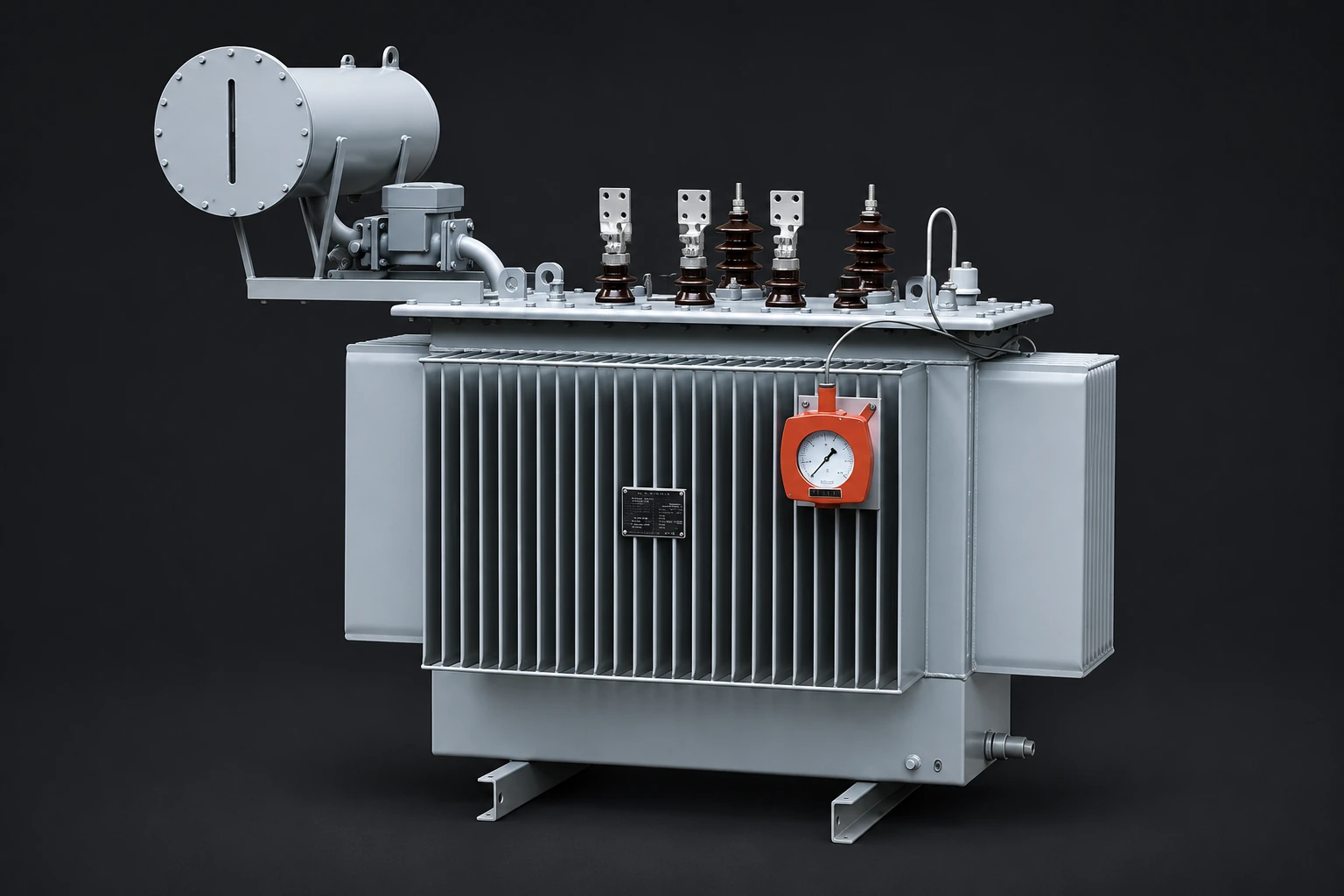
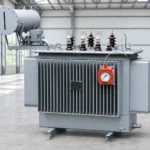
Le Shenheng oil-immersed transformer is the product reference for this article’s overall equipment illustrations. Its external appearance does not certify a breather model, air volume or replacement interface. Request the as-supplied drawing and accessory list for the unit concerned. The guide d'achat des transformateurs à huile addresses broader equipment selection; this article focuses on replacing a named accessory without changing its intended function.
Illustration de référence du produit basée sur l'image du produit Shenheng ; il ne s'agit pas d'un enregistrement réel de maintenance, de test ou de site client.
Separate exhausted desiccant from a replacement problem
A color change, damaged container and uncertain accessory identity are different findings. An indication that desiccant needs attention does not automatically mean the complete breather must be replaced. Conversely, fresh desiccant cannot correct a cracked housing, unsuitable connection or unintended route for moist air. Record the actual defect before asking suppliers to propose parts.
Review the indicator’s meaning against the installed product’s instructions. Do not infer universal color codes, regeneration temperatures or disposal requirements from a photograph. Different indicator systems and materials may have different requirements. Our transformer breather silica-gel guide covers condition monitoring; a compatibility review begins when a replacement assembly or a changed specification is proposed.
An unusually frequent service need also deserves investigation. Check the observation history, recent maintenance, surrounding conditions and preservation-system condition. Frequent saturation might reflect operating duty or another issue; it does not prove that simply fitting a larger container will solve the problem. Keep the original symptom visible in the procurement record so the replacement does not become a substitute for diagnosis.
Build a useful compatibility record
Start with asset identity, manufacturer, serial number, accessory designation and drawing revision. Include photographs of the installed assembly from authorized positions and any readable identification. Identify whether the proposed replacement is the same approved part, a manufacturer-approved successor or a third-party alternative requiring engineering review. Those three cases need different evidence.
Ask for the complete assembly boundary. A quotation might cover only a desiccant container, while the existing installation includes a connector, seal, valve arrangement or environmental cover. List retained components separately from supplied components. A drawing should show where responsibility transfers between old and new parts, especially where an adapter is proposed.
The following table is a procurement checklist, not a universal design specification. Actual values and acceptance limits must come from the supplied equipment’s approved documents.
Évaluation de l'article
Documents à demander
Raison de retenir l’approbation
Arrangement de conservation
Approved drawing identifying the protected air space
Supplier assumes the wrong air path
Connection
Drawing, dimensions, thread or flange specification and sealing details
Only nominal diameter is stated
Moisture-control duty
Manufacturer’s selection basis for the actual system
Container size alone is used as proof
Materials and environment
Approved seal, housing and exposure requirements
Material equivalence is unsupported
Supplied scope
Itemized assembly and retained-parts list
Adapters or seals are omitted
Service access
Installed envelope and maintenance access review
Removal would require unintended disturbance
Acceptation
Identification, installation and inspection records
Completion means only that the part was delivered
Check connections beyond nominal size
Connection compatibility includes the engagement, sealing face, support and installed orientation. Parts that can be physically screwed together may still have incompatible details. Ask the supplier to identify the exact connection standard and drawing reference. Avoid accepting descriptions such as “standard transformer fitting” without an explicit relationship to the installed unit.
An adapter changes more than the purchasing list. It can change support, clearance, removal access and the number of potential leakage interfaces. Ask the responsible engineer whether the proposed assembly needs additional support and whether the installed orientation remains permitted. Do not improvise an adapter in the field because the replacement arrived with a different connection.
cURL Too many subrequests by single Worker invocation. To configure this limit, refer to https://developers.cloudflare.com/workers/wrangler/configuration/#limits.
cURL Too many subrequests by single Worker invocation. To configure this limit, refer to https://developers.cloudflare.com/workers/wrangler/configuration/#limits
cURL Too many subrequests by single Worker invocation. To configure this limit, refer to https://developers.cloudflare.com/workers/wrangler/configuration/#limits.
cURL Too many subrequests by single Worker invocation. To configure this limit, refer to https://developers.cloudflare.com/workers/wrangler/configuration/#limits.
Illustration de référence du produit basée sur l'image du produit Shenheng ; il ne s'agit pas d'un enregistrement réel de maintenance, de test ou de site client.
Compare offers on evidence rather than container size
A useful request for quotation includes the installed part identity, required successor status, connection drawing, environment, assembly scope and requested documentation. Ask suppliers to list deviations explicitly. A shorter delivery time is useful only when the proposed accessory is demonstrably suitable for the intended system.
Consider a planning example. Two suppliers offer breathers with the same nominal connection. One provides an approved successor reference and a complete assembly drawing. The other states that its larger container is “better” but provides no selection basis. The offers are not equivalent. The second needs technical clarification before price or delivery can fairly decide the purchase.
Include recurring service considerations in the comparison. Ask how the actual approved assembly is inspected, which consumables it requires and how replacement consumables are identified. Avoid copying regeneration or change intervals from a different model. A service plan should preserve traceability after the original packaging and quotation have been discarded.
Plan the work and acceptance before delivery
The UK’s Health and Safety Executive explains the importance of planning, competence and appropriate work standards in work on electrical equipment. For this task, the responsible electrical authority must decide isolation, access and control arrangements. A procurement article cannot determine whether a particular installation is safe to approach or maintain.
Define who approves compatibility, who performs the work and who accepts the completed record. Delivery inspection should verify the actual model, assembly contents and documentation against the purchase order. If the delivered part differs from the approved offer, preserve that discrepancy and resolve it before installation rather than changing the record to fit the shipment.
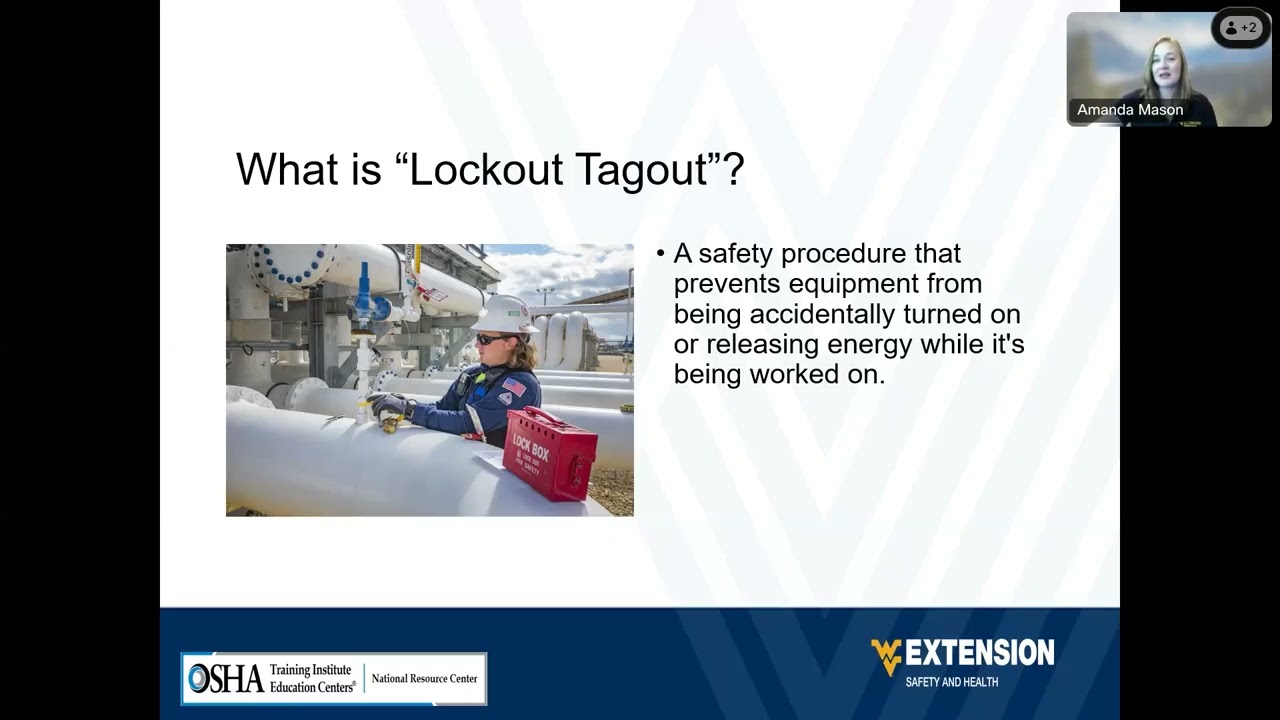
The government video below explains controlled energy isolation as maintenance background. It is not a transformer breather installation demonstration and provides no model-specific switching or removal instructions.
Pour approfondir : Stand Up For Safety and Health – Consignation et déconsignation (Lockout/Tagout) — Ministère du Travail français. Disponible sur YouTube.
Acceptance should link the approved replacement to the installed asset. Retain part identity, relevant drawing revisions, the authorized work record and observations required by the manufacturer. Record whether any deviations remain open. “Installed” describes an action; “accepted against the approved specification” requires the corresponding evidence.
Close the maintenance loop
After the approved return to service, follow the site’s monitoring plan and compare observations with the original concern. Record whether the replaced assembly addresses a documented defect or whether further investigation remains necessary. A fresh indicator appearance does not establish the health of the complete preservation system.
Keep the old designation and new designation together in the asset register. Update spare-parts references only after approval, including any components that must be purchased as a matched assembly. This prevents the next buyer from ordering an obsolete container or omitting an essential seal. A good compatibility review leaves a repeatable purchasing decision, not just one successful delivery.
Foire aux questions
Does the same connection size prove a breather is compatible?
No. Review the exact connection and seal, preservation arrangement, approved duty, support, environment and assembly scope. Nominal size is only one part of the evidence.
Should a larger desiccant container always replace a smaller one?
No. Container size alone does not establish correct moisture-control duty or system suitability. Obtain the manufacturer's selection basis and review any proposed deviation.
Does frequent saturation prove the breather is undersized?
No. Review operating history, environment, maintenance and preservation-system condition. Repeated saturation is a reason to investigate, not a complete diagnosis.
What should the final purchasing record contain?
Keep asset identity, installed and replacement designations, approved drawings, supplier deviations, delivered assembly scope, acceptance evidence and the updated spare-parts reference together.
Shenheng Electric Power s'engage à devenir un leader mondial des solutions d'équipements électriques, aidant les clients à réaliser une gestion de l'énergie sûre, efficace et durable.

 Shenheng Power Equipment Co., Ltd.