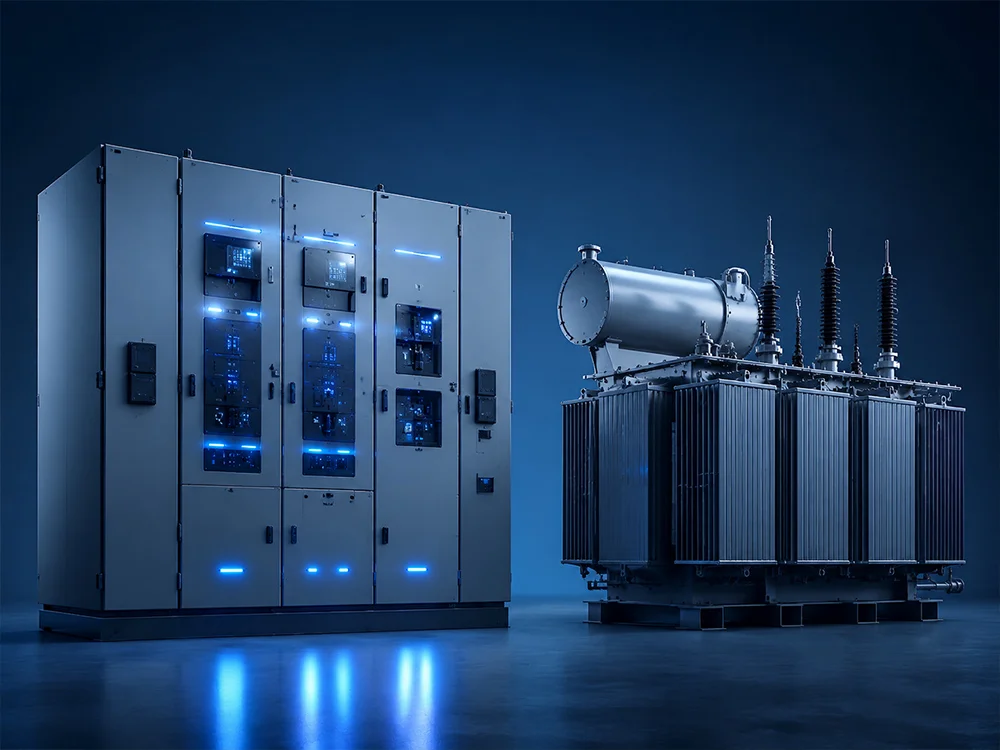
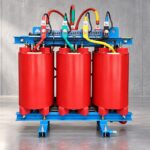
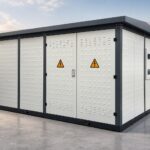
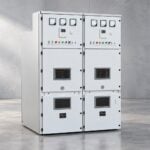
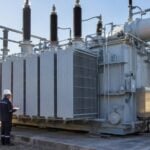
Alors que l'électrification mondiale s'accélère, les industries font face à une demande croissante de solutions de distribution d'électricité plus sûres, plus fiables et économes en énergie. Le transformateur de type sec est devenu un choix privilégié pour de nombreux systèmes électriques modernes en raison de sa conception ignifuge, de ses faibles exigences de maintenance et de ses caractéristiques respectueuses de l'environnement. Contrairement aux transformateurs à bain d'huile traditionnels, les transformateurs de type sec utilisent des matériaux d'isolation solide et des systèmes de refroidissement à air, ce qui les rend idéaux pour les installations intérieures et sensibles à l'environnement.
La croissance rapide des centres de données d'intelligence artificielle (IA), des projets d'énergies renouvelables, des infrastructures de recharge pour véhicules électriques (VE) et du développement des réseaux intelligents stimule l'innovation dans l'industrie des transformateurs. parmi les différents types de transformateurs, les transformateurs de type sec gagnent en popularité car ils assurent une conversion de tension fiable tout en répondant à des exigences plus strictes en matière de sécurité et de durabilité.
Pour les ingénieurs électriciens, les entrepreneurs EPC et les acheteurs industriels, le choix du bon solution électrique de transformateur implique plus que le choix de la tension et de la capacité. Les acheteurs doivent évaluer l'efficacité, les performances d'isolation, les méthodes de refroidissement, les niveaux sonores, les exigences de certification et les coûts d'exploitation à long terme.
Ce guide explique fondamentaux des transformateurs de type sec, compare différentes technologies de transformateurs, explore leurs applications industrielles et fournit des conseils pratiques pour choisir la solution adaptée aux réseaux électriques modernes.
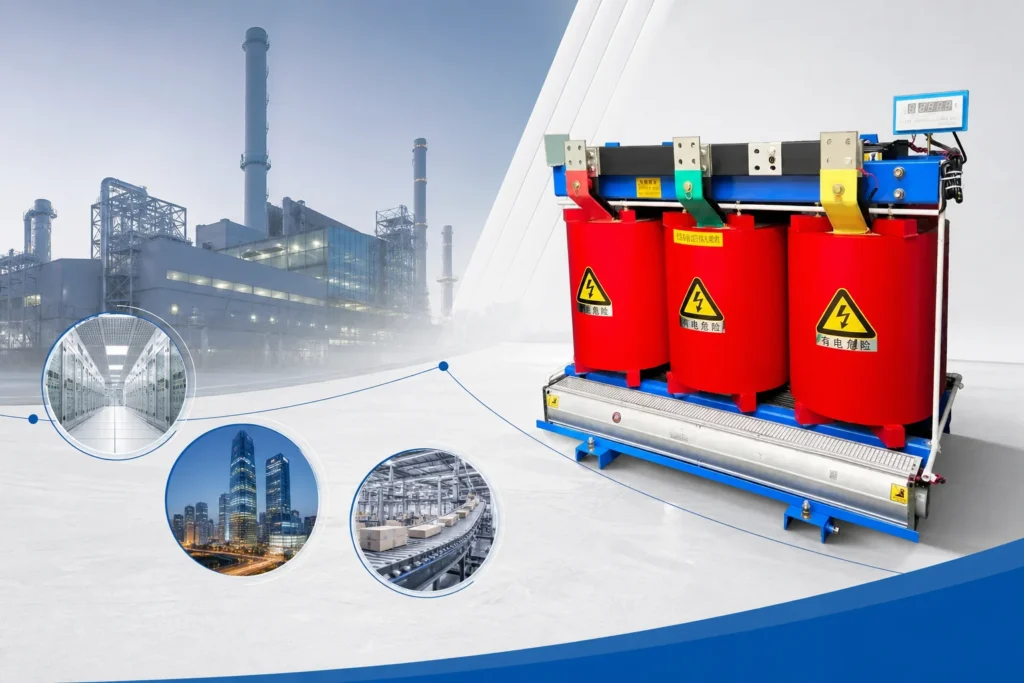
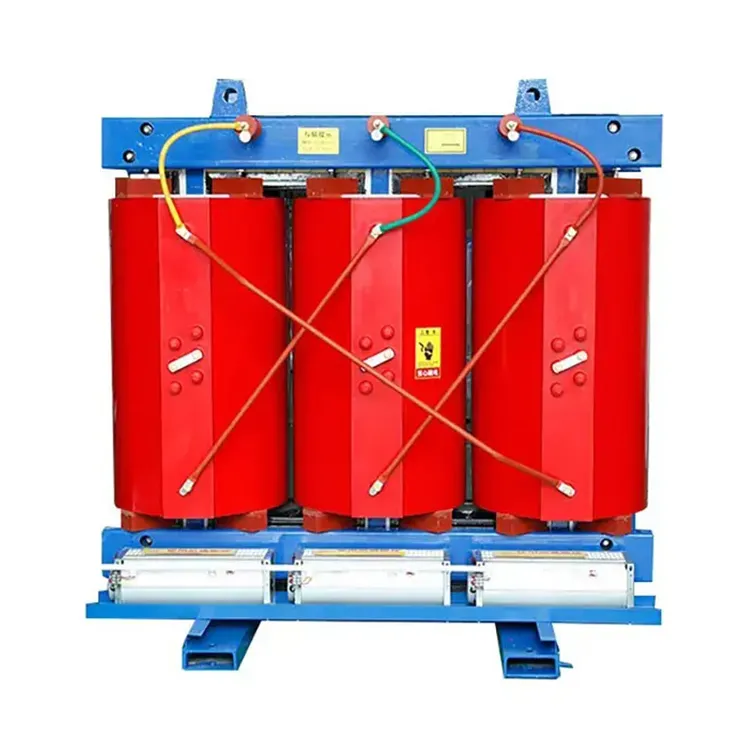
Un transformateur de type sec est un transformateur électrique qui transfère de l'énergie entre des circuits par induction électromagnétique tout en utilisant une isolation solide au lieu de matériaux diélectriques liquides.
La fonction principale d'un transformateur est d'augmenter ou de diminuer les niveaux de tension, permettant ainsi un transport d'énergie efficace et une distribution d'électricité sûre.
Un transformateur de type sec typique se compose de plusieurs éléments clés :
| Composant |
Fonction |
| Noyau magnétique |
Fournit un chemin à faible réluctance pour le flux magnétique et améliore l'efficacité du transfert d'énergie |
| Enroulement primaire |
Reçoit de l'énergie électrique en entrée |
| Enroulement secondaire |
Fournit une tension de sortie transformée |
| Système d'isolation |
Assure l'isolation électrique et la protection thermique |
| Structure de refroidissement |
Contrôle la température de fonctionnement |
Remarque : Comme les transformateurs de type sec ne contiennent pas d'huile isolante, ils réduisent considérablement les risques d'incendie et éliminent les risques associés aux fuites d'huile. Cela les rend adaptés aux bâtiments commerciaux, aux installations industrielles, aux hôpitaux et à d'autres endroits où la sécurité est une priorité.
Le principe de fonctionnement d'un transformateur de type sec est basé sur l'induction électromagnétique.
Lorsque le courant alternatif traverse l'enroulement primaire, il génère un champ magnétique variable à l'intérieur du noyau du transformateur. Ce flux magnétique induit une tension dans l'enroulement secondaire, permettant à l'énergie électrique d'être transférée d'un circuit à un autre à un niveau de tension différent.
Le processus de conversion d'énergie de base est :
Énergie électrique → Flux magnétique → Transformation de tension → Distribution d'énergie
Le rapport de transformation de tension dépend du nombre de tours dans les enroulements primaire et secondaire. En ajustant la conception des enroulements, les fabricants peuvent produire des transformateurs adaptés à différents niveaux de tension, notamment :
-
Systèmes basse tension (BT)
-
Distribution moyenne tension (MT)
-
Réseaux électriques industriels
Les transformateurs de type sec modernes incorporent également des technologies d'isolation avancées et des conceptions de gestion thermique pour améliorer la fiabilité dans des conditions de fonctionnement continu.
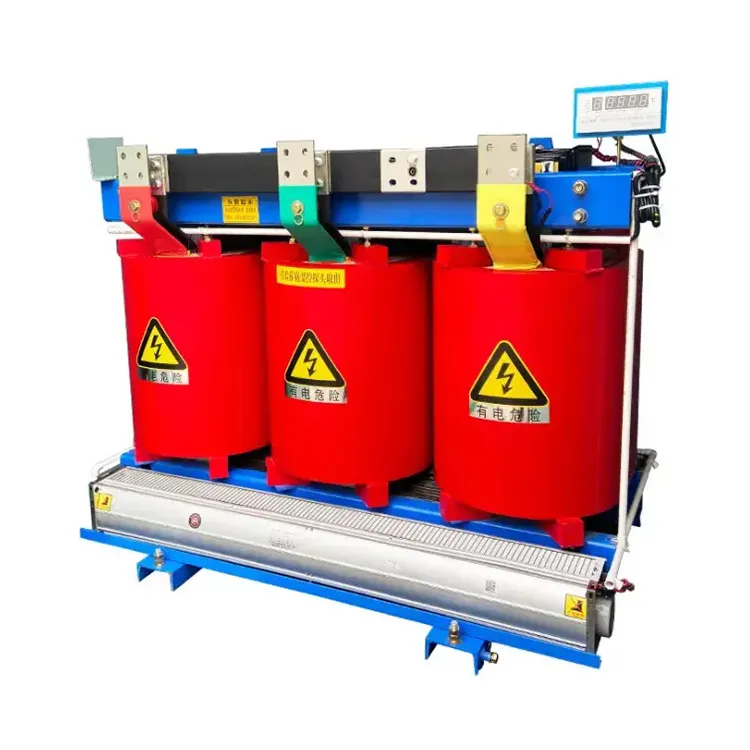
Les transformateurs peuvent être catégorisés selon la technologie d'isolation, le niveau de tension et les exigences d'application.
Les types de transformateurs les plus courants comprennent :
| Type de transformateur |
Système d'isolation |
Applications typiques |
| Transformateur à sec |
Isolation dans l'air et isolation solide |
Bâtiments commerciaux, usines, centres de données |
| Transformateur en résine coulé |
Enrobage en résine époxy |
Environnements industriels difficiles |
| Transformateur imprégné sous vide |
Imprégnation sous vide |
Applications industrielles générales |
| Transformateur à bain d'huile |
Isolation par huile minérale |
Postes électriques extérieurs |
| Transformateur de puissance |
Isolation haute tension à l'huile |
Réseaux de transport |
Transformateur à sec
Les transformateurs de type sec sont conçus pour des applications nécessitant un niveau élevé de sécurité, de fiabilité et de protection de l'environnement. Ils sont couramment installés à l'intérieur, là où la prévention des incendies et une maintenance limitée sont importantes.
Transformateur en résine coulé
Un transformateur en résine coulée utilise de la résine époxy pour enrober les enroulements, améliorant ainsi la résistance à l'humidité, à la poussière et aux conditions environnementales difficiles.
Les applications typiques incluent :
Transformateur imprégné sous vide
Les transformateurs à imprégnation sous vide (VPI) utilisent des systèmes d'isolation traités à la résine pour améliorer la résistance mécanique et les performances thermiques.
Ils sont largement utilisés dans les systèmes de distribution d'énergie industrielle où la fiabilité et la rentabilité sont importantes.
L'une des questions les plus courantes de la part des professionnels de l'électricité est de savoir comment les transformateurs de type sec se comparent à transformateur à huile motifs.
| Fonctionnalité |
Transformateur à sec |
Transformateur à bain d'huile |
| Méthode d'isolation |
Isolation solide |
Huile minérale |
| Sécurité incendie |
Haut |
Nécessite une protection supplémentaire |
| Risque environnemental |
Pas de fuite d'huile |
Contamination possible par les hydrocarbures |
| Maintenance |
Peu exigeant |
Nécessite une analyse d'huile |
| Installation |
Principalement à l'intérieur |
Principalement en extérieur |
| Investissement initial |
Plus haut |
Plus bas |
Les transformateurs de type sec sont généralement choisis pour les bâtiments, les hôpitaux, les aéroports et les centres de données où la sécurité et la fiabilité sont essentielles.
Les transformateurs à huile restent largement utilisés dans les sous-stations extérieures et les applications des services publics où une très grande capacité de puissance est requise.
Plusieurs tendances du marché accélèrent l'adoption de la technologie des transformateurs de type sec.
Sécurité incendie renforcée
Puisque les transformateurs secs ne contiennent pas d'huile isolante inflammable, ils offrent une protection incendie améliorée.
Cela les rend adaptés pour :
Environmental Protection
Modern industries increasingly focus on sustainable electrical infrastructure.
Dry type transformers offer advantages including:
Lower Maintenance Requirements
Compared with oil transformers, dry type transformers require fewer maintenance procedures because they eliminate:
-
Oil quality testing
-
Oil replacement
-
Leakage inspections
This reduces operational costs throughout the transformer lifecycle.
The application range of dry type transformers continues expanding due to global electrification trends.
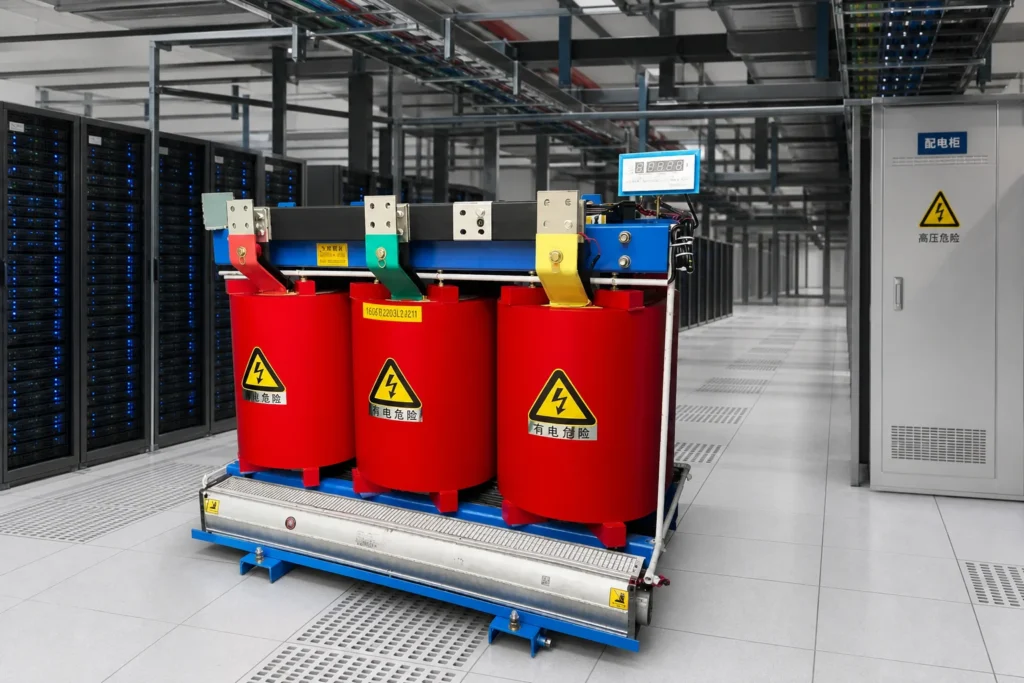
Dry Type Transformers for AI Data Centers
The rapid growth of artificial intelligence has significantly increased electricity demand from data centers.
AI computing facilities require:
Dry type transformers are increasingly used in data center electrical systems because they provide:
Renewable Energy Systems
Renewable energy projects require reliable voltage conversion between generation equipment and electrical grids.
Dry transformers are commonly applied in:
The oil-free design makes them attractive for environmentally sensitive renewable energy projects.
Infrastructure de recharge pour véhicules électriques
The expansion of electric vehicles requires stronger distribution infrastructure.
Dry type transformers support EV charging stations by providing:
Industrial Manufacturing
Factories using automation systems and advanced machinery require stable power quality.
Les applications typiques incluent :
Transformer selection should consider more than voltage and capacity. Several technical factors influence efficiency, reliability, and service life.
Thermal Management and Cooling Methods
Temperature control is critical because excessive heat can accelerate insulation aging.
Common cooling methods include:
| Cooling Class |
Description |
| AN |
Natural air cooling |
| AF |
Forced air cooling with fans |
Proper thermal design helps maintain stable operation and extend transformer lifespan.
Système d'isolation
The insulation system determines the transformer’s temperature resistance and reliability.
Common insulation classes include:
-
Class F insulation
-
Class H insulation
Higher insulation grades allow transformers to operate under demanding industrial conditions.
Partial Discharge Performance
For medium voltage dry type transformers, partial discharge (PD) performance is an important reliability indicator.
Low PD levels indicate:
Noise Reduction Design
Noise performance has become increasingly important for indoor installations.
Modern designs reduce transformer noise through:
-
Optimized magnetic core structures
-
Improved vibration control
-
Advanced manufacturing processes
Choosing the correct transformer requires evaluating technical and operational requirements.
Voltage and Capacity
Key parameters include:
Installation Environment
Engineers should consider:
Efficiency and Energy Loss
High-efficiency transformers reduce:
Total Cost of Ownership (TCO)
Professional buyers increasingly evaluate lifecycle value rather than only initial purchase price.
TCO includes:
For international projects, transformer compliance is a key purchasing factor.
Dry type transformers are commonly designed according to internationally recognized standards, including the IEC 60076 Power Transformer Standard, which defines requirements for transformer design, testing, and performance evaluation.
Common standards include:
| Standard |
Application |
| IEC 60076 |
International transformer requirements |
| IEEE C57 |
North American transformer standards |
| ANSI |
Electrical equipment requirements |
Before purchasing, buyers should verify:
Even high-quality transformers may experience reduced performance if installation conditions are unsuitable.
Poor Ventilation
Insufficient airflow can increase operating temperature and shorten insulation life.
Incorrect Transformer Sizing
Oversized or undersized transformers may result in:
Ignoring Harmonic Loads
Modern electrical equipment such as:
can introduce harmonic currents.
Transformer selection should consider harmonic distortion levels to ensure reliable operation.
The transformer industry is moving toward digital monitoring and intelligent power management.
Modern transformer development focuses on improving efficiency and reliability through technologies promoted by organizations such as the Association des normes IEEE.
Future trends include:
IoT-Based Monitoring
Smart sensors can monitor:
-
Temperature
-
Load conditions
-
Partial discharge
-
Operating status
Predictive Maintenance
Data analysis enables early detection of potential problems and reduces unexpected downtime.
Sustainable Transformer Technology
Future designs will focus on:
As electrical systems become more complex, customers require more than standard transformer products. They need reliable engineering support and customized solutions.
Our dry type transformer solutions provide:
-
Customized voltage and capacity design
-
Advanced insulation technology
-
Strict quality control
-
International standards compliance
-
Professional technical support
Whether for industrial facilities, renewable energy projects, data centers, or commercial buildings, reliable transformer solutions help ensure safe and efficient power distribution.
Foire aux questions
1. What is a dry-type transformer?
A transformateur sec is an electrical transformer that uses solid insulation and air cooling instead of transformer oil. It is widely used in buildings, factories, data centers, and other applications where safety and low maintenance are important.
2. What is the difference between dry-type and oil-type transformers?
La principale différence réside dans la méthode d'isolation et de refroidissement. Les transformateurs de type sec utilisent de l'air et une isolation solide, tandis que les transformateurs de type immergé dans l'huile utilisent de l'huile isolante. Les transformateurs de type sec offret une meilleure sécurité incendie et sont souvent privilégiés pour les installations intérieures.
3. What are the 4 types of transformers?
The four common types of transformers include:
Each type is designed for different voltage levels and electrical applications.
4. What are Class 3 transformers?
Les transformateurs de classe 3 sont des transformateurs de faible puissance conçus pour des applications à énergie limitée, telles que les systèmes de commande, les équipements de signalisation et les circuits basse tension.
5. How does a dry-type transformer work?
Un transformateur de type sec fonctionne par induction électromagnétique. Il transfère de l'énergie électrique entre des circuits en modifiant les niveaux de tension grâce à l'interaction entre les enroulements primaire et secondaire.
6. What are the advantages of dry-type transformers?
Les principaux avantages comprennent une sécurité incendie élevée, un faible entretien, aucun risque de fuite d'huile, une protection de l'environnement et des performances fiables dans les applications intérieures.
7. Where are dry-type transformers commonly used?
Les transformateurs de type sec sont couramment utilisés dans les usines industrielles, les bâtiments commerciaux, les hôpitaux, les aéroports, les projets d'énergies renouvelables, les stations de recharge pour véhicules électriques et les centres de données.
8. How do I choose the right dry-type transformer?
Le choix du bon transformateur dépend de facteurs tels que la tension nominale, la capacité (kVA), l'environnement d'installation, la méthode de refroidissement, les exigences de rendement et les normes électriques applicables.
Références
-
IEC 60076 Power Transformer Standards – International Electrotechnical Commission
International requirements for transformer design, testing, insulation, and performance evaluation.
-
IEEE Standards Association – Electrical Engineering Standards
Technical standards and engineering guidance for electrical power systems.
-
International Energy Agency (IEA) – Energy Transition Research
Research and analysis on electrification, renewable energy integration, and future power infrastructure development.
Dry type transformers have become an essential component of modern electrical infrastructure because of their safety, reliability, and environmental advantages.By understanding the different types of transformers, technical performance factors, and application requirements, engineers and buyers can make better decisions when selecting electrical equipment.With continued growth in AI infrastructure, renewable energy, and global electrification, dry type transformers will remain a key technology supporting the future of power distribution.

 Shenheng Power Equipment Co., Ltd.