Shenheng Power Equipment Co., Ltd.
- Home
- Products
Products
Since 2001, Shenheng Power has been a trusted manufacturer of power transmission and distribution equipment, delivering reliable electrical solutions globally.
- Solutions
- News & Blog
- Service
- About Us
- Contact Us
Since 2001, Shenheng Power has been a trusted manufacturer of power transmission and distribution equipment, delivering reliable electrical solutions globally.
Buyers writing a 24kv switchgear package for industrial feeders, utility rings, or renewable collector nodes need a disciplined checklist before quotations diverge on incomplete ratings.
This article turns common tender gaps into a practical GIS specification sequence. Use it with your approved single-line diagram and fault study — not as a substitute for project engineering sign-off.
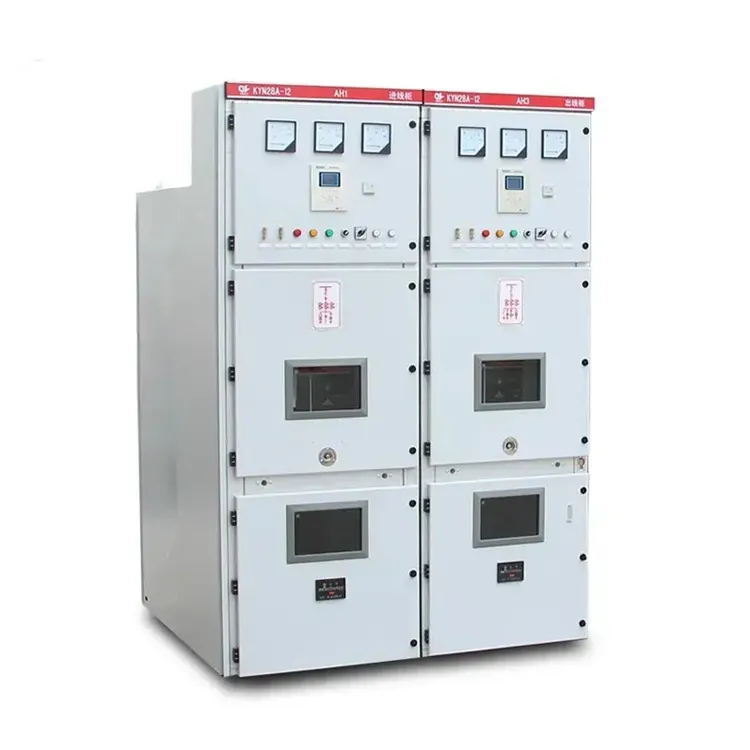
Late change orders often start with an RFQ that names “24kV GIS” without locking insulation level, busbar continuous current, or short-time withstand. Vendors then fill gaps differently, and technical clarification cycles consume the delivery window.
A written checklist forces the same rating language across every bidder. It also gives civil, protection, and commissioning teams a shared reference while outline drawings are still provisional.
Related reading on board architecture appears in the KYN28 gas insulated switchgear buyer guide and the medium voltage GIS components overview.
Capture these fields before normalizing prices:
| Spec field | Why it belongs on the RFQ | Typical source |
|---|---|---|
| Rated voltage / Um | Sets insulation class and cubicle design basis | Approved single-line |
| Power frequency and lightning impulse levels | Defines dielectric margins | Utility or consultant note |
| Busbar continuous current | Drives thermal design and feeder grouping | Load study |
| Short-time / peak withstand | Locks bracing and breaker duty | Fault study |
| Internal arc classification request | Clarifies operator exposure assumptions | Safety philosophy |
| Ambient, altitude, pollution degree | Triggers derating and enclosure choices | Site data sheet |
| Cable entry and CT/VT ratios | Aligns terminations and metering | Protection scheme |
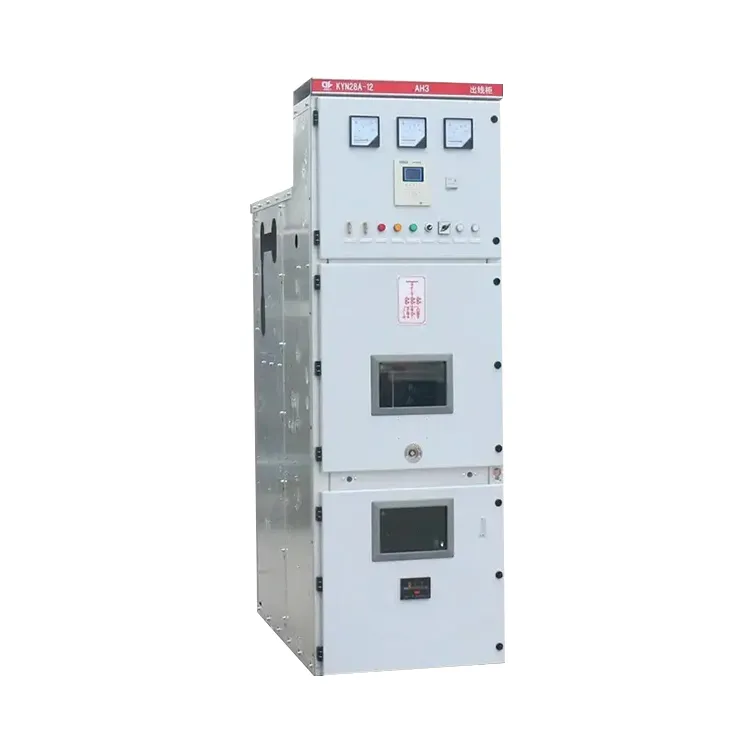
Also record service continuity needs, withdrawable versus fixed breaker preference, and whether remote racking or motorized disconnects are mandatory. Leaving those as “vendor standard” invites unequal offers.
A 24kV class is often selected when feeder density, cable length, or utility interface points make a lower MV class impractical. Compact GIS footprints help indoor substations and containerized collector stations where aisle width is limited.
Outdoor ring schemes may still prefer sealed RMU architectures rather than a full indoor GIS lineup. Compare those boundaries against the MV vs LV switchgear differences guide when the project straddles distribution and plant LV boards.
Corrosive, dusty, or high-altitude sites need explicit derating notes. Harmonic-rich industrial loads may require additional CT accuracy or relay coordination inputs before the protection philosophy is frozen.
| Document / item | Purpose | When to request |
|---|---|---|
| Type / routine test summary | Confirms dielectric and temperature-rise basis | Before purchase order |
| GA drawing and shipping weights | Civil pads, lifting, and aisle clearance | Design freeze |
| Single-line and wiring diagrams | Termination, interlocking, and relay mapping | Before manufacturing release |
| Gas monitoring I/O list | Density alarms, trending, and SCADA points | Design review |
| Interlock and earthing sequence | Safe isolation workflow | FAT planning |
| O&M manual and spare parts list | Site training and holding stock | Contract negotiation |
| Commissioning checklist | Insulation, timing, and functional tests | Before energization |
Attach the table to every RFQ revision so suppliers return comparable technical packages instead of marketing summaries.
Factory acceptance should prove dielectric integrity, functional interlocking, mechanism timing, and gas density alarm channels against the approved drawings. Witness points belong in the purchase order — not in a late email.
On site, verify grounding continuity, cable bending radius, torque records, and nameplate data against the revision that was released for manufacture. Gas handling procedures, cylinder logistics, and leak-check tools should be planned before the board arrives.
Maintenance access for density gauges, cable compartments, and withdrawable breakers needs to be designed into the room layout. Crowded aisles turn routine checks into outage risks.
For many indoor 24kV distribution scopes, start engineering review with Shenheng Power’s 12kV/24kV medium voltage switchgear catalog entry. The product page documents a 12kV/24kV medium voltage switchgear scope that buyers can use as a structured RFQ baseline.
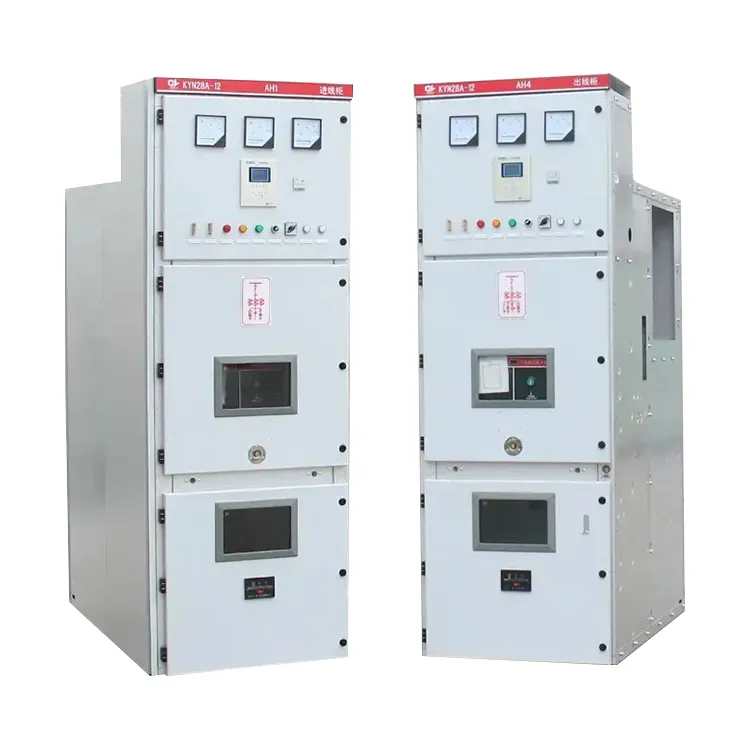
Fit boundary: This recommendation supports typical industrial and utility distribution boards described on the product page. It is not a substitute for project-specific studies when unusual fault levels, outdoor primary GIS yards, or national utility type-approval rules apply.
If the study points to an outdoor RMU scheme or a different voltage class, browse the medium voltage switchgear category and send study inputs through Contact Shenheng Power.
Start with rated voltage, insulation levels, busbar continuous current, short-time and peak withstand, and the environmental conditions that drive derating.
Continuous current sizes thermal capacity under normal load, while short-time and peak values size mechanical bracing and device duty during faults. Both must appear on the same revision.
Ask for density or pressure alarm setpoints, contact outputs or communication points, and any trending or lockout logic required by the protection philosophy.
Witness earthing, racking, door, and breaker interlocking against the approved sequence, including any remote or motorized operations specified in the RFQ.
Request GA drawings, wiring diagrams, routine test reports, gas monitoring lists, O&M manuals, and spare parts lists aligned to the purchase-order revision.
Projects often move to 24kV when feeder reach, interface voltage, or load growth make lower classes inefficient — confirm the choice with the utility interconnection note and cable study.