Shenheng Power Equipment Co., Ltd.
- Home
- Products
Products
Since 2001, Shenheng Power has been a trusted manufacturer of power transmission and distribution equipment, delivering reliable electrical solutions globally.
- Solutions
- News & Blog
- Service
- About Us
- Contact Us
Since 2001, Shenheng Power has been a trusted manufacturer of power transmission and distribution equipment, delivering reliable electrical solutions globally.
Copper vs aluminum transformer winding selection should compare complete transformer designs against the same operating requirements. Copper and aluminum have different electrical and mechanical properties, but conductor choice alone does not establish efficiency, temperature rise, short-circuit capability or service life. Ask suppliers for guaranteed losses, dimensions, mass, terminal details and verification evidence at an agreed duty. A copper quotation and an aluminum quotation can only be compared fairly when their voltage ratings, cooling, insulation system, load profile and acceptance requirements are aligned.
First identify whether the discussion concerns a power transformer, distribution transformer or a different application. Also distinguish the winding conductor from external cable, busbars and terminal hardware. A copper external terminal does not prove the entire winding is copper, and an aluminum cable connection does not identify the internal conductor material.
Record the specified material for each winding where that distinction matters. Do not rely on tank color, shipping mass or a photograph of the bushings. The approved specification, drawings and manufacturer declarations should identify the delivered construction. Any proposed material change should pass through the project’s technical approval process.
This article addresses procurement comparison. It does not provide a rewinding procedure or authorize substituting one conductor for another within an existing design. Such a change affects more than the material purchase order and needs an engineering review.
Copper offers higher conductivity for a given conductor cross-section, while aluminum has lower density. These differences influence design choices. They do not tell a purchaser the final tank dimensions, total mass or guaranteed losses without knowing the complete transformer design.
A manufacturer can change conductor area, winding arrangement, core design and cooling to meet a specification. Two compliant designs may therefore allocate material differently. Comparing a fixed conductor dimension answers a material question; comparing complete guaranteed designs answers a purchasing question. Do not mix those comparisons in the same conclusion.
Specify the result the installation needs before ranking the offers. If material is mandatory under the contract, make that requirement explicit. If alternatives are allowed, define the performance and evidence that an alternative must meet; do not approve it solely because its material price appears attractive.
| Evaluation item | What conductor choice can affect | What the purchaser should compare | Evidence needed |
|---|---|---|---|
| Electrical losses | Resistance and feasible conductor geometry | Guaranteed no-load and load losses on the same basis | Loss schedule and test requirements |
| Thermal performance | Heat generation and winding construction | Permitted duty, cooling and temperature-rise guarantees | Approved thermal specification |
| Dimensions and mass | Winding space and material distribution | Complete installed envelope and shipping mass | General arrangement and transport data |
| Fault performance | Mechanical and thermal design choices | Specified short-circuit duty and accepted verification | Design-specific evidence |
| Connections | Interface materials and joining methods | Terminal compatibility and installation requirements | Terminal and connection drawings |
| Commercial value | Material cost and design tradeoffs | Evaluated purchase and operating cost | Comparable quotation and loss guarantees |
The table intentionally avoids universal percentages. Project voltage, duty, construction and commercial conditions change the result. A claim that one material always produces a fixed saving should be supported by a clearly defined comparison, not repeated as a general rule.
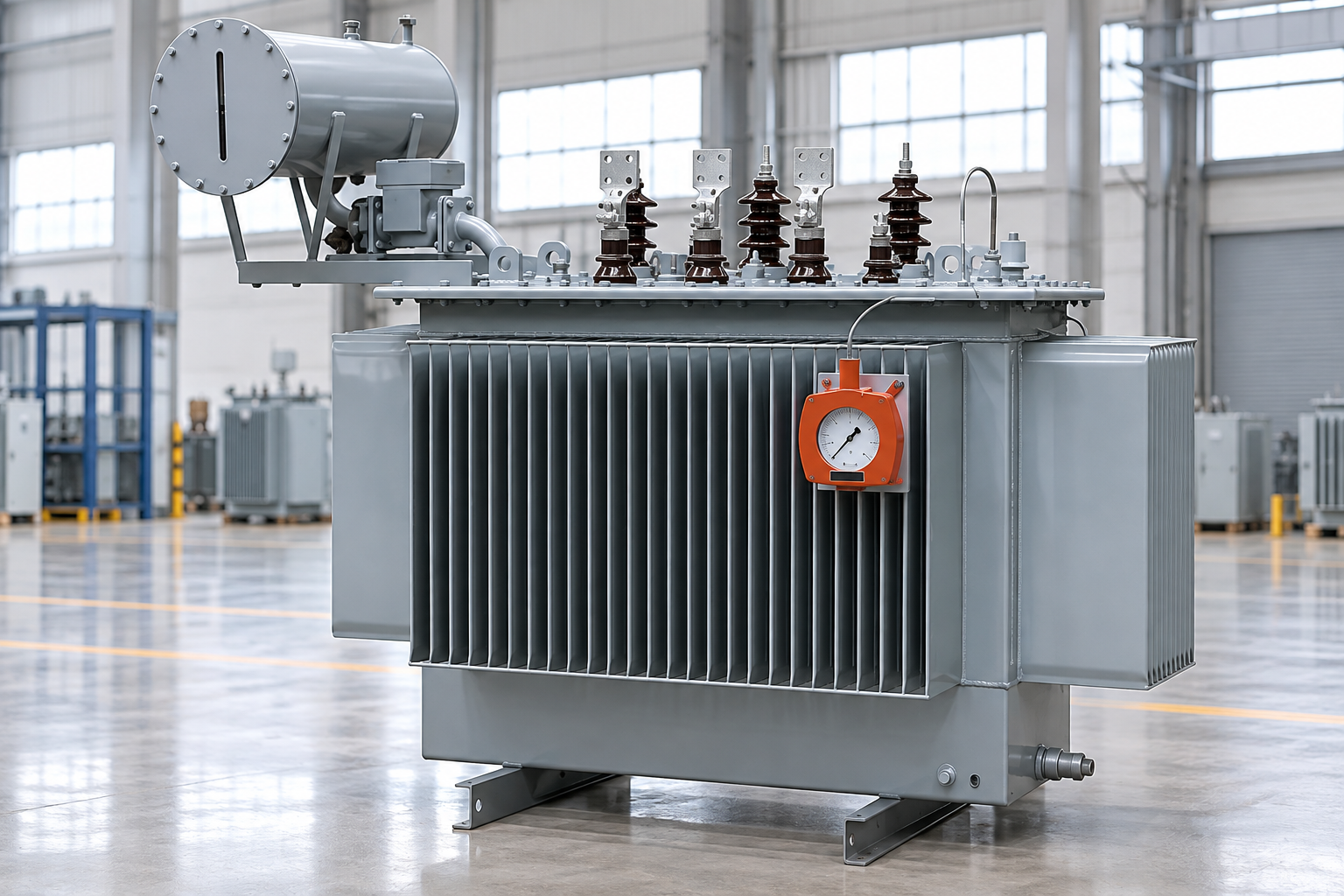
No-load losses and load losses respond to different operating conditions. The winding material is relevant to conductor resistance, but it does not alone determine the complete transformer’s energy use. Natural Resources Canada’s dry-type transformer guidance explains the distinction between core and winding losses and why operating conditions matter.
Ask for the load-loss reference temperature and the loading point used for an efficiency statement. A headline efficiency figure at one load is not a substitute for the underlying guaranteed losses. If two offers use different reference conditions, have the comparison normalized by the responsible engineer before assigning a preference.
The transformer efficiency calculation guide provides related background. For purchase evaluation, use approved guarantees and an agreed operating profile. Do not assume actual annual loading will match a supplier’s most favorable efficiency point.
A useful comparison separates the guaranteed equipment data from the owner’s operating assumptions. Record energized hours, expected loading, energy cost and the evaluation period. Identify whether the financial model uses a simple energy total, discounted cash flow or agreed capitalization factors for losses.
For a simplified comparison of two offers, annual energy-loss difference can be estimated as ΔE = h × [ΔP0 + x² × ΔPk]. Here h is energized hours, x is an assumed constant per-unit load, P0 is no-load loss in kW and Pk is load loss in kW at the agreed reference duty. The result is kWh. This approximation is not a guarantee and excludes several real operating effects.
As an arithmetic illustration, assume 8,000 hours, a constant load fraction of 0.5, and offer A having 0.1 kW less no-load loss but 0.4 kW more load loss than offer B. Then the simplified difference is 8,000 × [−0.1 + 0.25 × 0.4] = 0 kWh. These invented example inputs describe neither Shenheng equipment nor typical market performance. They show why the loading assumption can change the commercial result.
For varying loads, evaluate appropriate time blocks or an agreed load distribution instead. Temperature, harmonic currents and cooling auxiliaries can require a more complete model. The purchasing decision should remain traceable to its assumptions so the owner can update it if the operating plan changes.
Request the same ambient conditions, temperature-rise requirements, cooling arrangement and installation limits for both offers. A material comparison is incomplete if one quotation assumes generous ventilation while another must fit a restricted indoor room. Enclosure and cooling differences can affect the complete installation.
Also review the load characteristics. Nonlinear loads and repeated overloads may need specific evaluation. A generic continuous rating does not establish suitability for every operating cycle. Describe the intended duty and ask the manufacturer to state the accepted limits and any additional design measures.
The Bonneville Power Administration’s dry-type transformer selection review discusses design and loss considerations. Its scope is dry-type selection; use it as background rather than applying its findings indiscriminately to every oil-immersed transformer.
Neither the word copper nor aluminum establishes short-circuit withstand capability. The conductor arrangement, supports, insulation and complete mechanical design must suit the specified electrical duty. Ask what evidence is accepted by the project specification and how it relates to the offered configuration.
Keep thermal and mechanical fault requirements separate. A design review must consider the applicable current and duration, as well as the relevant peak forces. Do not convert a material property into a claim that every transformer using that material has superior fault performance.
If an offered design changes during procurement, assess whether the verification basis still applies. The transformer short-circuit withstand guide explains this evidence question in more detail. Material substitutions should not bypass the same approval process used for other significant design changes.
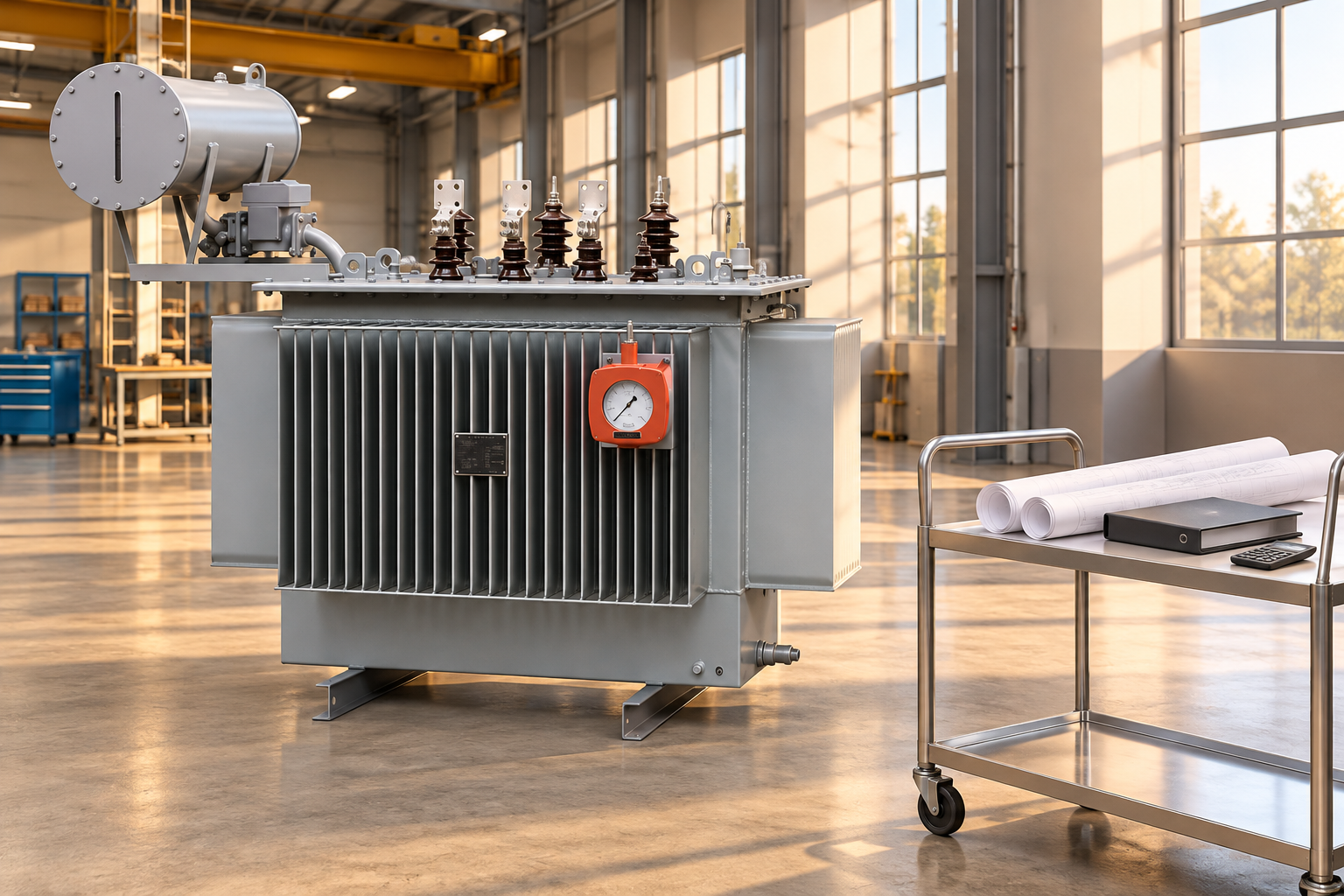
Specify the external conductor materials and connection arrangement. The terminal interface needs suitable hardware, preparation and installation instructions. Compatibility should be established from the approved details, including any required transition components, rather than inferred from the winding conductor.
Distinguish accessible terminal maintenance from internal winding work. A connection issue at an external lug does not automatically establish a defect in the internal winding material. Record the actual location and evidence before drawing conclusions about the transformer construction.
For acceptance measurements, the winding resistance test guide is useful related reading. Measurements depend on temperature and test setup. They should be evaluated against the agreed records and method, rather than used as an improvised material-identification shortcut.
Compare the full installed envelope, not just the active-part dimensions. Access doors, lifting clearances, terminal approaches and cooling space can control whether an offered unit fits. Record the transport dimensions separately from the operating arrangement if accessories are removed for shipment.
Mass also needs context. The winding conductor is only part of total equipment weight; the core, tank, insulation, cooling equipment and fluid contribute. Ask for the actual transport and installed masses rather than estimating them from the material name.
For replacement projects, identify the interfaces that cannot move: foundations, cable entry, rails, lifting routes and building openings. A lower purchase price can lose its advantage if it requires unplanned civil or electrical work. Quantify those differences using project information rather than a universal material ranking.
Give both suppliers the same voltage ratio, kVA, frequency, vector group, impedance requirements, environment and governing specification. Request winding material declarations, loss guarantees, cooling, dimensions, terminal drawings, verification scope and explicit departures. Keep optional alternatives separate from the compliant base offer.
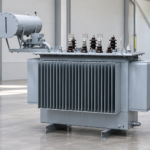
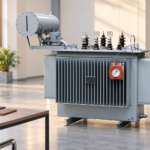
Shenheng’s oil-immersed industrial transformer page provides product context for an enquiry. Its external photographs cannot prove conductor material. Confirm the ordered winding construction and guaranteed performance in the approved project documents.
The university lecture below introduces transformer design in a power-electronic-converter course. Its scale and application differ from a utility power transformer, but it helps explain why winding and magnetic design decisions interact. It does not certify a copper or aluminum product or replace the procurement evidence described above.
Further learning: Lec 51: Transformer Design — NPTEL IIT Guwahati. Educational background; this is not an operating authorization. Open the video on YouTube.
No. Compare the guaranteed losses of complete designs under the same reference conditions and duty. Conductor material alone cannot establish the transformer’s efficiency.
No. Use the approved material declaration and project documentation. External terminals, tank dimensions and paint color do not reliably identify internal windings.
Do not assume that. A substitution requires an engineering review of geometry, losses, thermal behavior, connections and verification evidence, followed by the required project approval.
Request comparable ratings, loss guarantees, operating limits, dimensions, terminal details, winding material declarations, fault-duty evidence and clearly listed departures from the same specification.