2001 yılından bu yana Shenheng Power, güvenilir bir güç iletim ve dağıtım ekipmanları üreticisi olarak küresel çapta güvenilir elektrik çözümleri sunmaktadır.
2001 yılından bu yana Shenheng Power, güvenilir bir güç iletim ve dağıtım ekipmanları üreticisi olarak küresel çapta güvenilir elektrik çözümleri sunmaktadır.
Dry Type Transformer Enclosure Panel Replacement: Preserve the Approved Assembly
Release Time: 2026-11-16
Dry type transformer enclosure panel replacement requires more than matching the outline of a sheet-metal cover. Identify the original enclosure and panel revision, then review ventilation openings, internal clearances, fastening, bonding and any labels or accessories carried by that panel. A cover that can be bolted into place may still alter cooling or protection against access to hazardous parts. This guide helps owners and buyers prepare the replacement decision and acceptance record. It does not provide an enclosure fabrication design, permission to operate with panels removed or a method for accessing energized equipment.
Identify which assembly actually needs a replacement panel
Begin with the transformer serial number and the enclosure designation. These are related but different identifiers. A transformer active assembly may be installed inside a separately specified enclosure, and a project may contain several similar transformers with different housings. Record the damaged panel’s position, drawing number, revision and any original part designation. Avoid descriptions such as standard front cover when several versions exist.
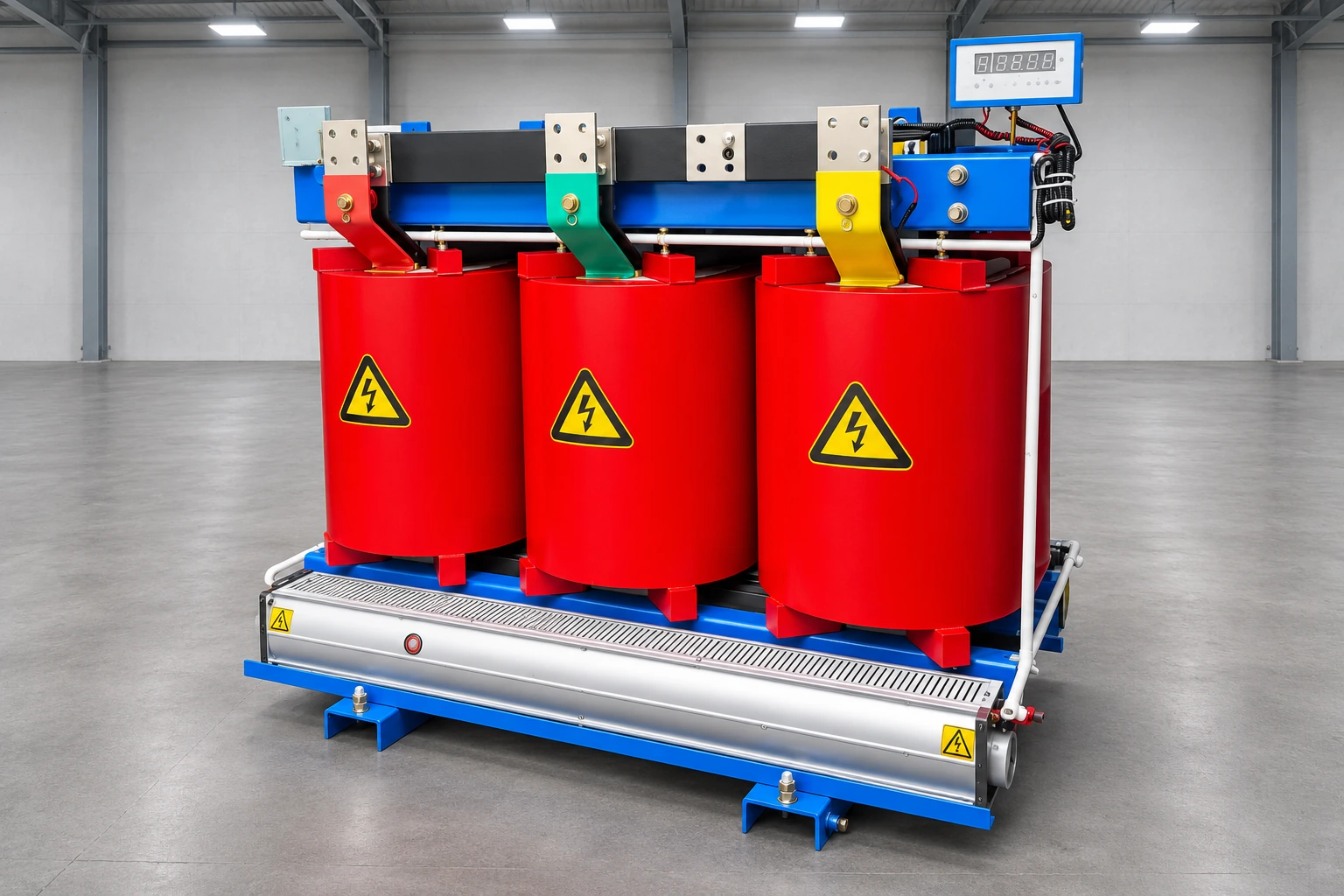
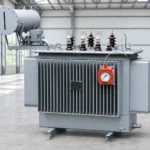
Shenheng'in three phase cast resin dry transformer is the product reference for this article. The illustration shows the exposed active assembly, including coils, frame and cooling components. It does not show an approved outer enclosure or a replacement panel. The enclosure discussed here must therefore be identified from the actual project documentation. No panel geometry, protection rating or spare availability is inferred from the product photograph.
A panel with a nameplate, warning notice, inspection opening, lock or mounted accessory needs a wider assessment than a plain blank panel. Record what must move with the replacement and which items require separate supply. Missing identification can complicate later maintenance even when the mechanical repair appears complete. Ask the manufacturer how the replacement will retain the correct equipment identity and warnings.
Shenheng ürün görseline dayalı ürün referans çizimi; gerçek bir bakım, test veya müşteri sahası kaydı değildir.
Establish why the original panel was damaged
A dented panel can be a local handling problem or evidence of a wider enclosure fault. The owner should obtain an authorized condition assessment covering the affected frame, adjacent panels, supports and attachments. If the surrounding structure is distorted or corroded, ordering an identical cover may not restore its intended fit. Record the condition before removal so the original problem is not lost once the panel is off site.
Keep the cause separate from the proposed remedy. A vibrating panel does not by itself prove that the panel material is wrong. Loose attachments, an altered support arrangement, a damaged fan or another operating condition may require investigation. Do not select thicker sheet metal or extra fasteners as a universal cure. The reviewer must determine whether the proposal restores the original design or introduces a modification.
The HSE guidance on work on electrical equipment explains why a repair must preserve safe operation. For this task, that means checking the functions of the assembled enclosure rather than accepting the visual improvement alone. The guidance is a planning reference, not proof that a particular panel or locally fabricated substitute is compatible with the transformer.
Use a panel comparison sheet
The following review table organizes the evidence needed for the purchasing decision. It contains no universal dimensions, fastening values or acceptance limits. Populate it from the original enclosure documents and the manufacturer’s response for the identified unit.
Önerilen ürün
Record from the existing assembly
Evidence needed for the proposed panel
Identity and position
Enclosure designation, panel location and revision
Approved part or documented replacement drawing
Cooling openings
Original opening pattern and associated screens
Confirmation that the intended cooling path is retained
Internal envelope
Approved clearances and permitted projections
Review of panel depth, returns, fasteners and mounted items
Attachments
Original mounting arrangement and frame condition
Compatible fixings and manufacturer installation information
cURL Too many subrequests by single Worker invocation. To configure this limit, refer to https://developers.cloudflare.com/workers/wrangler/configuration/#limits
Access barriers and applicable enclosure requirements
Defined evidence that the repaired assembly remains suitable
Bonding interfaces
Original arrangement where applicable
Required continuity provisions and acceptance method
Identification
Nameplate, warnings and accessory designations
Correct retained or replacement identification
Mark each row as confirmed, open or requiring a design change. A dimensioned sketch attached to a quotation is useful, but it is not a compatibility approval unless the responsible party states what was reviewed and for which equipment. Resolve open items before manufacture instead of passing them to the installer as assumptions.
Preserve ventilation instead of copying only the outer dimensions
The Bureau of Reclamation’s transformer maintenance guide includes ventilation and cooling condition in dry-type transformer maintenance. A replacement panel should therefore be reviewed as part of the enclosure’s air path. Its external dimensions do not describe the location, shape or effective obstruction of ventilation openings, screens and internal returns.
Do not assume that a panel with more perforations is automatically an improvement. A changed opening arrangement may affect access protection, contamination exposure or the intended path through the equipment. Equally, a denser mesh or an added filter can change airflow. The manufacturer should evaluate the complete proposal against the original design and the actual installation, including nearby walls and other restrictions.
Mevcut dry transformer ventilation guide cURL Too many subrequests by single Worker invocation. To configure this limit, refer to https://developers.cloudflare.com/workers/wrangler/configuration/#limits.
cURL Too many subrequests by single Worker invocation. To configure this limit, refer to https://developers.cloudflare.com/workers/wrangler/configuration/#limits
cURL Too many subrequests by single Worker invocation. To configure this limit, refer to https://developers.cloudflare.com/workers/wrangler/configuration/#limits.
cURL Too many subrequests by single Worker invocation. To configure this limit, refer to https://developers.cloudflare.com/workers/wrangler/configuration/#limits.
cURL Too many subrequests by single Worker invocation. To configure this limit, refer to https://developers.cloudflare.com/workers/wrangler/configuration/#limits.
cURL Too many subrequests by single Worker invocation. To configure this limit, refer to https://developers.cloudflare.com/workers/wrangler/configuration/#limits
cURL Too many subrequests by single Worker invocation. To configure this limit, refer to https://developers.cloudflare.com/workers/wrangler/configuration/#limits.
A change from indoor to outdoor service is also outside an ordinary panel repair. Adding a rain cover or closing openings can introduce new thermal and environmental questions. If the location or exposure has changed since the original installation, the owner needs a suitability review for the complete enclosure. Do not hide a changed service condition inside a spare-panel purchase description.
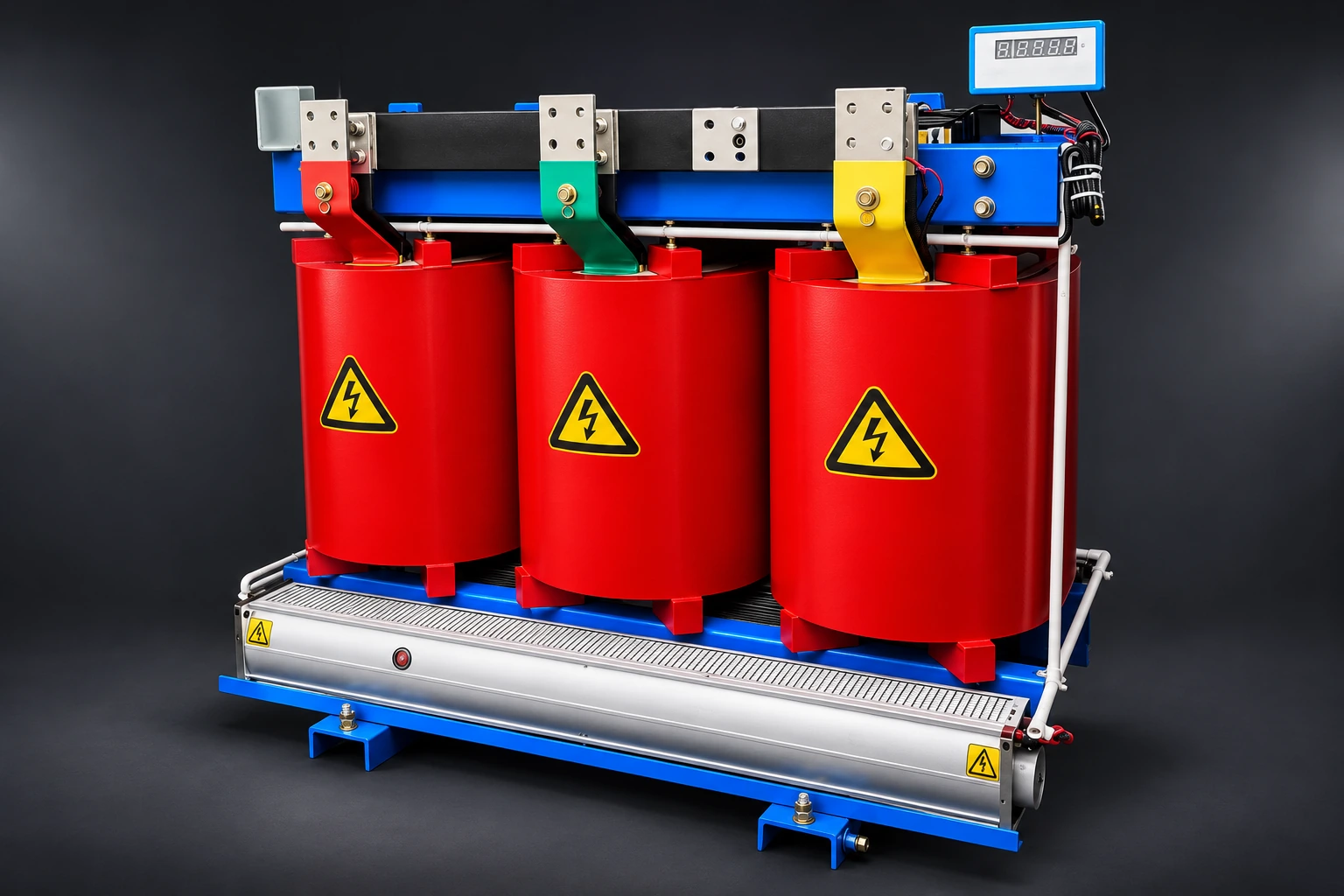
Shenheng ürün görseline dayalı ürün referans çizimi; gerçek bir bakım, test veya müşteri sahası kaydı değildir.
Review bonding, fasteners and cooling accessories together
Where the original design requires a bonding connection to a removable metal panel, preserve the intended arrangement and agree how it will be verified. Do not assume that a painted fixing automatically provides the necessary electrical connection, or that adding an arbitrary strap is an approved correction. The responsible engineer should identify the required interfaces and acceptance evidence for the actual assembly.
Cooling accessories can also cross the panel boundary. Record whether a fan, sensor cable, guard or terminal box is attached to the affected section. Use the separate replacement cooling fan compatibility review if the fan itself is changing. A panel order should not silently substitute a different fan or move its position. Separate decisions make the final configuration easier to check and maintain.
Ask the manufacturer to specify the permitted fasteners and installation information. The panel may fit with a different screw length, but that observation does not establish internal clearance, secure retention or the suitability of the joint. This guide gives no generic torque value because attachment details vary with the actual panel, frame and fixing design.
cURL Too many subrequests by single Worker invocation. To configure this limit, refer to https://developers.cloudflare.com/workers/wrangler/configuration/#limits
The replacement work package should identify the received spare, approved drawing, responsible installer and required inspections. It should also address how the surrounding equipment will be protected while a barrier is removed. HSE’s maintenance guidance provides planning background; the site-specific electrical procedure determines the actual safe conditions and access controls.
At handover, distinguish receiving inspection, installed fit and operational release. The review may need evidence of correct attachment, retained identification, clear cooling openings, completed bonding checks where applicable and restoration of all affected barriers. The owner and manufacturer should decide the appropriate checks rather than copying a test list from unrelated equipment.
Retain photographs and records sufficient to identify the completed configuration. List deviations and unresolved items by owner and required action. The task is not closed merely because the replacement looks tidy. A panel with an unapproved ventilation change or missing identification remains an open engineering issue even if it closes without difficulty.
Prepare an enquiry that reduces spare-part uncertainty
Send the transformer and enclosure identifiers, panel position, original drawing revision, permitted condition photographs and the reason for replacement. State whether an original spare is required or whether an alternative is being proposed for assessment. Ask the supplier to identify the scope of its compatibility statement and any exclusions, including screens, seals, labels and mounted accessories.
For equipment context, the dry type transformer overview explains the main transformer arrangement. Use it to understand the assembly, then return to the serial-number-specific enclosure documents for the replacement decision. A product category, capacity or coil appearance is not a panel part number.
Electrical maintenance safety background
The government safety video below provides background on hazardous-energy control. It is not a transformer panel removal demonstration. Do not remove a barrier or operate the transformer with a panel missing based on this video or article.
Daha fazla öğrenme: Güvenlik ve Sağlık İçin Ayağa Kalkın – Kilitleme Etiketleme — Çalışma Bakanlığı. YouTube'da açın.
Sık sorulan sorular
Is a panel with the same height and width equivalent?
No. Review the internal envelope, opening arrangement, attachment, protective functions, bonding interfaces and identification as well as the outside dimensions.
Can extra ventilation holes improve the replacement?
That is a design-change question. Additional openings may affect other enclosure functions, and the complete proposal needs manufacturer or responsible-designer review.
Does the product reference show the replacement enclosure?
No. The reference shows a cast resin transformer active assembly. The actual enclosure and panel must be identified from the installed equipment and project documents.
What records should remain after the repair?
Keep the approved panel identity and drawing, compatibility decision, completed inspections, relevant bonding and accessory checks, deviations and the owner’s release record.
Shenheng Elektrik, müşterilerinin güvenli, verimli ve sürdürülebilir güç yönetimi elde etmesini sağlayarak, güç ekipmanı çözümlerinde küresel bir lider olmayı taahhüt eder.

 Shenheng Elektrik Ekipmanları Ticaret Limited Şirketi.