A transformer oil pump rotation direction review should compare the installed pump’s identification, the manufacturer’s specified viewing reference and the approved commissioning evidence. A running motor or a flow flag alone does not prove correct rotation or adequate cooling. First confirm that the transformer actually has a pumped cooling circuit, then identify the pump and its controls. If records conflict or cooling behavior is abnormal, keep acceptance open for the responsible engineer and qualified maintenance team rather than experimenting with wiring or operation.
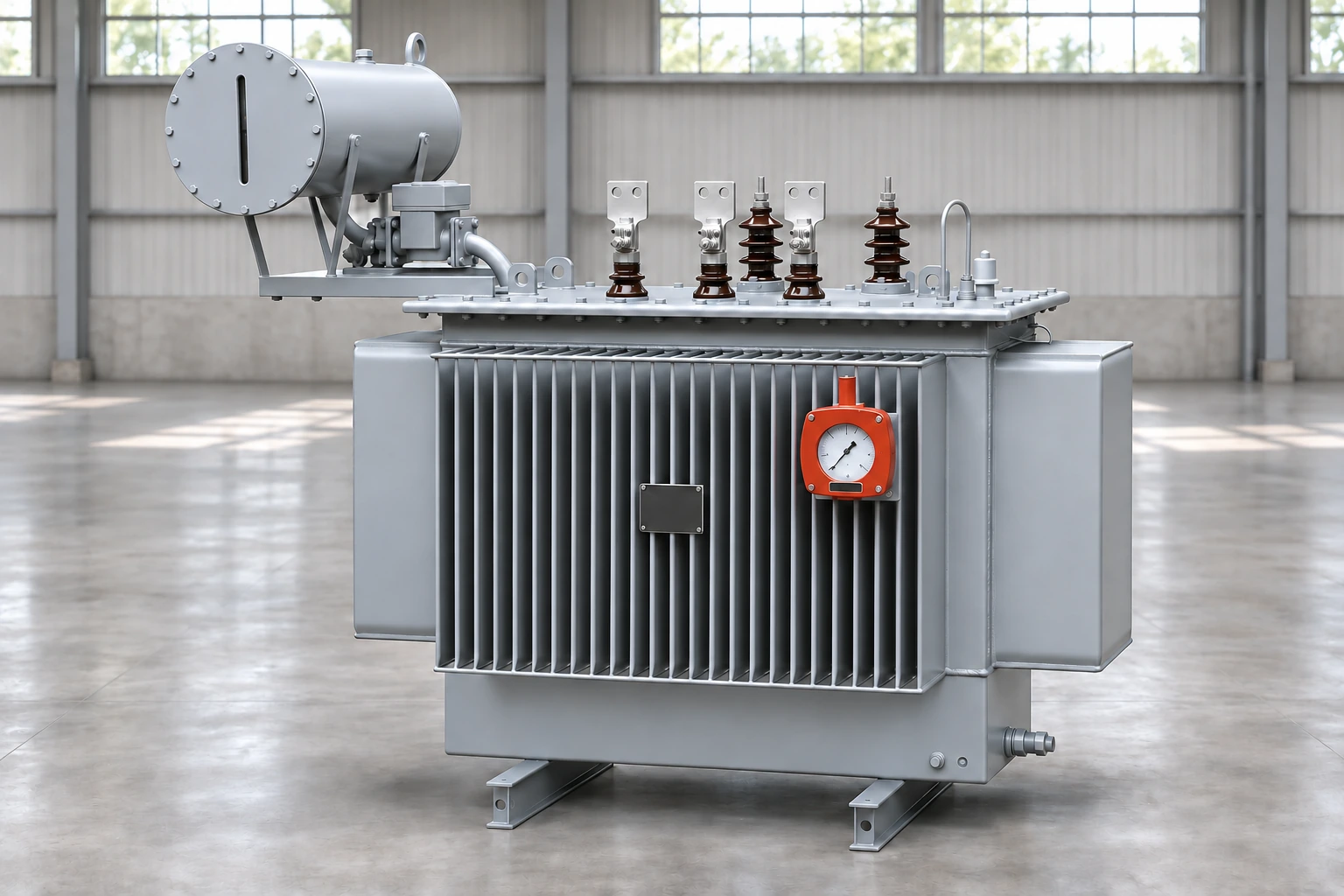
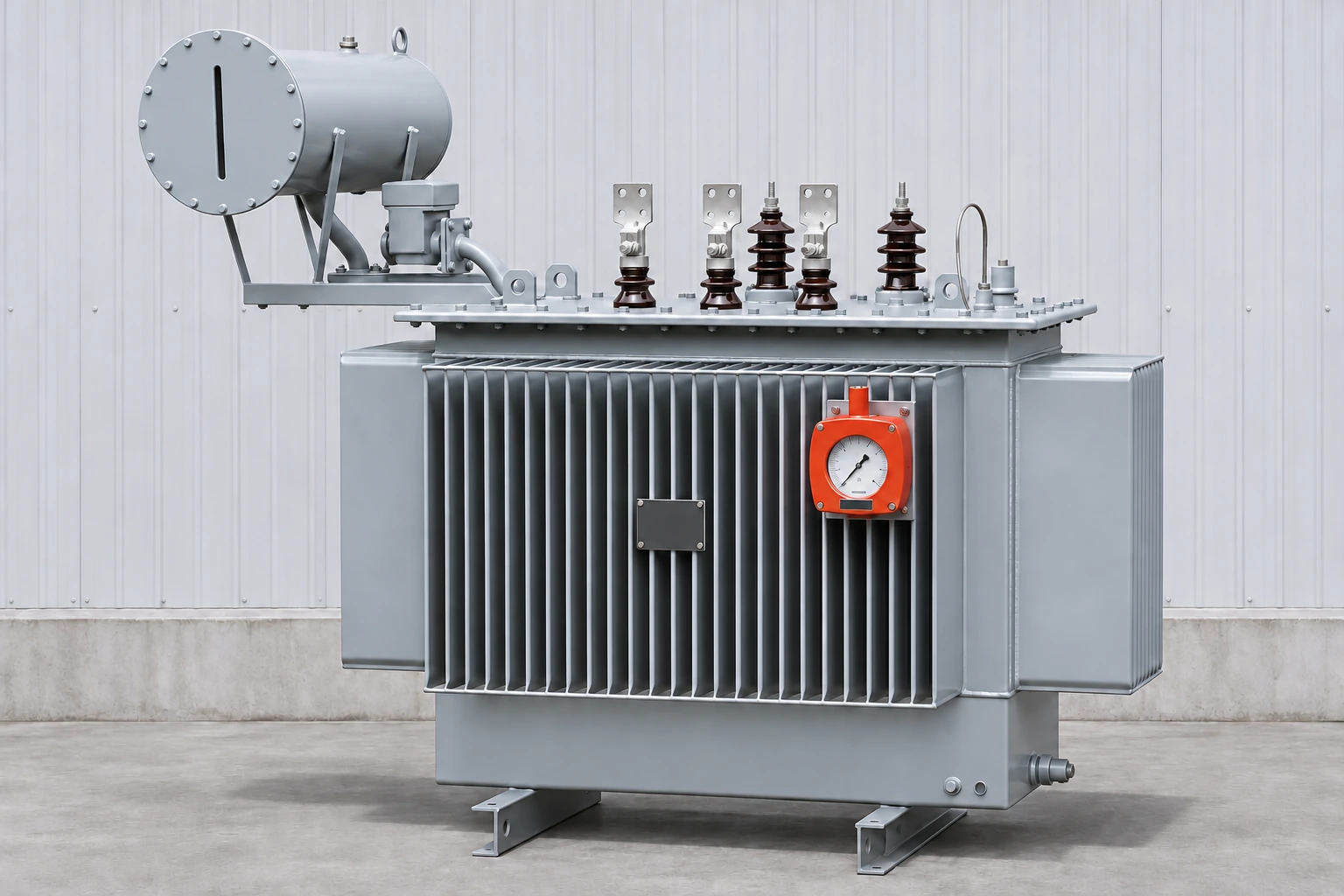
This is a document and condition-review guide for owners, buyers and project engineers. It is not a motor connection diagram or an energization procedure. Shenheng’s oil-immersed transformer product illustrates the relevant equipment family, but the product image does not establish that this particular transformer has an oil pump. Use the installed unit’s nameplate, drawings and cooling-system documents to determine the actual arrangement.
Confirm that the question applies to a pumped circuit
Oil-immersed transformers can use different cooling arrangements. Do not assume that fins, radiators or a conservator imply a circulation pump. Establish the cooling designation and the as-built circuit from the equipment records. If the unit uses natural oil circulation without pumps, an oil-pump rotation check is not applicable; investigate the actual cooling system instead.
Where pumps are installed, identify each one by its asset reference and location. A system may have multiple cooling groups, standby equipment or separate control supplies. Record which pump is under review and which temperature, flow or alarm evidence belongs to that circuit. Avoid mixing results from adjacent groups because the motor housings look alike.
สำนักงานบริหารงานชลประทานของสหรัฐอเมริกา ทรานส์ฟอร์เมอร์: พื้นฐาน การบำรุงรักษา และการวินิจฉัย discusses cooling arrangements and pump checks. Its explanation that a reversed pump may still move some oil is particularly relevant: apparent flow is not a complete acceptance criterion. Follow the installed pump’s instructions for the actual verification method.
Keep rotation direction separate from oil-flow direction
Rotation describes the moving assembly and depends on the stated observation end. Oil-flow direction describes the liquid path through the circuit. These are related design characteristics, but their arrows should not be treated as interchangeable. A label that says clockwise is incomplete unless the reference view is known.
Collect the pump model, serial number and the relevant instruction revision. Locate the manufacturer’s direction marking and establish how it is to be interpreted for the installed orientation. If the casing has more than one arrow, have the documentation identify each function. Do not infer shaft rotation from a pipe arrow or a photograph taken from the opposite end.
Record the viewing reference in the acceptance form in words, not just a copied clockwise abbreviation. Include a drawing or approved photograph if the manufacturer permits that method. If the marking is damaged or inaccessible, resolve it with the manufacturer before someone creates an unofficial direction label. An undocumented assumption can survive into later maintenance and be repeated as fact.
Review what changed before the concern appeared
A direction concern may arise after pump replacement, auxiliary supply work, cooling-panel modifications or commissioning. Build a short event history. Include the last accepted condition, the exact intervention and any new symptoms. This helps distinguish a direction-verification gap from a broader hydraulic or mechanical problem.
Review the replacement pump identity against the approved spare specification. Similar external dimensions do not establish the same duty, motor connection, liquid compatibility or indicated direction. Obtain the vendor’s confirmation where the replacement differs from the original. Keep proposed substitutions separate from the evidence that the installed system has been accepted.
Consider whether the evidence was collected before or after the final installation configuration. A workshop motor test does not automatically verify the pump after site wiring and controls were completed. Ask which test corresponds to the as-built condition and whether later changes required its review. The acceptance record should connect the equipment identity to the actual installation revision.
Evaluate several observations without turning them into shortcuts
A useful review can include approved rotation verification, flow behavior, motor electrical observations, noise or vibration findings and cooling-system response. Each observation answers a different question. Ask whether the method, instruments and operating conditions were suitable before comparing the result with the acceptance criterion.
For example, a flow indicator may respond while flow is below the required duty. An unusual sound may warrant investigation without identifying the cause by itself. A motor current record is meaningful only with the correct equipment, supply and operating conditions. None of these observations should be converted into a universal pass/fail threshold from a different pump.
The EPRI Power Transformer Maintenance and Application Guide provides broader maintenance context for transformer cooling equipment. Use such guidance to frame the review, while obtaining the actual pump’s acceptance criteria from its manufacturer and the project documents. This article deliberately supplies no generic current, flow, pressure or timing limit.
Build an acceptance-evidence table
The table below is a proposed review structure. It does not direct a test or authorize operation; the qualified team must use the approved equipment-specific procedure.
รีวิวสินค้า
Evidence requested
Reason to keep acceptance open
Pump identity
Model, serial number and circuit designation
Test record refers to another pump or cooling group
Required rotation
Manufacturer marking and defined observation end
Direction is copied without a viewing reference
Installed electrical configuration
Approved drawing and completed change record
Wiring or supply changed after the recorded verification
Rotation verification
Signed result using the approved method
Motor-running indication is the only evidence
Hydraulic performance
Applicable acceptance record with stated conditions
Flow flag is used as proof of full cooling duty
Controls and protection
Required functional-check records
Pump operation is accepted while related alarms remain unresolved
Final restoration
Documented as-left configuration and release
Temporary settings or incomplete reassembly are not accounted for
Assign unresolved items to named roles and preserve the evidence that already exists. A missing viewing reference may need clarification from the pump supplier; an unexplained cooling symptom may need engineering investigation. Those are different actions and should not be combined into a vague instruction to retest everything.
Do not overlook other causes of low or abnormal flow
Rotation is one possible concern within a cooling circuit. Review the manufacturer’s troubleshooting scope for liquid condition, valve configuration, air, restrictions, mechanical condition and instrumentation. The presence of one plausible explanation does not exclude the others. A qualified team should determine the inspection and test sequence appropriate to the symptoms.
Be precise about what is observed. Write that the indicator response differs from an accepted baseline, rather than declaring a reversed pump without verification. Note the operating state and any changes that affect comparison. If the baseline is unavailable, record that limitation rather than describing a subjective response as normal.
Do not compensate for unresolved cooling performance by changing alarm settings or assuming spare cooling capacity is sufficient. The transformer loading and cooling availability decision belongs to the responsible engineer, using the equipment ratings and site operating requirements. A procurement review or online guide cannot authorize continued operation under an unexplained condition.
Plan verification as controlled electrical maintenance
The HSE guidance on work on electrical equipment สนับสนุนการวางแผนและการปฏิบัติงานโดยผู้มีความสามารถ ให้ปฏิบัติตามข้อกำหนดด้านความปลอดภัยทางไฟฟ้าในท้องถิ่น รวมถึงคำแนะนำของปั๊มและหม้อแปลงไฟฟ้า ห้ามสันนิษฐานว่าขั้นตอนที่นำมาจากปั๊มรุ่นอื่นสามารถใช้ได้อย่างเหมาะสม เพียงเพราะมอเตอร์ทั้งสองเป็นมอเตอร์สามเฟส.

 บริษัท เสินเฮิง พาวเวอร์ อีควิปเมนท์ จำกัด.