
 บริษัท เสินเฮิง พาวเวอร์ อีควิปเมนท์ จำกัด.



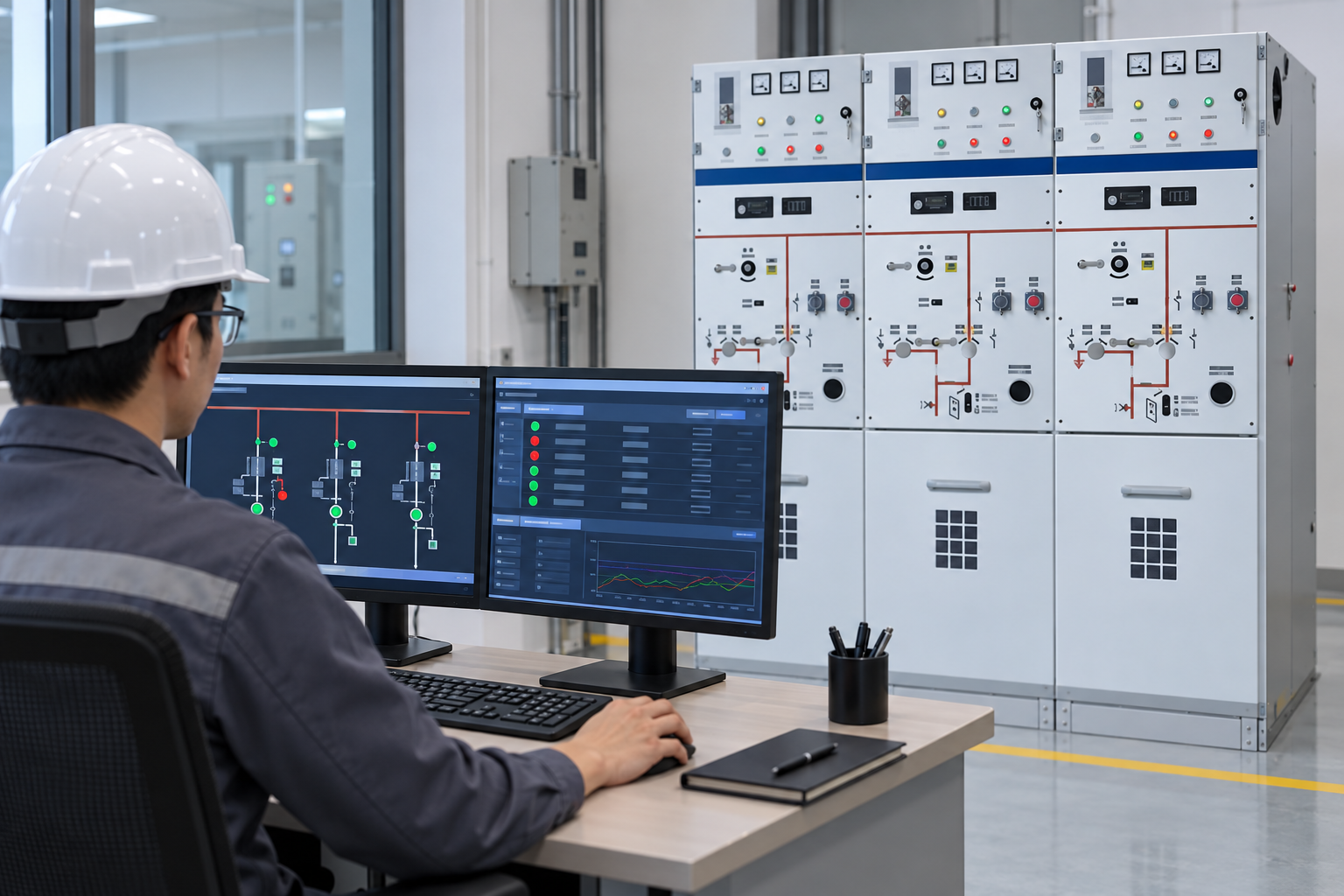
RMU SCADA integration requires a clear engineering boundary before it can support a purchase, inspection or commissioning decision. RMU SCADA integration connects ring main unit status, measurements, alarms and permitted commands to a supervisory system while preserving local protection, mechanical interlocks and safe earthing procedures. The right design starts with the RMU modules and the operator decisions, then defines the I/O, gateway, protocol, time source, quality flags and fallback state. A screen that merely shows green icons is not proof that the physical apparatus and communications path agree.
Define the RMU points
List switch or circuit-breaker position, earth-switch position, gas or pressure alarm where applicable, protection trip, local or remote selector, control power, feeder current and voltage, and communication health. Separate indication, alarm, measurement, command and event points.
For each point record source, unit, scaling, timestamp, quality flag, deadband and update behavior. Tie the list to the approved single-line diagram and RMU drawing. Remove points that have no operational decision or maintenance use.
Map the integration layers
A typical path runs from auxiliary contacts and sensors to an RMU controller or IED, then to an RTU or gateway, a station network, an HMI and possibly a control-center link. The exact protocol and architecture belong to the project owner.
Show every interface, address range, time source, redundancy path and cybersecurity boundary. Identify what remains available when communications, the gateway or control power fails. Avoid an unowned converter or unmanaged switch in a protection path.
Keep local interlocks authoritative
Remote operation must not defeat earth-switch, access, trapped-key or gas-condition interlocks. A command should include permission, selection, timeout, operation and reliable feedback. Local mechanical indication remains the reference for a safe physical state.
Define local, remote and maintenance modes, two-step commands and rejection messages. Test contradictory feedback, stale status and a failed command. Never bypass an interlock to make SCADA appear complete.
Time, quality and alarms
Operators need to distinguish a healthy zero from a stale, substituted, bad or communication-lost value. Events from protection, the RMU and the HMI need a common time basis for sequence-of-events review.
Specify time synchronization, quality flags, source priority, failover and alarm priority. Test loss of communications, clock drift, restoration and alarm acknowledgement. Suppress nuisance alarms without hiding a real trip or pressure condition.
Commission command and feedback
Commissioning should prove the chain from command permission through motor or mechanism operation to auxiliary contact feedback and event logging. Test local operation first, then remote operation under an approved method.
Record point lists, timestamps, relay settings, control voltage and rejected-command behavior. Confirm the final state after a communication or auxiliary-power failure. Retain the test record with the as-built RMU file.
Maintain the system
Firmware, gateway configuration, network switches, point lists, credentials and backups need controlled change management. A relay, motor operator or protocol change can alter the meaning of a point or the safe fallback.
Keep configuration backups and re-test after changes. Coordinate SCADA maintenance with switching permits and the site cybersecurity process. The maintainable design is the one an operator can understand without reverse-engineering the cabinet.
Test the remote command as a complete transaction
An RMU integration test should follow a remote command from the operator request to the physical apparatus and back to the display. Identify the command point, communication path, local or remote selector, permissives, interlocks and final position contacts. A gateway acknowledgement proves only what that interface has accepted; it does not prove that the switch moved. Keep the command acknowledgement separate from the independent position feedback. The operator should be able to distinguish an accepted request, a completed operation and a timed-out or rejected operation.
Define the feedback states before configuring the display. Where separate open and closed contacts are available, document how the system represents open, closed, intermediate and contradictory indications. Do not force every contact combination into a reassuring open or closed symbol. Review the contact wiring and point logic with the equipment supplier, then test the approved states with a simulator or safely isolated arrangement. Record how an invalid state is alarmed and how stale information is marked after communication fails. The exact contact convention must follow the supplied drawings.
Loss of remote communication should have a documented operational consequence. Check whether local operation remains available under the site’s procedures, how the control center detects the outage and what information is shown during restoration. Avoid interpreting the last reported position as a newly verified position. A retained value may be useful for context, but its age and quality need to remain visible. Test whether accumulated events retain their original timestamps and whether the restored gateway produces confusing alarm floods or duplicate records.
The handover file should include the point list, scaling, units, contact polarity, command behavior, quality mapping, communication settings and approved test results. Keep cybersecurity administration separate from ordinary operator controls: changing a display label should not require unrestricted access to protection or switching configuration. Define who can approve configuration changes and how the tested version is restored after a fault. A successful integration is one that communicates trustworthy equipment state and carries out authorized operations with clear feedback; it is not established by a green connection indicator alone.
ใช้มาตรฐานและหลักฐานจากผู้ผลิตควบคู่กัน
มาตรฐานกำหนดกรอบแนวคิดและศัพท์เฉพาะ ส่วนเอกสารของผู้ผลิตกำหนดขอบเขตการใช้งานและข้อจำกัดการก่อสร้างที่ได้รับการตรวจสอบแล้วของอุปกรณ์ที่จำหน่ายมา โดยลิงก์มาตรฐานไม่สามารถพิสูจน์ได้ว่าการปรับเปลี่ยนที่ไม่ได้รับการตรวจสอบนั้นเป็นที่ยอมรับได้ และเอกสารโบรชัวร์ก็ไม่สามารถแทนที่ข้อกำหนดการก่อสร้างหรือกฎเกณฑ์ด้านความปลอดภัยได้.
สำหรับการจัดซื้อ ขอให้ระบุขอบเขตการทดสอบมาตรฐาน การตรวจสอบออกแบบ หรือการทดสอบประเภทต่างๆ บันทึกการทดสอบประจำวัน ขีดจำกัดการติดตั้ง และการแก้ไขความสูงหรือสภาพแวดล้อม เก็บหลักฐานไว้ในบันทึกสินทรัพย์ เมื่อมีการโต้แย้งผลลัพธ์ ให้เปรียบเทียบคำจำกัดความ เงื่อนไขการทดสอบ และขอบเขตก่อนที่จะเปรียบเทียบตัวเลข.
วางแผนการติดตั้งและการทดสอบการใช้งาน
คุณภาพการติดตั้งมักจะเป็นตัวกำหนดว่าการออกแบบเสียงจะยังคงมีคุณภาพในพื้นที่ปฏิบัติงานหรือไม่ ตรวจสอบพื้นฐาน การเข้าถึง การยก การเปิดช่องว่าง การระบายอากาศ รัศมีโค้งของสายเคเบิล การต่อสายดิน ป้ายบอกข้อมูล และส่วนควบคุมก่อนการเปิดใช้งาน ใช้คำสั่งการติดตั้งที่ได้รับการอนุมัติและระบบใบอนุญาต การติดตั้งตู้ที่มีความเรียบร้อยไม่ได้หมายความว่าทุกส่วนเชื่อมต่ออย่างถูกต้อง.
การเปิดใช้งานควรเปลี่ยนจากการตรวจสอบเอกสารมาเป็นการตรวจสอบด้วยตาเปล่า การทำงานด้วยเครื่องกล ความต่อเนื่องทางไฟฟ้า โครงสร้างทางฟังก์ชัน การทดสอบการป้องกันหรือการควบคุม และการซ่อมแซมขั้นสุดท้าย บันทึกข้อมูลเกี่ยวกับเครื่องมือ เช่น ชื่อเครื่องหมายการตั้งค่า ค่าดิบ ข้อผิดพลาด และผู้ที่ดำเนินการตรวจสอบ ควรแยกอุปกรณ์ออกจากกันทุกครั้งที่การทดสอบหรือการตรวจสอบอาจก่อให้เกิดอันตราย.
การเปลี่ยนแปลงและการโอนย้ายการควบคุม
การเปลี่ยนเส้นทางสายเคเบิล การตั้งค่ารีเลย์ ตำแหน่งการแตะ การเดินท่อระบายความร้อน หรือการเชื่อมต่อการต่อสายดิน สามารถเปลี่ยนแปลงพื้นฐานการออกแบบเดิมได้ การเปลี่ยนเส้นทางสายเคเบิลต้องดำเนินการภายใต้การควบคุม โดยมีเจ้าของเป็นผู้รับผิดชอบ การตรวจสอบทางเทคนิค การแก้ไขแบบร่าง และหลักฐานการรับรอง การจัดเตรียมการทดสอบชั่วคราวต้องถูกลบออกหรือติดป้ายบอกชัดเจนก่อนการส่งมอบ.
แพ็คเกจสุดท้ายควรประกอบด้วยภาพวาดแบบก่อสร้าง แผ่นทดสอบ การตั้งค่าที่ได้รับการอนุมัติ รายละเอียดอุปกรณ์ คำแนะนำการบำรุงรักษา ข้อผิดพลาด และบันทึกการฝึกอบรม ผู้ปฏิบัติงานในอนาคตควรสามารถทำซ้ำการตัดสินใจได้โดยไม่ต้องพึ่งพาความจำหรือภาพถ่ายที่ไม่มีชื่อ.
คำเตือนด้านความปลอดภัย
อุปกรณ์ไฟฟ้าสามารถเก็บพลังงานไว้ได้และสามารถจ่ายกระแสไฟฟ้าได้จากแหล่งพลังงานมากกว่าหนึ่งแหล่ง บทความนี้ไม่ใช่คำแนะนำในการสลับสวิตช์ บุคคลที่มีคุณสมบัติเหมาะสมต้องปฏิบัติตามข้อกำหนดด้านการควบคุมการทำงาน การแยกการใช้งาน การตรวจสอบการไม่มีแรงดันไฟฟ้า การต่อสายดิน และการควบคุมการทำงาน ไม่ควรแตะต้องส่วนที่จ่ายกระแสไฟฟ้าหรือถอดการล็อคเพื่อทำการวัด.
หากการทดสอบล้มเหลว อุปกรณ์มีการเสียหาย มีเสียงผิดปกติหรือมีกระแสไฟรั่วไหล หรือการกำหนดค่าจริงไม่ชัดเจน ให้เก็บอุปกรณ์ไว้ในสถานะที่ปลอดภัย และแจ้งไปยังวิศวกรผู้รับผิดชอบ หากมีการเปิดเครื่องใหม่ซ้ำๆ โดยไม่ได้รับการวินิจฉัยอย่างถูกต้อง อาจทำให้เกิดความเสียหายและเพิ่มความเสี่ยงได้.
วิธีใช้ผลลัพธ์ในโครงการ
เริ่มต้นด้วยการออกแบบที่ได้รับการปล่อยตัวและเอกลักษณ์ของอุปกรณ์ขั้นสุดท้าย ตรวจสอบสถานะการใช้งาน จุดวัดค่า สภาวะแวดล้อม และหลักฐานที่ต้องสนับสนุนการตัดสินใจของคุณ จากนั้นเปรียบเทียบบันทึกข้อมูลกับมาตรฐานที่เกี่ยวข้อง คำแนะนำของผู้ผลิต และแผนการรับรองโครงการ หากมีข้อกำหนดขั้นพื้นฐานที่ขาดหายไป ให้เก็บข้อมูลนั้นไว้โดยไม่เติมช่องว่างด้วยค่าทั่วไป สิ่งนี้จะทำให้ทีมงานด้านจัดซื้อ การทดสอบการใช้งาน และการดำเนินงานมีจุดอ้างอิงเดียวกัน.
สำหรับการสอบถามจากผู้จัดจำหน่าย โปรดขอข้อมูลเกี่ยวกับพื้นฐานการคำนวณ การจัดเตรียมที่ได้รับการตรวจสอบ การจำกัด ข้อเท็จจริงการทดสอบ และความผิดปกติ สำหรับงานก่อสร้างในสถานที่ โปรดบันทึกชื่อบุคคล เครื่องมือ วันที่ ขอบเขตการแยกส่วน และการตรวจสอบการบูรณะ การบันทึกที่สั้นและชัดเจนจะมีความสำคัญมากกว่ารายงานที่ยาวนานซึ่งปิดบังข้อมูลที่จำเป็นต่อการอนุมัติขั้นตอนถัดไป.

| ตรวจสอบ | หลักฐาน | การใช้คำตัดสินใจ |
|---|---|---|
| คำจำกัดความ | ขอบเขต, รหัสอุปกรณ์ และสถานะการใช้งาน | ช่วยป้องกันไม่ให้ทีมต่างๆ เปรียบเทียบจำนวนที่แตกต่างกัน. |
| พื้นฐานการออกแบบ | คะแนนการประเมินผล สถานที่ทำงาน และสมมติฐานด้านหน้าที่ความรับผิดชอบ | เชื่อมโยงคำตอบเข้ากับระบบติดตั้งจริง. |
| การตรวจสอบ | วิธีการที่ได้รับการอนุมัติ เครื่องมือผลลัพธ์ที่ได้และเกณฑ์การยอมรับ | สร้างบันทึกที่สามารถตรวจสอบได้. |
| การควบคุมการเปลี่ยนแปลง | การเบี่ยงเบน การตรวจสอบเจ้าของ และการแก้ไขตามแบบที่สร้างขึ้น | ช่วยป้องกันการเปลี่ยนแปลงของฟิลด์ที่ซ่อนไว้ ซึ่งอาจเป็นอันตรายได้. |
| การส่งมอบงาน | การตั้งค่า การทดสอบ ภาพถ่าย การบำรุงรักษา และกรณีพิเศษ | สนับสนุนการดำเนินงานในอนาคตอย่างปลอดภัย. |
คู่มือผลิตภัณฑ์และเทคนิคการใช้งานที่เกี่ยวข้อง
สำหรับบริบทของผลิตภัณฑ์ Shenheng ที่ตรงกัน โปรดดูที่ หน้าผลิตภัณฑ์ที่เกี่ยวข้อง. สำหรับหัวข้อที่กว้างขึ้น โปรดอ่าน คู่มือวิศวกรรมสำหรับผู้ปกครอง. การอ่านที่เกี่ยวข้อง: คู่มือแนะนำเบื้องต้น และ คู่มือที่เกี่ยวข้องอีกฉบับ.
แหล่งข้อมูลและมาตรฐาน
แหล่งข่าวจากหน่วยงาน 1 · แหล่งข่าวจากหน่วยงาน 2
วิดีโอสำหรับบริบทของระบบ
คำอธิบายเชิงปฏิบัติทางวิศวกรรมเชิงลึกนี้ให้ข้อมูลพื้นฐานเกี่ยวกับสถานีจ่ายไฟ หม้อแปลง และอุปกรณ์ควบคุมไฟฟ้า เป็นบริบทเพื่อการศึกษา ไม่ใช่คำแนะนำในการเปลี่ยนสวิตช์หรือการทดสอบ.

คำถามที่มักถูกถาม
ขั้นตอนแรกคืออะไร?
Define the exact RMU SCADA integration boundary, equipment identity and operating state before comparing a value or feature.
หน้าแคตตาล็อกสามารถแทนที่วิศวกรโครงการได้หรือไม่
ไม่ ไม่ได้ มีหน้าผลิตภัณฑ์ที่เชื่อมโยงระบุถึงกลุ่มอุปกรณ์ของ Shenheng ที่เกี่ยวข้อง โดยรุ่นที่จัดส่ง อุปกรณ์เสริม มาตรฐาน และแผนการรับรองโครงการเป็นสิ่งที่ควบคุมผลการตัดสินใจในขั้นสุดท้าย.
หลักฐานใดควรถูกเก็บรักษาไว้?
เก็บรูปวาด การคำนวณ หรือวิธีการทดสอบที่ได้รับการอนุมัติ พร้อมกับค่าการวัดที่ได้จากเครื่องมือ ภาพถ่าย รายละเอียดของเครื่องมือ ข้อผิดพลาด การตั้งค่า และบันทึกผลการก่อสร้างที่ได้ในที่สุด.
บทความนี้อนุญาตให้ทำงานแบบสดได้หรือไม่
ไม่ ท่านต้องมีบุคลากรที่มีคุณสมบัติเหมาะสมปฏิบัติตามหลักการความปลอดภัยด้านไฟฟ้าของไซต์งาน รวมถึงคำแนะนำของผู้ออกแบบและผู้ผลิต.




