Компания Shenheng Power с 2001 года является надежным производителем оборудования для передачи и распределения электроэнергии, поставляя надежные электротехнические решения по всему миру.
Опираясь на комплексную систему послепродажного обслуживания, мы предоставляем экспертные технические консультации, рекомендации по продукции и гибкие услуги OEM и ODM для ваших проектов.
Компания Shenheng Power с 2001 года является надежным производителем оборудования для передачи и распределения электроэнергии, поставляя надежные электротехнические решения по всему миру.
Transformer Liquid Level Indicator Replacement: Check the Float, Dial and Alarm Together
Release Time: 2026-11-16
Transformer liquid level indicator replacement should begin with the identity of the complete indicating system, not the appearance of a new dial. Confirm which oil compartment is monitored, whether the indicated level is consistent with temperature, and whether the proposed spare matches the float mechanism, mounting interface and alarm functions. A low indication may represent a real oil problem; replacing the instrument does not resolve that condition. This guide helps owners and buyers prepare an engineering review and a useful spare enquiry. It does not authorize opening a transformer, draining oil, adjusting protection or working on energized equipment.
Identify the compartment and the complete instrument
The level indicator on a main tank is not automatically interchangeable with an indicator on a conservator or a separate tap-changer compartment. Start with the transformer serial number, arrangement drawing and instrument designation. Record exactly where the device is mounted and which volume of liquid it represents. If the drawing and the installed arrangement disagree, retain both records and ask the responsible engineer to resolve the difference before purchasing a spare.
Бюро по рекультивации transformer maintenance reference describes float-operated indicators with magnetic coupling between the internal mechanism and the external dial. This explains why the external face alone is an incomplete description. A replacement review may concern an external indicating assembly, an internal float assembly or the entire device. The manufacturer must identify the permitted replacement scope for the actual transformer.
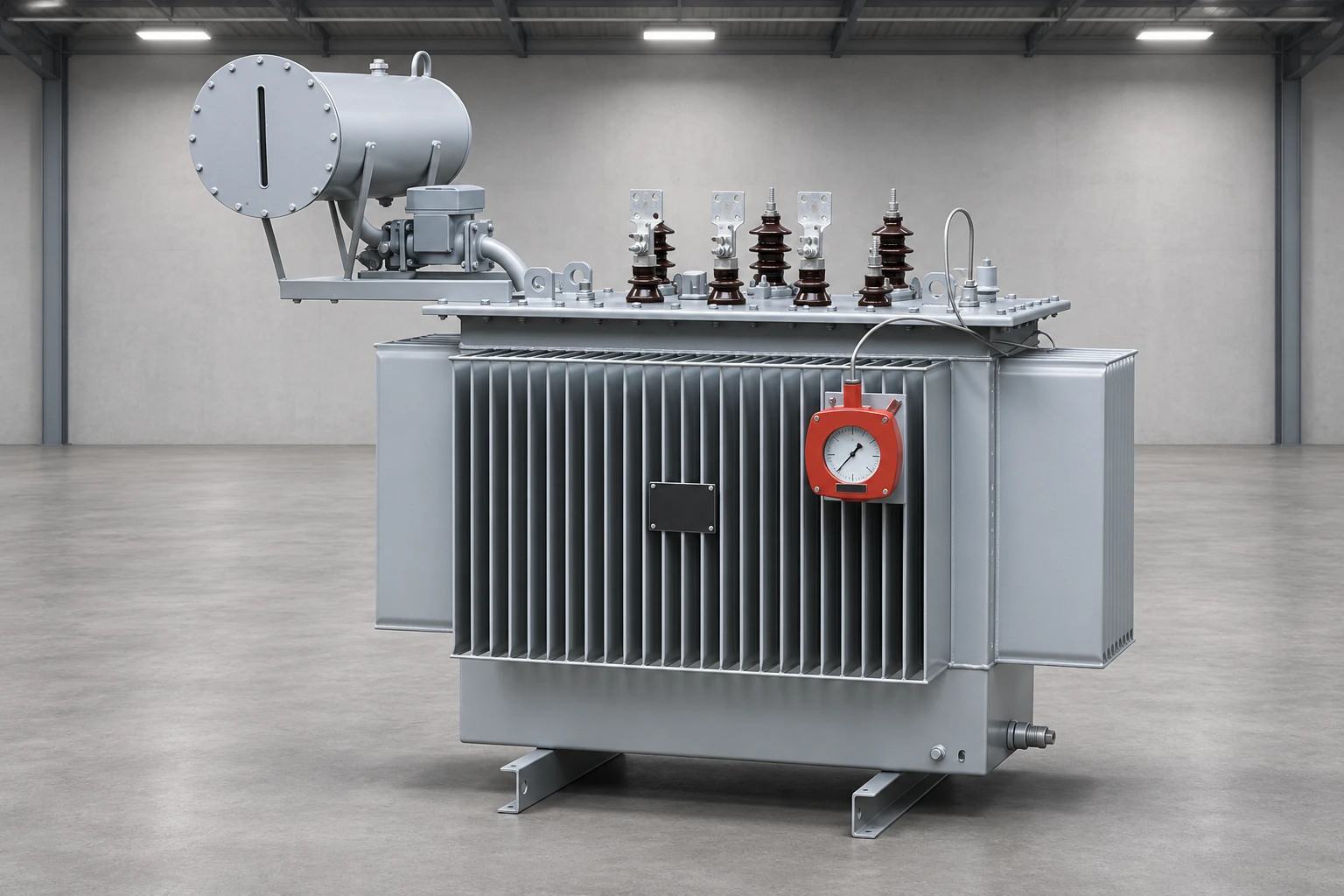
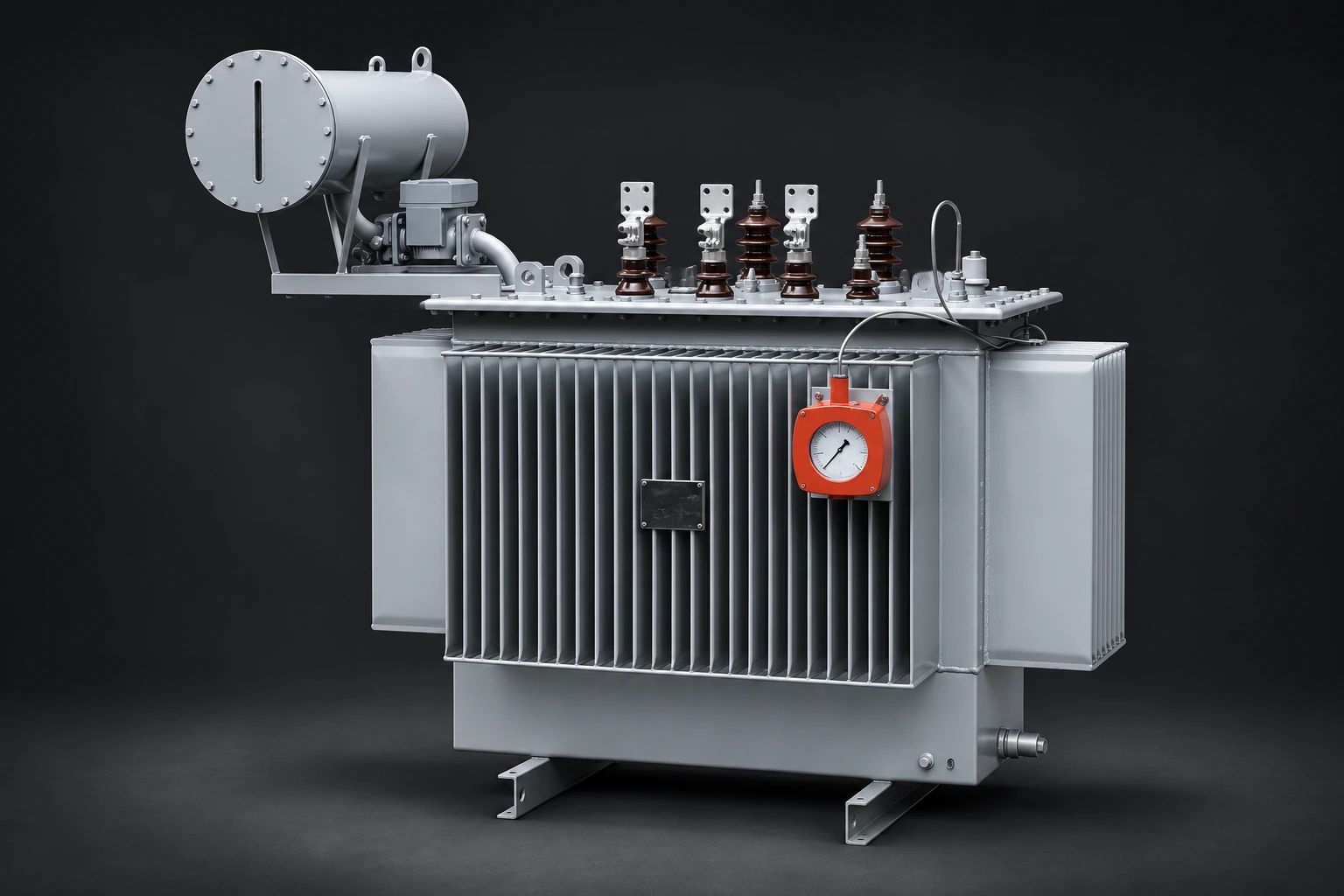
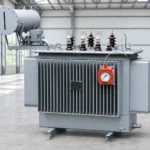
Шэньхэна oil immersed power transformer product provides relevant product context. Its photograph shows an oil-filled assembly with a conservator, bushings and cooling surfaces; the image does not establish the instrument model, alarm settings or interchangeability of spare parts. Ask for the serial-number-specific accessory schedule rather than treating a similar-looking product photograph as an approved parts drawing.
Иллюстрация изделия для справки, основанная на изображении продукции Shenheng; не является фактической записью о техническом обслуживании, испытаниях или объекте заказчика.
Separate an indication problem from a liquid-level problem
Before concluding that an indicator is defective, obtain the operating context through the owner’s authorized observation process. Useful records include the observed level, top-oil temperature, load condition, alarm history and any reported leakage. Keep the observation time with the readings. Comparing a warm operating condition with an old cold-condition photograph can create a false impression that the gauge has changed incorrectly.
Reclamation explains the relationship between temperature and indicated oil level and recommends checking temperature indication before deciding that the level instrument needs calibration or replacement. Apply that principle through the instructions for the installed equipment. Do not convert a temperature mark from an example instrument into a universal target for every transformer. The correct interpretation depends on the design and the manufacturer’s documentation.
An unexplained low-level alarm, visible leakage or inconsistent instrument response needs technical assessment. Do not bridge alarm contacts to clear an indication, add oil simply to move the pointer, or assume that installing a new dial restores safe operation. The owner must decide how the equipment is made safe and who is competent to investigate it. This article provides procurement questions, not an operating decision.
Build a replacement review sheet before requesting a price
A structured comparison makes omissions visible. The following table is an engineering review aid based on the indicator functions described by Reclamation and the repair-planning principles in Руководство HSE по выполнению электромонтажных работ. It does not supply dimensions, settings or a list of approved substitutes.
Отзыв о товаре
Доказательства для получения
Question the reviewer must resolve
Compartment identity
Arrangement drawing and device designation
Does the spare monitor the same liquid volume?
Replacement scope
Original parts list and spare proposal
Is approval for the dial, internal mechanism or complete assembly?
Mounting interface
Manufacturer drawing and revision
Are orientation, attachment and sealing interfaces compatible?
Float arrangement
Applicable assembly drawing
Does the mechanism suit the actual tank or conservator geometry?
Dial meaning
Approved scale and temperature reference
Will the indication retain its intended operating meaning?
Alarm functions
Circuit schedule and contact information
Are all required alarm or trip functions preserved?
Acceptance
Agreed inspection and functional-test scope
What evidence is needed before release to service?
Keep the completed review with the quotation. If a vendor answers only the flange dimension, the remaining rows are still open. A purchase order should identify the accepted assembly and revision, not merely repeat a generic description such as transformer oil gauge.
Review the mechanical interface without assuming internal access
Matching mounting-hole positions is only one part of the assessment. The proposed replacement may also depend on orientation, magnetic coupling, float travel, mechanical stops and the clearance available inside the monitored compartment. These details are not reliably established by an external photograph. Request the original assembly drawing and the spare manufacturer’s documented compatibility statement for the identified installation.
Ask the manufacturer to distinguish operations that leave the oil boundary intact from operations that disturb it. A maintenance publication may describe removal of an external mechanism for a particular arrangement, but that example is not permission to remove any gauge without lowering oil or controlling pressure. The approved work method must establish the boundary for this exact device and the condition of the transformer.
cURL Too many subrequests by single Worker invocation. To configure this limit, refer to https://developers.cloudflare.com/workers/wrangler/configuration/#limits
cURL Too many subrequests by single Worker invocation. To configure this limit, refer to https://developers.cloudflare.com/workers/wrangler/configuration/#limits.
cURL Too many subrequests by single Worker invocation. To configure this limit, refer to https://developers.cloudflare.com/workers/wrangler/configuration/#limits.
cURL Too many subrequests by single Worker invocation. To configure this limit, refer to https://developers.cloudflare.com/workers/wrangler/configuration/#limits.
cURL Too many subrequests by single Worker invocation. To configure this limit, refer to https://developers.cloudflare.com/workers/wrangler/configuration/#limits
cURL Too many subrequests by single Worker invocation. To configure this limit, refer to https://developers.cloudflare.com/workers/wrangler/configuration/#limits.
Иллюстрация изделия для справки, основанная на изображении продукции Shenheng; не является фактической записью о техническом обслуживании, испытаниях или объекте заказчика.
Agree the evidence required after replacement
Define acceptance before approving the purchase. The manufacturer and owner should agree how the received spare will be identified, what documentation accompanies it, and how the installed instrument and affected signals will be checked. Separate a receiving inspection from installation acceptance. An undamaged spare with the correct label can still be incorrectly configured or unsuitable for the installed float mechanism.
HSE’s maintenance guidance emphasizes planning, competent people and making equipment safe for maintenance. For this task, the work package must address electrical and other energy sources, the oil boundary and any changes to alarm availability. The site procedure determines the actual precautions. Do not infer a safe work condition from a stopped cooling fan, an open local switch or the absence of an alarm.
The handover record should identify the removed and installed devices, drawing revisions, approved deviations, observations and completed tests. If a discrepancy remains, record who owns it and how it affects the release decision. Do not close the task with a broad statement that the gauge was replaced successfully when the relevant alarm circuit has not been checked.
Send a useful spare enquiry
Provide the transformer identification, compartment designation, installed instrument details, permitted photographs, applicable drawings and a precise description of the symptom. State whether the request is for a quotation, compatibility assessment or an approved complete spare. Ask the supplier to list exclusions and unresolved information instead of treating silence as confirmation.
For example, a report of a pointer remaining unchanged while operating conditions vary is a symptom, not proof of a failed float or magnetic coupling. A supplier needs the observation history and the installed assembly identity before proposing a remedy. A clear enquiry reduces the risk of ordering a visually similar dial and discovering during the outage that the internal mechanism or alarm arrangement is different.
Electrical maintenance safety background
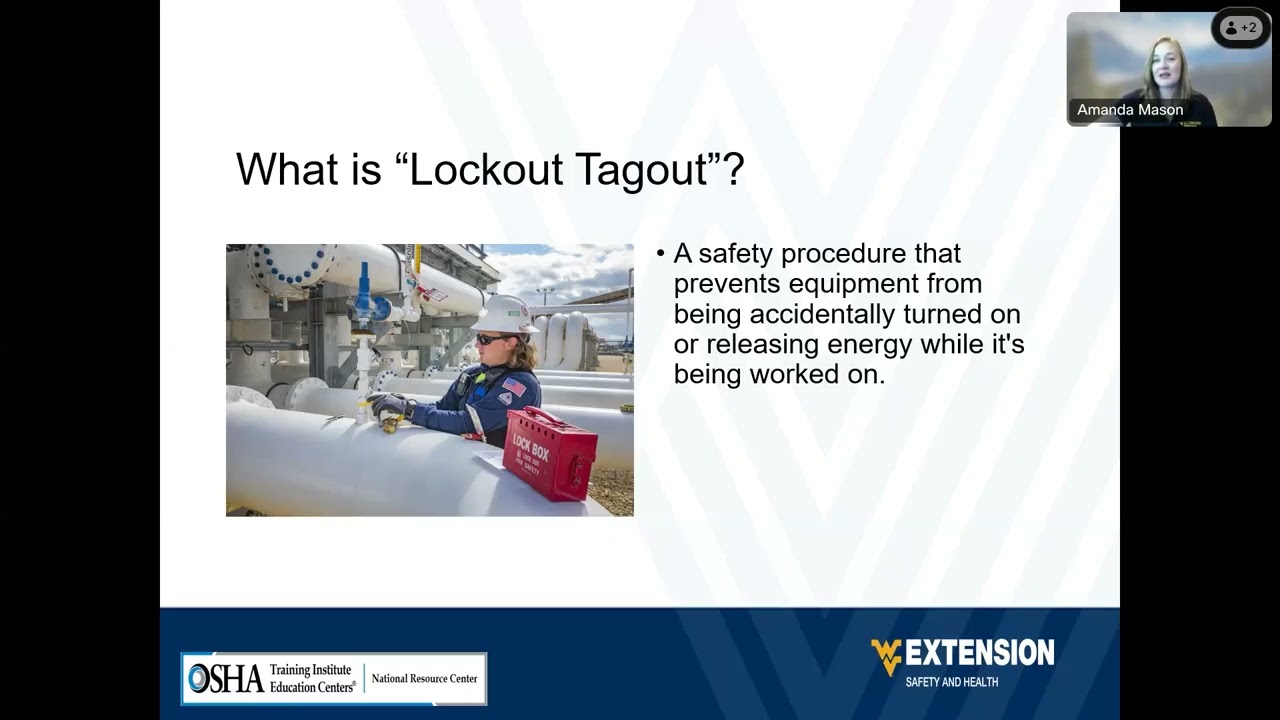
The following government safety video provides background on controlling hazardous energy during maintenance. It does not demonstrate replacement of this accessory or establish a transformer isolation procedure. The owner’s authorized work method remains essential.
Дополнительное обучение: Защита безопасности и здоровья – блокировка и метка — Министерство труда России. Публикация на YouTube.
Часто задаваемые вопросы
Can a similar-looking level gauge replace the original?
Appearance alone is insufficient. Confirm the compartment, complete assembly identity, mechanical interfaces, dial meaning and required signal functions through the manufacturer’s approved documentation.
Does a low indication prove that the gauge has failed?
No. The indication may reflect actual liquid condition or temperature context. Record the evidence and obtain a competent assessment before deciding that the instrument is defective.
Can the external dial always be removed without draining oil?
No universal permission applies. Some designs separate the external mechanism from the oil boundary, but the installed device’s instructions must establish the approved scope and safe work conditions.
What should the final replacement record contain?
Retain the original and replacement identities, approved drawings, compatibility decision, work scope, inspection and functional-test results, affected signal checks and the owner’s release decision.
Компания Shenheng Electric Power стремится стать мировым лидером в области решений для энергетического оборудования, помогая клиентам обеспечивать безопасное, эффективное и экологичное управление электроснабжением.

 Шэньхэн Силовое Оборудование Ко., Лтд.