Desde 2001, a Shenheng Power tem sido um fabricante de confiança de equipamento de transmissão e distribuição de energia, fornecendo soluções elétricas fiáveis a nível global.
Apoiados por um sistema pós-venda completo, fornecemos consultoria técnica especializada, orientação de produtos e serviços flexíveis de OEM e ODM para os seus projetos.
Desde 2001, a Shenheng Power tem sido um fabricante de confiança de equipamento de transmissão e distribuição de energia, fornecendo soluções elétricas fiáveis a nível global.
Transformer Oil Gassing Tendency Test: Method and Interpretation
Release Time: 2026-10-26
A transformer oil gassing tendency test examines how an insulating liquid evolves or absorbs gas under a defined laboratory stress. It is a fluid-characterisation test, and its meaning depends on the method used. It is not the same as dissolved gas analysis of oil collected from an operating transformer. Before interpreting a positive or negative result, confirm the method, units, sign convention, specimen identity and applicable specification. A favourable laboratory result does not prove that a transformer has no active fault, while an unfavourable result does not independently diagnose a defect or require immediate oil replacement.
Start with the question behind the test request
An owner may request a gassing test to compare candidate insulating liquids, examine a particular oil characteristic or support investigation of unexpected gas behaviour. These purposes need different evidence. Write down the intended decision before ordering analysis: selecting an oil against a specification is different from investigating a rising hydrogen trend in service.
Para um transformador de potência industrial imerso em óleo, the liquid operates within an assembly of insulation, conductors and other materials. A laboratory cell deliberately simplifies that environment. The resulting report can inform an engineering review, but it does not reproduce every material, temperature, electric field or operating event in the equipment.
That distinction should appear in the enquiry and in the final decision. Ask the laboratory which method addresses the stated question and what specimen it requires. Avoid ordering a loosely named “gassing test” and discovering afterwards that the report describes a different stress mechanism from the one under investigation.
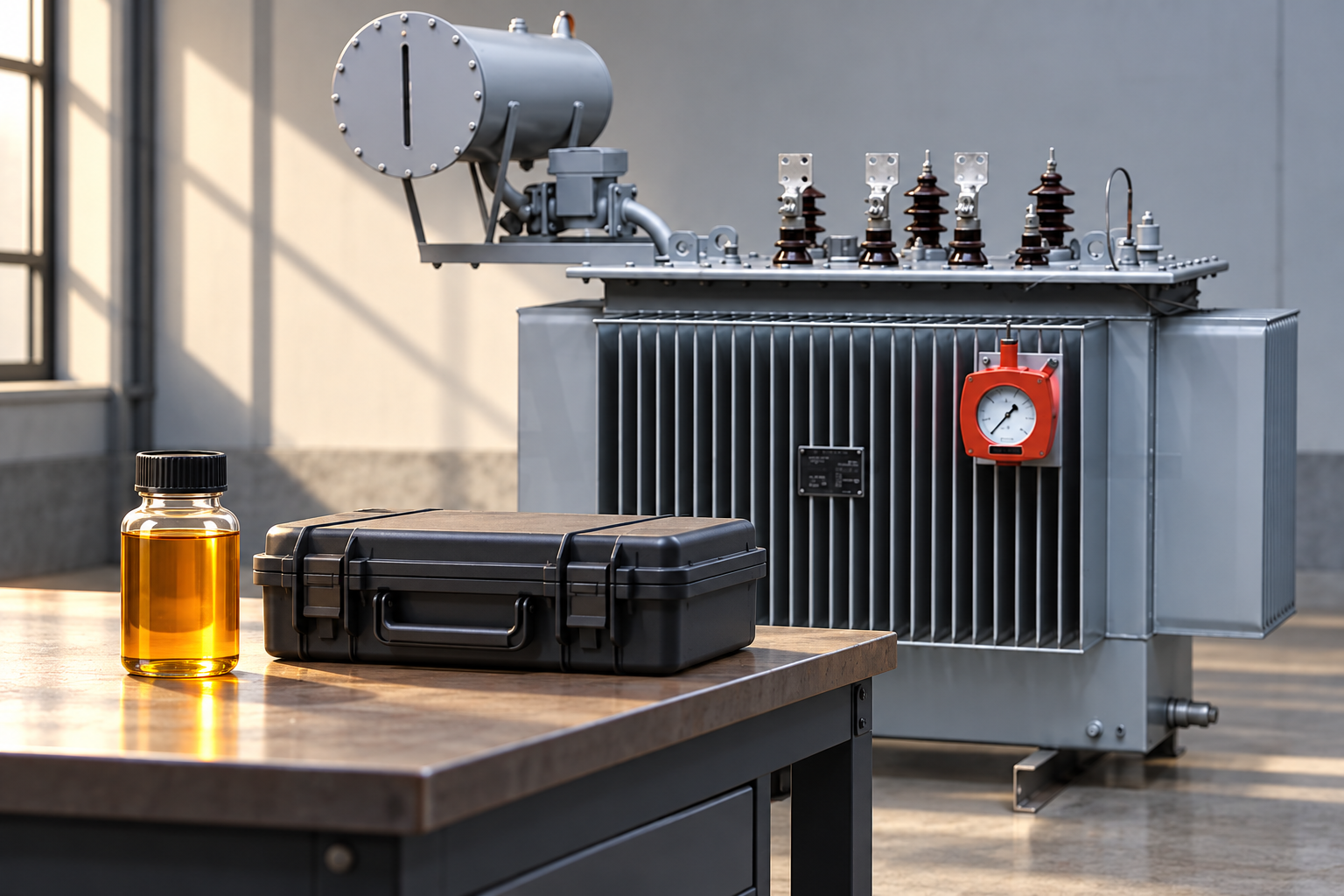
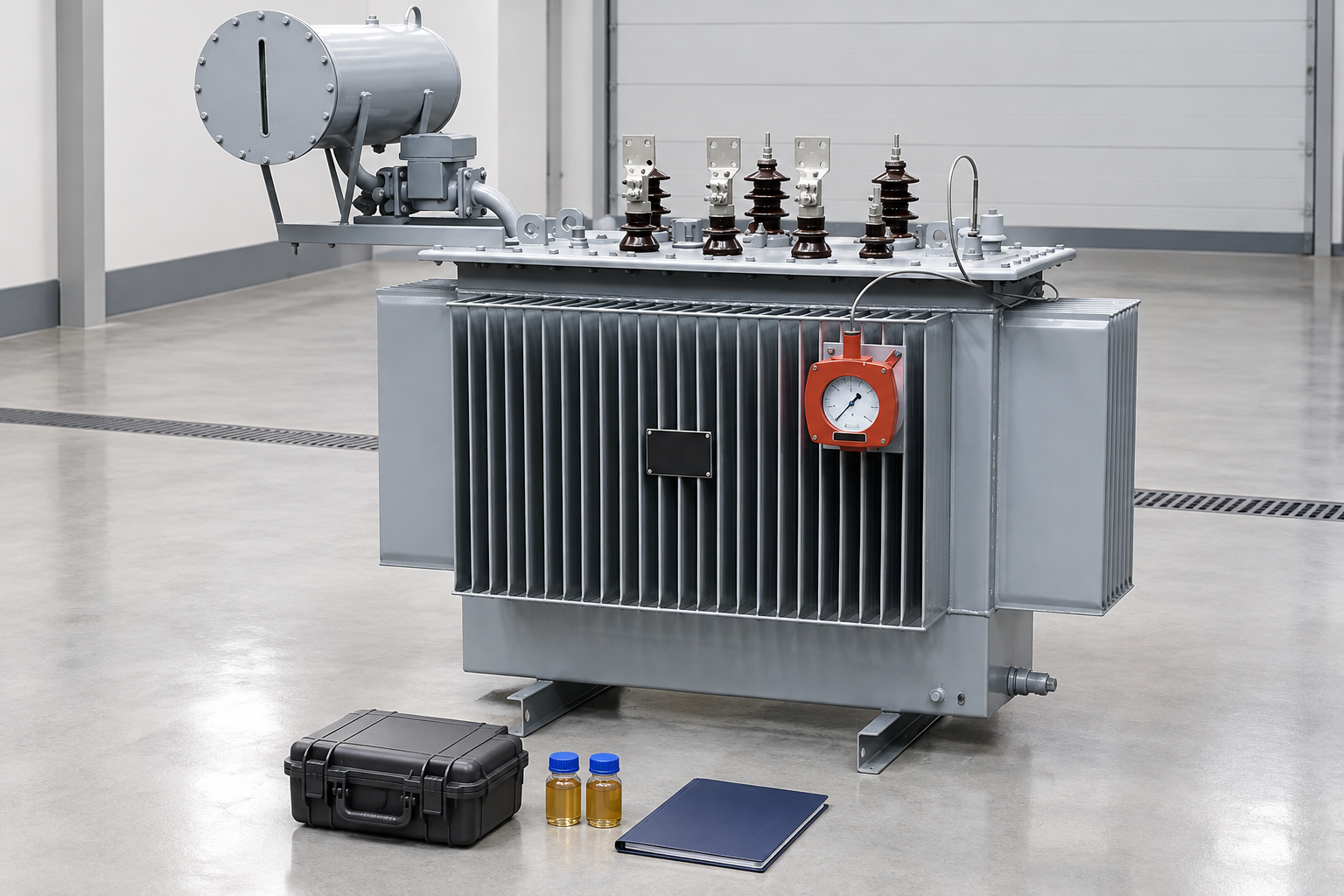
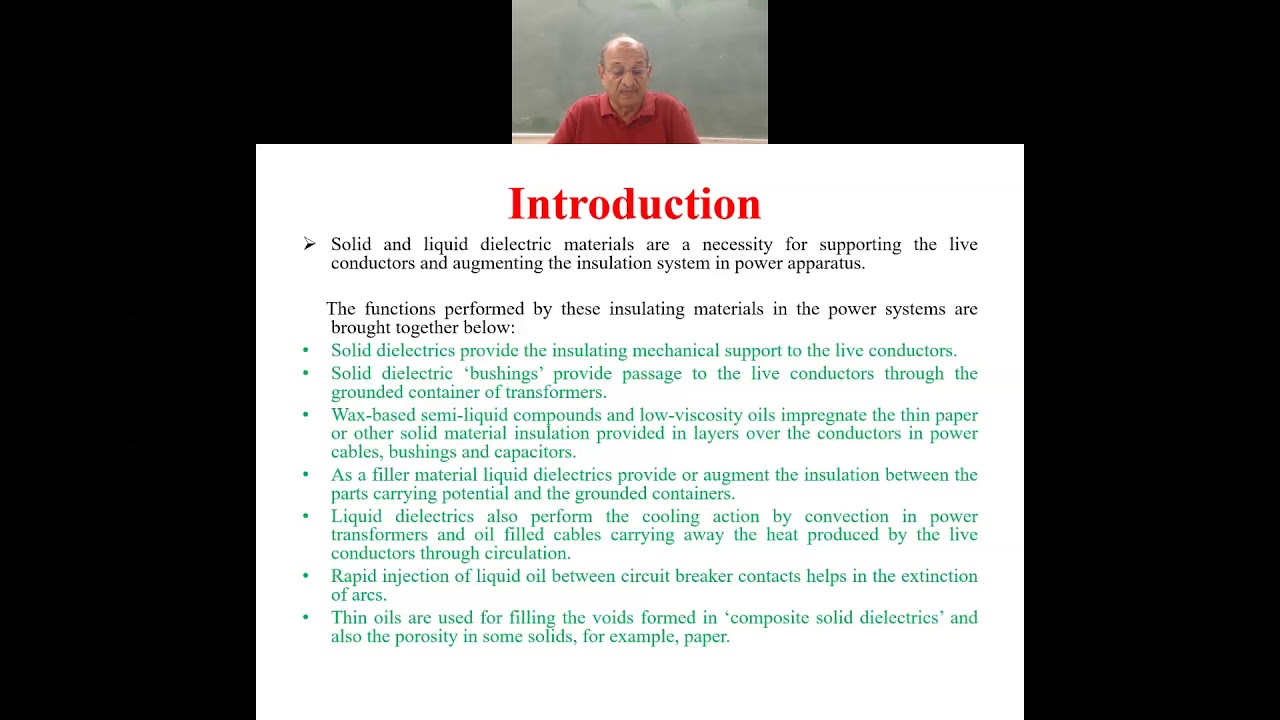
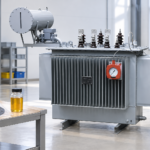
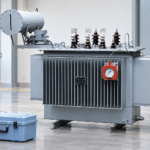
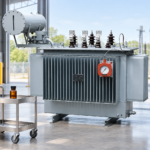
Conceptual illustration of specimen and method identification; no standard gassing cell or energised test circuit is depicted.
Electrical-stress testing and thermal-stress testing differ
ASTM D2300 concerns gas evolution or absorption under electrical stress and ionisation in a defined cell. Its public scope separates this subject from bubbles caused by supersaturation of the liquid. Use the full standard and laboratory procedure for implementation; the method title alone is not an instruction for constructing a test.
ASTM D7150 addresses gassing characteristics under thermal stress and includes investigation of behaviour often described as stray gassing. That is a different question. A report produced under one method should not be relabelled as the other, and numerical results should not be compared as if the stresses and measurements were identical.
Keep the method designation attached to the result wherever the data is copied. A spreadsheet column labelled only “gas” removes essential context. If several tests are commissioned together, give each method its own column, unit, qualification and interpretation note. This prevents a later reviewer from combining unrelated figures into an apparent trend.
Why this is different from routine DGA
Dissolved gas analysis measures gases in the collected oil specimen and supports condition assessment with equipment history and other evidence. Gassing-characterisation tests intentionally expose a specimen to specified laboratory conditions. One describes what was found in the collected specimen; the other investigates behaviour under the chosen test conditions.
A laboratory observation may help an expert assess alternative explanations for a service result. It does not erase the need to investigate an actual gas trend. The review still needs sampling history, maintenance events, oil identity, operating changes and other diagnostic findings. A statement that oil can generate a gas in a test is not proof that every service occurrence has the same cause.
Likewise, an acceptable DGA report does not establish compliance with an oil procurement gassing requirement. The reports have different purposes. Identify which document is being used for fluid acceptance and which supports equipment condition monitoring so that neither is asked to prove more than it measures.
Read sign, unit and conditions before comparing values
A signed value needs the laboratory’s interpretation of the sign. Confirm which direction denotes gas absorption and which denotes evolution under the reported method. Preserve that convention when importing results into a database. A missing minus sign can reverse the apparent meaning even though the magnitude is copied correctly.
Also record whether the number represents a rate, an amount or a reported gas concentration under another method. Units and calculation basis belong with the value. Do not convert between report formats unless the laboratory or responsible specialist supplies a valid conversion and confirms that the underlying measurements are comparable.
Report question
Information required
Decision it supports
What was stressed?
Oil identity, specimen source and relevant treatment history
Whether the report represents the fluid under review
Which stress was applied?
Method designation, edition and declared deviations
Whether electrical or thermal behaviour was investigated
What does the number mean?
Unit, sign convention, calculation basis and qualifications
Whether a numerical comparison is meaningful
What requirement applies?
Agreed specification and responsible technical reviewer
Whether the result satisfies the intended oil requirement
What remains unresolved?
Other equipment evidence and limits of the test
Whether further diagnosis or resampling is justified
The table provides a review sequence, not universal acceptance limits. Different fluid specifications and applications can require different criteria. A web article should not supply an invented pass value or a fleet-wide alarm threshold. State the criterion before evaluating quotations or asking a laboratory to repeat an unfavourable result.
Make specimen history part of the evidence
Ask whether the specimen is unused delivery oil, stored oil or oil removed from identified equipment. Record the compartment and collection point, especially when a transformer has more than one oil system. Keep the identifiers consistent across the sampling form, container and report. Similar-looking bottles are not interchangeable evidence.
Recent filling, mixing, processing or maintenance can change the context of a result. Document these events without assuming their effect. If the laboratory needs a retained sample from before an intervention, establish whether one exists and whether its storage and identity remain suitable. A new specimen cannot automatically reconstruct the previous condition.
O guia de amostragem de óleo de transformador provides broader collection context. Follow the receiving laboratory’s particular handling instructions for the requested tests. Avoid improvised transfer, venting, pre-treatment or mixing intended to improve a reading. Such actions can destroy the connection between the reported specimen and the original question.
Use complementary oil tests for separate questions
O dielectric breakdown test addresses electrical behaviour under its own conditions. Its result cannot be inferred from a gassing-tendency number. Maintain separate requirements and separate conclusions even when the reports are issued on the same date.
The procurement framework in the oil transformer buying guide helps place test documents in the wider equipment package. Ask the supplier to identify the intended insulating liquid and provide relevant certificates. Do not treat a sample certificate from another oil or production batch as evidence for the offered unit.
Preserving the method, specimen identity and decision record helps prevent laboratory findings from becoming unsupported equipment diagnoses.
A disciplined response to an unexpected report
Check identity, transcription, units and sign first. Next review the actual method and any laboratory qualification. If a mismatch explains the apparent problem, preserve the original report and document the correction. If the result remains credible, ask the responsible engineer what additional evidence would change the decision.
A repeat test should have a defined purpose. It may investigate analytical consistency, specimen suitability or differences between oil sources, but the question should be written before selecting specimens. Retain both results and the reason for repeating the work. Choosing only the preferred number prevents a useful investigation.
Where operating equipment is involved, follow the owner’s established condition-response process. This article cannot decide continued operation, isolation or oil replacement. Those actions require a competent assessment of actual equipment evidence and the consequences of the proposed intervention.
Keep supplier comparisons on a common basis
When evaluating two oil offers, send the same analytical and reporting requirements to both suppliers. Ask them to identify any difference between their routine certificate and the requested test. That difference is a question for review rather than a reason to silently adjust a result. Keep commercial comparisons separate until technical equivalence has been established.
After the decision, save the accepted certificate, relevant correspondence and any restrictions on its use. A report accepted for one procurement question should not later appear as proof of service condition without the additional equipment evidence that such a conclusion requires.
Background lecture on liquid insulation
The following lecture by Dr. Bharat Singh Rajpurohit, from an academic high-voltage engineering course with Prof. Ravindra Arora, covers solid and liquid insulating materials and their breakdown behaviour. It provides background for understanding why electrical stress matters. It does not demonstrate ASTM D2300, supply test acceptance criteria or diagnose the reader’s transformer.
No. DGA examines gases in a collected specimen. A gassing-characterisation method investigates fluid behaviour under specified laboratory stresses.
Can electrical and thermal gassing results be compared directly?
Do not assume equivalence. Identify the methods, stresses, units and reporting conventions, then ask the laboratory whether the proposed comparison is valid.
Does a favourable result prove the transformer is fault-free?
No. A fluid-characterisation result does not establish the condition of the complete equipment or replace investigation of actual operating evidence.
What should a buyer request with the result?
Request oil and specimen identity, method and edition, units, sign convention, report qualifications and the agreed requirement against which the result will be reviewed.
A Shenheng Electric Power está empenhada em tornar-se líder global em soluções de equipamentos elétricos, ajudando os clientes a alcançar uma gestão de energia segura, eficiente e sustentável.
Se tiver alguma dúvida ou precisar de ajuda, não hesite em contactar a nossa equipa.
N.º 168, Estrada South Sixth de Punan, Zona de Desenvolvimento Económico de Yueqing, Cidade de Yueqing, Cidade de Wenzhou, Província de Zhejiang, China

 Shenheng Power Equipment Co., Ltd.