Sinds 2001 is Shenheng Power een vertrouwde fabrikant van apparatuur voor krachtoverbrengst en -distributie en levert wereldwijd betrouwbare elektrische oplossingen.
Ondersteund door een volledig aankoopachterdrachtsysteem, bieden wij deskundig technisch advies, productbegeleiding en flexibele OEM- en ODM-diensten voor uw projecten.
Sinds 2001 is Shenheng Power een vertrouwde fabrikant van apparatuur voor krachtoverbrengst en -distributie en levert wereldwijd betrouwbare elektrische oplossingen.
LV Switchgear Door Latch Replacement: Check More Than the Handle
Release Time: 2026-11-17
An LV switchgear door latch replacement review must confirm how the complete closure engages the cabinet, preserves intended access control and maintains the approved enclosure arrangement. Matching the visible handle or mounting hole is only the beginning. Check the original assembly identity, cam and striker geometry, door alignment, locking function and any relationship with an interlock. Obtain the assembly manufacturer’s acceptance before substituting a different design. This guide helps engineers and buyers define that review; it is not a procedure for opening energized switchgear or bypassing a difficult door.
Define which closure has failed
The handle, lock cylinder, cam, connecting rod and striker may be separate parts. A loose handle is not necessarily a failed cam. A latch that will not engage may be reacting to a distorted door, worn hinge, displaced striker or damaged gasket. Record the actual symptom before choosing a replacement scope.
Use the switchboard serial number, cubicle designation, door identification and drawing revision to locate the correct spare. Similar doors on adjacent compartments may use different closure arrangements. Label photographs with their locations so a supplier does not select hardware for the wrong feeder or access panel.
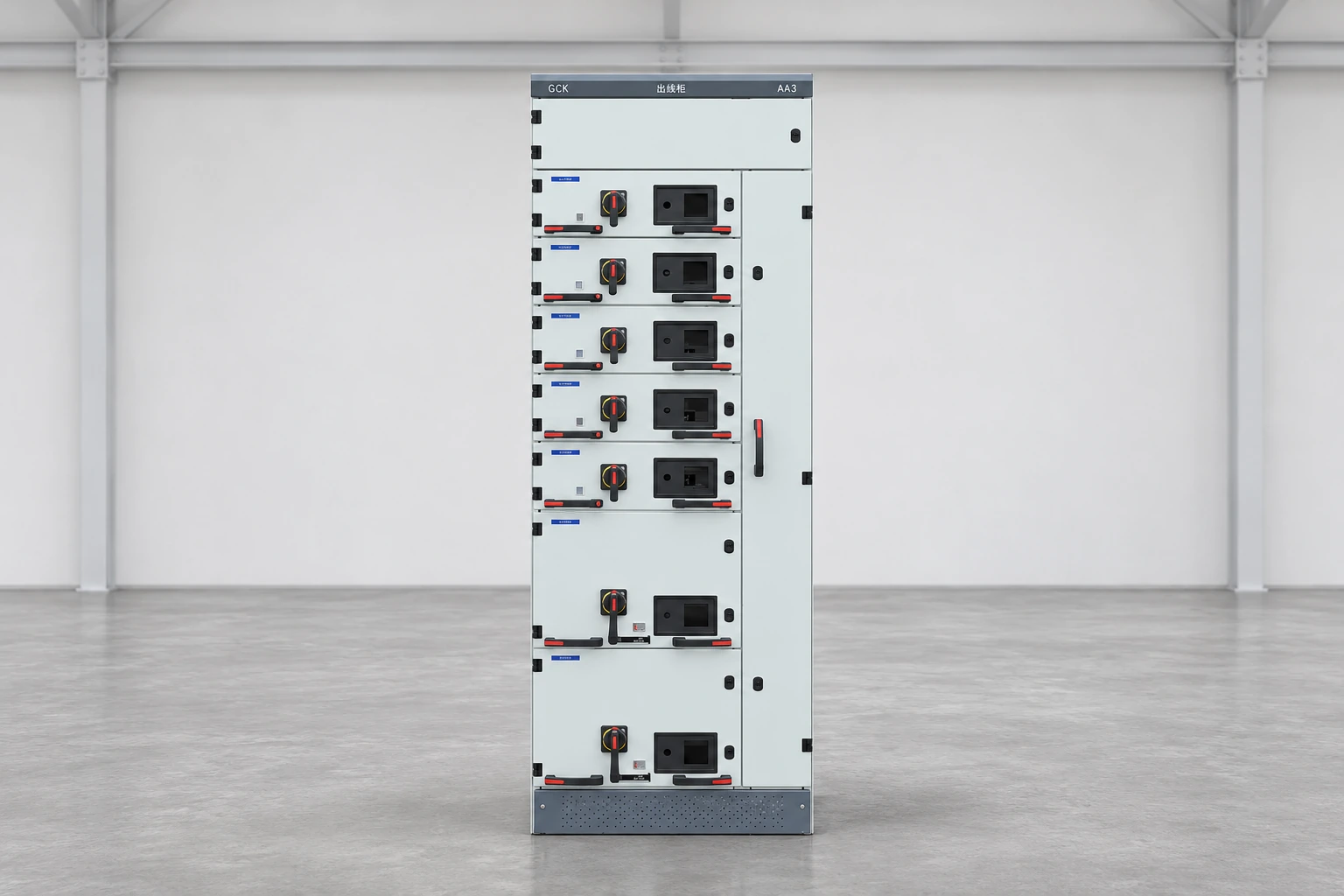
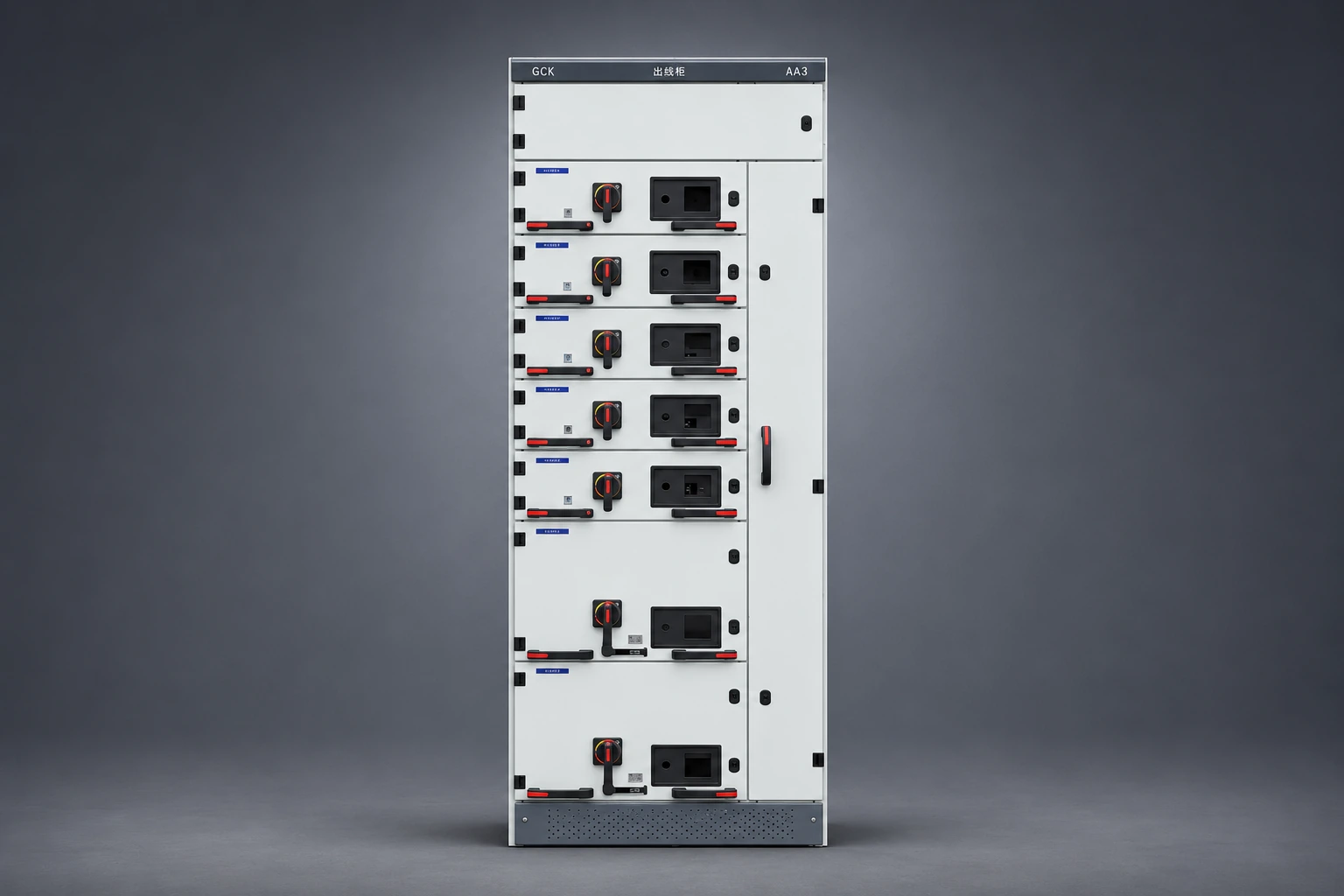
Shenheng’s low voltage distribution cabinet provides the product-family context for this review. The reference illustration shows the original closed cabinet, controls and external handle. It does not establish the concealed cam dimensions, the installed locking options or any certified performance of a proposed replacement. Those details require the applicable assembly documents.
Productreferentie-illustratie op basis van de productafbeelding van Shenheng; geen daadwerkelijk onderhouds-, test- of klantlocatierecord.
Why a mechanically small change can affect the assembly
The door helps maintain the intended separation between accessible areas and equipment inside the cabinet. The closure holds that door in its designed relationship with the frame. A different cam offset can pull unevenly, leave an edge proud or interfere with equipment inside. A longer fixing can create a clearance problem that is invisible from the outside.
This does not mean every replacement requires rebuilding the switchboard. It means the replacement decision should be traceable to the original design or an approved alternative. A direct spare with confirmed applicability is easier to justify than hardware chosen from a general enclosure catalogue solely because its handle looks similar.
De LV switchgear protection guide explains the wider protection context. Keep latch replacement within its own scope: preserving the approved door and access arrangement. It is not a substitute for protective-device coordination, fault studies or general maintenance of the assembly.
Use the project specification with its correct edition
De IOGP S-560 technical requirements specification, January 2022 provides an industry example of requirements for access doors, closures and padlocking. It is a supplementary procurement specification for defined applications, not proof that a particular Shenheng cabinet was supplied to it.
Check whether the project actually invokes that document and edition. This dated edition is used here as an example, not asserted to be the latest edition. A switchboard may have a different contractual specification. Do not retrospectively apply a requirement from a new document without reviewing the implications with the responsible engineer and assembly manufacturer.
The useful principle for a spare review is to preserve the documented operating and access arrangement. Identify which doors are opened during normal operation, which require tools, and which must remain locked. Do not replace a controlled-access closure with a convenient hand-operated one merely to simplify maintenance.
Record the interfaces before requesting a spare
Ask for the original part designation first. If it cannot be recovered, have authorized personnel document the necessary interfaces during an approved outage. The record should distinguish dimensions measured from the existing part from requirements confirmed by the manufacturer. An old part can be worn, bent or incorrectly fitted, so copying it without review can reproduce a previous defect.
Useful details include the door opening shape, thickness, handle orientation, cam reach and offset, striker arrangement, rod connections and fixing method. Where seals or gaskets form part of the closure, record their approved identity. Do not publish a universal torque or cam adjustment value: these depend on the actual hardware and door design.
The table below is an enquiry checklist, not a certification test schedule. It combines assembly-interface questions with maintenance planning principles from HSE’s equipment maintenance guidance.
Interface
Information needed
Hold point
Identiteit van de assemblage
Serial number, compartment and door reference
Spare applicability cannot be confirmed
Handle mounting
Approved opening, thickness and fixing details
New drilling or unapproved packing is proposed
Cam and striker
Reach, offset, engagement and permitted adjustment
Door appears shut without positive engagement
Locking arrangement
Required key, padlock and access-control functions
Replacement changes who can gain access
Internal envelope
Clearances to conductors, mechanisms and wiring
Protruding hardware conflicts with internal equipment
Door performance
Alignment, seals and manufacturer acceptance criteria
Closure force masks an underlying door defect
Check the door and frame before blaming the latch
A damaged hinge can shift the door so that a serviceable cam misses its striker. A bent frame can cause contact at one corner before the closure engages. Paint buildup, displaced seals and damaged door edges can create similar symptoms. Diagnose these conditions under safe arrangements before authorizing a different latch profile.
Gebruik de aparte door hinge replacement review where hinge identity or door support is part of the fault. Keep the two work scopes connected without confusing them. A latch should not be selected as a way to force a misaligned door into position.
cURL Too many subrequests by single Worker invocation. To configure this limit, refer to https://developers.cloudflare.com/workers/wrangler/configuration/#limits.
cURL Too many subrequests by single Worker invocation. To configure this limit, refer to https://developers.cloudflare.com/workers/wrangler/configuration/#limits
cURL Too many subrequests by single Worker invocation. To configure this limit, refer to https://developers.cloudflare.com/workers/wrangler/configuration/#limits.
cURL Too many subrequests by single Worker invocation. To configure this limit, refer to https://developers.cloudflare.com/workers/wrangler/configuration/#limits.
cURL Too many subrequests by single Worker invocation. To configure this limit, refer to https://developers.cloudflare.com/workers/wrangler/configuration/#limits.
Productreferentie-illustratie op basis van de productafbeelding van Shenheng; geen daadwerkelijk onderhouds-, test- of klantlocatierecord.
cURL Too many subrequests by single Worker invocation. To configure this limit, refer to https://developers.cloudflare.com/workers/wrangler/configuration/#limits
cURL Too many subrequests by single Worker invocation. To configure this limit, refer to https://developers.cloudflare.com/workers/wrangler/configuration/#limits.
Likewise, the marking on an individual handle does not prove the enclosure’s complete ingress protection. The door, opening, gasket, closure pressure and frame act together. See the LV switchgear IP rating guide for that broader distinction. Approval should state how the original enclosure arrangement is preserved, rather than simply repeating a component supplier’s rating.
Agree on acceptance before ordering
Define the required evidence with the manufacturer and site team. For a confirmed direct spare, this may include part traceability, the correct fasteners and seals, installation to the approved instructions and documented functional inspection. A proposed alternative needs a clear explanation of differences and the basis for accepting them.
Plan to check that the door aligns, closes and engages as intended without abnormal force. Confirm that required locking remains available and that adjacent doors, controls and internal components are unaffected. Any electrical verification belongs to the approved work plan; do not improvise tests after the cabinet has been re-energized.
Record unresolved results explicitly. If the door still needs force, the replacement has not solved the underlying issue. If an interlock behaves unexpectedly, keep the work open and seek technical review. A signed delivery receipt for the spare is not acceptance of the completed repair.
Make the quotation request specific
Supply the assembly nameplate, compartment designation, photographs, drawing references, original part number and failure description. Specify whether the request is for a handle, a complete latch set or a manufacturer-approved repair kit. Ask whether the striker, rods, seals or fixing hardware must also be renewed.
Require the supplier to confirm applicability to the named assembly and identify any differences from the original. Ask for installation instructions and recommended acceptance checks. Keep the supplier’s response with the purchasing record so maintenance staff can understand why the selected spare was approved.
Avoid ordering several “close enough” options for trial fitting inside the switchboard. Trial fitting can encourage unrecorded modifications and obscure which design was finally accepted. Where identification remains incomplete, obtain an inspection or drawing review before technical release of the purchase.
Safety learning for the planned outage
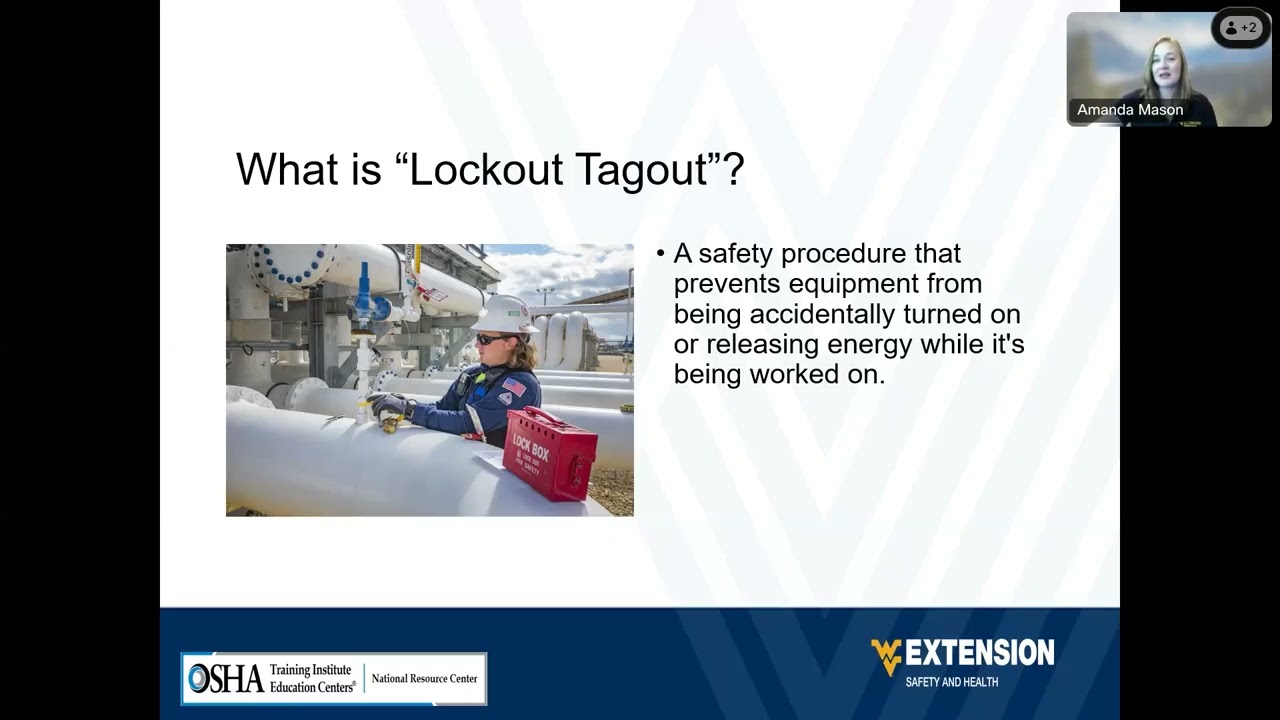
The US Department of Labor video below introduces lockout and tagout. It explains why maintenance needs control of hazardous energy. It is additional learning, not an assembly-specific switching instruction or permission to open a compartment. The actual work requires competent personnel, applicable site rules and the equipment’s approved instructions.
Verdere kennis: Sta Op Voor Veiligheid en Gezondheid – Lockout tagout — Ministerie van Arbeid Nederland. Openbaar op YouTube.
Veelgestelde vragen
Can a latch be replaced using only the mounting-hole size?
No. The review also needs the door thickness, cam and striker geometry, internal clearances, locking arrangement and applicability to the named assembly. A handle that fits the hole may still fail to close the door correctly.
Does a stiff latch always mean the latch is defective?
No. Door alignment, hinges, frame condition and seals can create similar symptoms. Diagnose the cause under approved safety arrangements before selecting replacement hardware or changing the striker position.
Does an IP-rated handle preserve the cabinet’s IP rating?
It does not establish that by itself. The complete door and enclosure arrangement matters. Obtain manufacturer confirmation covering the selected hardware, opening, seal and closure configuration.
What evidence should be kept after the replacement?
Retain the approved part identification, compatibility response, work record, inspection results and any required lock or interlock verification. Record who accepted the restored assembly and leave unexplained defects open for review.
Shenheng Electric Power streeft ernaar om een wereldwijde leider te worden in oplossingen voor elektrische apparatuur en helpt klanten om een veilig, efficiënt en duurzaam energiebeheer te realiseren.

 Shenheng Power Equipment Co., Ltd.