Sejak 2001, Shenheng Power telah menjadi pengeluar peralatan penghantaran dan pengagihan kuasa yang bertauliah, menyampaikan penyelesaian elektrik yang boleh dipercayai di peringkat global.
Disokong oleh sistem selepas jualan yang lengkap, kami menyediakan perundingan teknikal pakar, panduan produk dan perkhidmatan OEM & ODM yang fleksibel untuk projek anda.
Sejak 2001, Shenheng Power telah menjadi pengeluar peralatan penghantaran dan pengagihan kuasa yang bertauliah, menyampaikan penyelesaian elektrik yang boleh dipercayai di peringkat global.
Transformer Oil Pour Point Test: Cold Flow and Laboratory Reports
Release Time: 2026-10-26
A transformer oil pour point test reports a low-temperature flow property of the submitted oil under a specified laboratory method. It helps compare oil against an agreed cold-weather requirement, but it does not establish the lowest safe starting temperature of the complete transformer. Read the result with the method, units, oil identity and equipment requirements. A sufficiently low pour point is only one part of a cold-service assessment; viscosity, cooling arrangements and the manufacturer’s operating instructions also matter. Before accepting a delivery, confirm that the laboratory method matches the purchase specification and that the specimen represents the relevant oil batch.
What the test answers for a transformer owner
Oil must perform electrical and heat-transfer functions in an pengubah kuasa terendam minyak. Cold conditions change how a liquid moves, so a procurement specification may include a pour-point requirement. The report answers a limited question about the specimen’s behaviour during the stated test. It does not measure circulation through the windings or demonstrate the performance of an installed cooling system.
The useful first decision is whether the report supports the requirement actually placed on the oil. A certificate for a different batch, another fluid family or an unspecified method leaves that decision unresolved. Ask for clarification while the delivery remains traceable. Retesting a correctly identified retained specimen can be more useful than debating a number with no reliable connection to the shipment.
This article concerns laboratory reporting and procurement review. It does not provide instructions for operating cold electrical equipment or improvising a test with an oil bottle outdoors. Site work and energisation decisions belong to authorised personnel following the equipment owner’s procedures and manufacturer guidance.
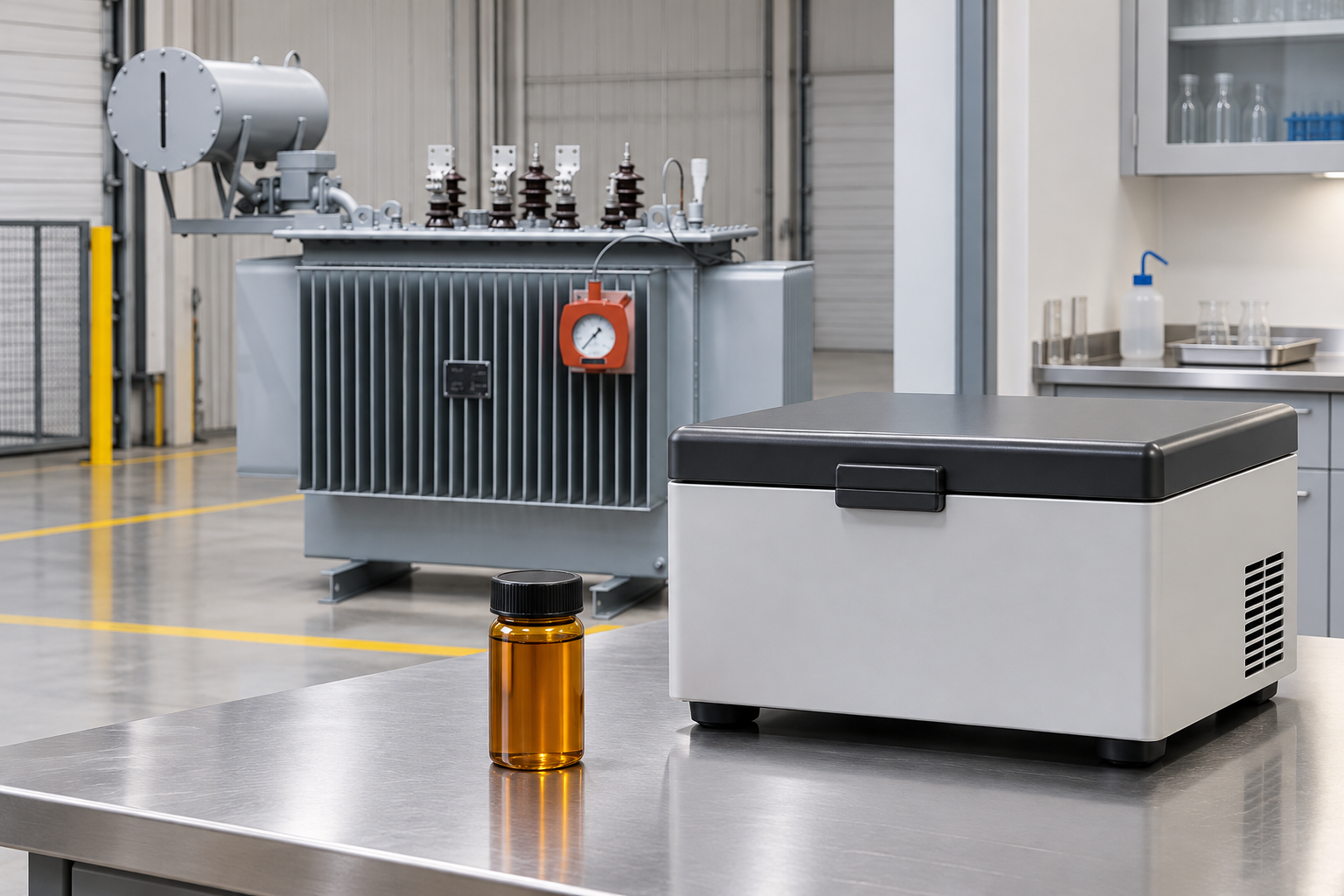
Conceptual illustration of specimen and cold-flow assessment; the chamber is not presented as standard test apparatus.
Separate pour point, cloud point and viscosity
These properties describe different observations. Pour point concerns low-temperature movement under a defined method. Cloud point concerns the appearance of cloudiness under its own test. Viscosity describes resistance to flow at a stated temperature. Reporting one does not supply the other two, and similar terminology should not encourage a buyer to substitute certificates.
The ASTM D97 public scope identifies pour-point testing of petroleum products and directs cloud-point determination to a separate method. It also distinguishes automatic techniques from D97. This matters when comparing quotations: the instrument’s marketing description is less useful than the method designation recorded on the analytical report.
Use the separate transformer oil viscosity guide when evaluating temperature-specific flow resistance. A lower pour point does not provide a viscosity curve, prove equal cooling performance or establish interchangeability between two insulating liquids. Keep each requirement attached to the property it actually controls.
Confirm the method instead of assuming equivalence
ASTM D97 and an automatic pour-point method should not be labelled interchangeably. For example, ASTM D5949 describes an automatic pressure-pulsing technique. Its public scope identifies controlled gas pulses and optical observation of surface movement. The full method governs laboratory execution; this description is only enough to explain why the technique must be named.
A purchaser does not need to recreate the experiment to identify a reporting mismatch. Compare the purchase order, laboratory quotation and certificate. If the order specifies one method and the certificate lists another, obtain a written technical disposition. Do not silently rewrite the method name because both reports use degrees Celsius.
Also request the method edition, any declared deviation and the laboratory’s relevant scope of service. If the laboratory reports a limit or an out-of-range result rather than an exact value, preserve that notation. Replacing a qualified result with an invented exact temperature makes the certificate less accurate.
A certificate review checklist
Item
Evidence to match
Action when unclear
Identiti minyak
Product designation, fluid family and batch or asset specimen identifier
Resolve the identity before accepting the result.
Test method
Designation and edition agree with the specified technique.
Ask for a documented assessment of any substitution.
Result format
Temperature unit, reporting interval and qualifications are explicit.
Request the complete report rather than transcribing a lone number.
Acceptance basis
Contract requirement and applicable equipment guidance are identified.
Seek the responsible engineer’s decision on a missing criterion.
Traceability
Sampling record connects the specimen to the delivered oil.
Review retained specimens or arrange representative resampling.
This is a document-review table, not a table of universal temperature limits. Requirements vary with fluid, equipment and project conditions. A temperature found on a generic product page cannot establish acceptance for every transformer. State the agreed criterion in the enquiry so that competing suppliers answer the same question.
Protect the connection between specimen and oil
Ask the receiving laboratory for container, quantity and handling instructions before collecting anything. Record whether the oil came from a delivery container, storage tank or transformer compartment. Those sources answer different questions: a delivery sample can support batch acceptance, while an in-service sample relates to the oil present in the identified equipment at that time.
The panduan persampelan minyak explains the wider importance of representative collection. For this test, preserve specimen identity and document unusual handling or suspected mixing. Avoid transferring oil between improvised containers or combining samples from separate deliveries. Apparent convenience can remove the ability to investigate a disputed result.
If a specimen has been warmed, cooled or stored unusually, tell the laboratory instead of trying to reverse that history yourself. The laboratory decides whether handling affects suitability under its procedure. A recorded qualification gives the engineer a basis for choosing resampling or further review.
Translate a cold-service requirement into an enquiry
Provide the proposed installation environment, anticipated cold conditions, fluid specification and transformer configuration. Ask the equipment supplier to confirm the relevant operating and storage conditions in writing. A pour-point certificate should join that technical package; it should not become a replacement for the complete equipment assessment.
Identify whether the enquiry concerns a new transformer, replacement oil or an existing installation with a changed duty. These situations have different information gaps. Replacement oil also requires compatibility and maintenance review. Passing one physical-property test does not establish compatibility with the existing liquid, seals, insulation or operating plan.
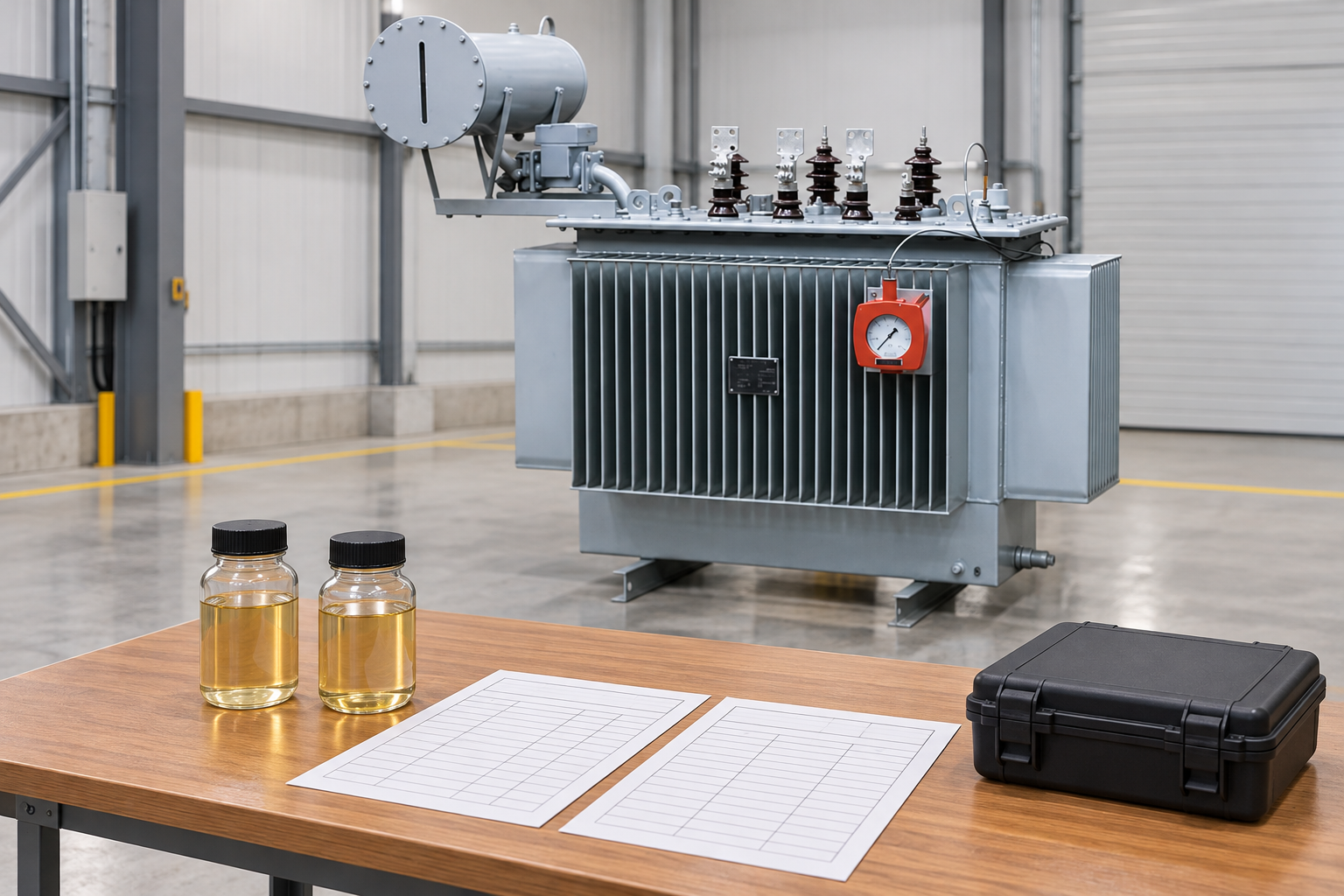
A cold-service review connects specimen records with equipment requirements rather than deriving a starting instruction from one result.
The oil transformer buying guide helps organise these broader requirements. Include the responsible reviewer and required documents in the enquiry. This avoids a late situation in which the oil supplier, laboratory and equipment supplier each assume that another party has approved the cold-service duty.
Investigate a surprising result without changing the criterion
First check for a transcription error, wrong unit, incorrect specimen identity or method mismatch. Then ask whether the submitted sample is representative and whether the laboratory noted a limitation. These checks should be applied consistently to favourable and unfavourable results; they are not a route to dismissing inconvenient evidence.
Where a repeat test is justified, agree the specimen and method before proceeding. Retain the original certificate and the reason for the repeat. If results differ, ask the laboratory to interpret the difference using its method’s applicable precision information. Do not average unrelated reports or select only the lower temperature.
Consider other oil evidence when the concern extends beyond cold flow. The dielectric breakdown test answers an electrical-property question. It cannot validate a pour point, and a satisfactory pour point cannot establish satisfactory dielectric behaviour. Separate conclusions make a maintenance decision easier to audit.
Close the acceptance record
After review, record whether the certificate meets the agreed oil requirement, needs clarification or requires further investigation. Attach the actual report rather than copying only the result into a spreadsheet. Include the decision date and the person responsible for resolving outstanding questions. This preserves the distinction between an analytical finding and approval of the equipment duty.
For repeat purchases, retain the same document requirements in the enquiry template. If the oil formulation, source, method or project environment changes, flag that change for review. A previous acceptance decision belongs to its original evidence and should not automatically transfer to a different delivery or colder installation.
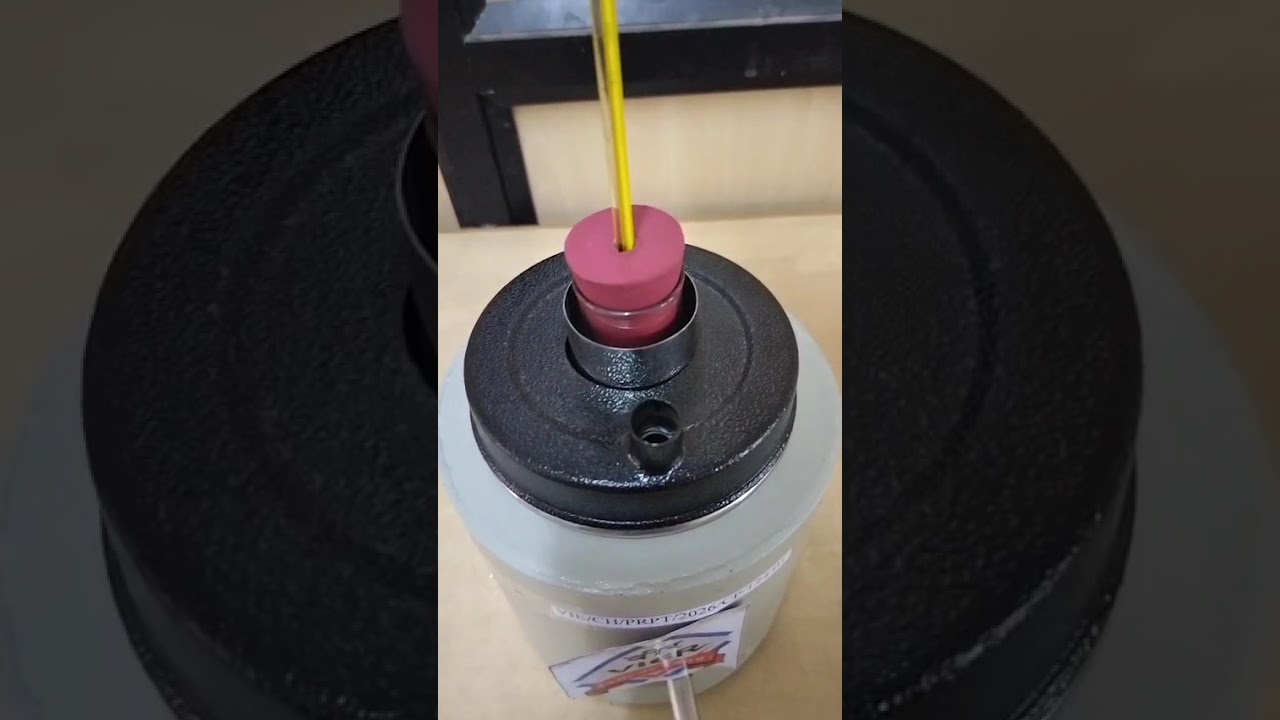
Educational demonstration of the underlying observation
The following video from Vadodara Institute of Engineering demonstrates cloud-point and pour-point observations for a petroleum product. It is useful for understanding the distinction between these observations. It does not certify transformer oil, establish an equipment temperature limit or replace the specified standard and laboratory procedure.
Questions about transformer oil pour-point reports
Is pour point the minimum safe transformer starting temperature?
No. It is a laboratory property of the oil specimen. Equipment starting conditions require the manufacturer’s guidance and a review of the complete installation and fluid requirements.
Can an automatic test be reported as ASTM D97?
Do not assume this. ASTM D97 distinguishes alternative automatic techniques and calls for their specific method designations. Obtain the actual method recorded by the laboratory.
Does a lower pour point prove better cooling?
No. Cooling assessment requires other information, including viscosity at relevant temperatures and the equipment’s thermal design. Pour point alone does not measure installed oil circulation.
What should accompany a pour-point number?
Keep the oil and specimen identity, method and edition, temperature units, report qualifications, collection record and agreed acceptance requirement together.
Shenheng Electric Power komited untuk menjadi peneraju global dalam penyelesaian peralatan kuasa, membantu pelanggan mencapai pengurusan kuasa yang selamat, cekap dan mampan.

 Shenheng Power Equipment Co., Ltd.