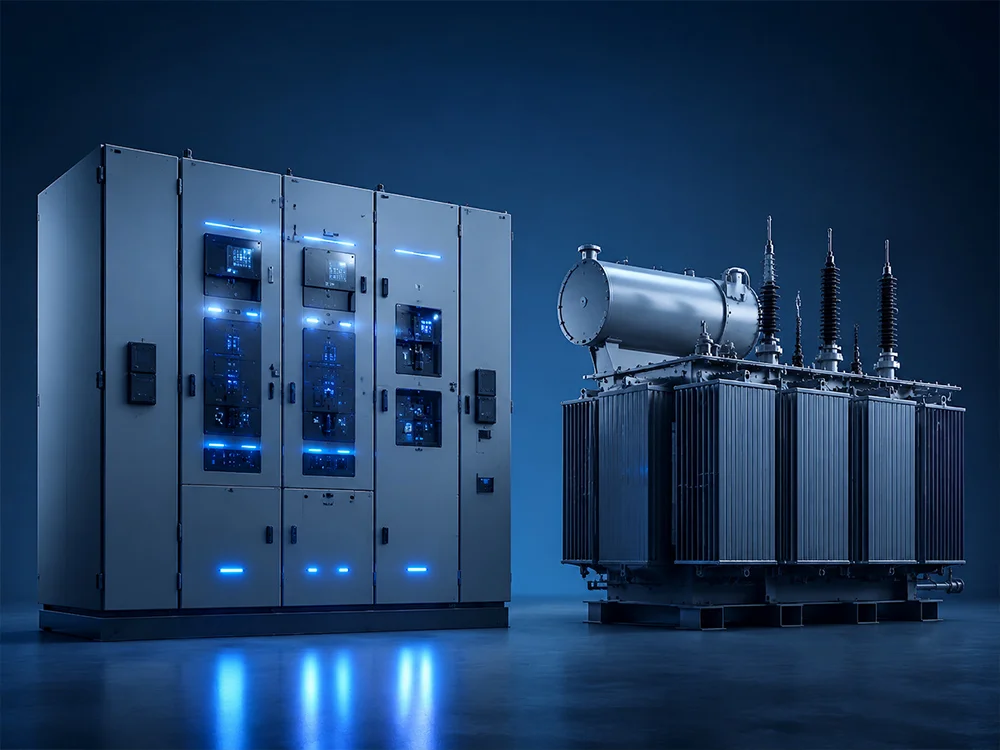
A transformer transport impact recorder helps document acceleration events during shipment so that the receiving team can identify events requiring engineering review. Its record is evidence of what the instrument measured at its mounting location, under its configured range and recording rules. It is not a direct measurement of winding displacement and cannot certify that a transformer is undamaged. A useful review connects the event trace with recorder configuration, mounting details, timestamps, route activity and the manufacturer’s agreed response criteria before deciding whether additional inspection or testing is needed.
This guide concerns the review of transport evidence for an oil immersed transformer. It does not authorize lifting, unloading or energization. Those activities require the responsible parties’ approved procedures and equipment-specific instructions.
Define which party selects and installs the recorder, who verifies its setup and who receives the data at arrival. A recorder fitted without a clear handover process may produce a file that no one reviews until after the equipment has been accepted or moved again.
The CIGRE guide on transformer transportation treats transport as an engineering activity requiring planned controls. Its existence supports a coordinated approach; a public guide description does not provide a universal acceleration acceptance threshold for every transformer. The manufacturer and project parties must agree the actual criteria.
Specify what happens when an event exceeds the agreed review level, when the device saturates, or when the record is incomplete. An alert level should trigger the agreed process. It should not be presented as an automatic proof of internal damage or as an automatic permission to energize below that level.
Match the device serial number to the shipping file and the transformer identification. Retain the configured measurement range, axes, sampling information, trigger rules and time settings. These details determine what the record can show and which events might not have been saved.
A triggered recorder may retain selected intervals rather than a continuous history. Absence of an event in that file therefore means only that no event meeting its recording rules was retained, provided the instrument was operating correctly. It does not establish that no movement or vibration occurred.
Check battery or power status and recording start and stop times where the device provides them. A gap spanning loading or transfer deserves a separate explanation. Do not join separated files into an apparently continuous record without marking the missing interval.
| 証拠 | What to verify | Reason for escalation |
|---|---|---|
| Device identity | Serial number matches shipment record | Uncertain connection between file and equipment |
| Mounting record | Location, orientation and fixing are documented | Loose mounting or changed axes |
| 設定 | Range, triggers and time settings retained | Unknown settings or measurement saturation |
| Event trace | Peak, duration and axis reviewed together | Event meets agreed engineering review criteria |
| Route timeline | Transfers and handling matched to timestamps | Unexplained event or recording gap |
This table defines review questions rather than numerical acceptance limits. The applicable project transport plan and manufacturer instructions remain the acceptance basis.
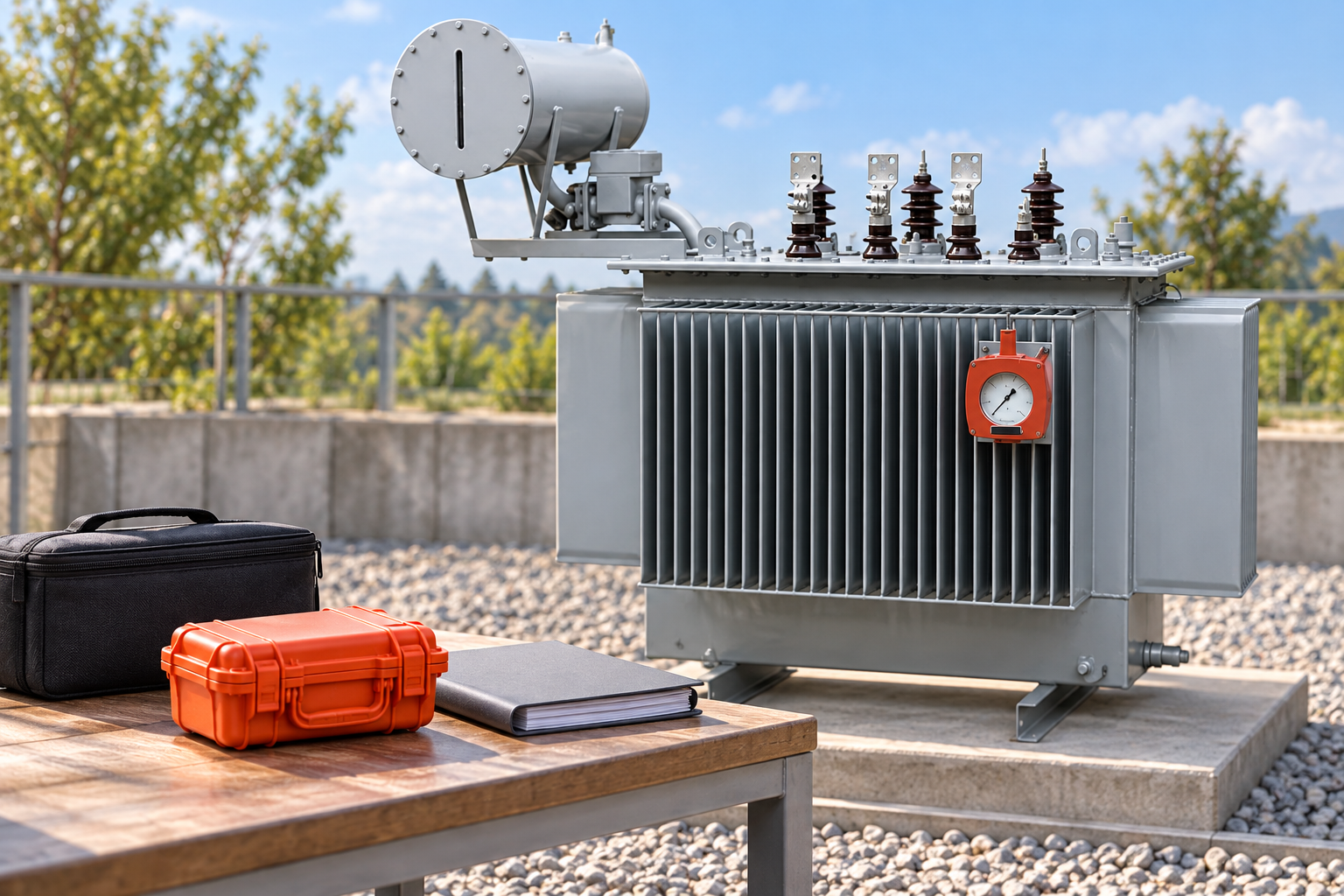
An accelerometer observes motion at its installed location. A recorder attached to a flexible bracket or loose packaging may not represent the same response as one attached at the approved equipment location. Ask for installation photographs and the mounting instructions used, rather than assuming all placements are equivalent.
Record how the device axes relate to the transformer and shipment direction. If the unit was rotated, remounted or transferred, preserve the timing and new orientation. Otherwise an event described as vertical in one part of the journey might be interpreted using an orientation that applied only earlier.
A photograph of the transformer does not prove recorder suitability. The mounting arrangement, sensor characteristics and expected transport environment require their own review. Avoid adding a convenient fixing point without the manufacturer’s approval, particularly when it could affect equipment surfaces or transport restraints.
A peak acceleration is one part of an event. Duration, direction, waveform and the instrument’s response also influence interpretation. Two records with a similar peak can describe different motion histories. A receiving checklist that copies only the largest number discards information the specialist may need.
Ask whether the plotted event reaches the recorder’s measurement range. Saturation limits the available evidence: the true peak may not be resolved. A flat-topped trace should not be treated as a precise maximum simply because the export lists a numerical value.
Keep original files and the software settings used to generate plots. A screenshot is useful for discussion but may conceal scaling, filtering or units. Preserve both the summary and the underlying data so that questions can be revisited without relying on a compressed image.
Confirm the time zone and any clock correction before matching a trace to a crane operation, road transfer or port movement. Carrier logs may use local time while the device records another reference. An apparent event during storage may actually belong to a handling operation once the clocks are reconciled.
Build a route timeline including loading, transfers, arrival and unloading. Record known pauses and any periods when the device was stopped or removed. Preserve uncertainty when a time cannot be established; do not invent a precise event location from an approximate schedule.
既存のもの transformer delivery planning guide covers the wider logistics decision. Recorder review is a narrower evidence task within that plan. It should connect to the handover process rather than become a substitute for route and handling preparation.
When the agreed review criteria are met, hold the next decision at the point specified by the transport plan and notify the designated responsible parties. Preserve the instrument and file. The event may justify additional work, but the recorder alone does not identify a particular internal defect.
Document visible external findings using the approved receiving inspection process. Keep photographs linked to equipment identity and inspection time. External appearance is useful evidence, although absence of visible damage cannot establish internal mechanical condition.
Ask the manufacturer or responsible engineer to define any further tests. A transformer SFRA comparison may address a relevant mechanical question where an appropriate baseline and interpretation are available. It should be selected because it supports the specific investigation, not added automatically to every shipment.
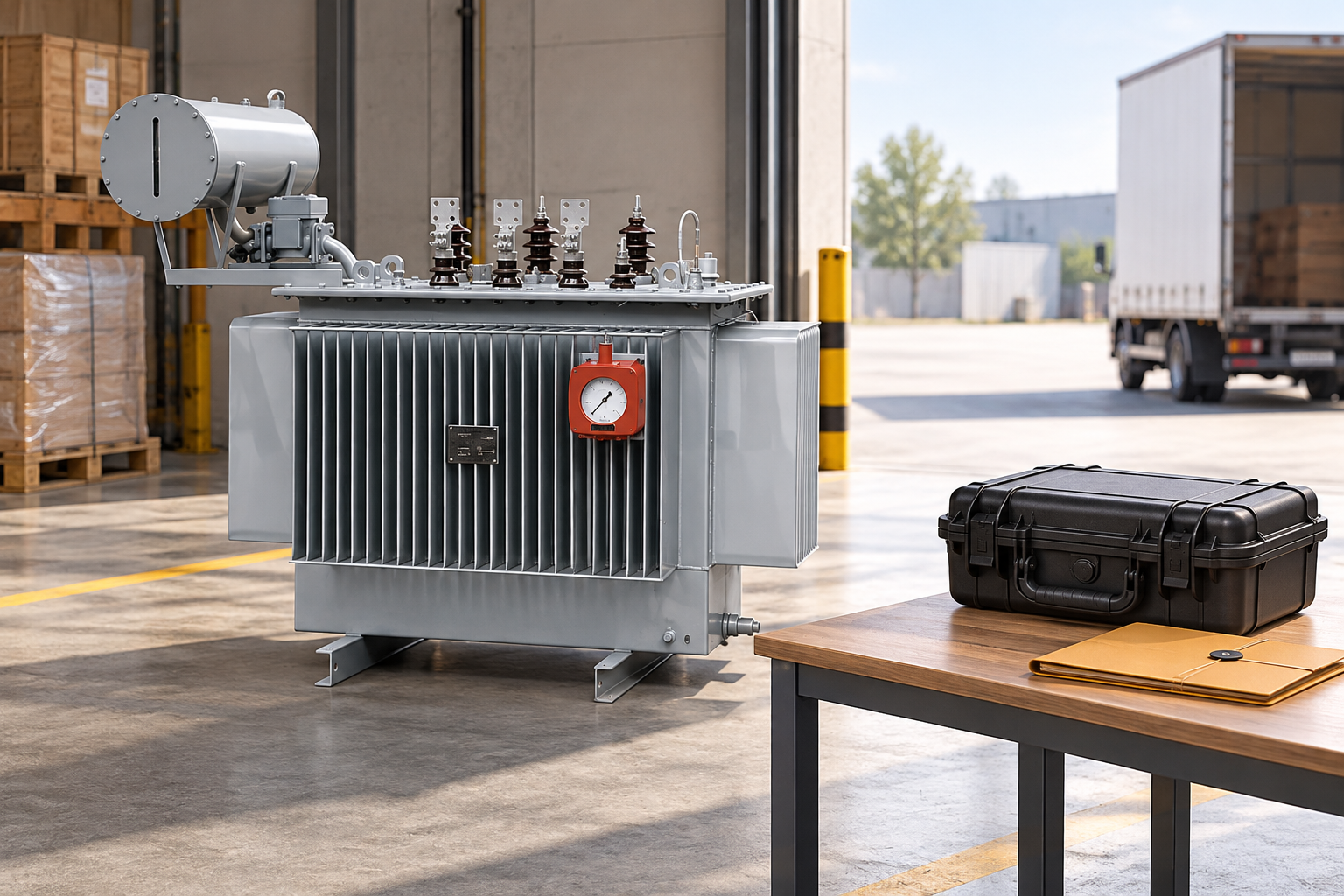
The oil transformer commissioning checklist addresses readiness through a broader set of checks. A satisfactory recorder summary is one input; it does not replace the required electrical, mechanical and documentation review before service.
The public scope of IEC 60076-1 provides the general power transformer standards context. The actual contract, applicable edition and agreed transport requirements must define what evidence is required for this delivery. Do not present a generic standards reference as approval of a particular event trace.
Keep factory and receiving records distinct while making them easy to compare. If a later test differs from the factory baseline, the event timeline can provide context. It cannot, by itself, prove that shipment caused the difference; alternative explanations and test comparability still require review.
For an oil immersed industrial transformer, agree the transport documentation package during procurement. Ask for recorder identity, setup, mounting evidence, original data, route chronology, event review and the written acceptance decision where required by the contract.
使用する transformer buyer’s checklist to assign responsibilities before shipment. The carrier, supplier, receiving team and engineering reviewer may hold different parts of the evidence. One named owner should collect the package so that incomplete records are identified before the next project milestone.
Close the review with a clear decision and its basis. State whether the available record was complete, which events were investigated and what follow-up was authorized. Retain unresolved limitations explicitly, including missing intervals or uncertain mounting, instead of converting an incomplete file into an unconditional acceptance statement.
For repeat shipments or fleet comparisons, retain recorder specifications rather than comparing alarm counts alone. Devices may use different trigger rules, ranges and data retention settings. A route with more recorded events may reflect a more sensitive setup rather than harsher handling. Record the differences and ask the reviewer which comparisons remain justified. If a device is replaced during a journey, keep the two serial numbers and operating intervals separate. The final transport file should make that change obvious to someone who did not witness the handover.
This NPTEL IIT Kharagpur lecture explains accelerometer principles. It supports understanding of recorded motion, but does not define transformer transport acceptance criteria or demonstrate a specific shipment.

Watch Lecture 38:Accelerometer on YouTube
No. It identifies an event for review under the agreed criteria. Equipment condition requires additional evidence and engineering interpretation.
No. Configuration, recording coverage, mounting and instrument operation determine what that file can establish.
No. Criteria depend on the equipment and approved transport arrangement and must be agreed with the responsible parties.
Yes. Keep original data, configuration and mounting records alongside the readable summary and final decision.

 申恒電力設備有限公司.