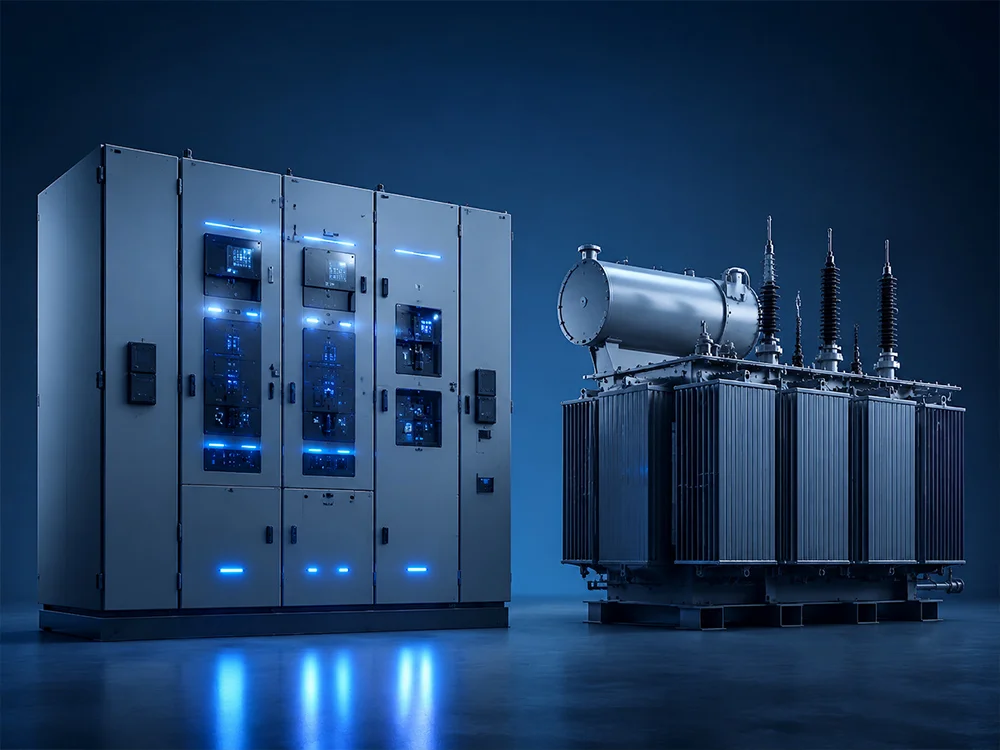
A transformer oil viscosity test measures how readily an insulating liquid flows at a defined temperature. The result helps engineers assess whether the liquid matches its specification and supports the intended cooling arrangement. It does not directly measure dielectric strength, moisture, or remaining transformer life. A useful report identifies the liquid, test method, temperature, units and sample history. Compare like-for-like results before treating a change as deterioration. For maintenance decisions, interpret viscosity alongside other oil tests and the equipment manufacturer’s requirements rather than using a single number as a pass-or-fail verdict on the transformer.
Viscosity describes resistance to flow. Kinematic viscosity relates dynamic viscosity to density, so the terms are connected but not interchangeable. Laboratories commonly report kinematic viscosity in square millimetres per second, also called centistokes. Dynamic viscosity uses different units, such as millipascal seconds. A bare number without units cannot support a meaningful comparison. If one supplier reports dynamic viscosity and another reports kinematic viscosity, ask for the corresponding density and temperature before attempting any conversion.
Temperature is part of the result, not an optional note. An oil generally flows more readily as its temperature rises, but the shape of that relationship depends on the liquid. A reading at one temperature must not be compared directly with a specification at another. Equally, two oils with similar values at a warm laboratory temperature can behave differently during a cold start. Ask which temperatures matter for the actual installation and which evidence the supplier provides for them.
The ASTM D445 method scope describes determination of kinematic viscosity using a calibrated glass capillary viscometer. This reference identifies the measurement principle; the applicable edition and complete procedure belong in the laboratory’s controlled documentation. An article cannot replace that method or establish a universal acceptance limit for every insulating liquid.
Oil carries heat away from active parts and transfers it toward cooling surfaces. Its movement depends on the cooling design, temperature differences and flow restrictions. Viscosity is therefore relevant to thermal performance, particularly when checking a liquid substitution or investigating unusually cold operating conditions. It is not the only influence. Radiator condition, loading, airflow, circulation paths and the overall transformer design also matter.
For an 油浸式産業用変圧器, review the actual cooling designation and manufacturer’s fluid requirements. Do not assume a different oil is acceptable simply because its viscosity looks close on a data sheet. Fluid compatibility, insulation materials, dielectric properties, fire characteristics and other design requirements need their own assessment. Approval of a substitution requires evidence for the complete equipment and service conditions.
In an existing installation, a hot tank does not prove that the oil has become too viscous. Check the operating load, ambient temperature, temperature indication and cooling equipment before narrowing the investigation. The ONAN versus ONAF cooling guide explains the separate role of natural and forced air cooling. Keep the fluid measurement and equipment investigation connected without confusing them.

Start with sample identity. Match the equipment identification, sample point, collection date and liquid description to the maintenance record. A correct viscosity measurement on a bottle from the wrong transformer is still the wrong evidence. Record oil additions, filtration, reclamation, replacement and any suspected mixing. These events can change the meaning of a trend even when the laboratory has performed the test correctly.
Next, identify the named method and temperature. ASTM D7042 addresses dynamic viscosity and density by a different instrumental approach and the calculation of kinematic viscosity. That does not mean every result from every method can be combined without review. Ask whether the method is suitable for the liquid, whether the report is accredited for that measurement and whether a change in method affects comparison with historical results.
Finally, compare the result against the correct requirement. A new-fluid procurement specification and an in-service investigation answer different questions. The supplier’s typical data are also different from a contractual acceptance requirement. A value printed in a brochure may describe a representative batch rather than a guaranteed limit. Keep those document types distinct when deciding whether a shipment satisfies the purchase order.
| レポート項目 | What to confirm | Why it affects interpretation |
|---|---|---|
| Liquid identification | Mineral oil, ester or another identified fluid | Different liquid families have different characteristics |
| Measurement type | Kinematic or dynamic viscosity | Units and calculation requirements differ |
| Temperature | The actual specified test temperature | Temperature strongly affects flow resistance |
| 方法 | Named standard and applicable edition | A method change may require comparison review |
| サンプル履歴 | Top-up, replacement or treatment dates | Changes can reflect the sample history rather than deterioration |
| Acceptance basis | Contract, fluid specification or equipment requirement | A typical data-sheet value is not automatically a rejection limit |
This table is a document-review checklist, not a set of standard acceptance values. Use the named method scopes and the applicable purchase and equipment documents to determine the required evidence.
Build a trend only after checking that the results refer to the same liquid and comparable measurement conditions. Include temperature and units in the column headings of the maintenance spreadsheet. Avoid putting a new result into an old column just because both reports contain the word viscosity. Preserve the original reports so that later reviewers can identify changes in method, laboratory or qualifiers.
A small difference between two reported values does not by itself prove a meaningful change. Consider the laboratory’s stated measurement uncertainty and the relevant precision information before interpreting a difference. Ask the laboratory to explain whether the comparison is technically justified. Repeating a test under matched conditions can be more useful than immediately ordering oil treatment based on an isolated number.
If a change is confirmed, investigate plausible causes without assuming one. Check whether a different fluid was added, whether the sample was contaminated and whether treatment or replacement changed its composition. Review the broader condition record. The トランスフォーマーオイルの酸性度試験ガイド addresses a separate chemical measurement that may help the investigation, but acidity does not mathematically determine viscosity.
Suppose a maintenance team receives a viscosity result that appears higher than the previous report. Before raising an equipment defect, the engineer notices that the earlier report used a different temperature. The next step is to obtain comparable measurements or an explicitly justified interpretation from the laboratory. The two values should remain in the record, with their original conditions, rather than being forced onto one trend line.
In another case, both reports use the same temperature and method, but a substantial oil top-up occurred between sampling dates. The engineer checks the delivery certificate and product identity, then asks whether the mixed fluid remains approved for the transformer. This is a compatibility and specification question as well as a condition-monitoring question. The viscosity test can flag the need for investigation without identifying the cause by itself.
Neither example establishes a universal alarm level. An action decision depends on the liquid specification, equipment guidance, service conditions and supporting test evidence. Record who reviewed those documents and why the chosen response is appropriate. That explanation helps future teams understand why the equipment remained in service or why additional investigation was requested.
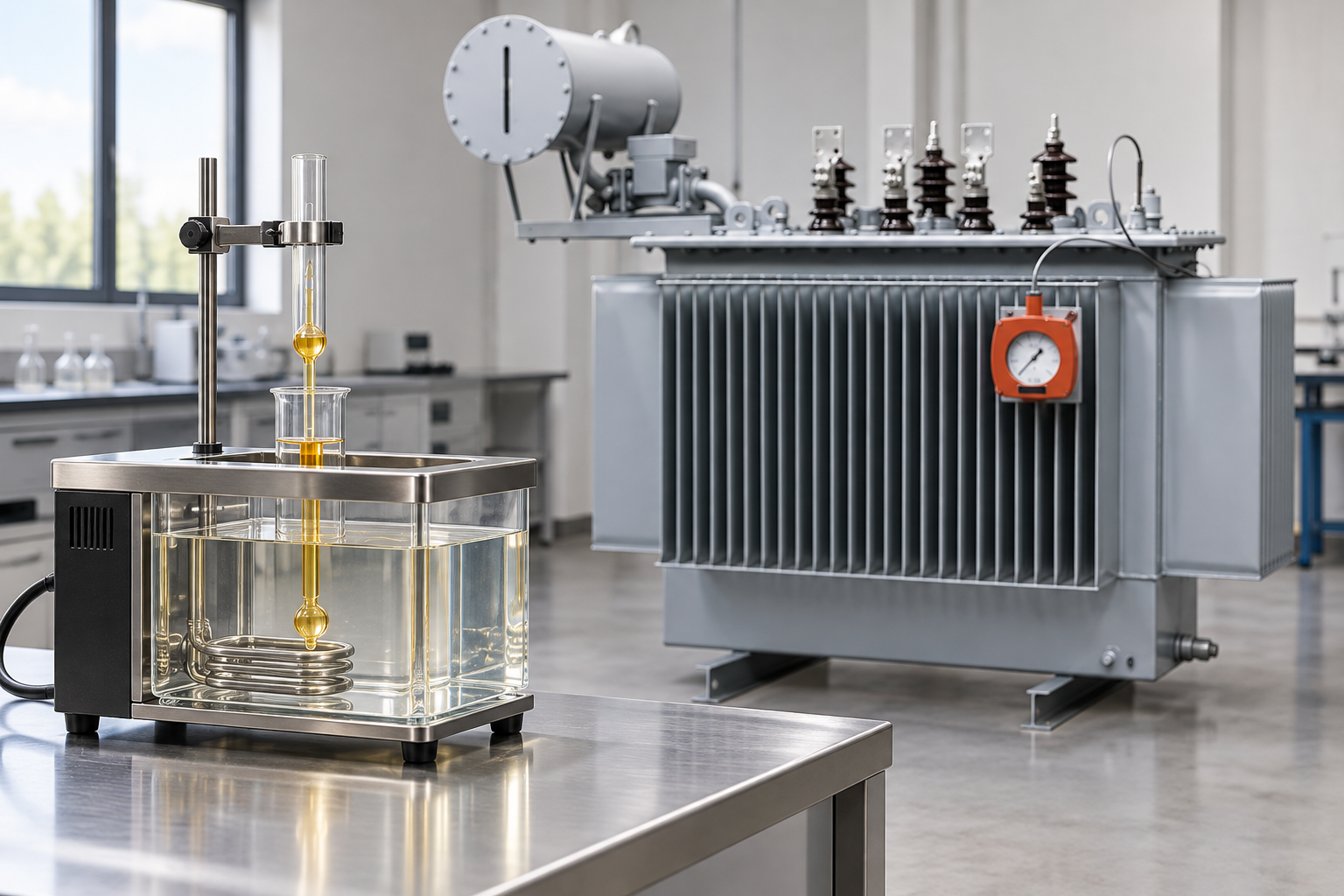
For a new shipment, use the オイル浸漬型変圧器の購入ガイド and request a batch-linked certificate that identifies the viscosity method, test temperature, units and acceptance requirement. Confirm that the certificate refers to the fluid being delivered rather than a generic product sheet. If the project needs cold-weather evidence, describe the actual environmental requirement and ask which measurements address it. Do not infer cold-start suitability from a warm-temperature value alone.
For an in-service sample, provide the fluid identity, treatment history and earlier reports. Ask the laboratory to highlight any comparability limitations rather than simply printing a red flag. Where a surprising result could affect operation, agree a verification plan with the responsible equipment engineer. That plan may involve a repeat specimen or complementary tests, but the sampling and operational controls must follow the site’s approved procedures.
Keep the investigation proportionate. A viscosity result is not a substitute for the dielectric breakdown test, and a good breakdown result does not establish acceptable flow behaviour. Each measurement addresses a different property. A coordinated test programme avoids making one test responsible for questions that it cannot answer.
The following NPTEL lecture explains viscosity as a fluid-mechanics concept. It supports understanding of the distinction between fluid properties and test conditions. It is not a transformer-oil laboratory procedure, an ASTM demonstration or evidence that a particular transformer meets its cooling requirements.

Further learning: Mod-01 Lec-04 Viscosity — nptelhrd. YouTubeで公開.
No. First check temperature, units, fluid identity, method and treatment history. A confirmed change may justify investigation, but viscosity alone does not identify degradation or establish the correct corrective action.
No. They describe related but different quantities. A conversion requires the appropriate density at the corresponding temperature and consistent units. Ask the laboratory to provide a justified comparison when reports use different quantities.
Not necessarily. The installation’s temperature range and equipment requirements determine the evidence needed. Ask the manufacturer and fluid supplier which specified measurements address the actual cold operating conditions.
No. Viscosity concerns flow resistance. Moisture, dielectric strength, chemical condition and dissolved gases need their own relevant measurements. Use an equipment-specific programme and interpret each result within its limits.





 申恒電力設備有限公司.