Dry type transformer core clamp corrosion inspection should distinguish surface-coating deterioration from damage involving the clamp, core steel, insulation or grounding arrangement. Record the location and extent of the finding, establish the moisture or contamination history, and ask the manufacturer to define the repair and verification scope. Rust colour alone cannot establish remaining strength or electrical condition. This guide helps owners and buyers prepare a technical assessment. It does not authorize energized inspection, loosening clamp bolts, removing a grounding connection, abrasive cleaning or applying an unspecified coating to the transformer.
A dry transformer can have a core clamping structure, winding supports, a base frame, lifting features and enclosure hardware close together. These parts do not have the same role. Start with the equipment serial number and the relevant assembly drawing. Mark the observed position using the manufacturer’s component names rather than labelling every painted steel member a core clamp.
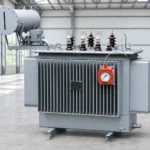
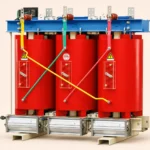
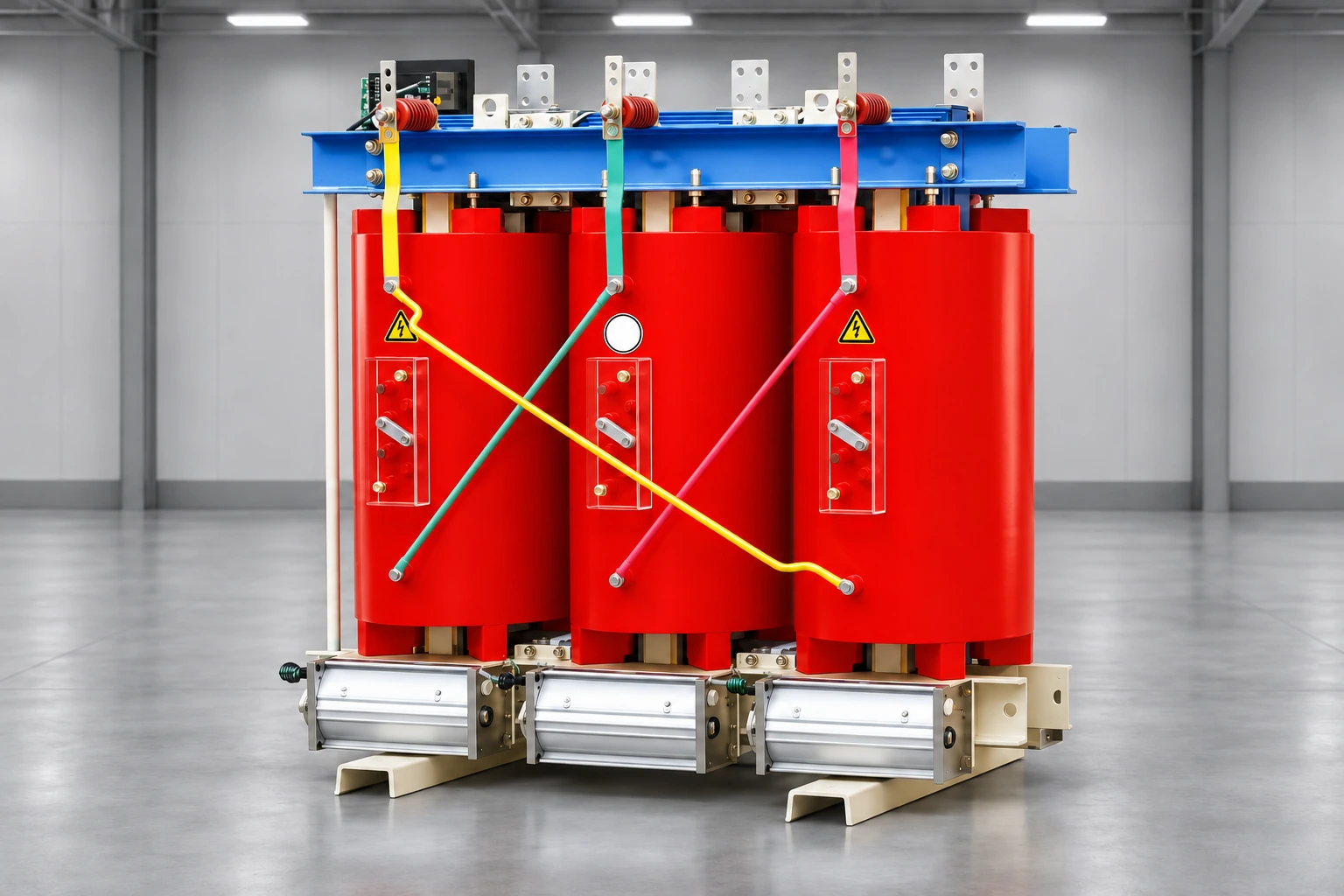
The 神恵鋳造樹脂乾式変圧器 shows the overall equipment family. Its three coils, upper structural member and base assembly provide visual context, but a product illustration is not a detailed core-clamp drawing. Hidden interfaces and grounding arrangements must be confirmed from the actual supplied design. The ドライタイプ変圧器ガイド introduces the broader construction without establishing repair instructions for an individual unit.
Arrange access through competent personnel and the owner’s approved safety system. Transformers can have more than one source of electrical energy or associated auxiliary circuits. A stopped fan or a silent transformer does not establish isolation. The HSE’s electrical-equipment guidance provides general principles for safe work; the site and equipment instructions determine the actual arrangements.
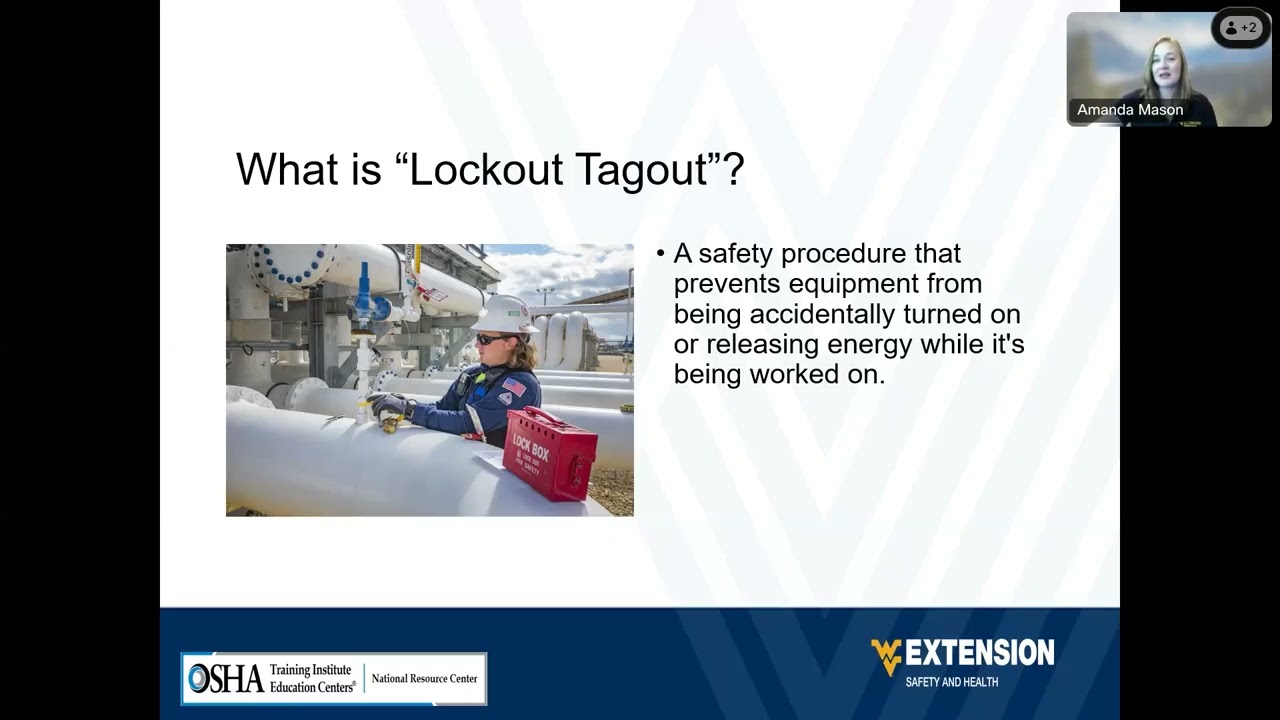
さらなる学習:安全と健康のために立ち上がろう – ロックアウトタグアウト — 労働省。. YouTubeで公開.
The US Department of Labor video explains why hazardous energy must be controlled before maintenance. It supports planning and awareness, not a transformer-specific isolation or corrosion-removal procedure. Internal inspection and any subsequent work require the applicable competence, authorization and documented method.
Define which surfaces were accessible and which were not. If a photograph shows only the front of the upper member, do not report the complete clamp assembly as inspected. Keep the viewing limitations with the images. That distinction matters when corrosion might be present at an interface that cannot be assessed without further approved access.
Use neutral descriptions: paint lifting near a fastener, rust staining on an exposed edge, visible deposits at an interface or apparent material loss. Record the approximate area and location through an approved measurement method. Include close and contextual photographs so a reviewer can relate the detail to the whole assembly. Do not scrape the surface simply to improve the photograph.
Record whether staining appears on the coating, on adjacent insulation or below another component. A stain can originate elsewhere, and an apparently minor mark can coincide with a hidden condition. The first inspection should preserve evidence rather than force a diagnosis. Ask the manufacturer what additional observations are needed and whether any finding requires an immediate operational restriction.
Also note reported changes in sound, temperature, vibration or protection behaviour from authorized operating records. Keep those observations separate from the corrosion description. Correlation can help a technical reviewer choose the assessment scope, but it does not prove that the visible rust caused a particular electrical or mechanical symptom.
Ask when the transformer was installed, whether it was stored before installation and whether water ingress, condensation, chemical vapours or unusual contamination has been reported. Obtain room or enclosure maintenance records where available. A repaired surface may deteriorate again if the underlying exposure remains unresolved. Avoid assuming that resin-encapsulated coils make every steel and insulating interface immune to the environment.
The HSE maintenance guidance supports planning maintenance around equipment condition, competent work and suitable arrangements. For this assessment, use that principle to connect the component finding with the site history and required corrective work. The article does not assign a humidity limit, drying temperature or inspection interval to an undocumented transformer.
For storage or water-exposure questions, ask the actual manufacturer to define what evidence is needed. Do not energize equipment merely to warm or dry it in response to a corrosion finding. Environmental correction, condition assessment and return-to-service approval are separate decisions. A purchasing request should show which of them has been resolved and which remains open.
A damaged paint film raises a coating question, but it may also expose other issues. The clamp’s role, material, fastening arrangement and insulating interfaces need to be understood before deciding that local touch-up is sufficient. Visible pitting or scaling requires the responsible technical reviewer to decide whether further assessment is necessary. No universal photograph-based acceptance rule can replace that review.
The EPRI dry transformer and reactor maintenance guide treats inspection as a review of multiple conditions, including insulation, connections and mechanical supports, and places core-and-coil repair within qualified specialist oversight. That framework is useful here: inspect the identified condition in context, without turning a coating defect into an unapproved clamp adjustment.
Do not confuse a core grounding arrangement with general frame bonding. Some transformer designs intentionally control the electrical relationship between the core and surrounding structure. A new conductive path or an altered insulating interface can matter. The core ground test guide addresses a separate diagnostic topic; it is not permission to disconnect straps or test an unidentified assembly during a corrosion inspection.
Use this qualitative table to organize the review. Its purpose is to keep observations, uncertainties and requested decisions separate. The actual equipment drawings and manufacturer-approved assessment determine the acceptance criteria; the EPRI guide above supplies general inspection context rather than model-specific repair limits.
| Finding or question | Evidence to collect safely | Decision to request |
|---|---|---|
| Component identity | Serial number, assembly drawing and marked location | Is this a clamp, frame member, support or enclosure part? |
| Coating deterioration | Context image and detail of the affected finish | Is local coating repair appropriate for this surface? |
| Possible material loss | Authorized observations and any approved measurements | Is structural assessment or part replacement needed? |
| Adjacent insulation | Condition report with viewing limitations | Does the scope need an insulation specialist? |
| Grounding relationship | Applicable drawing and existing connection records | Must an intentional insulating or grounding arrangement be protected? |
| 環境への曝露 | Storage, leak, condensation and contamination history | What source of deterioration must be corrected? |
| Acceptance | 合意された作業範囲と検証要件 | 所有者が発見を閉じることを許可する証拠は何ですか? |
完了した表を自動的なリリースとして扱わないでください。元の図面が欠落している場合やインターフェースがアクセスできない場合は、その問題を次のアクションを割り当ててオープンのままにしてください。誠実な部分検査は、仮定されたコンポーネント機能に基づく完全に見えるフォームよりも有用です。.
メーカーの承認された方法なしにワイヤーブラシ、研削、ブラスティング、または化学的な錆処理を指定しないでください。これらの操作は、破片を生成したり、近くの絶縁体や表面に影響を与えたりする可能性があります。外部エンクロージャパネルに適した方法は、巻線やコアインターフェースの近くでは不適切な場合があります。作業計画は、処理エリアとそれが引き起こす可能性のある汚染の両方を制御する必要があります。.
一般的なトルク値を使用してクランプハードウェアを緩めたり、再締めたり、交換したりしないでください。取り付けられたアセンブリは、指定されたハードウェア、プリロード、絶縁体、および承認された締め付け順序に依存している可能性があります。腐食したファスナーは、視覚的に類似したボルトを受け入れ可能な交換品にすることはありません。ハードウェアを購入したりアセンブリを妨害したりする前に、正確な部品識別と修理指示を要求してください。.
同様に、特定されていないジョイントに導電性コーティング、シーラント、または潤滑剤を適用しないでください。メーカーに表面処理、コーティングシステム、許可された境界、および関連する硬化または検証要件を指定するように依頼してください。回答を作業パッケージに保管してください。防錆とラベル付けされた製品は、それ自体で変圧器との互換性を確立するものではありません。.

メーカーに変圧器のシリアル番号、図面の参照、コンポーネントの位置、日付入りの写真、運転観察、および環境履歴を送信してください。検査の制限とすでに取られたアクションを含めてください。表面がすでに清掃または塗装されている場合は、その事実を明記してください。そうでない場合、レビュアーは写真を未処理の状態として解釈する可能性があります。.
提案された範囲がコーティング修理、ハードウェア交換、構造評価、またはより広範なコアとコイルのレビューであるかどうかを尋ねてください。その範囲に適した承認された材料、特定されたスペアパーツ、作業指示、および検証要件を要求してください。サプライヤーは仮定と除外を明記する必要があります。塗料の見積もりだけでは、クランプの完全性や絶縁インターフェースに関する質問を閉じることはできません。.
問題がコアクランプではなくコイルブロッキングに関する場合は、別の コイルサポートブロック評価. を使用してください。これらの2つのトピックは同じ変圧器に存在する可能性がありますが、異なる機械的機能を果たし、異なる証拠が必要です。腐食の明らかな近接性に基づいてサポート部品を注文することは避けてください。.
承認された作業の後、作業前後の状態記録、承認された方法、材料および部品の識別、完了した作業報告書および検証結果を保持してください。作業を受け入れた人と運用またはさらなる検査に関する制限を記録してください。塗装後の錆の目に見えない欠如は、表面の外観が変わったことだけを証明します。すべての関連する質問が回答されたことを確立するものではありません。.
フォローアップは、機器の指示、元の原因、および現場条件に従って設定してください。同じ場所を一貫した画像参照を使用して比較してください。劣化が再発する場合は、別の仕上げを繰り返し適用するのではなく、露出と修理範囲を再評価してください。以下の キャストレジンメンテナンスガイド は、このターゲットとなる発見を広範な変圧器メンテナンス記録に位置付けるのに役立ちます。冷却および絶縁観察を含みます。.
購入およびメンテナンス記録を関連付けておいてください。将来のエンジニアは、どのコンポーネントが評価されたのか、なぜ選択された修理が受け入れられたのか、次に何を監視すべきかを特定できる必要があります。その継続性は、最初の評価に関与した人員が変更された後も、変圧器が数年間サービスに留まる場合に特に有用です。.
自動的にはありません。正しい対応は、特定されたコンポーネント、劣化の程度、隣接する絶縁体、および製造業者の評価に依存します。発見を単なる外観上の問題として却下したり、色だけで交換が必要だと宣言したりしないでください。証拠を保存し、文書化された技術的決定を取得してください。.
検査をクランプの調整の承認と見なさないでください。ハードウェアと締め付け要件は設計に特有であり、一部のインターフェースには断熱材が含まれています。調整には、承認された範囲と実際の組み立てに関する指示が必要です。一般的なトルクテーブルは不十分な証拠です。.
互換性を仮定しないでください。表面機能、準備方法、近くの絶縁体および電気的関係が異なる場合があります。メーカーに承認されたコーティングと許可された適用範囲を特定するよう依頼してください。その確認を材料が適用される前に作業記録と一緒に保管してください。.
湿気や汚染源、元の診断、完了した修理の証拠を確認してください。同じ場所を時間をかけて比較し、追加の発見を報告してください。繰り返しの表面処理だけでは、環境原因や隠れたインターフェース条件が解決されたことを示すものではありません。.

 申恒電力設備有限公司.