Compact substation ventilation pest intrusion assessment should establish where animals or insects may be entering, whether the original barriers are damaged, and what electrical equipment may have been affected. Closing every opening is not a safe solution: ventilation openings also serve the enclosure’s cooling design. Record the condition and obtain an approved repair plan that preserves airflow, access control and the intended enclosure protection. This guide helps owners prepare an inspection scope and a useful supplier enquiry. It does not authorize opening energized compartments, removing wildlife or modifying a substation enclosure.
A compact substation brings different equipment compartments and service interfaces into one assembly. Its doors, ventilation panels, cable entries, roof junctions and base interfaces can have different functions. A visible grille is only one possible route. A pest report near the ventilation side does not prove that the animals entered through that grille, and a clean exterior does not prove that internal compartments are unaffected.
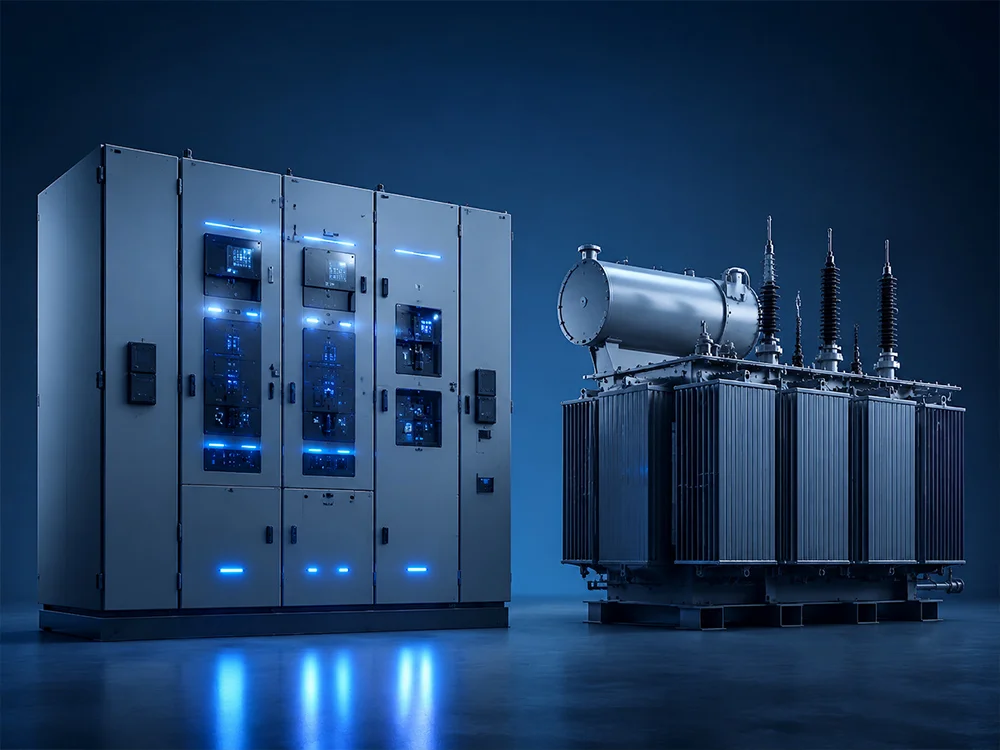
Start with the substation serial number, arrangement drawing and compartment plan. For equipment-family context, see the 神恆コンパクト屋外変電所. The product illustration shows the closed assembly and visible ventilation pattern; it is not an inspection record or proof of a particular hidden barrier design. Ask for the drawing and approved details for the actual supplied enclosure.
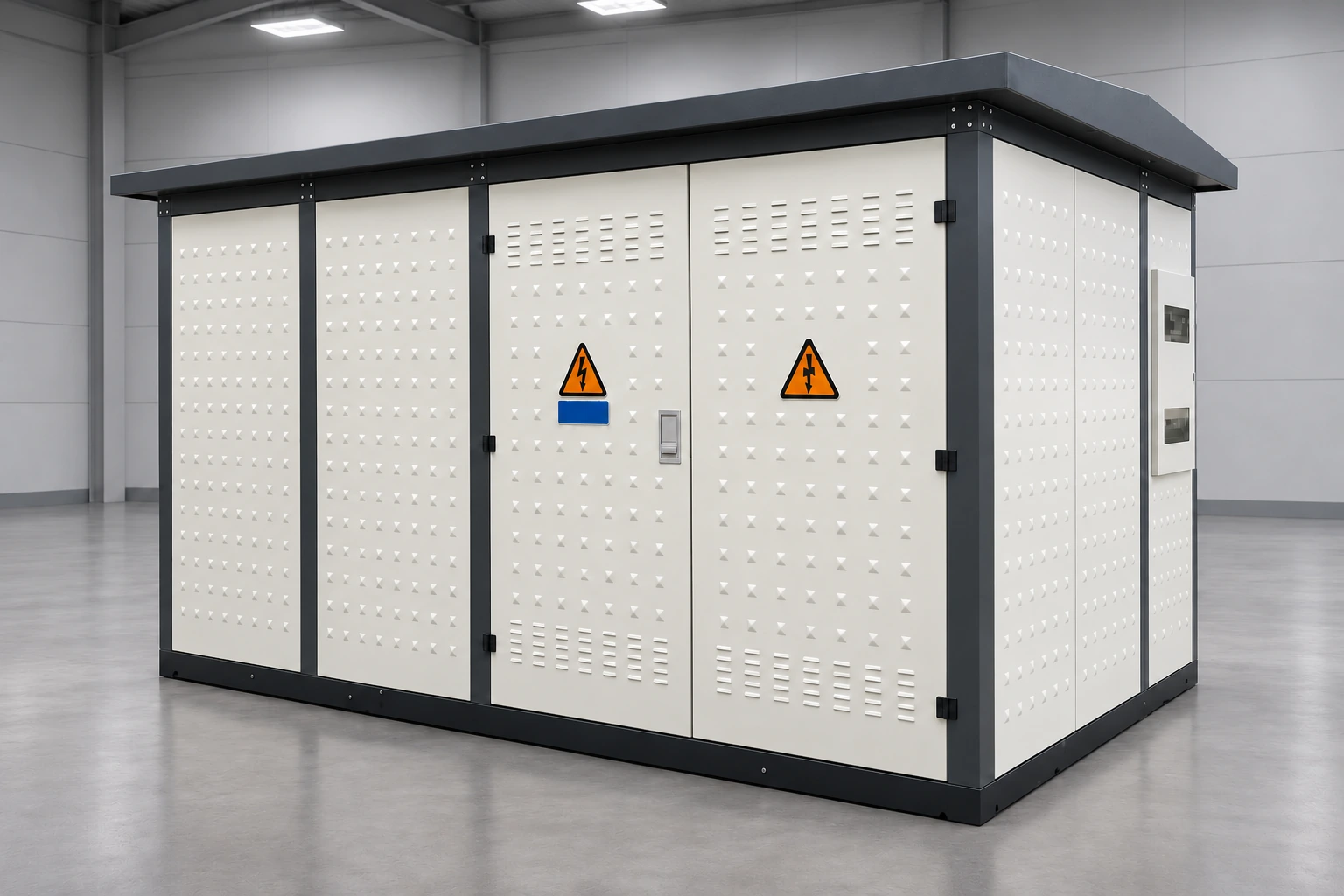
Describe what was observed, where it was observed and when. Distinguish sightings outside the enclosure from evidence inside an authorized inspection area. Examples of useful records include a damaged barrier, nesting material reported by qualified staff, debris near a cable opening or repeated activity beside a door. Keep each observation tied to a compartment or drawing reference. Avoid changing the scene before the competent assessment has established what needs to be preserved.
The distribution-substation code included in this Hong Kong government environmental assessment appendix treats vermin protection as a combination of boundaries, including doors, ventilation guards and cable-opening sealing. Its particular design requirements belong to that utility context. The transferable principle is to examine the enclosure as a whole rather than assuming one mesh panel solves every route.
The owner’s response should consider electrical damage as well as animal activity. Reported contamination, chewed insulation, obstruction or signs of discharge require the appropriate technical escalation. A pest-control visit and an electrical inspection have different responsibilities. Neither report should imply that the other discipline has cleared the equipment unless that clearance has actually been documented.
A person reporting the problem should remain outside the restricted equipment boundary and use the owner’s contact process. Do not approach vents with tools, insert a camera through openings or attempt to flush animals from the enclosure. An external sighting is useful information even without a close photograph. Obtaining a better image must not become a reason to enter an electrical danger area.
Internal access belongs to competent personnel under an approved safety arrangement. The HSE’s working with electrical equipment guidance explains general principles of safe isolation and competent work. The actual substation may have multiple supplies and auxiliary circuits; this article cannot determine which circuits are safe or define the site’s access procedure.
さらなる学習:安全と健康のために立ち上がろう – ロックアウトタグアウト — 労働省。. YouTubeで公開.
The US Department of Labor video explains hazardous-energy control for this access-planning context. It is not a demonstration of wildlife removal or a site-specific substation isolation method. Any work involving animals, contamination or electrical damage needs the relevant competence and the owner’s authorization before access begins.
Use the arrangement drawing to prepare an inspection map. Include ventilation assemblies, door perimeters, cable-entry systems and the interface between the enclosure and its base. Record whether a feature is original, repaired, modified or undocumented. An improvised patch may conceal a second defect, and a recent door adjustment may change the fit of an adjacent seal.
Different routes require different corrective actions. A broken ventilation guard needs its assembly reviewed; a disturbed cable seal needs the cable-entry system assessed. The ケーブル引込口のシーリングに関する確認 addresses that separate boundary. If a door perimeter is involved, consult the door gasket compatibility review without assuming that changing the gasket will correct frame distortion or a latch problem.
Do not assign a universal allowable gap or mesh opening to all compact substations. The target pest, original assembly design, cooling arrangement and applicable utility requirements may differ. The manufacturer should define the approved construction. A building-level recommendation from a different project cannot automatically be copied onto a factory-built enclosure.
This table translates the whole-boundary principle into a practical review record. It is not a certification checklist. Use the government-hosted code above and the actual enclosure drawings as context; obtain project-specific acceptance criteria from the owner and manufacturer.
| エリア | 記録する証拠 | 責任者への確認事項 |
|---|---|---|
| Ventilation assembly | Panel identity, visible damage and original drawing | Is a guard missing, displaced or altered? |
| Door boundary | Closure condition and reported perimeter defects | Is the opening caused by seal damage, alignment or hardware? |
| cURL Too many subrequests by single Worker invocation. To configure this limit, refer to https://developers.cloudflare.com/workers/wrangler/configuration/#limits | Approved sealing detail and observed disturbance | Is the cable boundary complete and compatible with the cables? |
| Base interface | Enclosure-to-plinth detail and accessible observations | Does the route belong to the enclosure, civil work or both? |
| Internal condition | Authorized inspection findings and affected compartment | Is electrical cleaning, testing or repair required? |
| Cooling function | Original ventilation design and proposed change | Will the remedy preserve the approved cooling path? |
| Follow-up | Work record, review date and recurrence observations | Has the entry route been resolved rather than temporarily hidden? |
Leave unknowns visible. For example, a record stating no external damage observed does not mean hidden internal mesh has been inspected. State the viewing limitation and who must resolve it. This makes the report more useful than a simple pass box with no description of the inspection boundary.
A finer screen or an additional layer can change the opening’s resistance to airflow and its tendency to collect dust. Its effect needs manufacturer review against the original assembly. Do not cover vents with solid sheet, foam, cloth or a generic household insect screen simply because it appears to exclude pests. A barrier that solves one visible problem may create a cooling or maintenance problem elsewhere.
Review the complete proposed panel, including mounting, corrosion compatibility, access for cleaning and the way it is retained. Ask whether the solution requires a revised drawing or changes the maintenance scope. Avoid claiming an unchanged protection rating or temperature performance without the relevant evidence. An enclosure’s label does not automatically validate an undocumented modification.
The HSE maintenance guidance emphasizes planned work, competent personnel and appropriate equipment information. Apply that approach to the complete replacement ventilation assembly: agree the design, cleaning access and verification scope before work begins. A generic pest-control product does not establish that the electrical enclosure remains suitable for its intended service.
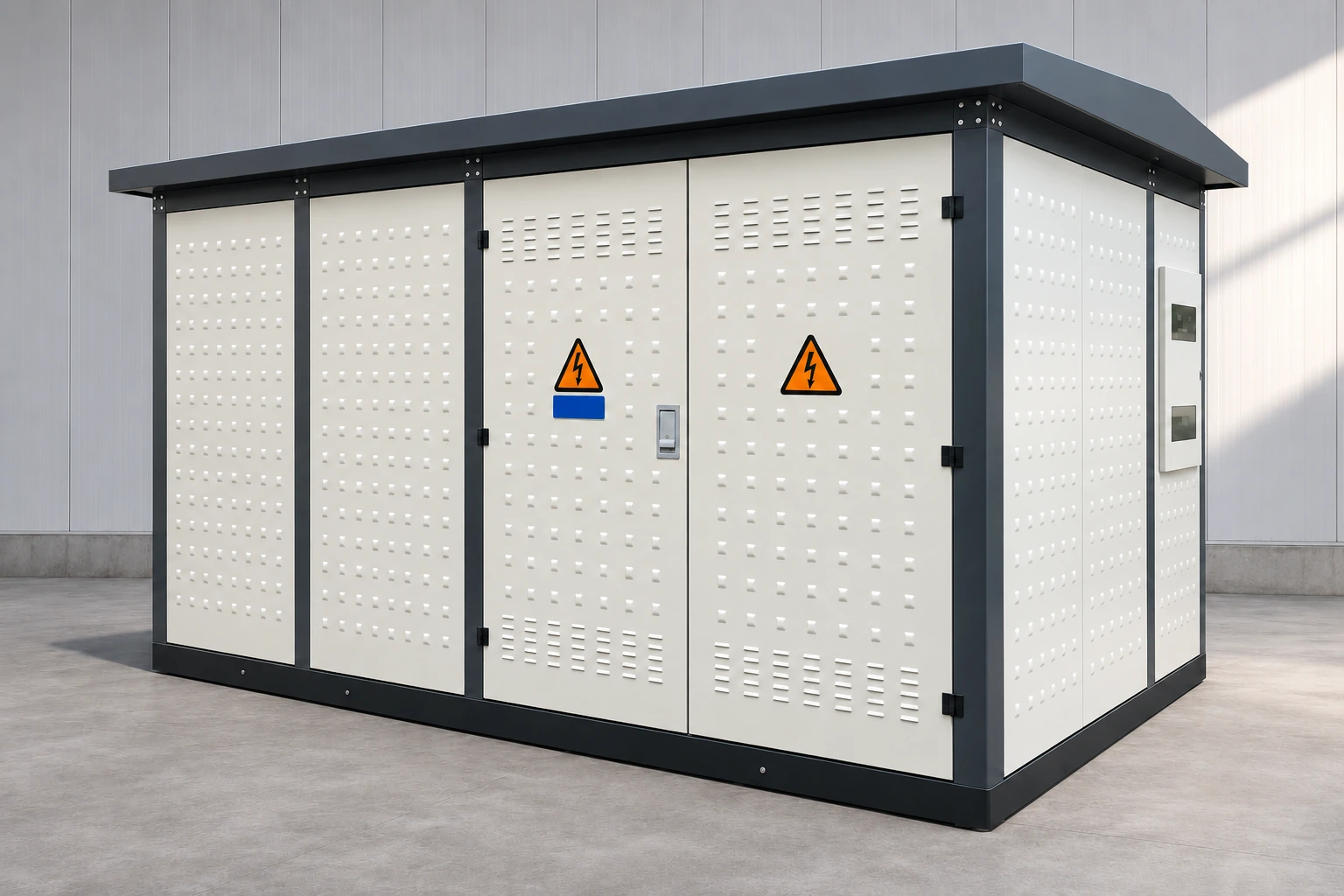
サプライヤーにエンクロージャの識別、配置図、影響を受けるパネルの位置、利用可能な場合は元のバリアの詳細、および承認された検査計画に基づいて収集された写真を送信してください。観察されたルートと電気的所見を別々に説明してください。サプライヤーが元のスペア、承認された改訂、または新しいエンジニアリングアセンブリを提案しているかどうかを尋ねてください。それらのオプションは、あいまいな項目に混ぜてはいけません。.
換気アセンブリの場合、パネルの指定、材料および仕上げの仕様、取り付けの詳細、ガードの構造、清掃アクセス、および必要な検証を要求してください。画像から寸法を作成しないでください。特徴が特定できない場合は、どの検査または図面検索が必要かを尋ねてください。明示的な不明点は、仮定から注文された不正確な部品よりも安全で、通常は安価に解決できます。.
The ventilation grille replacement review スペアアセンブリに関する質問を説明します。現在の評価は、修正を選択する前に、可能性のある侵入ルートと機器への影響を確立するためのより広い診断目的を持っています。これらの範囲を明確に保つことで、グリルの購入注文が未解決のケーブル侵入またはドアの欠陥の解決として扱われるのを防ぎます。.
巣材や汚染物質の除去には、所有者が特定した健康上の考慮事項を含む適切な作業計画が必要です。清掃方法は、電気機器およびエンクロージャと互換性がある必要があります。換気口に害虫化学薬品、水、または清掃液を噴霧しないでください。この記事は、化学物質が絶縁体、コーティング、または電気部品と互換性があることを確立できません。.
承認された修理後、変更された内容、適用される図面、および完了した検査または検証を記録してください。電気的損傷が疑われる場合は、資格のある技術的結論と制限を含めてください。修理された外部バリアは、汚染された絶縁体や損傷した配線が復元されたことを証明するものではありません。リリース決定は、その結論に責任を持つ人物または組織の名前を挙げるべきです。.
現場、季節、および元の所見に応じたフォローアップを手配してください。再発する活動と、交換されたバリアに汚れが蓄積しているかどうかを記録してください。 substation maintenance checklist フォローアップは、より広い検査プログラム内で行われます。地域の条件や所有者の要件を考慮せずに一般的な検査間隔をコピーしないでください。再発するルートは、境界および周囲の条件の再評価を引き起こすべきであり、同じ部品の無限の交換を引き起こすべきではありません。.
いいえ。換気口は冷却設計の一部です。所見を報告し、侵入ルートを評価してもらってください。バリアの変更には、実際のエンクロージャに対する承認が必要であり、気流、アクセス、およびメンテナンスへの影響を含める必要があります。レビューなしに開口部をブロックすると、異なる機器の問題を引き起こす可能性があります。.
IP指定を普遍的な害虫除去保証として扱わないでください。元の囲いの構造と対象ルートを確立してください。ユーティリティやプロジェクトの要件は、動物や昆虫の除去を別々に扱う場合があります。損傷した、欠落した、または変更されたバリアも、元のラベルに関係なく評価が必要です。.
所有者の認可されたアクセスと安全対策のみが、誰が機器に入ることができるか、または機器を開けることができるかを決定できます。害虫管理の能力だけでは、電気の能力を確立することはできません。電気評価と害虫管理作業を調整し、各責任者が自分の作業の境界を理解できるようにしてください。.
特定されたルート、承認された修理図面、完了した作業記録、必要に応じた電気評価、およびフォローアップ観察を一緒に保管してください。検査されなかった領域を明記してください。新しい視認の欠如自体は、隠れた損傷が修理されたことや、囲いの元の性能が維持されたことを証明するものではありません。.

 申恒電力設備有限公司.