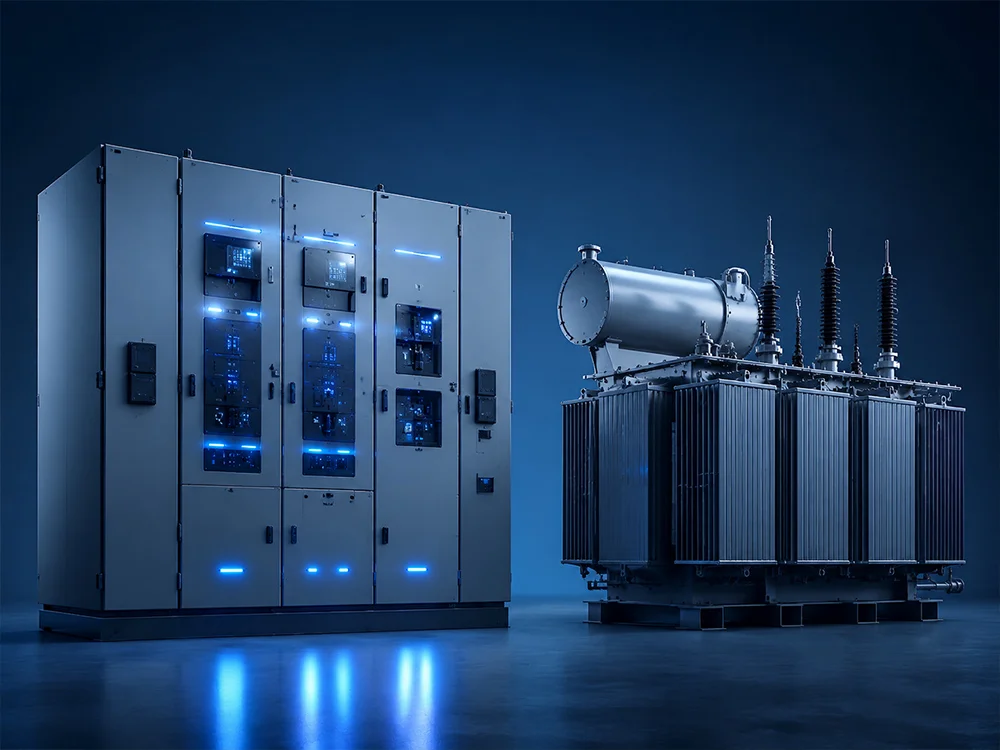
グローバルな電化が加速する中、産業界では、より安全で、信頼性が高く、エネルギー効率の高い配電ソリューションに対する需要が高まっています。乾式変圧器は、その耐火設計、低い保守要件、環境に優しい特性により、多くの近代的な電気システムにおいて好まれる選択肢となっています。従来の油入変圧器とは異なり、乾式変圧器は固体絶縁材料と空気冷却システムを使用しているため、屋内や環境に敏感な場所への設置に最適です。.
人工知能(AI)データセンター、再生可能エネルギープロジェクト、電気自動車(EV)充電インフラ、およびスマートグリッド開発の急速な成長が、変圧器業界全体のイノベーションを推進しています。さまざまなタイプの変圧器の中でも、乾式変圧器は、より厳格な安全性と持続可能性の要件を満たしながら信頼性の高い電圧変換を提供するため、注目を集めています。.
電気エンジニア、EPCコントラクター、産業用バイヤーにとって、適切な 変圧器の電気的ソリューション 電圧と容量の選択にとどまりません。購入者は、効率、絶縁性能、冷却方式、騒音レベル、認証要件、および長期的な運用コストを評価する必要があります。.
このガイドでは、 乾式変圧器の基礎, 、異なる変圧器技術を比較し、その産業上の応用を探求し、現代の電力システムに適したソリューションを選択するための実践的なガイダンスを提供する。.
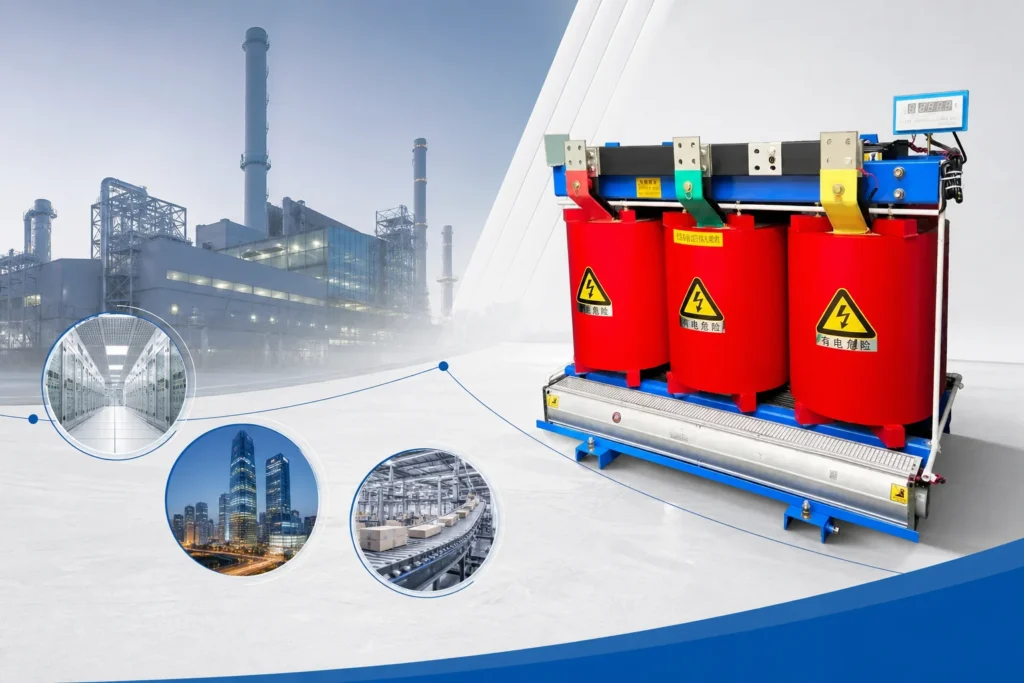
乾式変圧器とは 変圧器 液体誘電体材料の代わりに固体絶縁を使用しながら、電磁誘導によって回路間でエネルギーを伝達する.
変圧器の主な機能は電圧レベルを昇圧または降圧することであり、これにより効率的な電力送電と安全な配電が可能になります。.
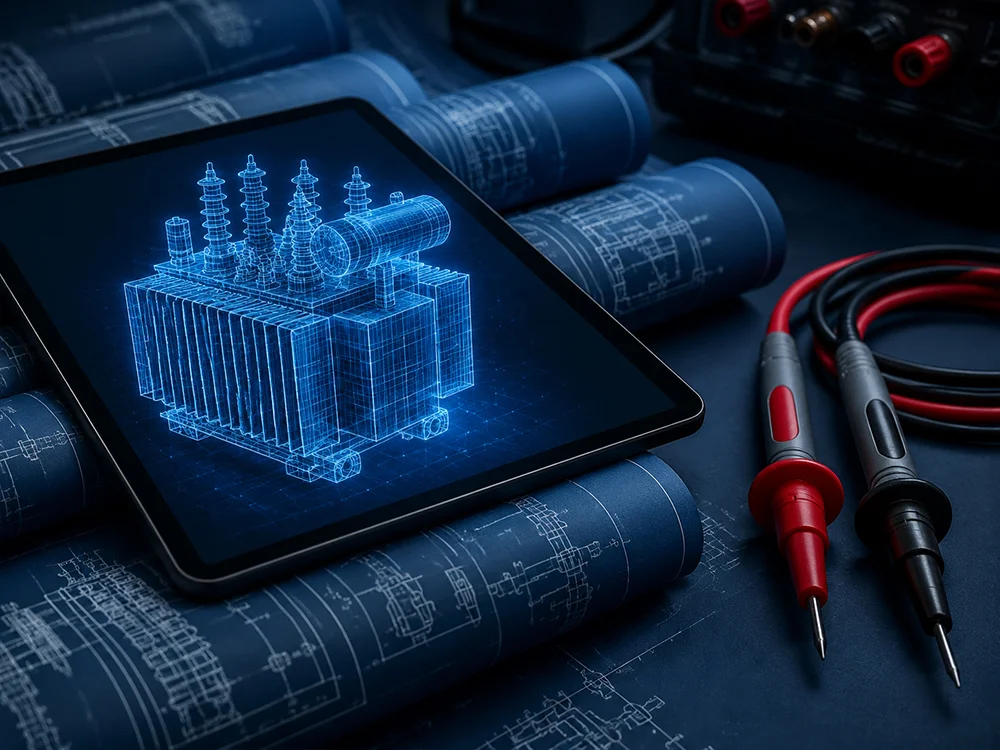
一般的な乾式変圧器は、いくつかの主要な構成部品で構成されています。
| コンポーネント | 関数 |
|---|---|
| 磁心 | 磁束の低リダクタンス経路を提供し、エネルギー伝達効率を向上させます |
| 一次巻線 | 電気的な入力エネルギーを受け取る |
| 二次巻線 | 変換された出力電圧を提供する |
| 絶縁システム | 電気的絶縁と熱的保護を確保します |
| 冷却構造 | 動作温度を制御する |
注:モールド変圧器(乾式変圧器)は絶縁油を含まないため、火災の危険性を大幅に軽減し、漏油に伴うリスクを解消します。これにより、商業施設、工場、病院など、安全性が重視される場所への設置に適しています。.
乾式変圧器の動作原理は電磁誘導に基づいています。.
一次巻線に交流が流れると、変圧器の鉄心内部に変化する磁場が生成されます。この磁束が二次巻線に電圧を誘導し、異なる電圧レベルで電気エネルギーをある回路から別の回路へ伝送することを可能にします。.
基本的なエネルギー変換のプロセスは:
電気エネルギー → 磁束 → 変圧 → 電力配分
電圧変成比は、1次巻線と2次巻線の巻き数に依存します。巻線の設計を調整することで、メーカーは以下を含む異なる電圧レベルに適した変圧器を製造することができます。
低電圧(LV)システム
高圧配電
産業用電力網
現代の乾式変圧器は、連続運転条件下での信頼性を向上させるため、高度な絶縁技術や熱管理設計も取り入れています。.
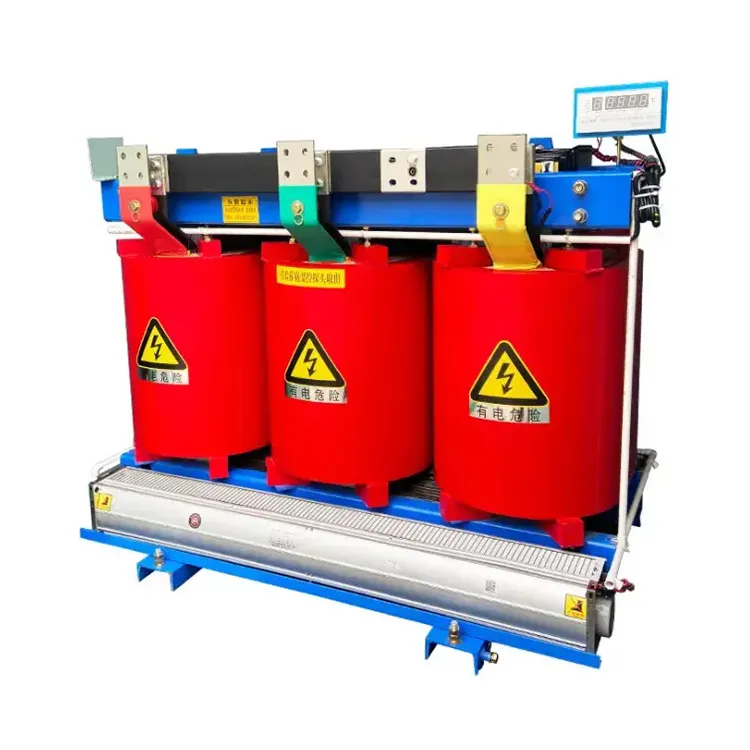
変圧器は、絶縁技術、電圧階級、および用途要件に応じて分類できる。.
最も一般的なトランスフォーマーの種類には、以下のようなものがあります。
| トランスフォーマー型 | 絶縁システム | 主な用途 |
|---|---|---|
| 乾式変圧器 | 空気および固体絶縁 | 商業ビル、工場、データセンター |
| モールド変圧器 | エポキシ樹脂封止 | 過酷な産業環境 |
| VPIトランスフォーマー | 真空含浸 | 一般産業用アプリケーション |
| 油入変圧器 | 鉱油絶縁 | 屋外変電所 |
| 電力用変圧器 | 油入高電圧絶縁 | 送電網 |
乾式変圧器は、高い安全性、信頼性、環境保護が求められる用途向けに設計されています。防火性と限られたメンテナンスが重要となる屋内に設置されることが一般的です。.
モールド変圧器は、エポキシ樹脂を使用して巻線を封止し、湿気、粉塵、および過酷な環境条件に対する耐性を高めます。.
主な用途には以下のようなものがあります:
化学プラント
地下施設
海洋施設
高湿度環境
真空加圧含浸(VPI)変圧器は、機械的強度と熱性能を向上させるために、樹脂処理された絶縁システムを使用しています。.
それらは信頼性と費用対効果が重要視される産業用配電システムで広く使用されています。.
電気工事業界の専門家から最もよく寄せられる質問の一つは、乾式変圧器が 油入変圧器 デザイン.
| 機能 | 乾式変圧器 | 油入変圧器 |
|---|---|---|
| 断熱方法 | 固体絶縁 | 鉱物油 |
| 火災報知器 | 高 | 追加の保護が必要です |
| 環境リスク | オイル漏れなし | 油分混入の可能性 |
| メンテナンス | 手間がかからない | オイルの点検が必要です |
| インストール | 主に屋内 | 主に屋外 |
| 初期投資 | より高く | 下げる |
乾式変圧器は通常、安全性と信頼性が不可欠なビル、病院、空港、データセンターなどに選ばれます。.
油入変圧器は、非常に高い電力容量が求められる屋外変電所や電力用途において、現在も広く使用されています。.
いくつかの市場動向が乾式変圧器技術の採用を加速させています。.
乾式変圧器には可燃性の絶縁油が含まれていないため、防火性が向上します。.
これにより、これらは以下の用途に適しています:
病院
Airports
Shopping malls
High-rise buildings
データセンター
Modern industries increasingly focus on sustainable electrical infrastructure.
Dry type transformers offer advantages including:
No oil leakage risk
Reduced environmental impact
Compatibility with green building requirements
Compared with oil transformers, dry type transformers require fewer maintenance procedures because they eliminate:
Oil quality testing
Oil replacement
Leakage inspections
This reduces operational costs throughout the transformer lifecycle.
The application range of dry type transformers continues expanding due to global electrification trends.
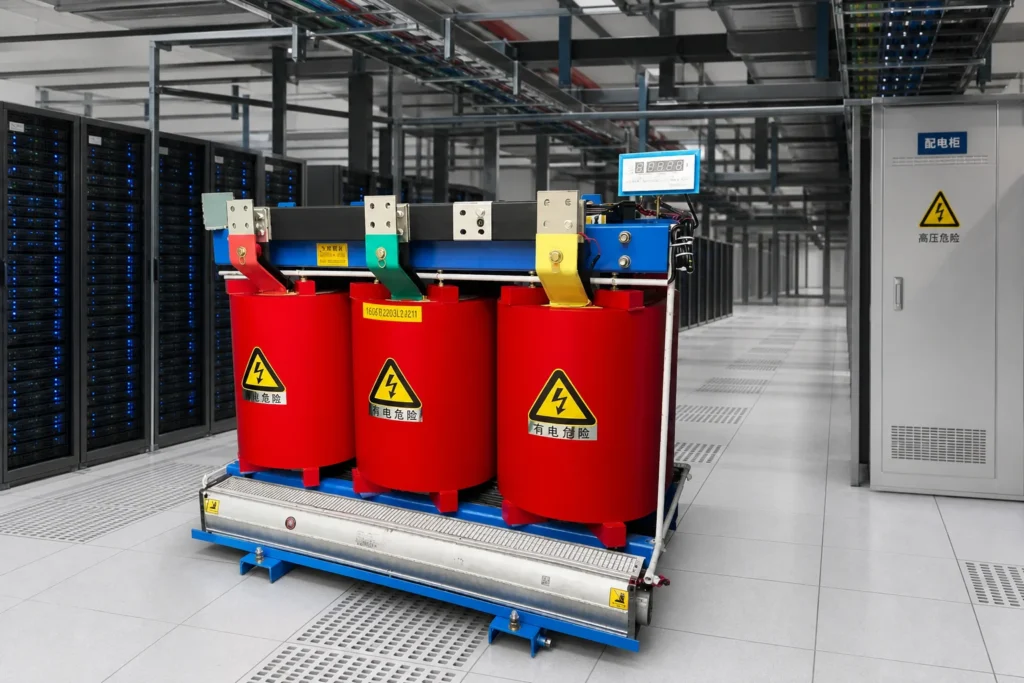
The rapid growth of artificial intelligence has significantly increased electricity demand from data centers.
AI computing facilities require:
Stable power supply
High availability
Reliable voltage regulation
Dry type transformers are increasingly used in data center electrical systems because they provide:
Improved fire safety
Indoor installation flexibility
メンテナンス要件の軽減
Renewable energy projects require reliable voltage conversion between generation equipment and electrical grids.
Dry transformers are commonly applied in:
Solar farms
Wind power systems
Battery energy storage systems (BESS)
The oil-free design makes them attractive for environmentally sensitive renewable energy projects.
The expansion of electric vehicles requires stronger distribution infrastructure.
Dry type transformers support EV charging stations by providing:
Reliable voltage conversion
Compact installation
Safe operation in public areas
Factories using automation systems and advanced machinery require stable power quality.
主な用途には以下のようなものがあります:
Automotive manufacturing
Semiconductor facilities
Steel plants
Industrial automation systems
Transformer selection should consider more than voltage and capacity. Several technical factors influence efficiency, reliability, and service life.
Temperature control is critical because excessive heat can accelerate insulation aging.
Common cooling methods include:
| Cooling Class | Description |
|---|---|
| AN | Natural air cooling |
| AF | Forced air cooling with fans |
Proper thermal design helps maintain stable operation and extend transformer lifespan.
The insulation system determines the transformer’s temperature resistance and reliability.
Common insulation classes include:
Class F insulation
Class H insulation
Higher insulation grades allow transformers to operate under demanding industrial conditions.
For medium voltage dry type transformers, partial discharge (PD) performance is an important reliability indicator.
Low PD levels indicate:
Higher insulation quality
Reduced failure risk
Longer service life
Noise performance has become increasingly important for indoor installations.
Modern designs reduce transformer noise through:
Optimized magnetic core structures
Improved vibration control
Advanced manufacturing processes
Choosing the correct transformer requires evaluating technical and operational requirements.
Key parameters include:
Rated voltage
kVA capacity
Load characteristics
Future expansion requirements
Engineers should consider:
Indoor or outdoor installation
Ambient temperature
Humidity conditions
Space limitations
High-efficiency transformers reduce:
No-load losses
Load losses
Long-term electricity costs
Professional buyers increasingly evaluate lifecycle value rather than only initial purchase price.
TCO includes:
Equipment cost
Installation cost
Energy consumption
Maintenance expenses
Expected service life
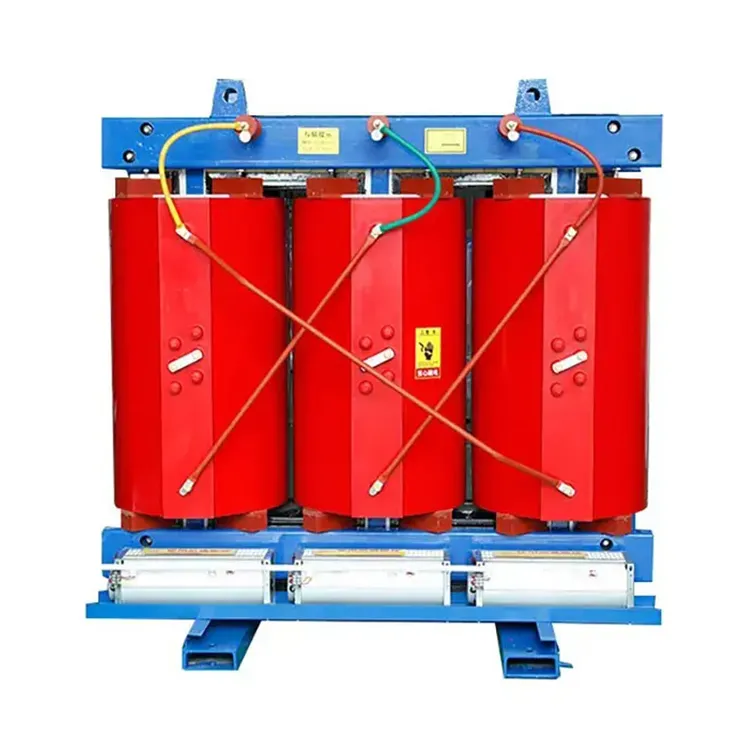
For international projects, transformer compliance is a key purchasing factor.
Dry type transformers are commonly designed according to internationally recognized standards, including the IEC 60076 Power Transformer Standard, which defines requirements for transformer design, testing, and performance evaluation.
Common standards include:
| Standard | Application |
|---|---|
| IEC 60076 | International transformer requirements |
| IEEE C57 | North American transformer standards |
| ANSI | Electrical equipment requirements |
Before purchasing, buyers should verify:
Routine test reports
Insulation tests
Temperature rise tests
Short circuit performance
Even high-quality transformers may experience reduced performance if installation conditions are unsuitable.
Insufficient airflow can increase operating temperature and shorten insulation life.
Oversized or undersized transformers may result in:
Poor efficiency
Overloading
Increased operating costs
Modern electrical equipment such as:
Variable frequency drives
Data center power supplies
Solar inverters
can introduce harmonic currents.
Transformer selection should consider harmonic distortion levels to ensure reliable operation.
The transformer industry is moving toward digital monitoring and intelligent power management.
Modern transformer development focuses on improving efficiency and reliability through technologies promoted by organizations such as the IEEE Standards Association.
Future trends include:
Smart sensors can monitor:
Temperature
Load conditions
Partial discharge
Operating status
Data analysis enables early detection of potential problems and reduces unexpected downtime.
Future designs will focus on:
Lower energy losses
Environmentally friendly materials
Higher efficiency performance
As electrical systems become more complex, customers require more than standard transformer products. They need reliable engineering support and customized solutions.
Our dry type transformer solutions provide:
Customized voltage and capacity design
Advanced insulation technology
Strict quality control
International standards compliance
Professional technical support
Whether for industrial facilities, renewable energy projects, data centers, or commercial buildings, reliable transformer solutions help ensure safe and efficient power distribution.
A dry-type transformer is an electrical transformer that uses solid insulation and air cooling instead of transformer oil. It is widely used in buildings, factories, data centers, and other applications where safety and low maintenance are important.
主な違いは、絶縁と冷却の方法です。乾式変圧器は空気と固体絶縁を使用するのに対し、油入変圧器は絶縁油を使用します。乾式変圧器は火災安全性が高く、屋内に設置されることが多いです。.
The four common types of transformers include:
Dry-type transformers
Oil-filled transformers
Power transformers
Distribution transformers
Each type is designed for different voltage levels and electrical applications.
クラス3変圧器は、制御システム、信号機器、低電圧回路などの限定されたエネルギー用途向けに設計された低電力変圧器です。.
乾式変圧器は電磁誘導によって動作します。一次巻線と二次巻線の相互作用を通じて電圧レベルを変えることにより、回路間で電気エネルギーを伝達します。.
主な利点として、高い防火安全性、低いメンテナンス性、漏油リスクがないこと、環境保護、および屋内用途での信頼性の高い性能が挙げられます。.
乾式変圧器は、工場、商業ビル、病院、空港、再生可能エネルギープロジェクト、EV充電スタンド、データセンターなどで一般的に使用されています。.
適切な変圧器の選定は、定格電圧、容量(kVA)、設置環境、冷却方式、効率要件、適用される電気規格などの要因によって決まります。.
IEC 60076 Power Transformer Standards – International Electrotechnical Commission
International requirements for transformer design, testing, insulation, and performance evaluation.
IEEE Standards Association – Electrical Engineering Standards
Technical standards and engineering guidance for electrical power systems.
International Energy Agency (IEA) – Energy Transition Research
Research and analysis on electrification, renewable energy integration, and future power infrastructure development.
Dry type transformers have become an essential component of modern electrical infrastructure because of their safety, reliability, and environmental advantages.By understanding the different types of transformers, technical performance factors, and application requirements, engineers and buyers can make better decisions when selecting electrical equipment.With continued growth in AI infrastructure, renewable energy, and global electrification, dry type transformers will remain a key technology supporting the future of power distribution.

 申恒電力設備有限公司.