Dal 2001, Shenheng Power è un produttore affidabile di apparecchiature per la trasmissione e la distribuzione di energia, che fornisce soluzioni elettriche affidabili a livello globale.
Supportati da un completo sistema post-vendita, offriamo consulenza tecnica esperta, guida sui prodotti e servizi flessibili OEM e ODM per i vostri progetti.
Dal 2001, Shenheng Power è un produttore affidabile di apparecchiature per la trasmissione e la distribuzione di energia, che fornisce soluzioni elettriche affidabili a livello globale.
Transformer Oil Oxidation Stability Test: Laboratory Evidence and Limits
Data di uscita: 2026-10-23
A transformer oil oxidation stability test evaluates how a mineral insulating oil behaves during a defined accelerated laboratory exposure. Depending on the method, the report may describe acid and sludge formation or a pressure-vessel oxidation endpoint. It helps compare specified oil behavior under controlled conditions, especially for new-oil qualification and production consistency. It does not directly predict the number of years a transformer will operate. Before accepting a result, match the method to the fluid, distinguish new oil from oil already in service, and use the limits in the applicable purchase specification rather than borrowing an unrelated acceptance number.
Why accelerated oxidation is tested
An insulating liquid must continue to perform its thermal and electrical functions while exposed to service stresses. Oxidation is one contributor to deterioration, and laboratory methods deliberately accelerate selected conditions to make comparisons practical. A controlled test answers a bounded question: how did this specimen respond under this method? That question is narrower than whether a complete transformer is fit for continued operation.
Il Laboratorio dei dielettrici liquidi presso l’Istituto Centrale di Ricerca Energetica describes oxidation, thermal stress and electrical stress as reasons to monitor insulating oil. Its laboratory capabilities also distinguish oil properties, dissolved gases and furan analysis. That distinction matters because an oxidation-stability certificate cannot replace evidence about electrical faults or solid insulation.
For owners buying an trasformatore di potenza in bagno d'olio, the practical value is a traceable fluid specification. Identify the oil product, batch and agreed test requirements before manufacturing acceptance. A generic statement that the equipment uses quality oil is less useful than a certificate tied to the material actually supplied.
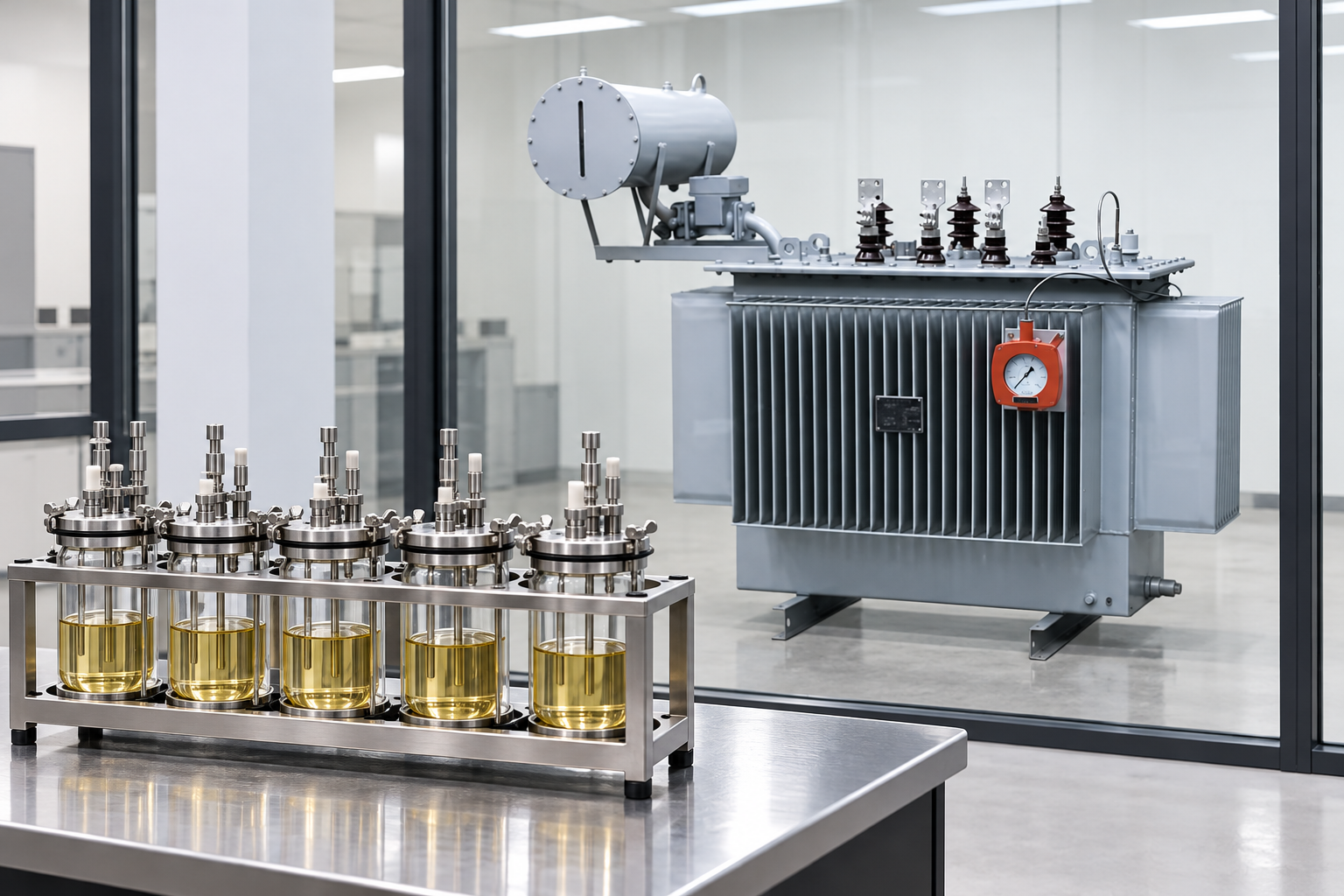
Laboratory vessels illustrate controlled testing, not a prescribed ASTM apparatus or operating procedure. Reference-based illustration.
D2440 and D2112 answer different questions
ASTM D2440 examines mineral transformer oil under accelerated aging conditions and evaluates its tendency to form sludge and acid. Its scope includes new inhibited and uninhibited oils, while application to used or reclaimed oils is not well defined. This makes sample identity an essential part of interpreting the report rather than an administrative detail.
ASTM D2112 is a pressure-vessel method directed at new mineral insulating oils containing specified synthetic oxidation inhibitors. Its published scope identifies a role in checking consistency between shipments. A result from that method should not be presented as though it were the same measurement as acid or sludge formation from another method.
Neither designation is a universal instruction to test every insulating liquid. Ester fluids, mixed fills and unfamiliar formulations require their own applicable specifications. Even within mineral oils, confirm that the fluid and intended decision fall within the selected method’s scope. A laboratory’s ability to operate an instrument does not by itself establish that the result supports the proposed acceptance decision.
The comparison below is qualitative. It identifies the evidence to request; it deliberately supplies no generic pass value because the governing specification, sample type and method must be agreed together.
Domanda
D2440 evidence
D2112 evidence
Review consequence
What is observed?
Acid and sludge formed under prescribed aging
A defined pressure-vessel oxidation response
Keep endpoints and units distinct
Which oil is intended?
New mineral oil, inhibited or uninhibited
New mineral oil with specified synthetic inhibitors
Verify sample formulation
What comparison is useful?
Controlled comparison of oxidation products
Consistency of the specified inhibited oil property
Compare like methods and sample types
Can it describe used oil without qualification?
Published scope notes limitations
Published scope is directed at new oil
Ask for a separate technical justification
Does it predict transformer life?
No direct service-life conversion
No direct service-life conversion
Avoid converting test time into operating years
Why a laboratory result is not a service-life clock
A transformer contains more than the tested oil. The insulation system, construction materials, temperature distribution, loading, oxygen exposure and maintenance history affect real service behavior. A small specimen subjected to a prescribed laboratory regime cannot reproduce every interaction inside that system. Apparent precision in a test result does not remove this difference.
D2440’s published explanation specifically cautions against assuming a proven correlation with service performance. Treat that boundary seriously when comparing suppliers. A better result under a named test may support the agreed material assessment, but it does not justify a claim that one complete transformer will operate a proportional number of extra years.
For example, two suppliers may submit different oxidation-stability results while also using different test methods. Ranking them by the larger number is meaningless until the methods, units, formulations and acceptance requirements are aligned. Even two comparable results should be reviewed within the full specification rather than being used as the only purchasing criterion.
Separate inhibitor concentration from oxidation response
An inhibitor-content measurement asks how much of a named additive is present. An oxidation-stability test asks how the specimen behaves under prescribed exposure. A concentration result can help explain the formulation, but it cannot substitute for a requested stability test. Two reports that use the word antioxidant may therefore contain quite different evidence.
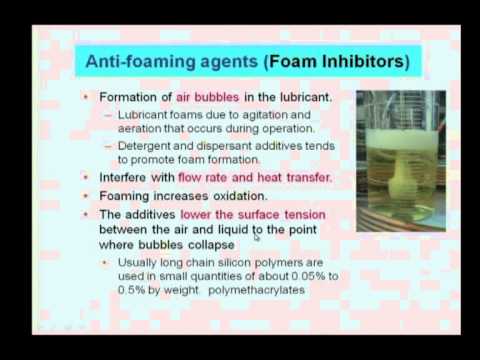
The broader chemistry of additives helps explain why this distinction matters. The following NPTEL lecture by IIT Delhi introduces lubricant additives, including the wider context of protective additive functions. It is supporting chemistry education, not an insulating-oil qualification procedure. Lubricant formulations and transformer oils must not be treated as interchangeable materials or assigned each other’s dosing instructions.
When a test report gives only the phrase inhibited oil, ask for the original fluid classification and certificate. Do not infer a complete additive package, acceptable treatment plan or universal stability level from that phrase. The applicable oil specification and identifiable laboratory results should support the decision.
Build an acceptance request that a laboratory can answer
Start with the decision: new-oil batch acceptance, comparison of proposed supplies, investigation after treatment, or another defined purpose. Give the laboratory the fluid identity and history. Ask it to confirm the method’s suitability before a specimen is tested. This is especially important when an old certificate is being reused for a changed oil product or mixture.
Require the report to identify the sample, batch, method and revision, test date, reported endpoints and units. If the purchase specification calls for a defined exposure duration or multiple endpoints, make sure the laboratory report addresses those requirements. A short certificate summary can conceal an omitted measurement if the reviewer only checks for the standard number.
Keep the acceptance limits in the controlled purchase documents. A limit copied from another utility’s specification may concern a different fluid class, delivery condition or contractual requirement. If a supplier proposes an equivalent method, require a documented technical and contractual review rather than silently replacing one designation in the order.
Evaluate oil already in service differently
Routine condition monitoring asks what is happening in a particular operating asset. The oil acidity guide e interfacial tension guide address measurements that can contribute to that assessment. Combine such reports with sampling history, operating conditions and the owner’s maintenance program; do not replace the assessment with a new-oil qualification claim.
If oil has been reclaimed, reinhibited or mixed, document the intervention and ask which test interpretation is justified. A treatment can change the liquid’s properties without resetting the condition of the solid insulation or removing the cause of deterioration. It is therefore unsafe to describe a treated transformer as new simply because one oil property improved.
Where fault-related questions arise, follow the separate dissolved gas analysis workflow. An oxidation result should neither dismiss an abnormal gas pattern nor be used to invent a fault diagnosis. Each measurement should remain attached to the question it can answer.
Review the method, specimen identity and contract requirement together. Reference-based illustration.
Resolve a result that misses the purchase requirement
First confirm that the certificate applies to the delivered batch and that the result is being compared with the correct specification. Check whether the sample came from a delivery container, storage tank or transformer compartment. Those locations may have different handling histories. Preserve the original report and chain of custody while the discrepancy is investigated.
Next ask the laboratory about sample suitability, any deviations and whether confirmation is warranted. Contact the supplier with the documented discrepancy rather than requesting an informal explanation by telephone alone. If the contract provides for retesting or retained samples, follow that process. Retesting should resolve uncertainty, not continue until an acceptable number appears.
A final disposition might involve acceptance with an approved concession, replacement, additional investigation or another formally authorized action. The responsible owner and engineering team must decide using the contract and technical evidence. Do not quietly blend, treat or relabel the material to make a certificate appear compliant.
Questions to settle before ordering equipment
Include fluid identity, batch traceability, applicable standards, acceptance evidence and delivery handling within the oil-immersed transformer buying review. Ask who supplies each certificate and when the owner can review it. A clear document schedule prevents a late dispute after equipment arrives on site.
Also establish how any oil substitution will be approved. A proposed alternative may require compatibility review, revised certificates and updated maintenance information. Record that change in the final handover package so future oil sampling can be interpreted against the actual fill. Equipment records should describe what was supplied, rather than what an early quotation originally proposed.
A useful acceptance package leaves the next reviewer able to reconstruct the decision: material identity, method, result, requirement and approval. That traceability provides more practical value than an unsupported marketing statement about exceptional oxidation resistance or maintenance-free service.
Domande frequenti
Can oxidation test minutes be converted into transformer years?
No justified universal conversion exists for this purpose. Laboratory exposure and the complete operating insulation system are different. Use the result for its specified comparison, not as a remaining-life forecast.
Are D2440 and D2112 interchangeable?
No. They have different scopes and endpoints. Any proposed substitution needs a technical and contractual review before the certificate can be accepted against a requirement written for another method.
Does a good stability result eliminate routine monitoring?
No. A qualification result describes the tested specimen under defined conditions. Water, contamination, operating faults and changing service conditions still require the owner’s appropriate monitoring and maintenance program.
Can the same criteria be applied to natural ester oil?
Do not assume so. These mineral-oil methods have specific scopes. Select the applicable fluid standard and obtain qualified laboratory advice before assigning acceptance criteria to an ester or mixed liquid.
Shenheng Electric Power si impegna a diventare un leader globale nelle soluzioni di apparecchiature elettriche, aiutando i clienti a ottenere una gestione dell'energia sicura, efficiente e sostenibile.

 Shenheng Power Equipment Co., Ltd.