Seit 2001 ist Shenheng Power ein vertrauenswürdiger Hersteller von Energieübertragungs- und -verteilungsausrüstung und liefert weltweit zuverlässige elektrotechnische Lösungen.
Unterstützt durch ein umfassendes Kundendienstsystem bieten wir kompetente technische Beratung, Produkthinweise sowie flexible OEM- und ODM-Dienstleistungen für Ihre Projekte.
Seit 2001 ist Shenheng Power ein vertrauenswürdiger Hersteller von Energieübertragungs- und -verteilungsausrüstung und liefert weltweit zuverlässige elektrotechnische Lösungen.
Transformer Oil Dissolved Metals Analysis: ICP Reports and Limits
Release Time: 2026-10-27
Transformer oil dissolved metals analysis measures elemental concentrations in an insulating-oil sample, commonly using inductively coupled plasma atomic emission spectrometry, or ICP-AES. It can support an investigation of contamination, material interaction or an emerging equipment problem, but it does not locate a defect or measure every metal particle in a transformer. The useful question is not simply whether copper or iron appears on a report. It is whether the sample, preparation method, reporting limit and trend make that result meaningful for the particular transformer. Start with a comparable laboratory record before connecting the finding to an operating decision.
What the laboratory actually measures
An elemental result describes how much of a specified element the analytical process detects in the submitted sample. It does not directly identify the original compound, the component that released it or the physical mechanism responsible. A report headed “metals” may include oil-soluble material and some fine suspended material. Calling every reported concentration “dissolved” without checking sample preparation can therefore create a false distinction between chemical contamination and particles.
The official scope of ASTM D7151 for elements in insulating oils identifies ICP-AES as the relevant technique and explains that particle size affects the analytical response. This matters when a low elemental result appears alongside visible debris or another abnormal observation. An ordinary elemental measurement is not a complete inventory of all metallic material in the tank. Ask the laboratory what fraction of the sample its reported value represents.
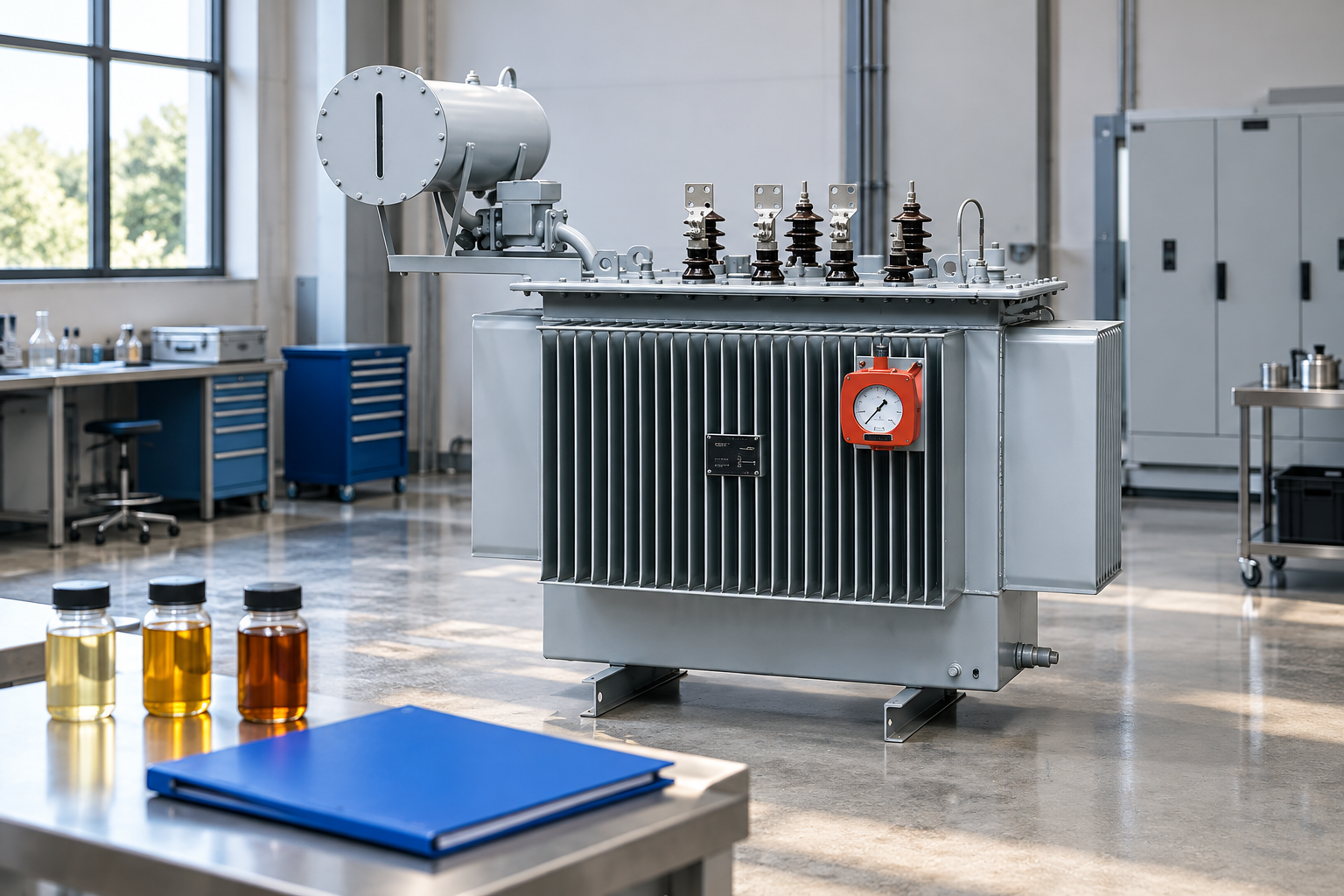
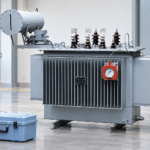
Reference-based illustration of sample documentation; no operating test or measured result is shown.
Why ICP results need a method-specific interpretation
ICP-AES introduces prepared sample into a plasma and measures characteristic optical emissions. The laboratory uses calibration and quality controls to convert the instrument response into a concentration. For the asset owner, the important controls are the approved method, sample preparation, calibration range, reporting limit and any qualification attached to the result. The instrument name alone does not establish that two laboratories have measured an identical sample fraction.
The similarly named ASTM D5185 method for lubricating and base oils should not be substituted automatically for an insulating-oil request. If a laboratory proposes a different method, ask it to document suitability for the sample matrix, required sensitivity and intended comparison. A purchasing specification should name the required application rather than requesting a generic “oil metal test” and assuming every offer is equivalent.
Separate dissolved material, fine particles and visible debris
A filtered analysis and an unfiltered analysis answer different questions. Filtration can help investigate how elemental material is distributed, but it introduces additional preparation steps and must be defined by the laboratory. The report should identify whether the sample was filtered, whether a separate retained fraction was investigated and how the reported fractions were calculated. Do not subtract unrelated results from different bottles and present the difference as a precise particle concentration.
Visible sediment requires its own investigation. Material may settle during transport, adhere to a bottle or be distributed unevenly. An instrument reading from a prepared portion cannot replace observation of the original sample condition. Photograph unexpected material, preserve the container as instructed and ask the laboratory whether complementary particle examination is appropriate. Avoid cleaning or transferring an abnormal sample before the laboratory has advised how to preserve useful evidence.
Build the sampling record before looking for a cause
Record transformer identity, sampling point, sampling time, oil identity, operating condition and recent work. Distinguish a main-tank sample from oil taken from a separate compartment. A shared asset number is not enough if the equipment contains separate oil systems. The collection method, bottle suitability and contamination controls should follow the laboratory and site procedure. This article does not provide instructions for opening energized equipment or taking samples from hazardous locations.
Maintenance history often explains an apparent step change. Oil replacement, treatment, repairs or a changed sampling point can interrupt a trend. Record these events beside the result, rather than leaving them in a separate maintenance system that the analyst never sees. A fresh bottle collected under controlled conditions may resolve uncertainty more effectively than an elaborate diagnosis based on an untraceable specimen. Sampling should be performed only by authorized personnel under the applicable safety arrangements.
A practical report review table
Artikelbericht
Frage zu klären
Nützliche weitere Schritte
Sample fraction
Filtered, unfiltered or another preparation?
Obtain the preparation description before comparison.
Element and unit
Are both records reporting the same quantity?
Retain original units and document any conversion.
Reporting limit
Is a non-detect comparable with the earlier limit?
Compare limits before calling a trend stable.
Method change
Did the laboratory or analytical procedure change?
Ask for a comparability assessment.
Unexpected increase
Could sampling or recent maintenance explain it?
Review history and agree a confirmation plan.
Visible debris
Could material be poorly represented by ICP?
Discuss complementary particle examination.
This is an owner-side review checklist, not a table of universal acceptance limits. The analytical limitations are grounded in the method scopes linked above; the action sequence organizes the information needed for an engineering assessment. Acceptance criteria must come from the applicable equipment specification, laboratory interpretation and responsible asset engineer.
Read trends without creating false precision
Keep both the numerical value and its qualifier. “Below reporting limit” is not a measured zero, and a result below one laboratory’s limit may still be measurable by another procedure. A spreadsheet that replaces every qualified result with zero can manufacture an apparent increase when the reporting capability changes. Preserve the laboratory wording and compare the actual detection or reporting limits alongside the concentrations.
Use a timeline rather than a single red or green cell. Add operating events, sampling changes and complementary findings. A confirmed increase across comparable samples deserves a different response from an isolated result with uncertain collection history. Where the consequence is significant, ask the laboratory about measurement uncertainty and repeatability before treating small numerical changes as evidence of an accelerating equipment problem. No universal rate of change is prescribed here.
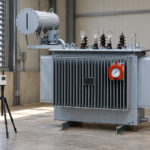
Keep sample identity and analytical records together when reviewing a trend.
Combine elemental analysis with complementary evidence
Transformer oil particle counting addresses particle population and cleanliness rather than elemental identity. The two tests can complement each other, but one cannot be converted into the other. A low metal concentration does not prove a low count of nonmetallic particles, and a particle count cannot identify every particle as copper, iron or another element.
Rezension corrosive sulfur testing separately when the investigation concerns chemical interaction with conductive materials. An elemental result alone cannot establish the corrosion mechanism. Likewise, operating symptoms and other condition tests must remain part of the assessment. Avoid a repair recommendation that names a damaged winding solely because one elemental concentration changed.
What to send with a laboratory request
State the engineering question: routine baseline, confirmation of an abnormal result, investigation after maintenance, or assessment of suspected contamination. Include the oil type, compartment, recent treatment history and earlier comparable reports. Ask for the proposed method, preparation, element list, units, reporting limits and interpretation scope before collection. This reduces the risk of receiving a technically valid report that cannot answer the actual maintenance question.
For a new oil immersed power transformer, agree baseline documentation and future sampling provisions during specification review. The product page identifies the equipment family; it does not establish that a particular test package or acceptance threshold is included. Use the broader oil immersed transformer selection guide to connect monitoring requirements with the purchase specification.
When an investigation also concerns cellulose ageing, keep the methanol analysis record as a separate line of evidence. Different measurements describe different parts of the insulation system. Combining them means checking whether they support the same engineering explanation, not adding them into an unsupported condition score.
Before closing the investigation, record why the chosen action is proportionate to the evidence. If confirmation testing resolves the abnormality, retain both reports and the explanation rather than deleting the first result. If the finding remains unexplained, assign an owner and review date to the next investigation step. This keeps an uncertain laboratory observation from becoming either a forgotten exception or an unsupported permanent fault label.
Learn the measurement principle
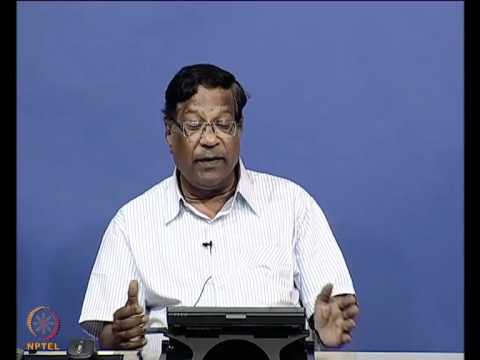
The following nptelhrd lecture explains ICP atomic emission instrumentation. It is background education about the analytical technique, not a demonstration of the insulating-oil standard, an approved sampling procedure or a source of transformer acceptance limits.
No. The result identifies an element detected in the submitted sample, not its exact source or failure mechanism. Confirm sample history and assess complementary evidence before drawing a component-level conclusion.
Does ICP measure all particles in transformer oil?
No. Sample preparation and particle size affect what reaches the measurement system. Ask the laboratory how its method handles particulate material and whether additional examination is needed.
Can results from two laboratories be trended together?
Only after checking method, preparation, units, reporting limits and sample comparability. Preserve qualified results instead of replacing every non-detect with zero.
What should happen after an unexpected result?
Review sampling identity, recent work and the original report, then agree a confirmation and investigation plan with the laboratory and responsible engineer. Do not prescribe an outage from one unexplained number.
Shenheng Electric Power hat sich zum Ziel gesetzt, ein weltweiter Marktführer für Lösungen im Bereich Energieausrüstung zu werden und Kunden dabei zu helfen, ein sicheres, effizientes und nachhaltiges Energiemanagement zu erreichen.

 Shenheng Power Equipment Co., Ltd.