Shenheng Power Equipment Co., Ltd.
- Home
- Products
Products
Since 2001, Shenheng Power has been a trusted manufacturer of power transmission and distribution equipment, delivering reliable electrical solutions globally.
- Solutions
- News & Blog
- Service
- About Us
- Contact Us
Since 2001, Shenheng Power has been a trusted manufacturer of power transmission and distribution equipment, delivering reliable electrical solutions globally.
Dry type transformer core clamp corrosion inspection should distinguish surface-coating deterioration from damage involving the clamp, core steel, insulation or grounding arrangement. Record the location and extent of the finding, establish the moisture or contamination history, and ask the manufacturer to define the repair and verification scope. Rust colour alone cannot establish remaining strength or electrical condition. This guide helps owners and buyers prepare a technical assessment. It does not authorize energized inspection, loosening clamp bolts, removing a grounding connection, abrasive cleaning or applying an unspecified coating to the transformer.
A dry transformer can have a core clamping structure, winding supports, a base frame, lifting features and enclosure hardware close together. These parts do not have the same role. Start with the equipment serial number and the relevant assembly drawing. Mark the observed position using the manufacturer’s component names rather than labelling every painted steel member a core clamp.
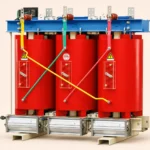
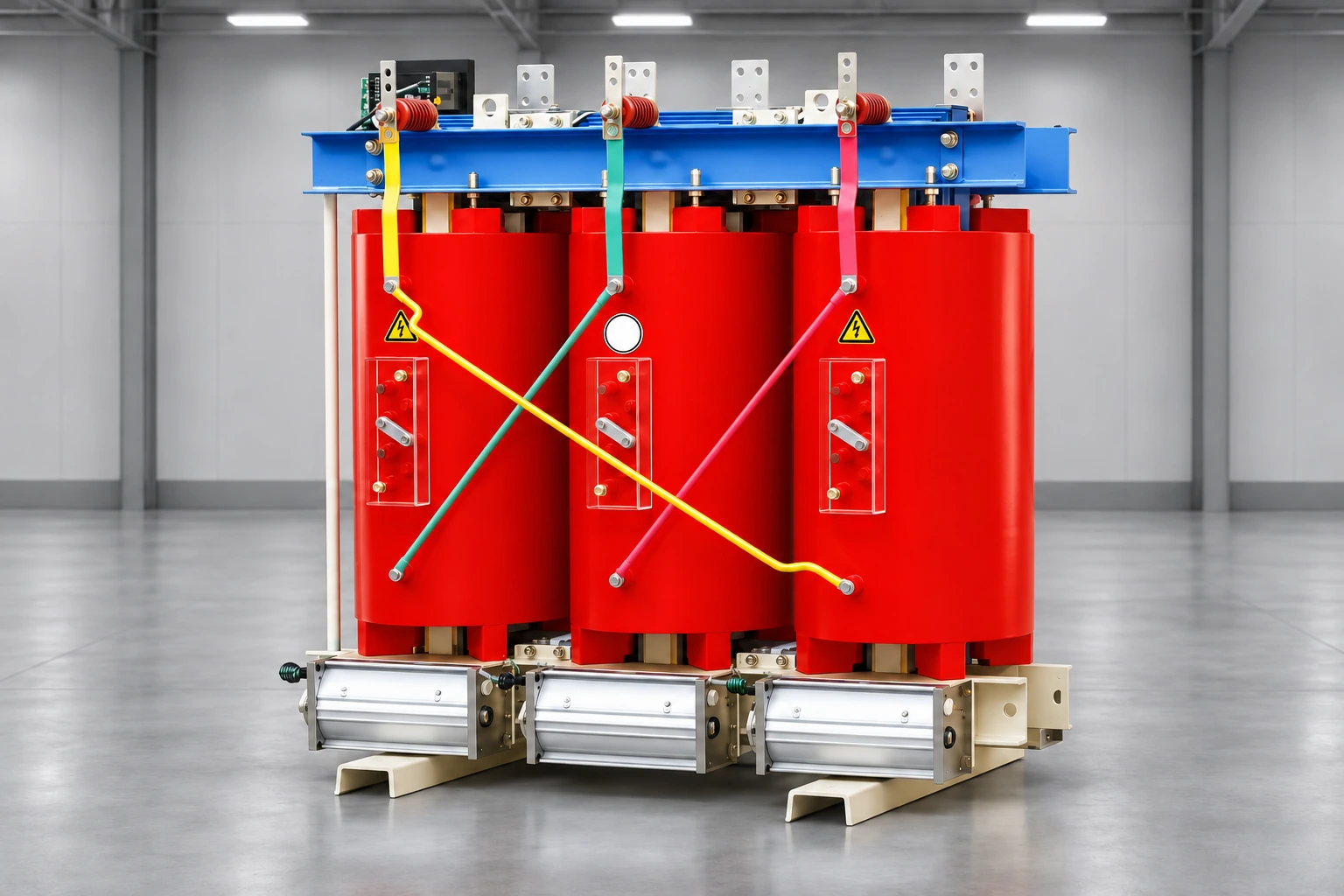
The Shenheng cast resin dry type transformer shows the overall equipment family. Its three coils, upper structural member and base assembly provide visual context, but a product illustration is not a detailed core-clamp drawing. Hidden interfaces and grounding arrangements must be confirmed from the actual supplied design. The dry type transformer guide introduces the broader construction without establishing repair instructions for an individual unit.
Arrange access through competent personnel and the owner’s approved safety system. Transformers can have more than one source of electrical energy or associated auxiliary circuits. A stopped fan or a silent transformer does not establish isolation. The HSE’s electrical-equipment guidance provides general principles for safe work; the site and equipment instructions determine the actual arrangements.
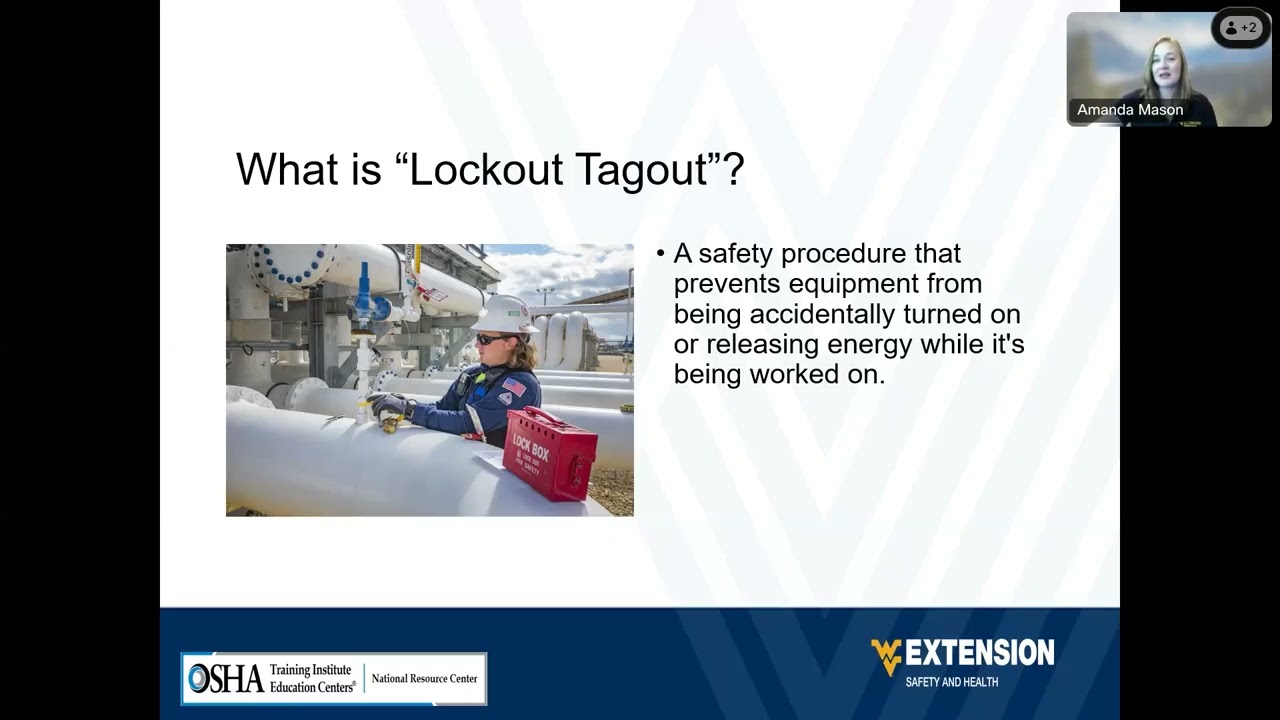
Further learning: Stand Up For Safety and Health – Lockout tagout — USDepartmentofLabor. Open on YouTube.
The US Department of Labor video explains why hazardous energy must be controlled before maintenance. It supports planning and awareness, not a transformer-specific isolation or corrosion-removal procedure. Internal inspection and any subsequent work require the applicable competence, authorization and documented method.
Define which surfaces were accessible and which were not. If a photograph shows only the front of the upper member, do not report the complete clamp assembly as inspected. Keep the viewing limitations with the images. That distinction matters when corrosion might be present at an interface that cannot be assessed without further approved access.
Use neutral descriptions: paint lifting near a fastener, rust staining on an exposed edge, visible deposits at an interface or apparent material loss. Record the approximate area and location through an approved measurement method. Include close and contextual photographs so a reviewer can relate the detail to the whole assembly. Do not scrape the surface simply to improve the photograph.
Record whether staining appears on the coating, on adjacent insulation or below another component. A stain can originate elsewhere, and an apparently minor mark can coincide with a hidden condition. The first inspection should preserve evidence rather than force a diagnosis. Ask the manufacturer what additional observations are needed and whether any finding requires an immediate operational restriction.
Also note reported changes in sound, temperature, vibration or protection behaviour from authorized operating records. Keep those observations separate from the corrosion description. Correlation can help a technical reviewer choose the assessment scope, but it does not prove that the visible rust caused a particular electrical or mechanical symptom.
Ask when the transformer was installed, whether it was stored before installation and whether water ingress, condensation, chemical vapours or unusual contamination has been reported. Obtain room or enclosure maintenance records where available. A repaired surface may deteriorate again if the underlying exposure remains unresolved. Avoid assuming that resin-encapsulated coils make every steel and insulating interface immune to the environment.
The HSE maintenance guidance supports planning maintenance around equipment condition, competent work and suitable arrangements. For this assessment, use that principle to connect the component finding with the site history and required corrective work. The article does not assign a humidity limit, drying temperature or inspection interval to an undocumented transformer.
For storage or water-exposure questions, ask the actual manufacturer to define what evidence is needed. Do not energize equipment merely to warm or dry it in response to a corrosion finding. Environmental correction, condition assessment and return-to-service approval are separate decisions. A purchasing request should show which of them has been resolved and which remains open.
A damaged paint film raises a coating question, but it may also expose other issues. The clamp’s role, material, fastening arrangement and insulating interfaces need to be understood before deciding that local touch-up is sufficient. Visible pitting or scaling requires the responsible technical reviewer to decide whether further assessment is necessary. No universal photograph-based acceptance rule can replace that review.
The EPRI dry transformer and reactor maintenance guide treats inspection as a review of multiple conditions, including insulation, connections and mechanical supports, and places core-and-coil repair within qualified specialist oversight. That framework is useful here: inspect the identified condition in context, without turning a coating defect into an unapproved clamp adjustment.
Do not confuse a core grounding arrangement with general frame bonding. Some transformer designs intentionally control the electrical relationship between the core and surrounding structure. A new conductive path or an altered insulating interface can matter. The core ground test guide addresses a separate diagnostic topic; it is not permission to disconnect straps or test an unidentified assembly during a corrosion inspection.
Use this qualitative table to organize the review. Its purpose is to keep observations, uncertainties and requested decisions separate. The actual equipment drawings and manufacturer-approved assessment determine the acceptance criteria; the EPRI guide above supplies general inspection context rather than model-specific repair limits.
| Finding or question | Evidence to collect safely | Decision to request |
|---|---|---|
| Component identity | Serial number, assembly drawing and marked location | Is this a clamp, frame member, support or enclosure part? |
| Coating deterioration | Context image and detail of the affected finish | Is local coating repair appropriate for this surface? |
| Possible material loss | Authorized observations and any approved measurements | Is structural assessment or part replacement needed? |
| Adjacent insulation | Condition report with viewing limitations | Does the scope need an insulation specialist? |
| Grounding relationship | Applicable drawing and existing connection records | Must an intentional insulating or grounding arrangement be protected? |
| Environmental exposure | Storage, leak, condensation and contamination history | What source of deterioration must be corrected? |
| Acceptance | Agreed work scope and verification requirements | What evidence permits the owner to close the finding? |
Do not treat a completed table as an automatic release. If the original drawing is missing or an interface remains inaccessible, keep that issue open with an assigned next action. An honest partial inspection is more useful than a complete-looking form based on assumed component functions.
Do not specify wire brushing, grinding, blasting or chemical rust treatment without the manufacturer’s approved method. These operations can generate debris or affect nearby insulation and surfaces. A suitable method for an external enclosure panel may be unsuitable beside a winding or core interface. The work plan needs to control both the treatment area and the contamination it could create.
Do not loosen, retighten or replace clamp hardware using a generic torque value. The installed assembly may depend on specified hardware, preload, insulation and an approved tightening sequence. A corroded fastener does not make any visually similar bolt an acceptable replacement. Request the exact part identification and repair instructions before purchasing hardware or disturbing the assembly.
Likewise, do not apply conductive coating, sealant or lubricant across an unidentified joint. Ask the manufacturer to specify surface preparation, coating system, permitted boundaries and any relevant curing or verification requirements. Keep the answer in the work package. A product labelled anti-corrosion does not by itself establish compatibility with the transformer.

Send the manufacturer the transformer serial number, drawing references, component location, dated photographs, operating observations and environmental history. Include the inspection limitations and any action already taken. If a surface has already been cleaned or painted, state that fact; otherwise the reviewer may interpret the photograph as an untouched condition.
Ask whether the proposed scope is a coating repair, hardware replacement, structural assessment or a wider core-and-coil review. Request the approved materials, identified spare parts, work instructions and verification requirements appropriate to that scope. The supplier should state assumptions and exclusions. A paint quotation alone cannot close a question about clamp integrity or an insulating interface.
Where the issue concerns coil blocking rather than the core clamp, use the separate coil support block assessment. The two topics can appear in the same transformer but serve different mechanical functions and need different evidence. Avoid ordering a support part based only on the apparent proximity of the corrosion to a coil.
After authorized work, retain the before-and-after condition record, approved method, materials and part identities, completed-work report and verification results. Record who accepted the work and any limitations on operation or further inspection. The visible absence of rust after painting proves only that the surface appearance changed; it does not establish that all relevant questions have been answered.
Set follow-up according to the equipment instructions, the original cause and site conditions. Compare the same locations using consistent image references. If deterioration recurs, reassess the exposure and repair scope rather than repeatedly applying another finish. The cast resin maintenance guide helps place this targeted finding within the wider transformer maintenance record, including cooling and insulation observations.
Keep the purchasing and maintenance records connected. A future engineer should be able to identify which component was assessed, why the chosen repair was accepted and what should be watched next. That continuity is particularly useful when the transformer remains in service for years after the personnel involved in the first assessment have changed.
Not automatically. The correct response depends on the identified component, extent of deterioration, adjacent insulation and the manufacturer’s assessment. Do not dismiss the finding as cosmetic or declare replacement necessary from colour alone. Preserve evidence and obtain a documented technical decision.
Do not treat inspection as authorization to adjust the clamp. Hardware and tightening requirements are design-specific, and some interfaces include insulation. Any adjustment needs an approved scope and instructions for the actual assembly. A generic torque table is insufficient evidence.
Do not assume compatibility. The surface function, preparation method, nearby insulation and electrical relationships may differ. Ask the manufacturer to identify the approved coating and permitted application boundary. Keep that confirmation with the work record before material is applied.
Review the moisture or contamination source, the original diagnosis and the completed repair evidence. Compare the same location over time and report any additional findings. Repeated surface treatment alone does not establish that the environmental cause or a hidden interface condition has been resolved.