Shenheng Power Equipment Co., Ltd.
- Home
- Products
Products
Since 2001, Shenheng Power has been a trusted manufacturer of power transmission and distribution equipment, delivering reliable electrical solutions globally.

- Solutions
- News & Blog
- Service
- About Us
- Contact Us
Since 2001, Shenheng Power has been a trusted manufacturer of power transmission and distribution equipment, delivering reliable electrical solutions globally.
Compact substation door gasket replacement should preserve the approved door-and-enclosure arrangement, rather than merely fill a visible gap. Identify the original seal profile, retaining method, mating surfaces and door hardware, then obtain a replacement approved for that assembly and its environment. A similar-looking strip does not establish weather protection, durability or compatibility. If the door is distorted or the hinges and latches are misaligned, a thicker gasket may conceal the problem without restoring the intended closure. Plan the repair with the substation manufacturer and define acceptance before ordering the spare.
This guide focuses on door seals and purchasing evidence. Cable-entry sealing, interlocks and roof drainage are related boundaries but require their own checks. It does not authorize access to energized compartments or provide an enclosure test procedure.
A gasket is one component in a complete protective boundary. Door stiffness, frame geometry, hinges, latches, corners, coating condition and nearby openings all influence how the closure performs. A supplier’s description of a sealing material does not certify the complete substation after a site repair.
IEC 60529 addresses the classification of enclosure protection through the IP Code. Its public scope is useful for understanding the subject, but it does not assign an IP rating to a spare strip. Obtain the protection requirement for the actual compartment and ask the manufacturer what evidence supports the repaired arrangement.
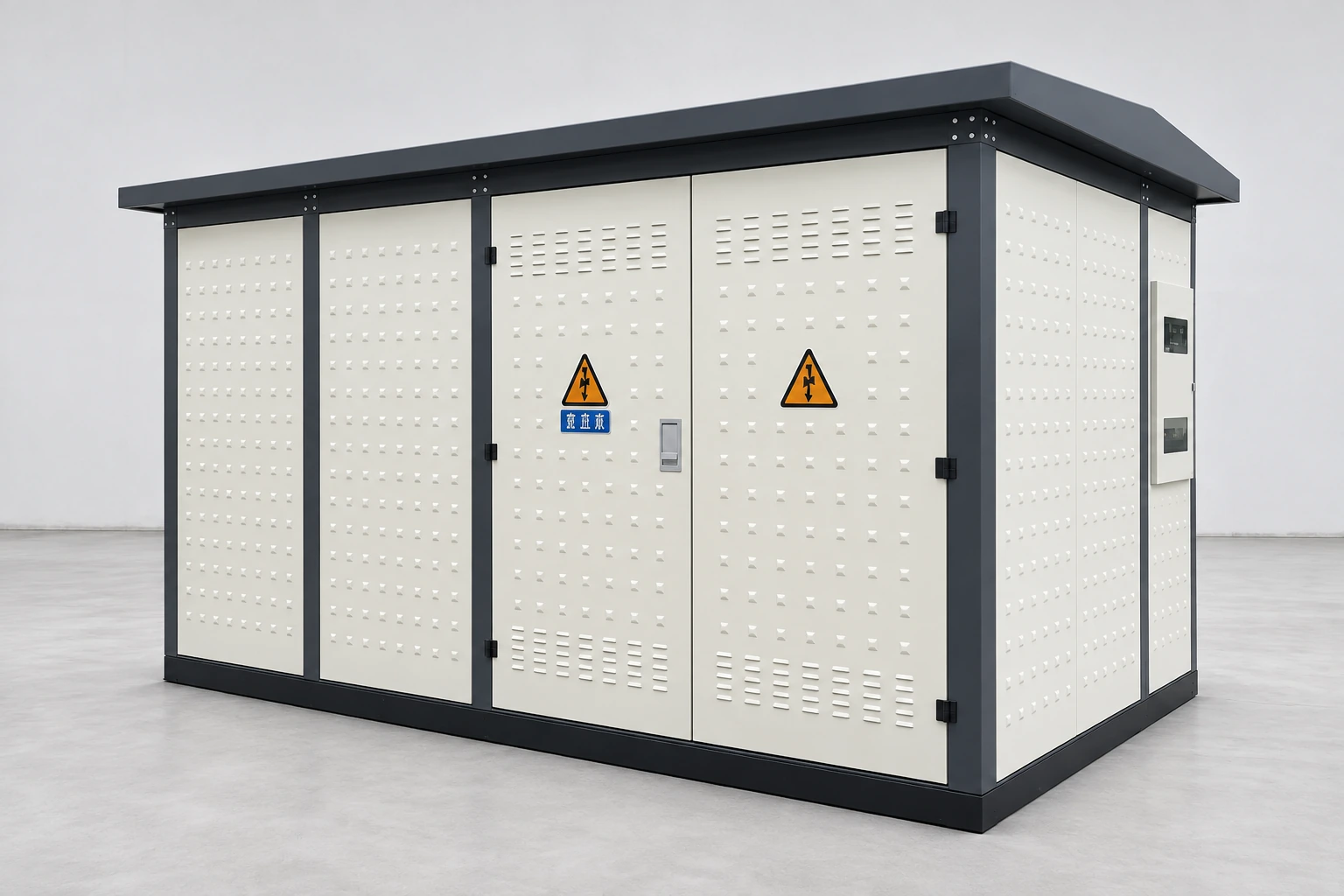
A Shenheng compact outdoor substation can be discussed as the relevant equipment family. Its photograph is not proof of an exact gasket material, compression dimension or enclosure rating for a proposed project. Those details belong in the approved specification and drawings.
Identify the substation serial number, compartment and door position. Record the visible condition along the complete perimeter where access is authorized. Useful observations include a detached length, a cut, a crushed corner, an uneven contact mark or deterioration near a particular exposure. Keep photographs linked to their exact locations.
Look for evidence of a wider closure problem. A loose latch, damaged hinge, bent flange, corrosion or an obstruction may prevent the seal from contacting as intended. Replacing the rubber alone may not resolve any of these. Ask the manufacturer to review the complete assembly when the cause is uncertain.
Do not reproduce a destructive field test to demonstrate the leak. Spraying water at a substation or opening a live compartment can create additional hazards. The responsible engineer should define safe inspection and test arrangements for the actual installation.
Request the original part reference or an approved equivalent identified by a controlled drawing. The package should describe profile, dimensions, retained or bonded mounting, joints and corner details. Color and apparent softness are weak evidence because different compounds can look alike, while an aged seal may no longer represent its original dimensions.
Ask how a supplied length is intended to form the complete perimeter. A continuous molded seal, an extruded profile and a joined strip may require different details. Do not invent a corner joint or substitute a generic adhesive merely because the replacement arrived without instructions.
| Interface to review | Information to confirm | Unresolved question that should stop acceptance |
|---|---|---|
| Door identity | Compartment, serial number and drawing revision | Which door is the part approved for? |
| Seal section | Controlled profile and dimensions | Was the selection based only on appearance? |
| Retention | Approved channel, adhesive or other attachment | Will it remain in its designed position? |
| Corners and joins | Manufacturer’s perimeter detail | Is the sealing path continuous as designed? |
| Closure hardware | Hinge and latch condition and adjustment | Is the seal compensating for damaged hardware? |
| Exposure | Actual weather, temperature and contaminants | Has compatibility been established for this site? |
| Acceptance | Manufacturer-supported inspection or test scope | What evidence supports return to service? |
The table is a review checklist. It does not prescribe a universal compression percentage, material grade or IP acceptance test.
Tell the supplier where the substation is installed and which exposures actually exist. Outdoor sunlight, local temperature range, salt, cleaning agents and industrial contamination may affect material selection. If oil contact is possible, identify the actual liquid and exposure rather than assuming that every outdoor rubber is oil-compatible.
Ask for the proposed compound’s suitability for the application and its compatibility with the supporting coating and attachment system. A material name alone may cover multiple grades. The evidence should relate to the supplied product and the intended service, not a generic list of properties from an unrelated catalogue.
Avoid changing several variables at once without review. A new profile, different adhesive and additional latch force might all affect the closure. A documented equivalent should explain the approved arrangement clearly enough that the installation team does not have to improvise.
A door that does not meet its frame evenly can damage a new gasket or leave a discontinuity. Ask the qualified maintenance team to assess the hardware and supporting structure under the approved procedure. This is especially relevant if deterioration repeatedly returns at the same corner.
A multi-point closure must be assessed as an assembly. Do not increase latch force indiscriminately or add a new latch to compensate for a mismatch. Such changes may alter door distortion, access operation or other design features. Obtain manufacturer instructions for any adjustment or component replacement.
If the job also affects locking or interlocking, use the separate door lock and interlock review. If the evidence points toward entry openings rather than the door perimeter, consult the cable-entry sealing review. Keep the cause and repair boundary explicit instead of treating all moisture as the same gasket problem.
An enclosure repair can expose people to electrical hazards even when the task appears mechanical. Plan access, isolation, stored-energy control and supervision for the actual equipment. The HSE guidance on electrical work provides general principles for competent work and safe preparation; local rules and the site’s approved procedure govern the task.
Identify whether opening a door affects adjacent energized compartments, auxiliary supplies, security or protection. The work package should state who controls the installation and who may authorize access. A weather forecast or a short expected repair time does not remove the need for that planning.
Protect the equipment during the repair using methods approved for the installation. Do not leave a compartment unprotected while waiting for a spare, and do not improvise coverings that obstruct ventilation or interfere with safety. If the replacement cannot be completed as planned, escalate the condition to the responsible operator.
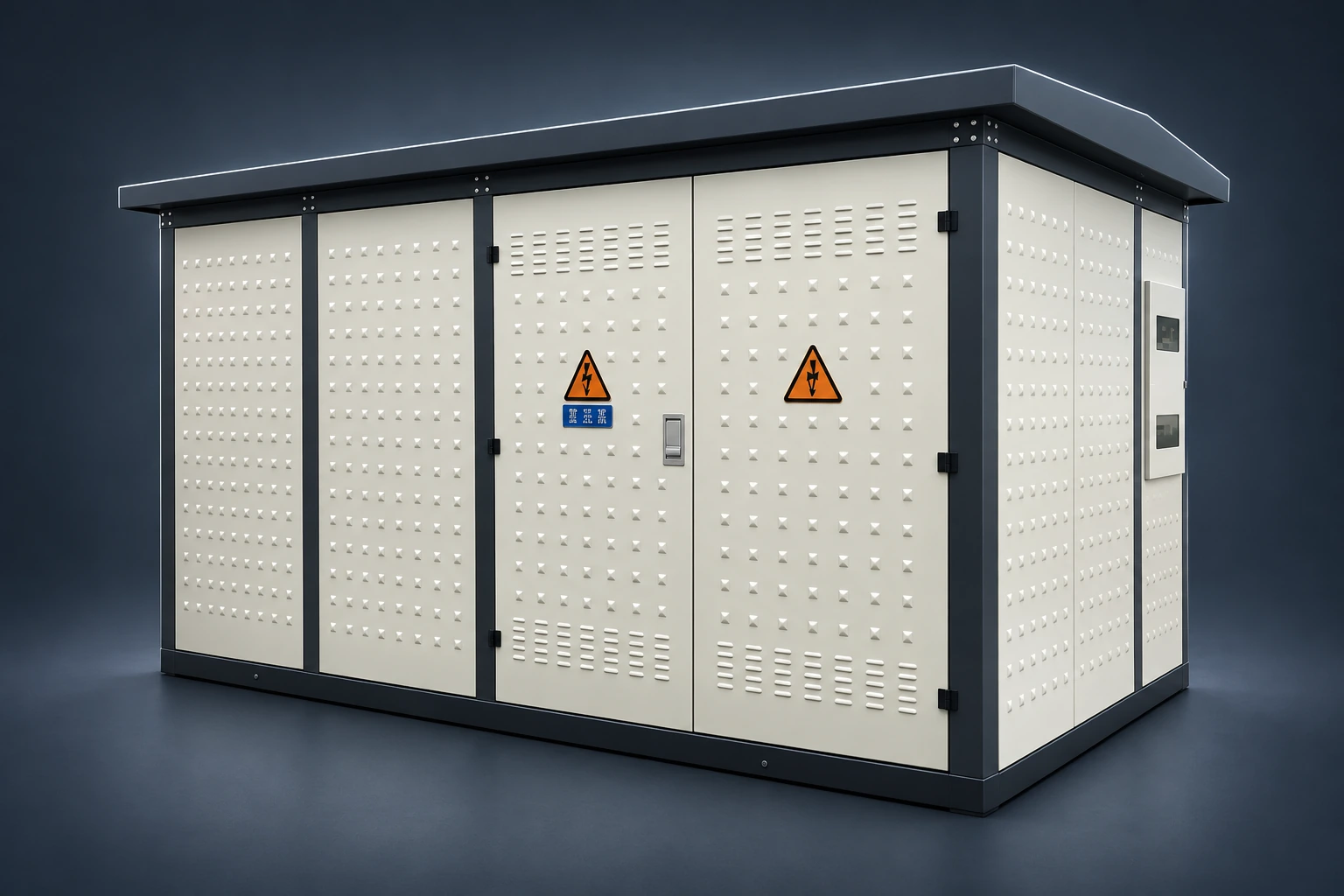
The acceptance plan should cover the seal’s identity, retention, continuous perimeter, door movement and intended closure. It should also record the condition of hardware and surfaces within the repair scope. The manufacturer or responsible engineer must determine whether additional testing is necessary and how it can be performed safely.
A visual review may identify an obvious defect, but it does not automatically prove a specified protection classification. Do not mark the substation “IP restored” solely because a new strip was fitted. Record exactly which checks were performed, their results and the basis for acceptance.
Retain the replaced part reference, approved substitute information and final photographs with the work order. If a whole door or frame was replaced, update the asset documentation accordingly. This prevents a later team from ordering the obsolete seal against an old drawing.
Provide the supplier with the substation identity, compartment, door drawing and observed problem. Request an approved spare or equivalent, perimeter details, installation requirements and acceptance guidance. Ask the supplier to state any exclusions, especially frame or hardware repairs that cannot be assessed remotely.
Compare quotations on that complete scope. A roll of material without applicability evidence is not equivalent to a defined replacement package. Delivery time also needs to include engineering clarification; the fastest physical strip may become the slowest repair if it arrives without a usable profile or attachment method.
The prefabricated substation overview provides broader equipment context. The foundation requirements guide helps review a different possible water path at the base. Neither should be used to infer that a door gasket can solve roof runoff, site drainage or water entering through cable routes.
The following US Department of Labor video explains hazardous energy control as general background for maintenance planning. It does not demonstrate gasket replacement or determine which compartments can be opened safely. Use it alongside the approved site procedure rather than as a work instruction.
Further learning: Stand Up For Safety and Health – Lockout tagout — USDepartmentofLabor. Open on YouTube.
Only if the revised arrangement is approved for the door and enclosure. A thicker strip may alter closure force or conceal misalignment. Establish why the existing seal failed and obtain the correct profile and installation detail before making the change.
A material description does not establish the complete enclosure’s protection. The door, frame, hardware, seal and other openings all matter. Ask the manufacturer what inspection or testing supports acceptance of the repaired arrangement and record the actual evidence.
No. Appearance does not reliably establish compound, grade, temperature suitability or compatibility. Use the original part reference, controlled drawing and supplier documentation. An aged sample is useful for identification but should not be the only basis for selecting a replacement.
Reassess the entry path and the complete closure rather than repeatedly fitting a new strip. Roof runoff, cable openings, frame damage and condensation require different investigations. Keep the observations traceable and obtain an engineering review when the cause remains uncertain.