Shenheng Power Equipment Co., Ltd.
- Home
- Products
Products
Since 2001, Shenheng Power has been a trusted manufacturer of power transmission and distribution equipment, delivering reliable electrical solutions globally.
- Solutions
- News & Blog
- Service
- About Us
- Contact Us
Since 2001, Shenheng Power has been a trusted manufacturer of power transmission and distribution equipment, delivering reliable electrical solutions globally.
When a project manager in Texas received a seemingly straightforward utility connection quotation, the equipment list looked complete and the delivery date looked workable. After the installation crew began setting foundations, however, the available fault level, cable routing, and protection interfaces did not match the original assumptions; commissioning stopped, the contractor faced rework, and the project schedule moved. The lesson was not that the equipment had failed. The underlying selection logic had failed. That is why buyers searching “Main Components of a Power Substation and Their Functions” need an engineering answer before they need a product list.
Summary: A power substation is the controlled point where electrical energy is transformed, switched, protected, measured, and routed between parts of a power system. The right design starts with voltage, load, fault duty, operating continuity, and applicable standards such as IEC 60076 and IEC 62271. For B2B buyers, the practical action is to confirm the single-line diagram, protection philosophy, site constraints, and lifecycle service plan before comparing quotations.
A power substation is not simply a fenced yard with transformers. It is an integrated electrical node that receives power at one voltage, changes voltage where necessary, isolates equipment, clears faults, measures operating conditions, and delivers controlled feeders to the next part of the network. Transmission, distribution, industrial, renewable-energy, and data-center projects use the same core discipline even when their physical layouts differ.
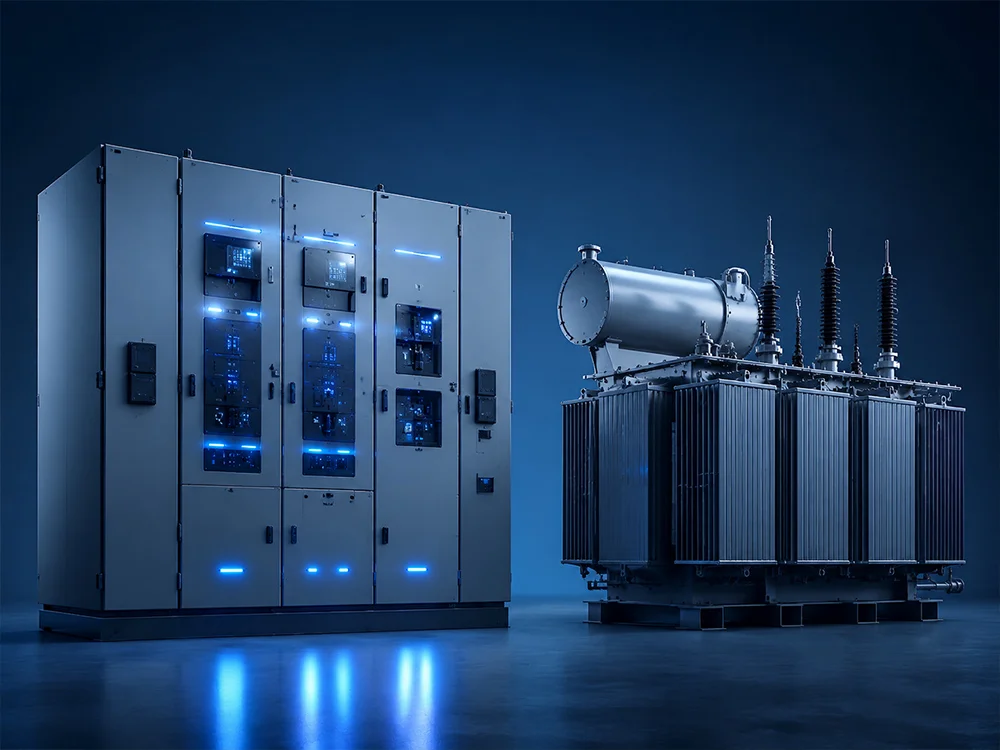
In distribution work, a transformer may step medium voltage down to a level suitable for local loads; switchgear then divides that supply into feeders, while breakers and relays remove a defective section without taking the entire site offline. The definition matters because a buyer who specifies only transformer capacity can miss the short-circuit rating, protection selectivity, enclosure class, cable interfaces, and expansion space that make the installation workable.
Every design begins with a load profile rather than a catalogue page. Engineers establish present demand, diversity, motor starting or inverter behavior, power factor, planned growth, and the required outage tolerance. They then translate those inputs into voltage levels, transformer MVA or kVA rating, busbar current rating, incoming and outgoing feeder count, and breaker interrupting duty. A 10% to 25% growth allowance may be appropriate for some projects, but the correct allowance depends on the documented expansion plan rather than a universal rule.
Protection is equally important. Current transformers and voltage transformers provide scaled measurement inputs; protective relays compare those values with settings and issue trip commands when they detect a fault. Circuit breakers must interrupt the prospective fault current assigned by the network study. IEC 62271 covers high-voltage switchgear and controlgear requirements, while transformer performance and testing are addressed through IEC 60076. Those references turn a general equipment request into verifiable acceptance criteria.
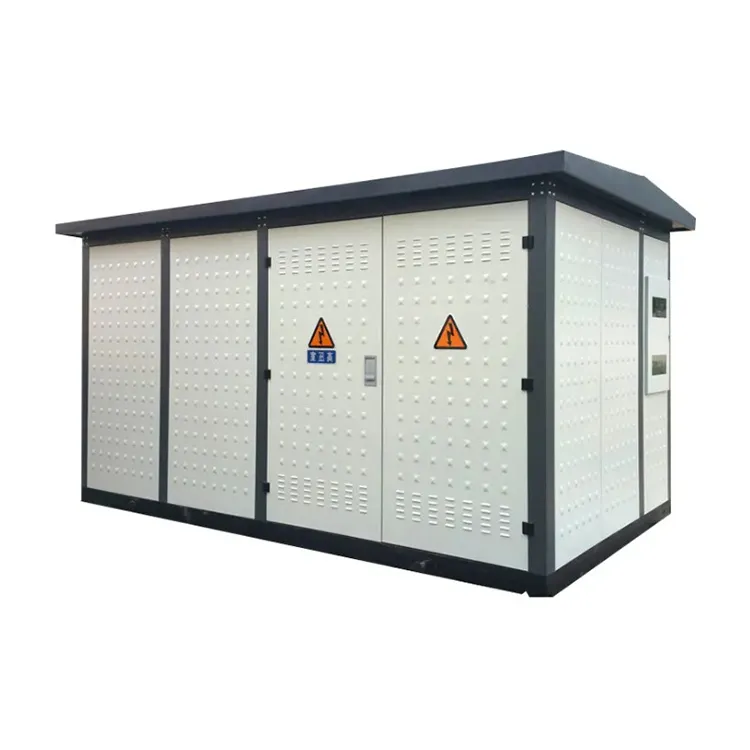
During normal operation, the incoming supply passes through rated switching and protection equipment to a busbar or transformer primary. The transformer changes voltage if required, and outgoing switchgear allocates energy to feeders. Metering records the quantities needed for operational decisions. If a fault occurs, relays detect abnormal current, voltage, frequency, or differential conditions and trip only the relevant breaker as quickly as coordination allows. The goal is not merely to open a circuit; it is to preserve personnel safety and keep healthy parts of the system energized.
For that reason, commissioning is a system activity. It typically includes insulation and dielectric checks, breaker operation checks, relay secondary injection or equivalent testing, interlock verification, polarity checks, functional trip tests, and review of the as-built single-line diagram. Factory routine tests support quality control, but they do not replace site integration checks after transport, installation, and cable termination.
| Decision factor | Prefabricated substation | Conventional site-built arrangement |
|---|---|---|
| Site work | Factory-integrated enclosure can reduce field assembly. | More civil and installation coordination is usually required. |
| Standardization | Repeatable modules support consistent testing and delivery. | Useful where bespoke layouts or large ratings drive the design. |
| Expansion | Plan cable entries, spare ways, and transformer access early. | Can offer broad physical flexibility where land is available. |
| Lifecycle focus | Inspect enclosure, ventilation, interfaces, and protection settings. | Inspect the same electrical assets plus distributed site interfaces. |
The right choice is therefore not a branding exercise. It is a fit between land availability, environmental exposure, transport limits, delivery schedule, voltage class, and future operating philosophy. GIS can reduce footprint where land or environmental constraints are decisive, while AIS remains attractive where visibility, conventional maintenance access, and available space favor it. The value comes from documenting the choice against the project constraints.
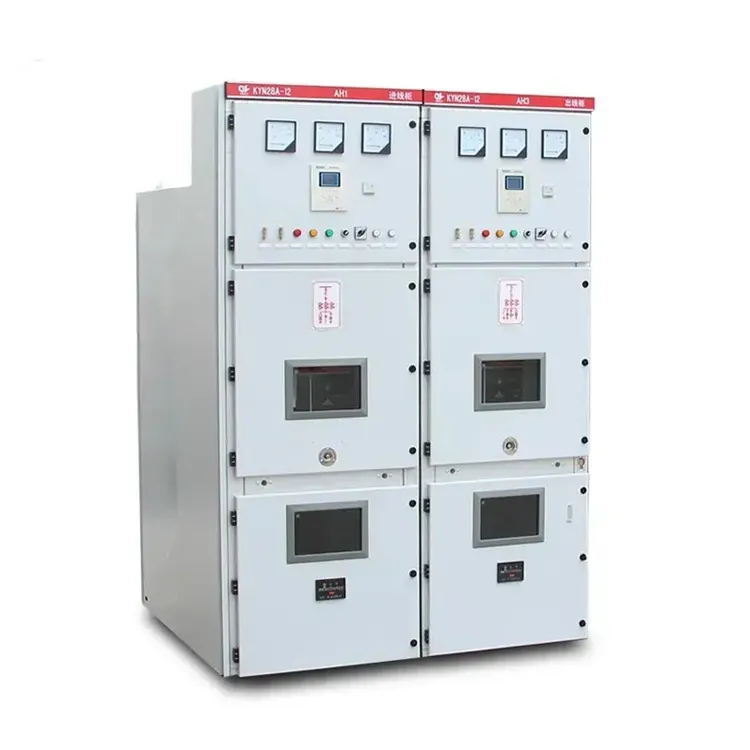
Applicable standards should appear in the request for quotation, drawings, inspection-and-test plan, and acceptance records. A power grid substation project needs those references to remain consistent from design through energization. IEC 60076 provides a core reference for power transformers; IEC 62271 addresses switchgear and controlgear. Depending on the market and contract, IEEE C57, ANSI requirements, utility specifications, CE-related requirements, and local grid codes can also apply. Buyers should confirm the exact edition and scope rather than assume a generic “IEC compliant” statement covers every assembly and accessory.
Non-compliance is commercial as well as technical. A late mismatch can trigger revised protection settings, replacement devices, failed energization tests, delayed utility approval, or insurance and warranty questions. Clear documentation of ratings, type-test evidence where applicable, routine-test reports, terminal arrangements, and instruction manuals reduces these risks before equipment reaches site.
At this stage, Shenheng Power’s prefabricated substation solutions can be evaluated alongside transformer and switchgear requirements as one coordinated package. The practical value is a documented interface between equipment categories, supported by ISO 9001 quality management and product testing aligned with relevant IEC and project requirements. For transformer selection, buyers can also review the power transformer substation options before finalizing voltage and capacity assumptions.
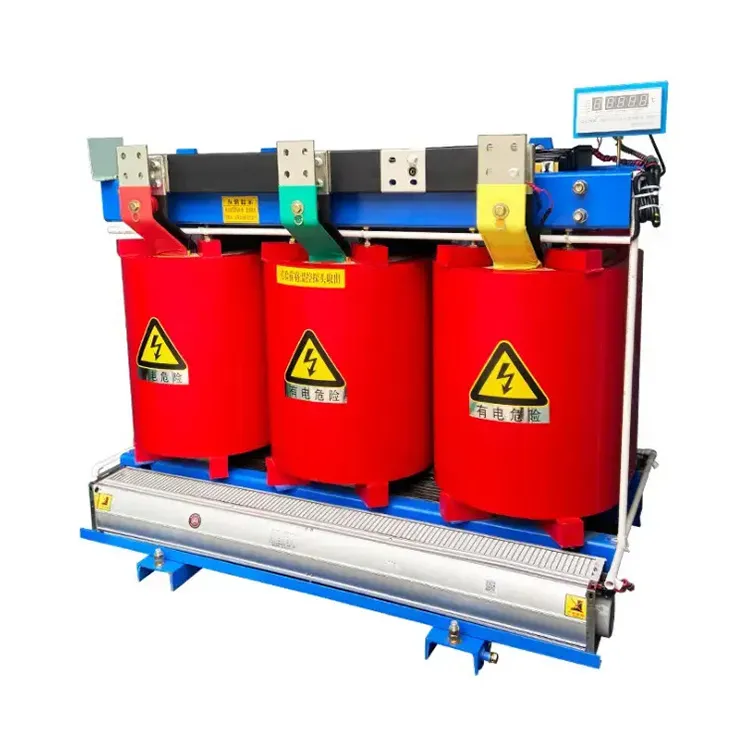
Before procurement, the owner, consultant, utility, contractor, and supplier should agree on one controlled data set. It should state nominal voltage and frequency, maximum and minimum operating load, transformer vector group where relevant, available fault current, earthing method, cable or overhead-line interfaces, metering responsibility, auxiliary-power requirements, communication protocol, and the permitted outage window. A revision-controlled single-line diagram is more valuable than a long unstructured equipment list because it makes each electrical interface visible.
Environmental data also changes the result. Ambient temperature, altitude, salt contamination, humidity, dust, access for lifting, acoustic limits, and enclosure ventilation can affect the selected insulation level, cooling arrangement, ingress-protection class, coating system, and physical layout. We recommend recording the acceptance tests and spare-parts strategy in the same scope document. This is how a buyer protects both the first delivery date and the operating years that follow.
The answer depends on the electrical duty, available land, required continuity, and governing standards. A proper single-line diagram and protection study turn the general concept into a defensible project decision.
The answer depends on the electrical duty, available land, required continuity, and governing standards. A proper single-line diagram and protection study turn the general concept into a defensible project decision.
The answer depends on the electrical duty, available land, required continuity, and governing standards. A proper single-line diagram and protection study turn the general concept into a defensible project decision.
The answer depends on the electrical duty, available land, required continuity, and governing standards. A proper single-line diagram and protection study turn the general concept into a defensible project decision.
The difference is not just in a substation’s voltage rating; it is in the engineering decisions that determine whether the first energization is routine or expensive. Shenheng Power builds coordinated transformer, switchgear, and prefabricated substation solutions for that moment, with the project information needed to move from a broad requirement to a testable technical scope.