Компания Shenheng Power с 2001 года является надежным производителем оборудования для передачи и распределения электроэнергии, поставляя надежные электротехнические решения по всему миру.
Опираясь на комплексную систему послепродажного обслуживания, мы предоставляем экспертные технические консультации, рекомендации по продукции и гибкие услуги OEM и ODM для ваших проектов.
Компания Shenheng Power с 2001 года является надежным производителем оборудования для передачи и распределения электроэнергии, поставляя надежные электротехнические решения по всему миру.
Transformer Oil Dissipation Factor Test: Reading Tan Delta Results
Release Time: 2026-10-24
A transformer oil dissipation factor test, often called an oil tan delta test, measures dielectric losses in a liquid sample under specified AC test conditions. It helps investigate changes associated with contamination or deterioration, but it does not identify a single cause or measure the condition of every part of the transformer. Interpret the result with its temperature, frequency, method, reporting units and fluid history. Compare equivalent measurements and use the applicable fluid specification before assigning an alarm. An oil-sample test is also different from an on-site power-factor test of a complete transformer or bushing.
What tan delta describes
An ideal capacitor would store and return electrical energy without dissipating it. Real insulating materials have losses. Dissipation factor expresses a relationship between the loss component and the capacitive component of the response under the measurement conditions. This makes it useful for characterising an insulating liquid, but the result is conditional: changing the material, temperature or test arrangement can change what is measured.
A laboratory report may use dissipation factor, tan delta or power factor. These terms are closely related in low-loss materials, but they are not identical definitions. Do not silently rename one reported quantity as another. If a specification requests a particular quantity, ask the laboratory to report it explicitly. Preserve the original terminology in the maintenance database so that later comparisons do not lose the measurement’s meaning.
Units deserve similar attention. A dimensionless ratio can be presented as a decimal or as a percentage. For example, a purely illustrative ratio of 0.005 corresponds to 0.5 percent. This arithmetic example is not an acceptable limit for transformer oil. A misplaced percentage symbol can create a hundredfold interpretation error, so confirm the laboratory’s reporting convention before judging the result.
What the relevant method covers
ASTM D924 covers dissipation factor or power factor and relative permittivity of electrical insulating liquids. Its scope includes new liquids and liquids from service. The full method defines the test requirements; the public scope is not a substitute for the laboratory’s controlled procedure. Use the applicable edition and verify that the laboratory’s measurement conditions match the requested specification.
The test concerns the submitted liquid specimen. It does not reproduce every electrical, thermal or mechanical condition inside an operating transformer. A satisfactory oil result cannot certify the winding insulation, bushings, connections or cooling system. Conversely, an unexpected liquid result needs verification and context before it is used to condemn an entire transformer.
Для того чтобы промышленный трансформатор с погружением в масло, keep the laboratory report linked to the equipment record and actual fluid identity. Mineral oil, esters and other insulating liquids can require different interpretation. Do not transfer a limit from an unrelated liquid family or from a component test and assume that it governs this sample.
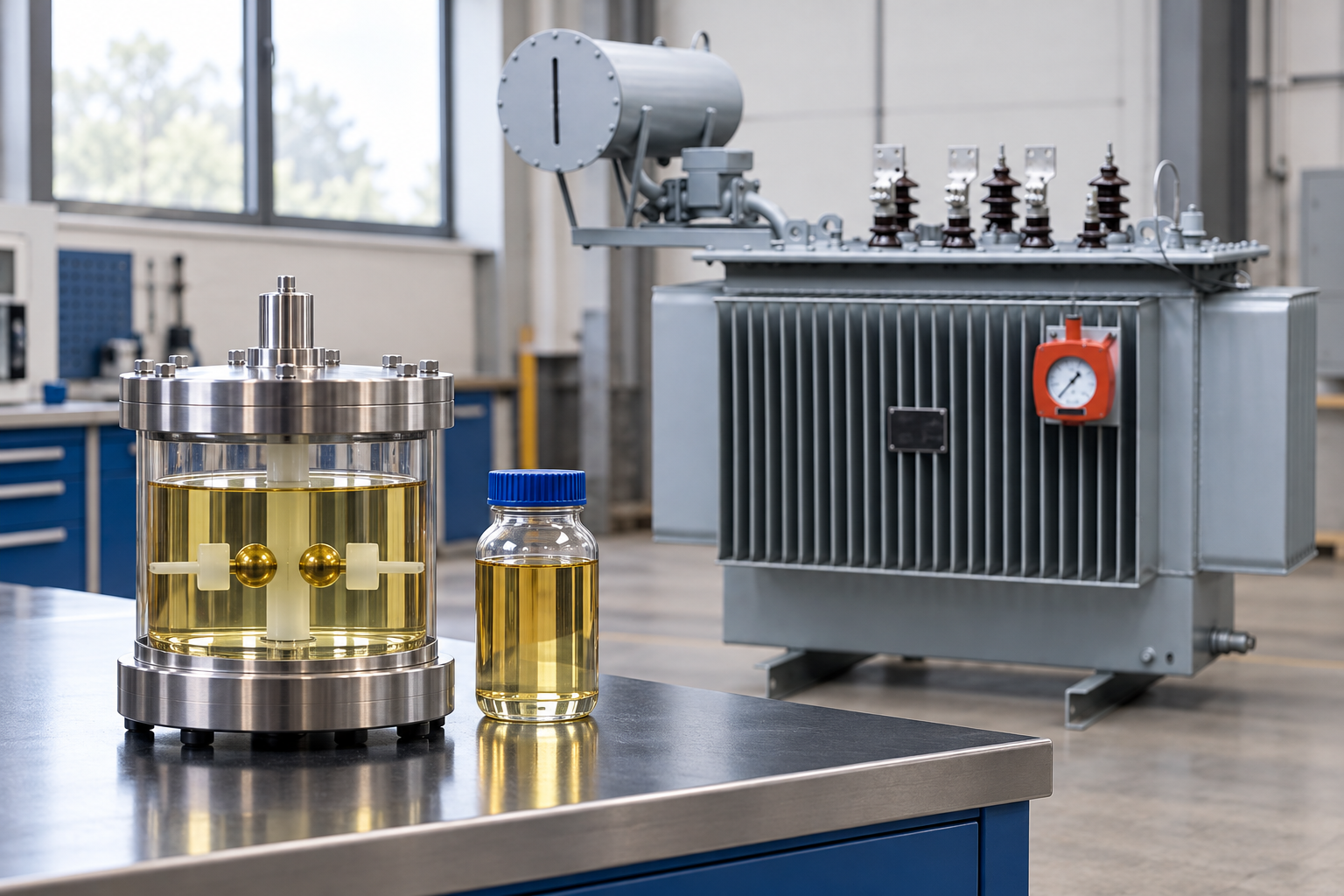
Illustrative laboratory cell only; electrode geometry and the actual method require validated laboratory equipment. Reference-based illustration.
Why temperature, cleanliness and sample history matter
Electrical losses in insulating liquids can be sensitive to temperature and to substances introduced during service or sample handling. Compare tests at the required temperature and frequency. A result measured under different conditions should be identified separately until a qualified comparison is available. Applying a generic correction factor without confirming its validity can turn an uncertain comparison into a misleadingly precise trend.
Sampling containers and the test cell also matter. An unexpected result may reflect the liquid, the specimen handling or the measurement process. This does not justify dismissing an inconvenient report. Ask the laboratory which quality checks were performed and whether a repeat determination or a new sample is appropriate. Keep the distinction between a suspected interference and a demonstrated cause clear in the investigation record.
Record top-ups, reclamation, filtration and replacement. A new sample after treatment may not be directly comparable with the old fluid history. Ask what the treatment was intended to change and which measurements demonstrate that objective. A lower dissipation factor alone does not prove that every relevant contamination issue has been resolved or that the transformer can operate without further review.
A checklist for reading the result
This table lists the evidence needed to interpret a report. It deliberately gives no universal acceptance numbers. The actual standard, fluid specification and equipment requirements determine the applicable limits and actions.
Report field
Что нужно установить
Interpretation risk if missing
Sample identity
Transformer, sample point and collection date
A valid result may be assigned to the wrong equipment
Liquid type
Declared fluid and known treatment history
The wrong baseline or requirement may be selected
Quantity
Dissipation factor or power factor as reported
Related definitions may be confused
Scale
Decimal ratio or percentage
A hundredfold reporting error is possible
Temperature and frequency
Actual specified measurement conditions
Unmatched results may create a false trend
Метод
Named method, edition and laboratory scope
The result may not meet the requested test requirement
Supporting evidence
Repeat result and complementary tests when needed
A single symptom may be mistaken for a diagnosis
Separating oil tests from equipment tests
An oil laboratory test uses a liquid specimen in an appropriate cell. An equipment power-factor or tan delta test measures a different arrangement that can include solid insulation and other components. The names can sound similar while the test objects and interpretation differ. Identify what was tested before comparing numbers or applying a maintenance criterion.
The bushing power-factor test guide concerns a component test. A bushing result should not be copied into an oil trend, and an oil result does not establish that a bushing is healthy. Both can contribute to an equipment investigation, but each needs its own test conditions, reference history and responsible engineering interpretation.
Аналогичным образом, oil resistivity testing addresses resistance to conduction under its specified conditions. ASTM D1169 describes a resistivity method using DC potential. Dissipation factor and resistivity may both inform a contamination investigation, but they are different measurements. One should not be calculated from the other using an unsupported universal conversion.
Responding to an unexpected increase
Begin with the report itself. Confirm the decimal or percentage convention, temperature, method and sample identity. Check whether an apparent increase is actually a change in reporting format. Compare the result with the applicable baseline and laboratory precision information rather than assuming every last-digit difference is significant. Record any reporting correction transparently and preserve the original report.
If the increase remains unexplained, ask for an agreed verification step. Depending on the circumstances, the laboratory may repeat the determination, review cell preparation or request another specimen. The responsible engineer should decide how the result affects operation using the equipment’s risk and condition evidence. The article cannot establish whether a particular transformer should remain energised or be removed from service.
Select complementary tests to answer specific questions. The oil moisture-content test helps assess water, while acidity and other chemical measurements address other aspects of liquid condition. A multi-test pattern can guide investigation, but it does not remove the need to verify the sample and identify what each result can actually establish.
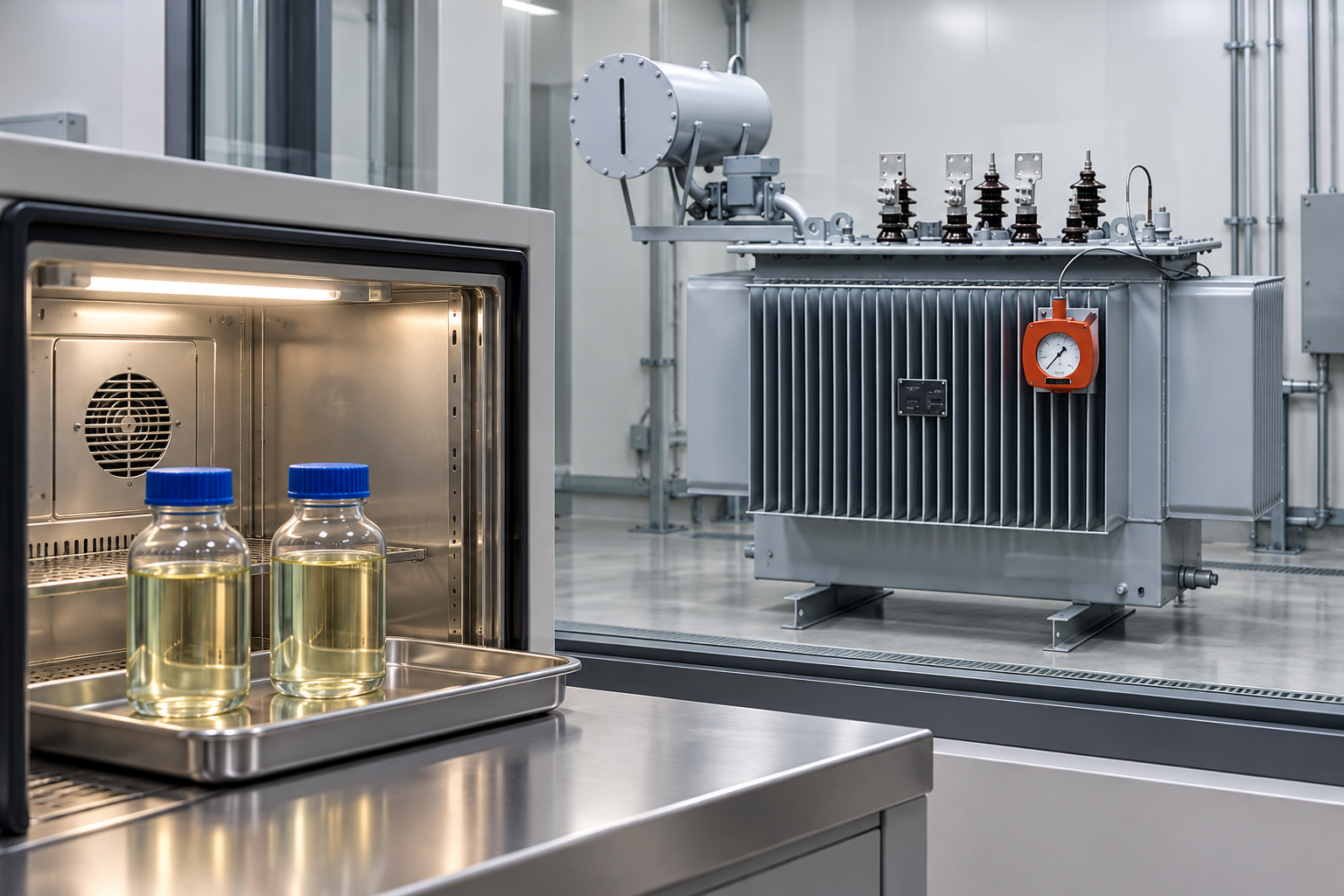
Clean specimens and controlled conditions support comparable reports; illustration is not an operating procedure. Reference-based illustration.
A document-review example
Consider a hypothetical maintenance record containing an earlier result written as 0.004 and a later report written as 0.4 percent. If both refer to the same quantity under comparable conditions, they represent the same numerical ratio. Treating the second figure as a hundredfold increase would be a reporting error. These values are illustrative only and establish no acceptance criterion.
Now suppose the notation is consistent but the tests used different temperatures. The maintenance team should not declare improvement or deterioration from the raw numerical difference. Ask for results under matched conditions or a technically justified comparison from the laboratory. Keep the temperature visible beside each result, and explain the limitation in the trend chart or maintenance note.
A third case may involve a new fluid batch after replacement. A changed result can reflect a new baseline, so review the replacement certificate and equipment approval. The correct question is whether the actual liquid meets its specified requirements and whether the overall equipment evidence supports the planned operation. A single before-and-after ratio cannot answer all of those questions.
What to request with an order or test instruction
Specify the liquid type, named method, required quantity and reporting conditions. Ask for the result scale to be explicit. For a delivered batch, request traceability between the certificate and the containers supplied. For an in-service specimen, provide the treatment history and earlier comparable reports. Good instructions help the laboratory return evidence that can answer the engineering question.
Используйте Руководство по покупке трансформаторов с маслом for the broader equipment review. A dissipation-factor certificate is one document within that process. It does not replace the transformer test records, fluid compatibility approval or project-specific requirements. Agree the acceptance basis before the result arrives so that purchasing and engineering teams evaluate the same requirement.
Further learning: dielectric response
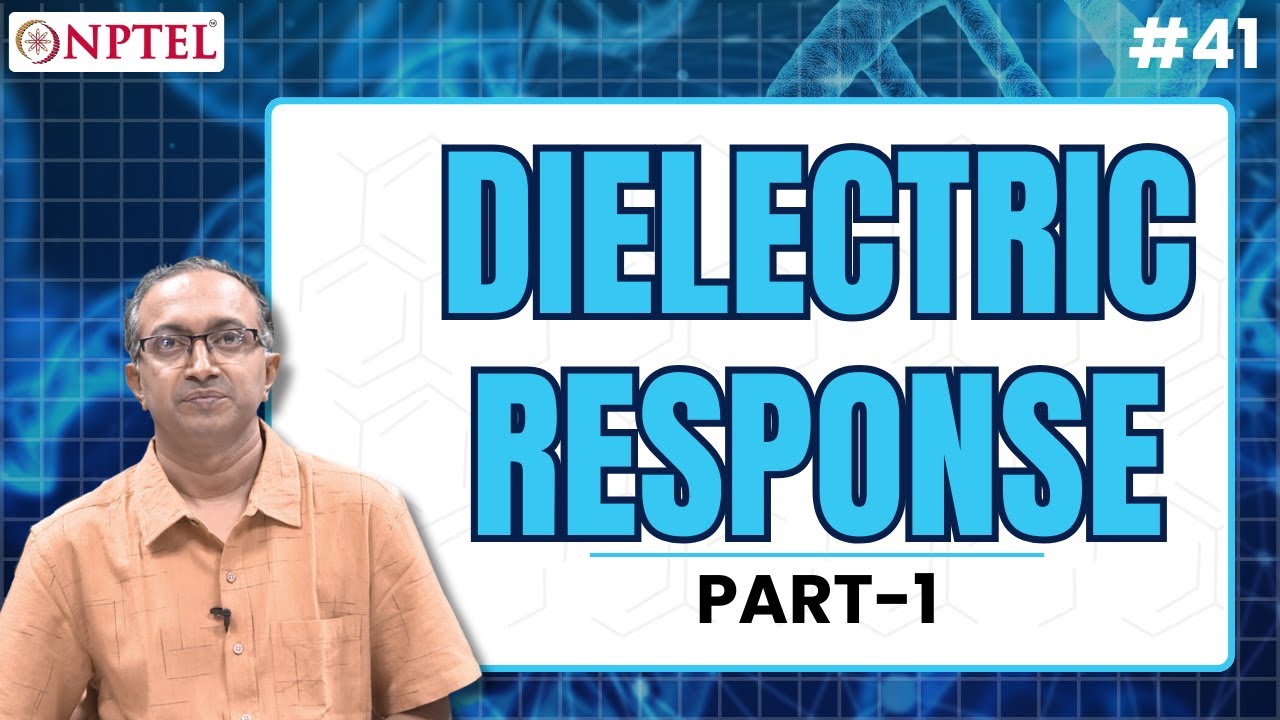
The following NPTEL lecture introduces dielectric response in a materials-science course. It provides background on how materials respond to electric fields. Its focus is broader than transformer liquids and includes polymers; it is not an ASTM D924 demonstration or a source of oil acceptance limits. The article’s liquid-test interpretation stands independently of the video.
Further learning: #41 Dielectric Response | Part I | Polymers Concepts, Properties, Uses & Sustainability — NPTEL-NOC IITM. Публикация на YouTube.
Часто задаваемые вопросы
Does a high oil tan delta result prove that the oil contains water?
No. It can justify investigation, but it does not identify water as the sole cause. Verify the result and use appropriate complementary measurements to assess moisture and other possible influences.
Are a decimal result and a percentage directly interchangeable?
They can express the same ratio when converted correctly. Multiply the decimal ratio by one hundred to express it as a percentage, while preserving the reported quantity and test conditions.
Is an oil dissipation-factor test the same as a transformer power-factor test?
No. A liquid specimen and complete equipment are different test objects. Their results, baselines and acceptance criteria must be interpreted separately even when related terminology is used.
Can one favourable result prove that treatment restored the transformer?
No. It demonstrates one measured property under stated conditions. Verify the treatment objective with the appropriate tests and review the equipment’s wider condition before drawing an operational conclusion.
Компания Shenheng Electric Power стремится стать мировым лидером в области решений для энергетического оборудования, помогая клиентам обеспечивать безопасное, эффективное и экологичное управление электроснабжением.

 Шэньхэн Силовое Оборудование Ко., Лтд.