An indoor vs outdoor RMU decision is primarily an installation and environmental decision, not a change to the basic ring-network function. Indoor equipment operates inside a suitable electrical room; outdoor equipment must be supplied as a complete arrangement validated for its exposed environment. The insulation technology alone does not establish outdoor suitability. Compare the enclosure, cable entry, condensation control, corrosion protection, operating access and internal-arc installation conditions before selecting either option. A sealed gas compartment does not make every control compartment, mechanism or cable termination weatherproof.
Describe the proposed installation in enough detail for a supplier to identify special service conditions. State whether the unit is in a dedicated building, an open-sided shelter, a street cabinet or a packaged substation. A shelter that prevents direct rain may still expose equipment to humidity, salt, dust, sunlight and wind-driven water.
Record temperature range, altitude, rainfall or flooding exposure, airborne contamination and access restrictions. Include photographs and a site layout, but do not expect photographs to replace measured environmental data. Describe nearby traffic, public access and the routes available for cable installation and future maintenance.
Start the electrical selection with the RMU types and configurations guide. Keep that configuration decision separate from the environmental arrangement. A three-way or four-way unit may be offered in more than one installation package, and the complete package must be specified.
| Selection issue | Indoor arrangement | Outdoor arrangement | What must be verified |
|---|---|---|---|
| Rain and sunlight | Building normally provides primary protection | Equipment enclosure or dedicated housing provides protection | Tested arrangement, roof and door details |
| Condensation | Can occur in unheated or poorly ventilated rooms | Can occur through daily temperature changes | Approved heating and humidity control |
| Corrosion | Depends on room contaminants and cleaning | Depends on salt, pollution and coating exposure | Coating system and maintenance instructions |
| Cable entries | Commonly coordinated with trenches or floors | May require outdoor foundations and sealed entry routes | Cable bending, drainage and ingress control |
| Operating access | Room layout defines working and escape space | Public barriers and external access must be considered | Operator position and emergency access |
| Internal-arc conditions | Room and exhaust arrangement form part of the assessment | Housing and pressure-relief routing form part of the assessment | Applicable classification and installation limits |
This is a qualitative comparison, not a universal rating table. IEC 62271-200 identifies the scope for relevant AC metal-enclosed assemblies, including indoor and outdoor installations. The actual offered design, applicable edition and test evidence must be checked against the project specification.
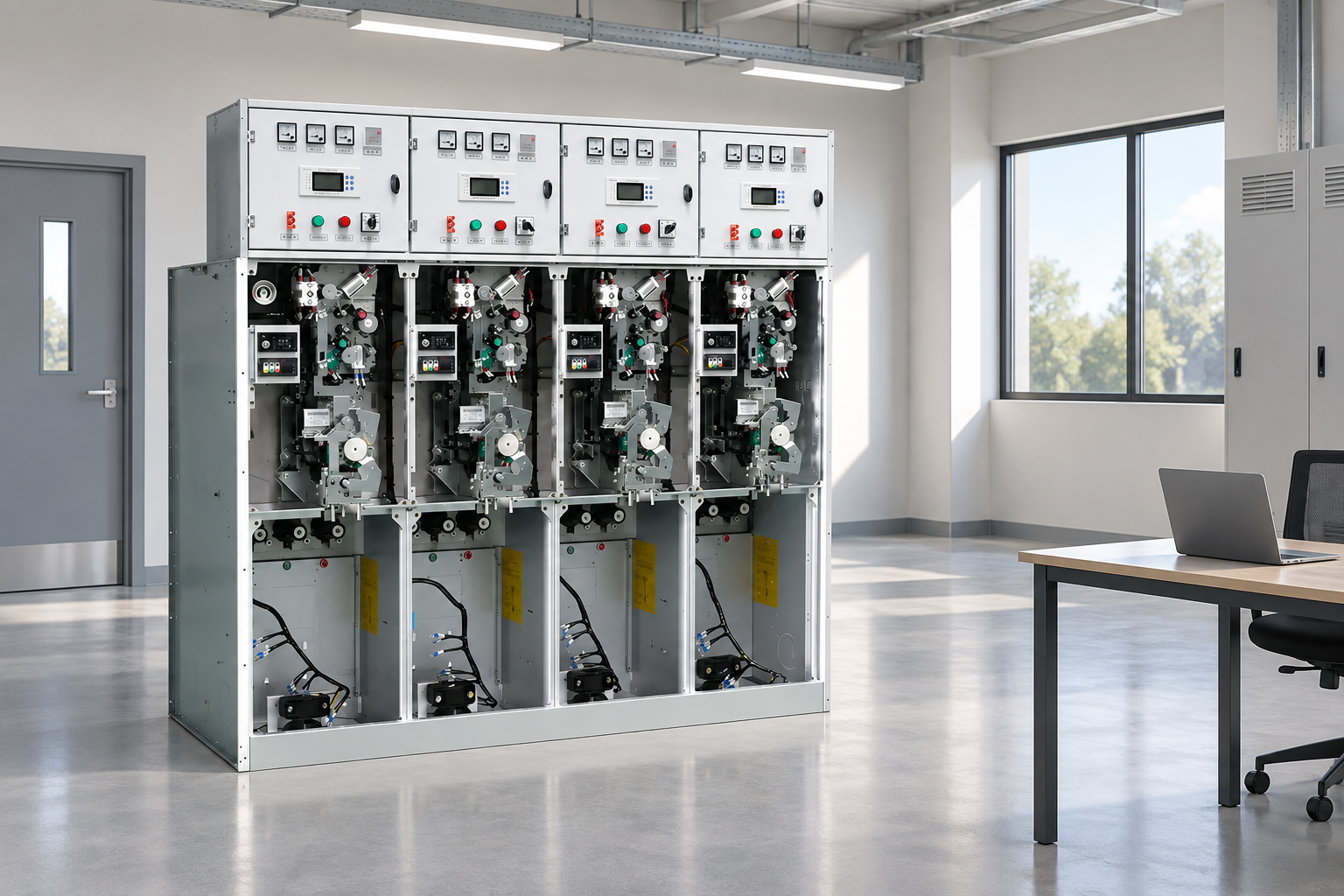
The primary insulation may be sealed inside a gas compartment, while operating mechanisms, control wiring, relays and cable connections occupy other compartments. These areas can have different environmental exposure and maintenance requirements. Request a compartment drawing instead of assuming that the whole cabinet has the same protection as the tank.
Check whether the offer includes an outer housing. If it does, identify whether the housing is factory supplied, site built or supplied by a separate contractor. Confirm the interface responsibilities for ventilation, heaters, cable openings, door seals, pressure relief and foundation fixing. An incomplete division of responsibility can leave a compliant cabinet inside an unsuitable housing.
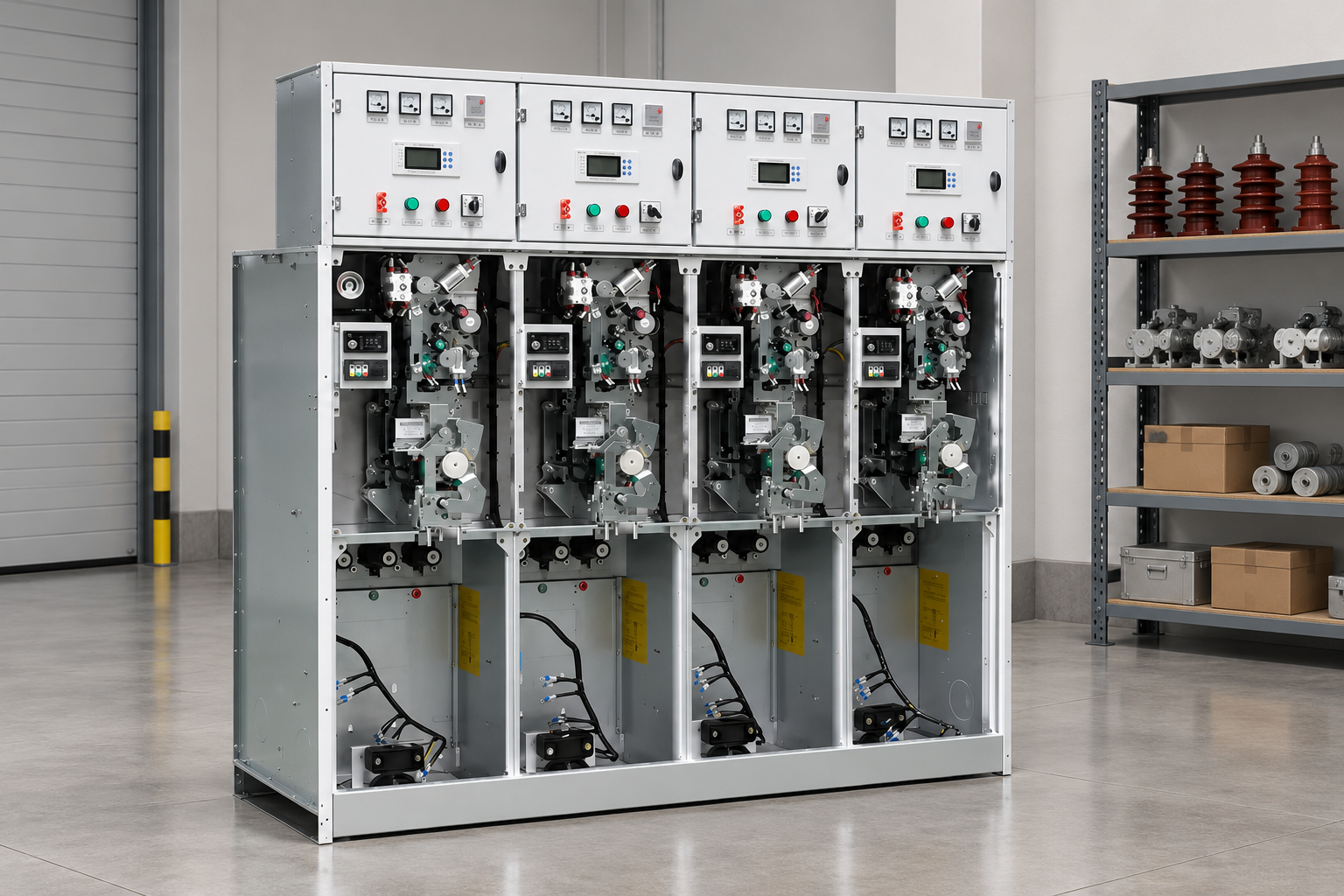
The website RMU product is a relevant starting point for a technical inquiry. Its photographs identify the equipment category but do not prove that every illustrated compartment or optional enclosure is suitable for a particular outdoor site. Ask for the specific configuration and documentation being offered.
Moisture can condense when surfaces fall below the dew point. A room can look dry during a daytime visit yet experience condensation overnight or during a seasonal change. Outdoor equipment can face the same issue when cabinet temperature follows the weather. The word “indoor” is therefore not an adequate condensation-control specification.
Ask whether heaters are required, how they are controlled and where their supply originates. Check whether heating remains available when the main circuit is de-energized. Also confirm whether the controls provide a failure indication or whether periodic inspection is required to detect a heater problem.
Do not seal ventilation openings or add a heater without approval. Both actions can alter the thermal and environmental behavior of the equipment. Use the manufacturer’s installation instructions and the site’s humidity assessment to choose the arrangement. Record any special conditions so later maintenance staff understand why the measures were installed.
A good outdoor installation begins below the cabinet. Review foundation levels, anchoring, surrounding drainage and the possibility that water can enter through cable trenches. A high enclosure protection rating is not a substitute for preventing a trench from filling with water or for maintaining the specified installation height.
Coordinate cable bend radii, termination type and pulling space before fixing the foundation. Cable forces should not be transferred into terminations through a poorly planned entry arrangement. Specify how unused openings will be closed and who verifies the completed seals. The cable supplier and switchgear supplier should agree on the interface rather than provide separate assumptions.
For indoor equipment, inspect floor openings and trench covers as well. Water can travel through cable routes from outside the building. A dry room above a wet trench is not necessarily a satisfactory installation. Keep building drainage and switchgear environmental checks connected through one installation review.
Compare the actual operator position, door opening and escape route. Outdoor equipment may be accessible to the public, vehicle traffic or unauthorized persons, requiring a suitable barrier and locking arrangement. Indoor equipment may have restricted room access but insufficient working space if the building was designed around cabinet footprint alone.
Internal-arc evidence has installation conditions. Ask which sides are classified for access, how pressure is relieved and what surrounding dimensions or ducts are required. A test designation should not be interpreted as permission to stand anywhere around any housing. The supplier must identify the arrangement covered by its evidence.
For a deeper explanation, use the RMU internal-arc classification guide. Its questions complement the location choice. They help prevent an enclosure change from silently changing the operator exposure or exhaust path assumed in the original equipment design.
Rated voltage, normal current, short-circuit duty and feeder protection must satisfy the network regardless of location. Do not accept a lower fault capability merely because the outdoor package appears robust. Conversely, a higher electrical rating does not establish suitability for salt, sunlight or flooding.
Confirm the earthing arrangement, cable screen connections and bonding of any separate outer housing. The site designer must coordinate touch and step potential considerations with the earthing system. Operators should never infer a safe state from the appearance of a closed door or from a position label alone.
OSHA’s electrical work-practice guidance provides a useful safety reference: control devices and interlocks do not replace proper isolation and verification. Apply the relevant local rules and authorized switching procedure to the actual installation.
For indoor installation, include the building, room services, access doors, lighting, ventilation, drainage and cable routes. For outdoor installation, include the housing, foundation, security, environmental accessories and any additional site work. Equipment-only quotations rarely describe the complete difference.
Evaluate maintenance access over the service period. Can a defective relay, motor or termination be reached in poor weather? Is lifting space available for replacement? Can the owner obtain the required seals, heaters and coating repair materials locally? An inexpensive cabinet may create expensive maintenance if its access arrangement requires major civil work.
Compare outage consequences as well. An outdoor cabinet may simplify some building work but still require temporary supply arrangements during replacement. An indoor room may support easier inspection but restrict future extensions. Use the same assumed project life, operating duty and expansion requirement for both alternatives.
Send the supplier a site plan, environmental data, single-line diagram, cable schedule and proposed operator access. Ask for the exact offered arrangement, general dimensions, cable interface drawing, protection details, environmental limits, internal-arc conditions and installation instructions. Require deviations to be listed rather than hidden in a general compliance statement.
At delivery, match the equipment identification to the drawings and reports. Inspect visible damage, seals, coating, cable entry hardware and loose accessories. During installation, verify anchoring, drainage, bonding, heater supply, labels and access. Complete the RMU commissioning checklist using the approved site procedure.
Photograph the completed cable entries and outer housing interfaces before they become difficult to inspect. Retain records of any site modifications and obtain manufacturer acceptance where necessary. The final acceptance record should describe the installed configuration, not merely the catalog model used during bidding.
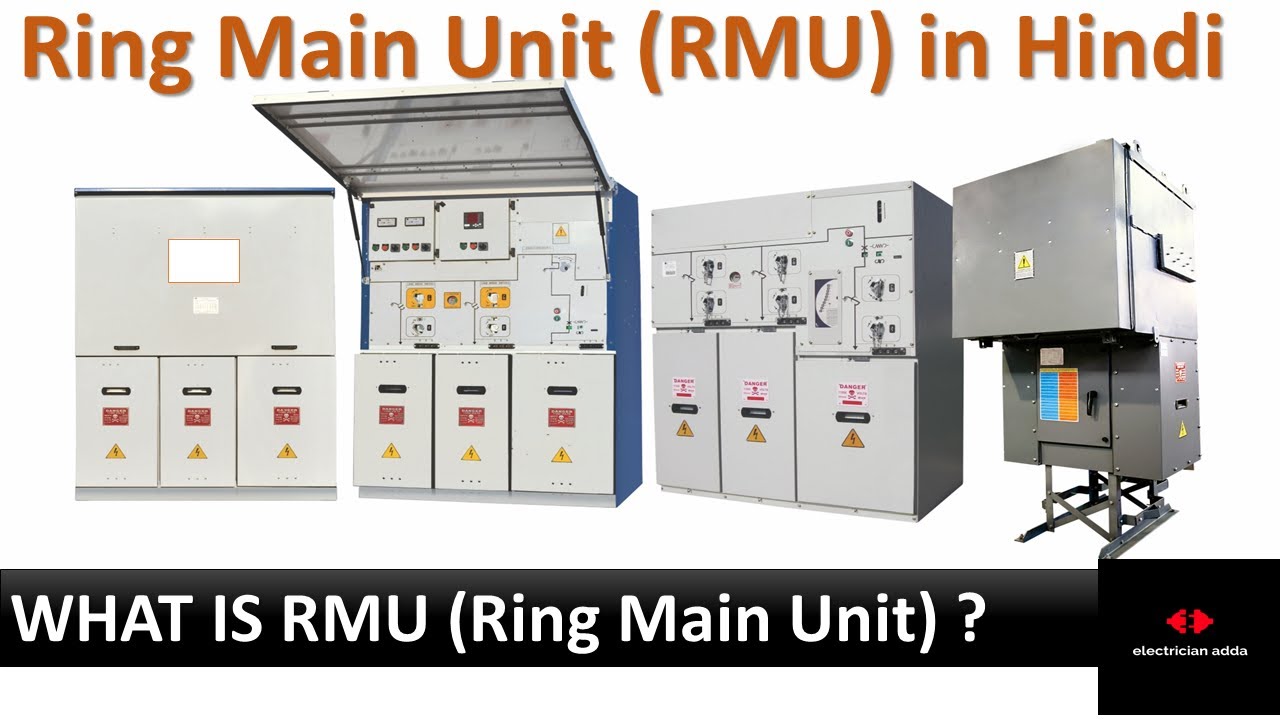
Further learning: Ring Main Unit Working | Basic knowledge Of RMU in Hindi | Ring main Unit (RMU) | — Electrician Adda (Electric tech). This educational video supports the topic; it is not a product demonstration or an operating authorization. YouTubeで動画を開く.
Only if the complete arrangement is approved for the resulting conditions. A roof may prevent direct rain but does not necessarily control condensation, salt, dust, temperature or public access.
No. The primary gas compartment and the rest of the assembly have different functions. Check the protection and installation conditions of every relevant compartment and outer housing.
Equipment cost alone may be higher, but the building and civil costs can change the total comparison. Evaluate the complete installation and maintenance plan using consistent assumptions.
Neither label settles the choice. Specify salt exposure, coating requirements, moisture control, sealing and maintenance, then select an arrangement supported by the supplier’s evidence.

 申恒電力設備有限公司.







