Dal 2001, Shenheng Power è un produttore affidabile di apparecchiature per la trasmissione e la distribuzione di energia, che fornisce soluzioni elettriche affidabili a livello globale.
Supportati da un completo sistema post-vendita, offriamo consulenza tecnica esperta, guida sui prodotti e servizi flessibili OEM e ODM per i vostri progetti.
Dal 2001, Shenheng Power è un produttore affidabile di apparecchiature per la trasmissione e la distribuzione di energia, che fornisce soluzioni elettriche affidabili a livello globale.
Transformer Dissolved Gas Analysis Interpretation Guide
Release Time: 2026-10-07
Transformer dissolved gas analysis (DGA) measures gases in insulating oil to help assess developing thermal or electrical problems inside an oil-filled transformer. A useful interpretation combines sample quality, individual gas patterns, their change over time, operating events and other condition evidence. One elevated concentration does not, by itself, identify a failed component or authorize continued operation. For an asset manager, the practical question is: is this a trustworthy change, what could explain it, and what action should a qualified transformer specialist recommend?
This guide explains how to read a laboratory report, build a comparable trend and prepare a decision record. It concerns in-service oil-filled equipment, principally mineral-oil transformers. Other fluids, unusual designs and separate tap-changer compartments need their own interpretation rules.
What DGA tells you—and what it cannot prove
Heat and electrical stress can produce gases through the decomposition of insulating liquid and solid insulation. The mixture provides clues to the processes involved. A laboratory measures concentrations; interpretation connects those measurements to an engineering hypothesis. These are different tasks. A report with precise numbers can still lead to the wrong conclusion if the asset identity, sample origin or treatment history is missing.
The IEEE C57.104 guide addresses interpretation for mineral-oil-immersed transformers. Its scope includes data quality, fault identification and operating decisions. Apply the actual licensed edition and the equipment owner’s procedure when making an asset decision; the catalogue description is not a substitute for its assessment framework.
DGA does not directly measure remaining insulation life, locate every fault or establish that an asset is safe to energize. It also cannot replace the transformer oil dielectric breakdown test, which asks a different question about the liquid’s dielectric behavior. Treat these measurements as complementary evidence rather than alternative versions of the same test.
Start with the laboratory report header
Before comparing gas values, confirm the equipment serial number, tank or compartment sampled, fluid type, sampling date, laboratory receipt date and analytical method. A fleet spreadsheet should distinguish the main tank from an on-load tap changer. Combining their histories under one name can create an alarming but meaningless trend.
Check units and reporting conventions. Concentrations are commonly expressed in parts per million by volume, but a report may also include a total gas measurement, extraction details or analytical flags. Preserve the laboratory’s original units, detection limits and remarks. A result reported below detection should remain qualified; replacing it with an invented precise value distorts ratios and trend calculations.
Record whether the transformer was operating, its approximate loading and any recent outage, trip, oil addition, filtration or degassing. These events may change the gas inventory or the comparability of samples. If a sample was taken immediately after fluid processing, its lower gas concentration is not automatically proof that the underlying cause disappeared.
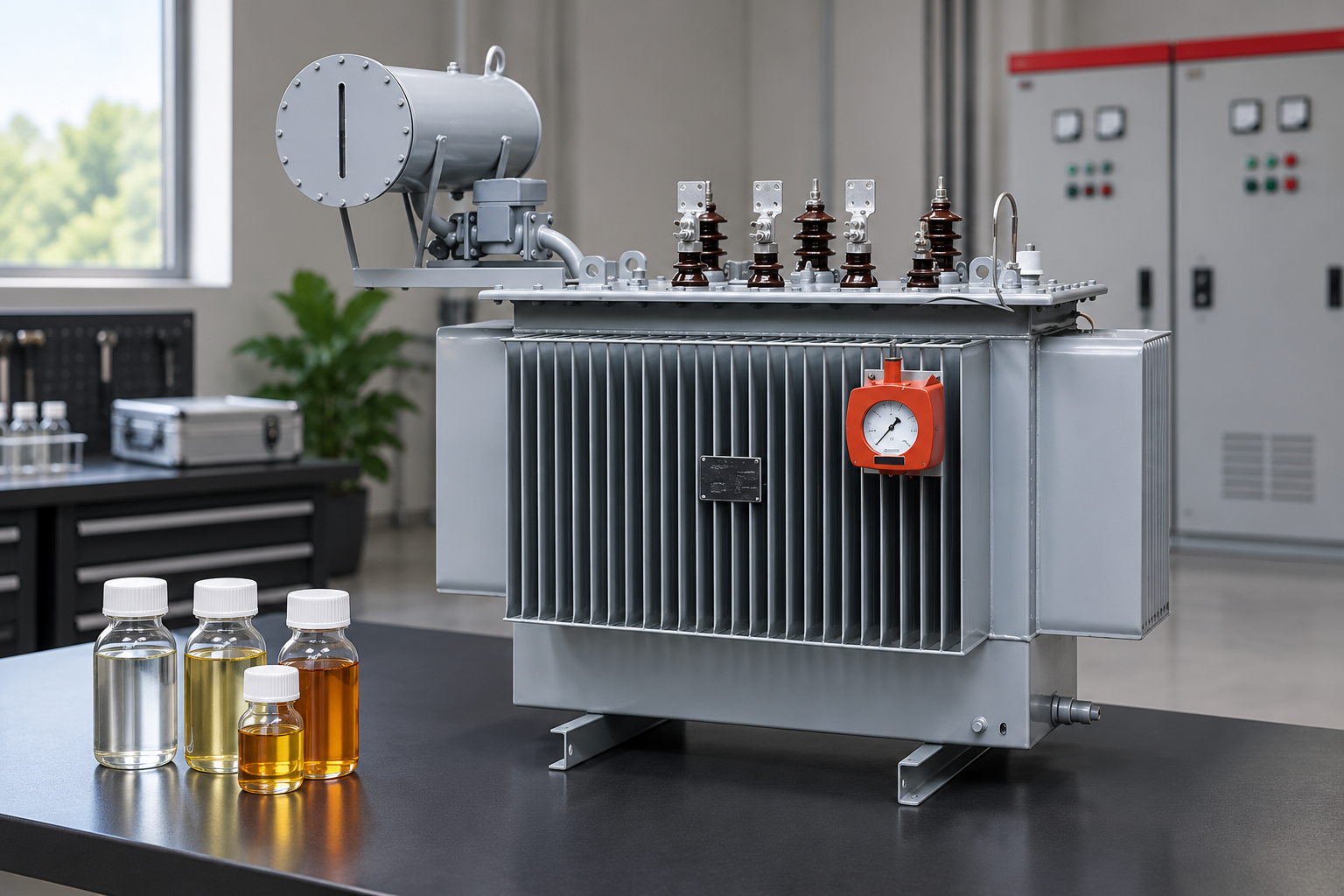
Agree sample handling and record the operating context. Reference-based illustration.
Read the individual gases as a pattern
Hydrogen and hydrocarbon gases can support different electrical or thermal interpretations, while carbon oxides may add information about cellulose insulation. Their diagnostic significance depends on the complete pattern and equipment context. Avoid using a single gas as a universal label for one fault temperature, one damaged part or one maintenance action.
For example, acetylene warrants attention in the appropriate context, but its source must be investigated. A separate tap changer, past fault event, historical contamination or recent sample problem can matter. Conversely, the absence of a gas does not rule out every insulation defect. Laboratory sensitivity and the time between gas generation and sampling affect what can be seen.
Carbon monoxide and carbon dioxide should be interpreted with operating history, liquid condition and other evidence relevant to paper insulation. A ratio calculated from two concentrations should not become a stand-alone measure of remaining life. Where a decision requires assessment of cellulose condition, agree the additional tests and their limits with the specialist.
The Bureau of Reclamation transformer diagnostics manual provides public background on using transformer condition information together. It is useful for understanding the diagnostic process; current asset-specific instructions and applicable standards still determine the work plan.
Compare concentration, rate and operating context
The absolute concentration describes the measured gas inventory at one sampling time. The rate describes how that inventory changed between comparable samples. A stable historical concentration and a rapidly increasing concentration can imply different priorities, even when today’s numbers happen to be similar.
For a simple illustrative calculation, suppose one gas increased from 40 ppm to 64 ppm across 12 days. The arithmetic interval rate is (64 − 40) / 12 = 2 ppm per day. These numbers are hypothetical and are not an alarm threshold. The calculation is useful only if both samples represent the same compartment, units and comparable analytical conditions, with no intervening treatment that invalidates the comparison.
Do not extrapolate that interval indefinitely. Loading changes, sampling uncertainty and intermittent processes can make the next interval different. A graph should show measured points, dates and operational events, rather than a smooth prediction presented as fact. Keep the original concentrations visible alongside any calculated rate.
When comparing laboratories or an online monitor with a laboratory report, establish how the methods differ. A change in measurement system can create a step in the chart. Investigate that possibility before attributing the step to transformer deterioration.
Use a decision table without inventing universal limits
The table below organizes the review process. It provides qualitative next steps, not operating instructions or standard acceptance values. Any alarm limits and sampling intervals must come from the agreed engineering assessment.
Report finding
First question
Evidence to collect
Decision to document
Unexpected rise in one or more gases
Are the samples genuinely comparable?
Original reports, units, compartment, method and treatment dates
Accept the trend or arrange qualified confirmation
New gas pattern after an event
What changed in the asset or its duty?
Trip records, load history, switching and maintenance log
Identify the relevant diagnostic investigation
Large historical value with little recent change
Is this a stable residual inventory?
Long-term trend and known previous events
Set an evidence-based monitoring plan
Main-tank and tap-changer data mixed together
Which compartment produced each result?
Sampling-point identification and equipment drawings
Separate histories before interpretation
Lower values after oil treatment
Was gas removed by processing?
Processing scope, dates and post-treatment baseline
Check whether the source remains active
Conflicting laboratory and monitor results
Are measurement methods aligned?
Calibration status, method and repeat comparison
Resolve the discrepancy before relying on it
Why sample quality can dominate the diagnosis
Sampling is part of the measurement chain. Air ingress, inadequate containers, incorrect sample-point identification and unsuitable handling can undermine the result. The laboratory and equipment owner should agree the container, collection procedure, transport requirements and information needed on the submission form.
Usa il guida al campionamento dell'olio to prepare questions for the qualified sampling team. This article does not provide instructions for opening an energized transformer valve. Site access, fluid pressure, environmental containment and electrical risks need an approved procedure before work begins.
If a surprising result conflicts with the entire historical record, treat sample confirmation as a defined action with an owner and deadline. Do not quietly delete the result as an outlier. Preserve it, record why it is questioned and compare the confirmation outcome. That approach avoids both unnecessary intervention and the dismissal of a developing problem.
Combine DGA with targeted evidence
Choose additional checks to answer the specific uncertainty. For suspected liquid contamination, the oil moisture content test can contribute relevant information. For an event associated with protection operation, retrieve the disturbance records and review them with the protection engineer. For a possible localized thermal problem, inspection and appropriate electrical diagnostics may be required.
These checks should not become a shopping list of every available test. Explain what each proposed measurement could confirm or exclude, its limitations and whether it requires an outage. An investigation that lacks a hypothesis can generate a large report while leaving the original decision unresolved.
Safety planning must match the work. The US electrical power safety provisions provide an authoritative reference for applicable US work; other jurisdictions and owner rules may differ. Qualified personnel must establish the correct local requirements.
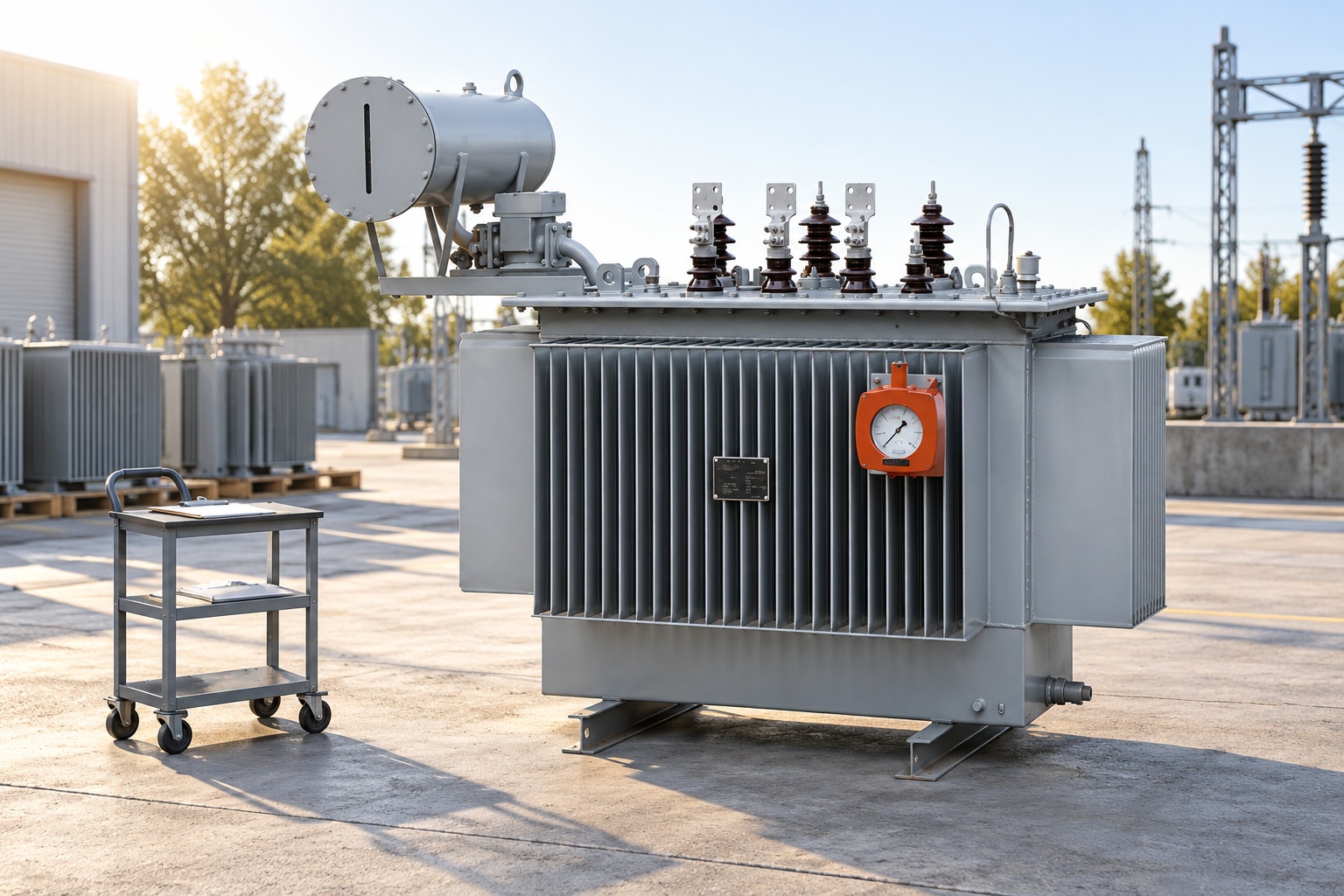
Combine gas trends with maintenance and treatment history. Reference-based illustration.
Build an action record the next reviewer can use
A useful assessment records the asset, significant measurements, comparison dates, analytical qualifications, operating context, proposed explanation and alternative explanations. It then identifies the next action, responsible person, required completion time and escalation conditions. Store the supporting laboratory reports with that record.
Separate an engineering recommendation from the operating authority’s approval. If the specialist recommends additional monitoring, the record should state what change would trigger reassessment and who receives the next result. If an outage is recommended, record the investigation scope rather than describing shutdown alone as the diagnosis.
For new procurement, request access to baseline fluid records, relevant factory results, the sampling-point arrangement and maintenance documentation. The 35 kV oil-immersed transformer product page is a starting point for discussing equipment requirements. Confirm the actual offered preservation system and test documentation in the project specification; a product photograph does not establish its diagnostic features.
Educational explanation of dissolved gas analysis
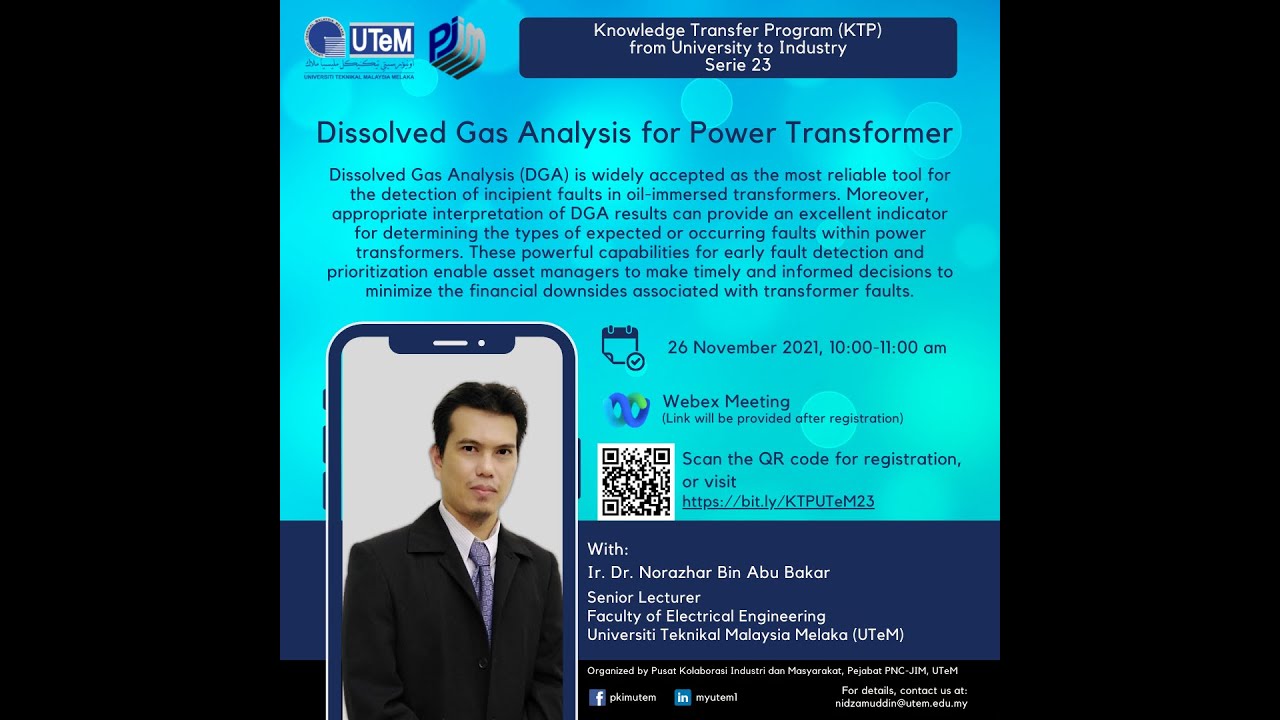
The university video below introduces DGA as a condition-assessment tool. Use it to understand the diagnostic idea, while keeping the operating decision grounded in the laboratory data and the asset-specific engineering review.
Further learning: 23 – Dissolved Gas Analysis for Power Transformer — UTeM STEM Centre. This educational video supports the topic; it is not a product demonstration or an operating authorization. Apri il video su YouTube.
Domande frequenti
Can one dissolved gas result prove a transformer fault?
No. A single result can justify investigation, but interpretation requires sample quality, gas pattern, historical trend and equipment context. The responsible specialist should consider alternative explanations and decide what confirming evidence is needed.
Is a low DGA reading proof that the oil is in good condition?
No. Gas concentrations address a different aspect of condition from moisture, dielectric breakdown behavior and other liquid properties. Oil treatment can also lower gas concentrations without removing the underlying source of gas generation.
Can main-tank and tap-changer gas results be compared directly?
They should be maintained as separate histories unless the actual design and assessment method explicitly justify combining them. Different compartments and operating mechanisms can produce different gas patterns.
How often should a transformer be sampled for DGA?
There is no universal interval suitable for every transformer. The owner and specialist should set it from asset condition, consequence of failure, recent changes, applicable guidance and the reliability of the available trend.
Shenheng Electric Power si impegna a diventare un leader globale nelle soluzioni di apparecchiature elettriche, aiutando i clienti a ottenere una gestione dell'energia sicura, efficiente e sostenibile.

 Shenheng Power Equipment Co., Ltd.