Seit 2001 ist Shenheng Power ein vertrauenswürdiger Hersteller von Energieübertragungs- und -verteilungsausrüstung und liefert weltweit zuverlässige elektrotechnische Lösungen.
Unterstützt durch ein umfassendes Kundendienstsystem bieten wir kompetente technische Beratung, Produkthinweise sowie flexible OEM- und ODM-Dienstleistungen für Ihre Projekte.
Seit 2001 ist Shenheng Power ein vertrauenswürdiger Hersteller von Energieübertragungs- und -verteilungsausrüstung und liefert weltweit zuverlässige elektrotechnische Lösungen.
Transformer Oil Acidity Test and Neutralization Number
Release Time: 2026-10-09
A transformer oil acidity test measures the quantity of acidic constituents detected under a specified laboratory method. The result is commonly expressed as milligrams of potassium hydroxide per gram of oil, written mg KOH/g, and is also called acid number or neutralization number. It supports assessment of insulating liquid condition, but it does not identify every acid or prove that the whole transformer is healthy. Use a comparable trend, the correct liquid-specific guidance and complementary tests before deciding whether monitoring, investigation or oil maintenance is appropriate.
Acid number and neutralization number explained
The measurement expresses the equivalent amount of alkali required by the test relative to the sample mass. It is not a percentage of acid and it is not the pH of transformer oil. Reporting the units accurately is essential: copying a concentration into an asset database without its method or units can make later comparisons unreliable.
Das ASTM D974 method description explains acid and base number as measurements under defined test conditions and identifies acidic constituents arising from additives or degradation. Its general petroleum-product scope does not establish a transformer-specific service limit. Owners need the method and maintenance criteria applicable to their actual insulating liquid and equipment.
A laboratory can explain which constituents and endpoint its method captures. Do not assume that every titration technique produces an identical result. A trend assembled from different procedures needs a comparability review before the owner interprets a small difference as deterioration.
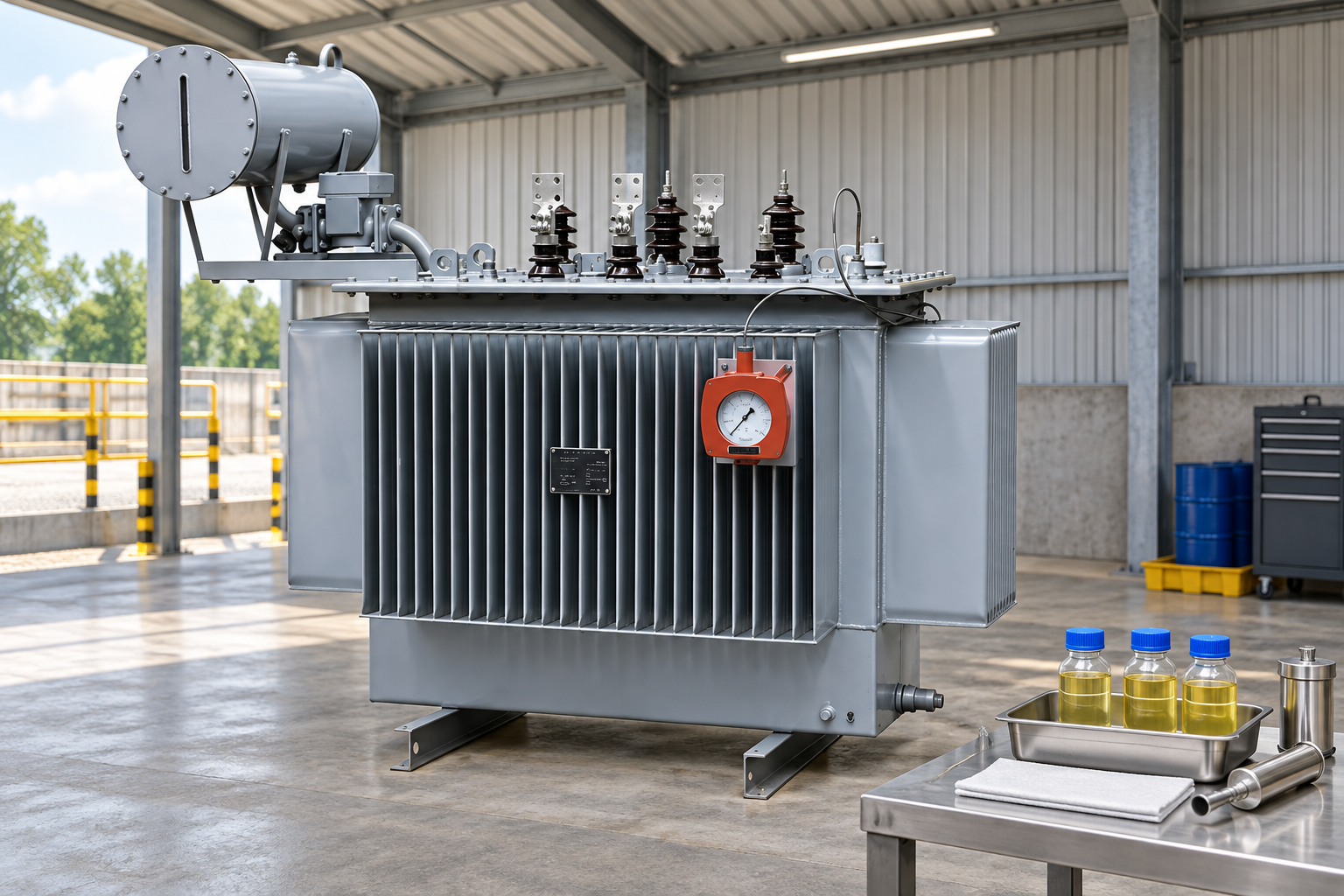
Use laboratory-approved sample handling and identify the fluid. Reference-based illustration.
Why transformer owners monitor acidity
Insulating liquid serves electrical and thermal functions. Monitoring its condition helps the maintenance team decide where more investigation is needed and whether an intervention is justified. Acidity is one part of that evidence. The concern is the condition of the liquid and insulation system, not simply the color of a sample bottle or the age on a nameplate.
A useful program connects each oil result to the transformer’s history. Changes in load, cooling performance, sealing condition, previous liquid treatment and maintenance findings help define the investigation. The Bureau of Reclamation maintenance reference library provides broader transformer maintenance resources. Use those resources within the owner’s applicable operating instructions rather than turning one test into a universal shutdown rule.
For a project using an ölgekühlter Leistungstransformator, request the actual liquid specification and maintenance documentation. A website product category alone is not evidence of which laboratory method, oil formulation or service limit applies to the delivered asset.
Choose the method before collecting the sample
Specify the fluid type and requested method in the laboratory order. Mineral oil and ester liquids should not be assessed against an assumed common acidity limit. Ask whether the laboratory accepts the actual fluid and whether its method is suitable for that matrix. If the liquid history is uncertain or mixed, identify that uncertainty before interpretation.
The requested report should show the method reference, result, units, sample identity and any qualification about sample suitability. A laboratory change or method revision should be visible in the asset record. Keeping the old method information makes it possible to review an apparent step change without guessing what occurred.
Do not write a purchase order that requests only “oil quality: pass or fail.” Define the measurements and acceptance basis. If engineering interpretation is required, assign it explicitly and supply the operating history. Measurement and interpretation are separate responsibilities, even when the same service provider performs both.
Sample identity and handling checklist
Use qualified personnel, the approved site procedure and suitable containers provided or approved by the laboratory. Collection is an electrical and environmental task as well as a laboratory task. The site must manage access, oil containment and the hazards of the actual sampling point. This guide is not an instruction to operate a valve on energized equipment.
Record the asset identifier, compartment, collection date, sample point and collector. Add relevant operating observations, the most recent oil intervention and any uncertainty about the sample. If a separate tap-changer compartment exists, do not silently compare its sample with the main-tank record. Keep the original label and chain of identification with the laboratory report.
Ask the laboratory about storage and delivery conditions. Avoid improvised reused bottles and undocumented additives. If the container or sample handling deviates from the laboratory instruction, report the deviation rather than concealing it behind a numerical result.
Interpret the result using a comparable trend
Begin by checking that the new result belongs to the correct asset. Then compare it with earlier measurements using the same method and units. Retain the laboratory’s reporting precision and qualifiers. A displayed extra decimal place does not mean the measurement supports that level of confidence.
Review whether the oil was replaced, topped up, reclaimed or otherwise treated between samples. Mark those events on the trend. A lower value after an intervention describes a new liquid-condition observation; it does not demonstrate reversal of paper aging or resolve unrelated electrical defects.
Situation
Review before deciding
Appropriate question for the specialist
Stable comparable results
Method, sample quality and other oil tests
Is the existing monitoring interval still suitable?
Unexpected increase
Identity, laboratory change and maintenance events
Is confirmation sampling or a broader investigation needed?
Different insulating liquid
Fluid identification and liquid-specific criteria
Which method and acceptance basis apply?
Result after oil intervention
Scope and date of treatment
Where should the post-intervention baseline begin?
Acidity concern with other abnormalities
Complete oil and asset condition evidence
Which problem should the maintenance plan address first?
The table organizes decisions without inventing universal numerical thresholds. The owner should document the actual governing criteria and who approved them.
Do not use an internet limit as an automatic verdict
A number copied from a general article may refer to unused oil, a particular equipment class, a specific test method or a different insulating liquid. Those distinctions matter. Before declaring a pass or fail, identify the criteria’s source, edition, scope and relationship to the asset’s maintenance program.
Where a contract supplies a limit, confirm that the laboratory result uses the specified method and unit. If the contract is ambiguous, resolve the interpretation with the responsible engineer. Applying whichever published limit appears most convenient can create either unnecessary maintenance or false reassurance.
There is also a difference between investigation, treatment and removal-from-service criteria. A maintenance plan should describe the action attached to each trigger. A laboratory result alone does not grant authority to keep operating or require an operator to shut down equipment without the site’s decision process.
Combine acidity with other oil and transformer evidence
Review acidity alongside other appropriate liquid-condition tests selected by the maintenance specialist. Moisture, dielectric behavior and relevant physical or chemical observations can change the investigation. A normal acidity result cannot exclude every contamination, moisture or electrical problem. Conversely, an abnormal result should be interpreted with sample confidence and the broader condition record.
Transformer dissolved gas analysis supports review of gas-producing fault processes and is not interchangeable with an acidity test. Furan analysis addresses markers associated with cellulosic insulation degradation. Keeping these purposes separate helps avoid claiming that one oil report measures all aspects of transformer health.
The owner’s inspection findings also matter. A leak, damaged sealing arrangement or cooling concern deserves its own investigation. The transformer oil leak guide discusses maintenance planning for that issue. Resolve the actual fault rather than assuming that treatment of the liquid alone will remove its cause.
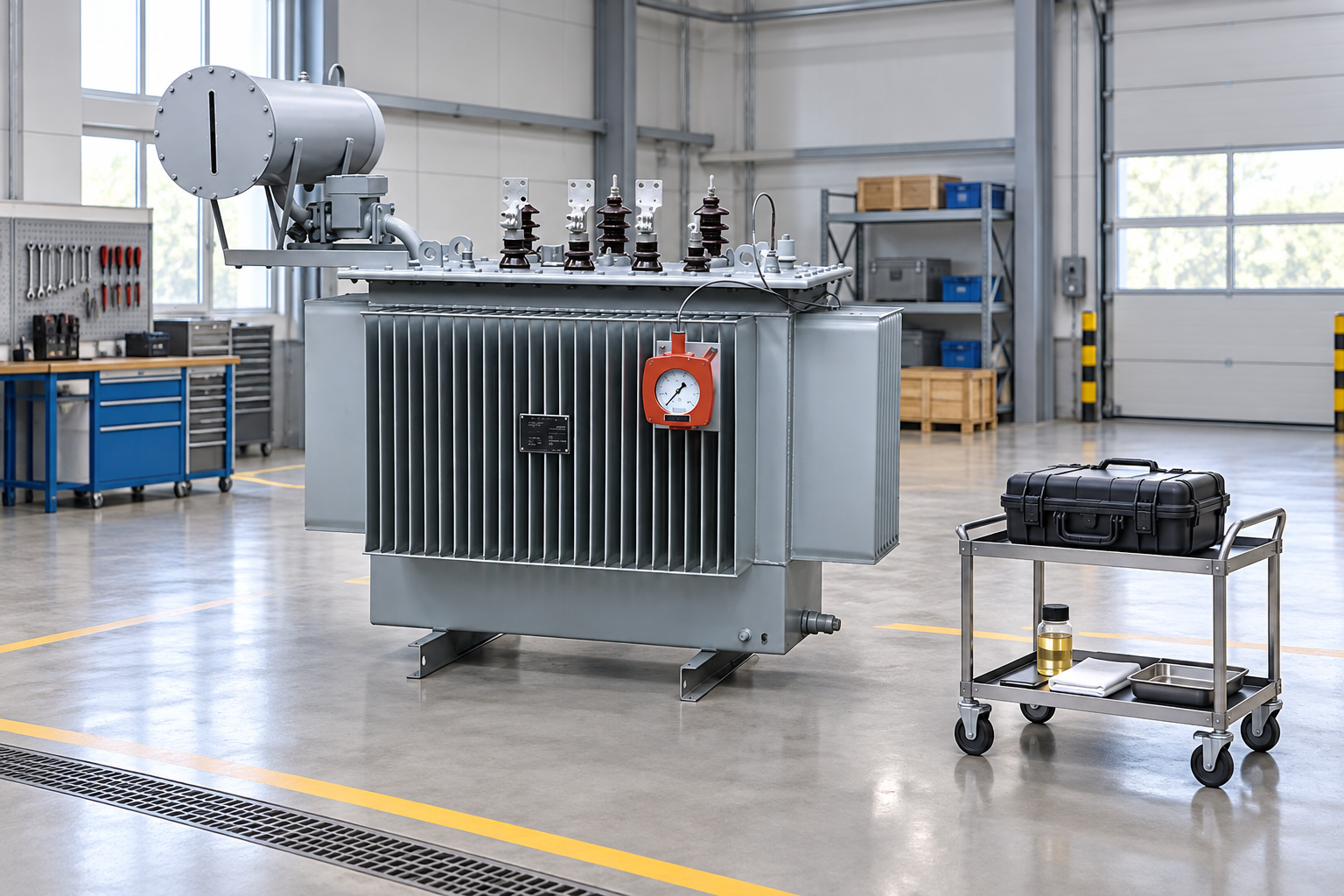
Define the oil maintenance objective and the verification record. Reference-based illustration.
Decide between monitoring and oil maintenance
First establish that the result is valid and the action criteria apply. Next identify whether the evidence points to a liquid-condition concern, a sampling problem or a wider transformer investigation. Then ask the specialist to define the intervention, its limitations and the evidence needed afterward.
Oil filtration, drying, reclamation and replacement are different operations with different objectives. Do not treat them as interchangeable names for “cleaning the transformer.” A service proposal should explain what it will change, how fluid compatibility will be managed and how the work will be verified. The proposal must also address site isolation, waste handling and return-to-service responsibilities where relevant.
After work, preserve the before-and-after reports and a description of the intervention. Agree on subsequent monitoring with the responsible engineer. A maintenance invoice marked complete is not a substitute for evidence that the agreed liquid-condition objective was achieved or that the asset was correctly restored.
Example of a defensible review
Imagine an owner receives an increased acidity result after switching laboratories. The maintenance team first verifies the transformer identity and confirms whether both methods are comparable. It checks the collection record and any recent oil addition. The engineer then decides whether a repeat sample or additional tests are needed before choosing an intervention.
If a confirmed trend meets the applicable investigation criteria, the team records the reason for action and the information still missing. If an intervention follows, it records a new baseline and preserves the earlier history. This example intentionally uses no invented measured values. The lesson is the sequence of decisions, not a numerical pass limit.
Information to request in a service quotation
Give the provider the liquid type, asset identification, sampling arrangements, requested methods and reporting requirements. Ask for laboratory qualifications relevant to the work, turnaround expectations and handling of unsuitable samples. If an interpretation is included, request the applicable criteria and a clear statement of assumptions.
For oil maintenance, request the proposed process, compatibility review, acceptance checks, waste responsibilities and records delivered at handover. Keep the scope tied to the problem established by the evidence. A provider should not promise that lowering one measurement will restore all solid insulation or eliminate every source of transformer risk.
Learn the equipment context
Further learning: Transformer Oil Testing | Types of Transformer Oil | Transformer Oil Testing Methods & Analysis — Power System Operation Slides. This educational video supports the topic; it is not a product demonstration or an operating authorization. Öffne das Video auf YouTube.
The educational video surveys transformer oil tests. It provides context for acidity alongside other measurements and does not authorize sampling or supply asset-specific acceptance limits.
Häufig gestellte Fragen
Is transformer oil acidity the same as pH?
No. Acid number is a method-defined measurement usually reported as mg KOH/g. It should not be substituted for an aqueous pH reading.
Does a low acid number prove the transformer is healthy?
No. It is one liquid-condition observation. Moisture, gas-producing faults, solid insulation condition and mechanical concerns require appropriate complementary evidence.
Can mineral oil and ester oil use the same acceptance limit?
Do not assume they can. Identify the fluid and apply the suitable method, maintenance guidance and equipment-specific criteria.
Does oil treatment restore aged paper insulation?
A changed oil result does not prove reversal of solid insulation aging. Document the intervention and assess the paper and liquid evidence within their respective limitations.
Shenheng Electric Power hat sich zum Ziel gesetzt, ein weltweiter Marktführer für Lösungen im Bereich Energieausrüstung zu werden und Kunden dabei zu helfen, ein sicheres, effizientes und nachhaltiges Energiemanagement zu erreichen.

 Shenheng Power Equipment Co., Ltd.