
 Shenheng Power Equipment Co., Ltd.



Off-circuit and on-load tap changers solve different voltage-regulation duties. An off-circuit device is adjusted only when the transformer is isolated. An on-load tap changer changes ratio during service using a controlled selector and diverter arrangement. Selection depends on voltage variation, switching frequency, control philosophy, maintenance and the complete transformer design.
Off-circuit and on-load tap changers
An off-circuit tap changer is adjusted only after isolation, while an on-load tap changer changes ratio during service through a controlled selector and diverter arrangement. The distinction affects controls, transition duty, maintenance, range and voltage-regulation philosophy.
Compare tap positions, range, rated through-current, motor duty, controller, interlocks, position indication and service intervals. The approved voltage study determines the normal position and deadband; a wider range is not a substitute for correct network design.
Choose regulation duty before selecting the mechanism
The decisive question is whether the transformer must remain energized while its ratio is changed. An off-circuit tap changer requires the transformer to be de-energized under the approved isolation procedure before operation. Removing the load alone is not an adequate substitute. An on-load tap changer is designed to change the ratio under its specified operating conditions, using a defined transition arrangement. The presence of a handle, motor drive or position indicator does not establish the permissible switching duty; the equipment documentation must identify the mechanism and its limits.
Describe the voltage problem before specifying tap positions. Record supply variation, cable voltage drop, load changes and the permitted voltage at the point of use. A seasonal or infrequent setting adjustment with an acceptable planned outage may suit off-circuit operation. A network requiring regular regulation while supplying customers may justify an on-load arrangement. That decision also brings requirements for a drive, controls, indication, alarms and maintenance access. Do not assume that installing an on-load mechanism automatically produces good voltage regulation without a correctly designed control strategy.
Compare tap range and step size with the actual regulation requirement. Establish the reference winding, nominal position and direction of voltage change from the nameplate and drawings. A higher tap number does not universally mean a higher secondary voltage. Verify that the operating instructions, local labels and remote display use the same convention. Where transformers operate in parallel, review how tap positions and control modes affect circulating current and load sharing. Parallel operation requires a coordinated design; matching displayed tap numbers is not enough evidence that two different transformers have compatible ratios.
For an off-circuit arrangement, handover should include the isolation requirements, permitted operating method, position securing arrangement and approved verification after adjustment. For an on-load arrangement, retain evidence for local and remote commands, position feedback, end limits, motor-drive alarms and the selected automatic-control settings. Maintenance requirements depend on the actual switching technology and duty history, including whether the mechanism uses oil or vacuum for its switching function. Use the supplied operating manual to define inspections and intervals rather than assigning one generic schedule to every tap changer.
How outage availability changes the selection
An off-circuit tap changer can suit a transformer whose voltage ratio is set during commissioning and adjusted only during an authorized outage. The owner must be able to accept the interruption needed for a later adjustment. A facility that cannot interrupt its supply whenever voltage conditions change should not assume that an accessible tap handle makes an off-circuit device suitable for operational regulation.
An on-load tap changer addresses a different duty: changing ratio while the transformer remains in service through a purpose-designed switching system. The value of that capability depends on how often regulation is needed and what an interruption would cost the project. Compare the complete operating requirements, rather than choosing solely by the price of the tap-changing mechanism.
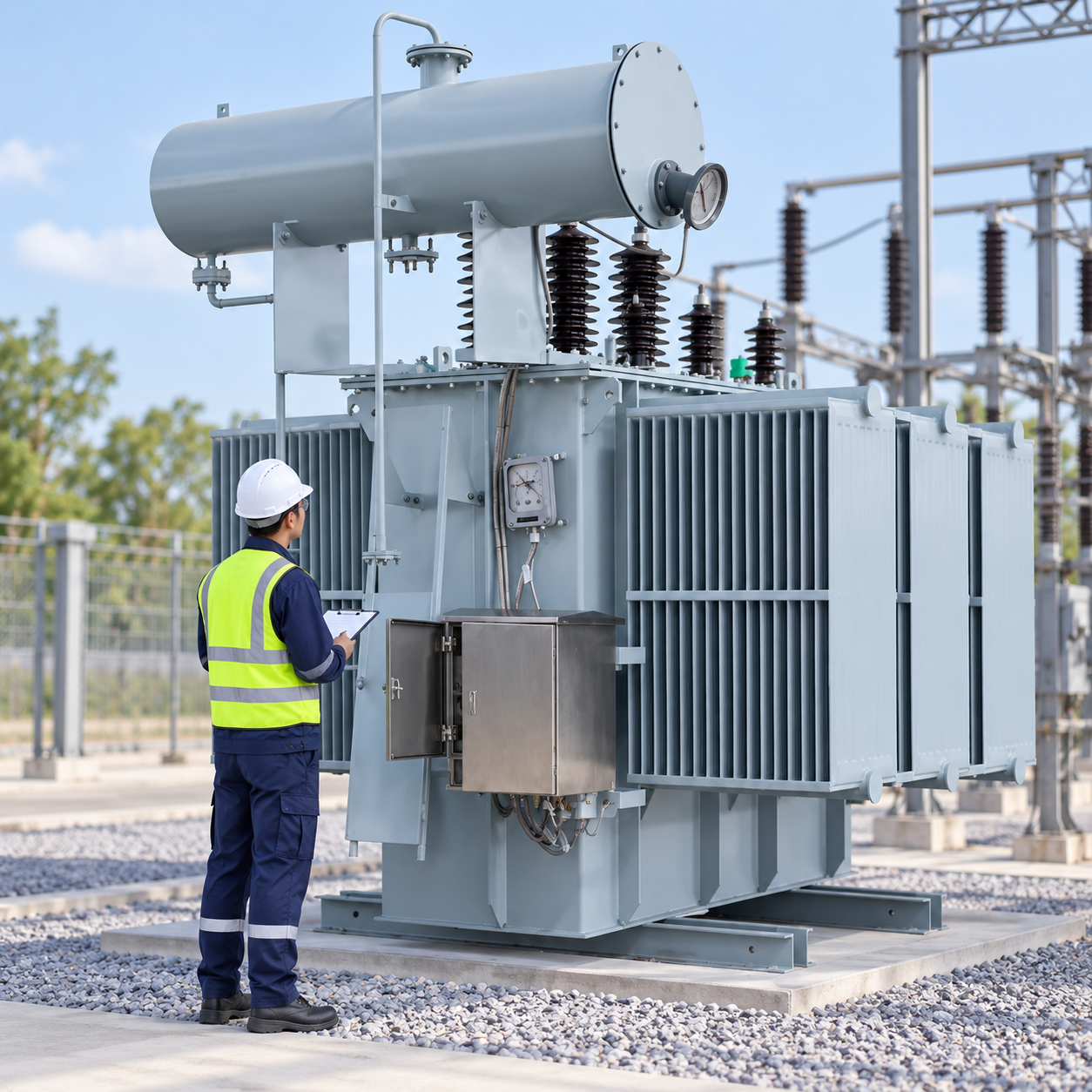
Define the required range and steps
The procurement specification should identify the regulated winding, required tapping range and individual positions from the approved electrical design. Ask how the proposed positions relate to the declared transformer ratio and the project’s voltage requirement. Do not calculate the delivered low-voltage condition from a tap label alone while ignoring the supply variation and load-dependent voltage drop.
The designer must also check the consequences of each operating position for the complete transformer. A supplier should confirm the supported tapping arrangement for the actual rating and construction. An online product photograph is not enough to establish the available range. Keep the approved tapping schedule with the nameplate record so commissioning personnel can identify the intended initial position without guessing.
Distinguish the switching mechanism from the regulator
An OLTC is the apparatus that performs the ratio change. A voltage regulator and its associated measurements determine when a change should be requested. A transformer can have an OLTC without having a complete automatic regulation scheme suited to the site. State whether control will be manual, local, remote or automatic, and define the relevant command priorities.
Automatic control requires project-specific decisions about measurement, setpoint, deadband, delay, limits and failure behavior. These should prevent unnecessary operation while meeting the voltage objective. This guide supplies no universal regulator settings. The approved control study and the equipment instructions determine the arrangement. A supplier’s standard control panel should be checked against that arrangement before purchase.
Check interfaces for parallel transformers
Parallel operation adds a coordination question. Different ratios can create unwanted circulating current and affect load sharing. Identical tap-position numbers do not necessarily mean identical ratios when the transformers have different schedules or constructions. The designer should establish compatibility and the intended regulation strategy for the actual pair or group.
For OLTC-equipped transformers, specify how the controls coordinate and what happens if a transformer or communication path becomes unavailable. For off-circuit units, record the authorized initial positions and the conditions under which a later change is permitted. Changes must follow an engineering review and an approved outage process; moving a tap to cure one observed voltage problem may affect the wider parallel system.
Compare the maintenance commitments
An OLTC introduces operating mechanisms, switching duties and monitoring requirements that depend on its design. Ask the manufacturer for the applicable maintenance instructions, inspection triggers and service support. Some designs use separate oil compartments; others use different switching technology. Do not generalize one design’s oil treatment or inspection procedure to every OLTC.
For an off-circuit device, fewer operational changes do not remove the need for correct position indication, locking, connection integrity and manufacturer-directed inspection. A selector left between intended positions or an inaccurate record can create a serious commissioning problem. The comparison should therefore include access, personnel capability and spare-parts support, as well as the expected frequency of tap changes.
Put the correct requirements in the inquiry
Provide the transformer duty, voltage variation to be managed, required tapping schedule, outage constraints and preferred control arrangement. State environmental conditions and any parallel-operation requirement. Ask the supplier to identify which parts of the proposed package are included: tap-changing apparatus, drive, regulator, measurements, local controls and remote interfaces.
Das IEC 60214-1 description provides the performance-and-test framework for tap changers. IEC/IEEE 60214-2 addresses their application. The purchase specification should name the applicable requirements and edition, while the supplier confirms the actual equipment construction and declared capability. Neither reference means that an unspecified catalog transformer automatically includes an OLTC.
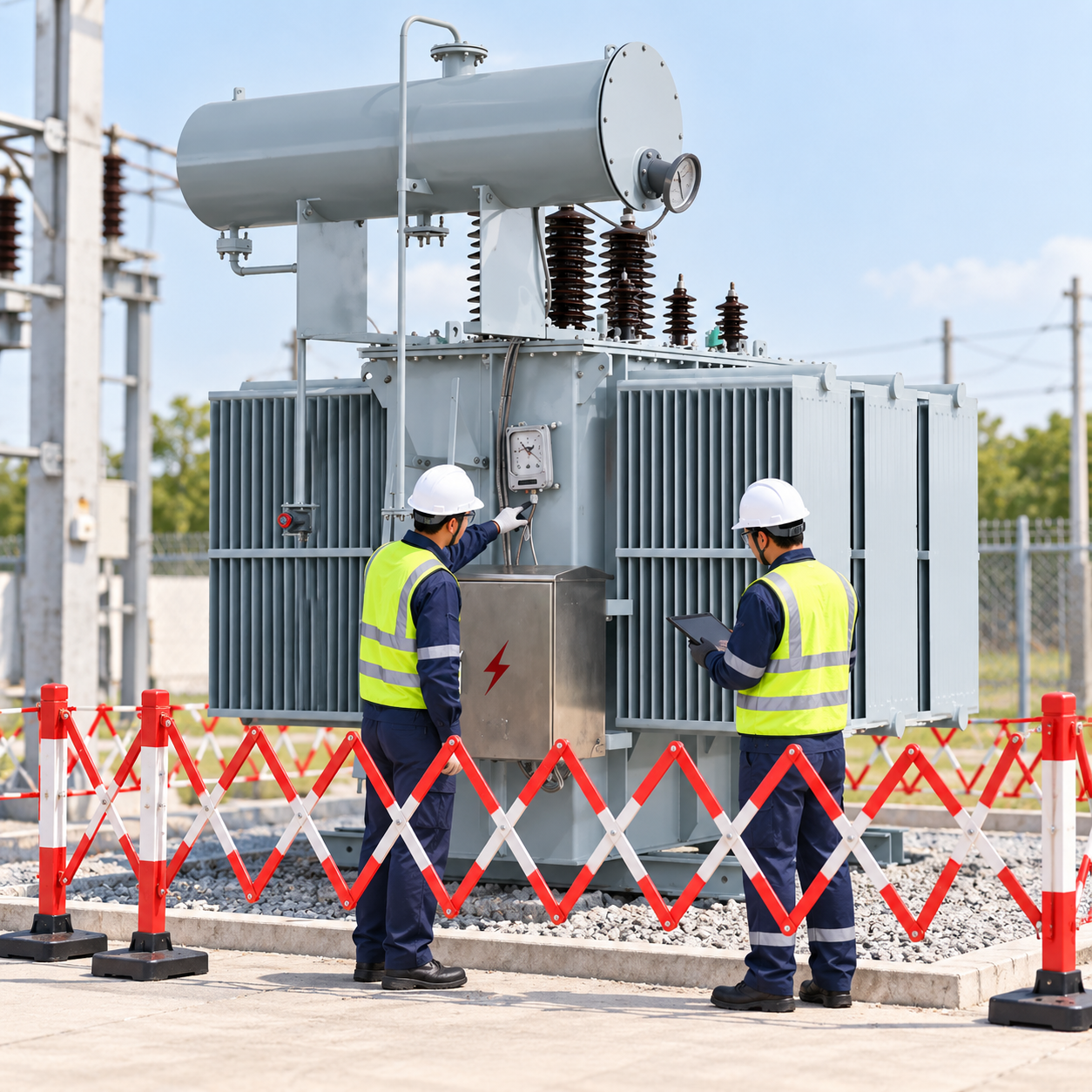
Verify commissioning evidence before handover
Commissioning should reconcile the delivered tapping schedule, nameplate information, mechanical indication and recorded initial position. The responsible test team selects the approved checks needed to establish that the transformer and its tap-changing arrangement match the specification. Any discrepancy should be resolved before the record becomes the operating baseline.
For an OLTC, the agreed functional checks should cover the supplied command paths, position feedback, limits and control behavior within the approved commissioning procedure. The site also needs a record of the final regulator configuration where automatic control is included. A motor-drive demonstration by itself does not prove that the entire voltage regulation scheme will behave correctly on the installed network.
A practical comparison for the purchasing team
Consider two hypothetical projects. One distribution transformer serves a stable supply and allows a planned outage if a later ratio adjustment is required. The other supplies a process where voltage changes need regular correction without interrupting operation. The first project may be compatible with an off-circuit arrangement; the second warrants evaluation of an OLTC and its control system.
Those are starting points for review, not promised product selections. Each project still needs its voltage study, tapping range, transformer capability and maintenance plan confirmed. Document the reason for the chosen arrangement so a later buyer does not replace it with a superficially cheaper option that removes a required operating capability.
Keep changes linked to the voltage study
When a supply voltage, load pattern or parallel transformer arrangement changes, review the regulation requirement before altering the tapping schedule or regulator settings. Preserve the earlier configuration and the reason for the revision. Update the operating documents so the commissioning record and current equipment state remain consistent.
The handover file should include the tapping schedule, actual initial position, control diagram, relevant test results, maintenance instructions and unresolved limitations. That gives the owner a specific starting point for operating the supplied arrangement. It also prevents an off-circuit selector from being treated later as an on-load operating control merely because a voltage problem appears.
Compare the operational choices
| Decision | Off-circuit arrangement | On-load arrangement |
|---|---|---|
| Ratio adjustment | Requires the prescribed isolated condition | Purpose-designed switching during service |
| Regulation control | Usually a recorded setting changed during an outage | Specify commands, regulator and measurements separately |
| Outage constraint | Confirm that a later adjustment outage is acceptable | Review whether continuity justifies the additional equipment |
| Parallel operation | Verify actual ratios and authorized positions | Verify control coordination and failure behavior |
| Handover evidence | Tapping schedule and initial position | Tapping schedule, position feedback and final control configuration |
This qualitative comparison supports the project review and does not declare the tapping capability of a specific catalog transformer.
Verwandte Produkt- und Engineering-Anleitungen
Für den passenden Shenheng-Produktkontext siehe 35KV MV&HV Oil Immersed Industrial Power Transformer. Für das umfassendere Thema lesen Sie Transformer Tap Changer Types and Selection. Weiterführende Informationen: Transformer Voltage Regulation: Formula and Worked Example und Grenzen für die Temperaturerhöhung bei Transformern und Lebensdauer der Isolation.
Quellen und Normen
IEC 60214-1: Tap-changer performance requirements and tests · IEC/IEEE 60214-2: Tap-changer application guidelines
Video für den Systemkontext
This neutral Practical Engineering explainer gives background on substations, transformers and switchgear. It is educational context, not a switching or test instruction.

Häufig gestellte Fragen
Can an off-circuit tap changer be operated while energized?
No. It requires the isolation and other conditions specified by the manufacturer and approved site procedure. An accessible handle does not make it an on-load control.
Does an OLTC include automatic voltage regulation?
Not necessarily. The tap-changing apparatus and its regulator are separate parts of the specification; confirm the supplied control and measurement package.
Can parallel transformers use the same tap number?
A matching position number alone does not prove matching ratios. Review the actual tapping schedules and the parallel-operation design.
Which arrangement should a buyer select?
Select from the voltage-regulation duty, outage availability, approved tapping range and maintenance requirements. Request confirmation for the actual transformer.




